Coonawarra's terra rossa strip near Penola is a flat, walkable wine region best visited midweek and outside school holidays. A two-night stay in Penola allows three to five unhurried cellar door visits, tasting the region's benchmark cabernet sauvignon. The flat terrain suits older travellers, though some heritage buildings have uneven floors. With no direct public transport, a designated driver or local tour operator is needed, and it's roughly a four-hour drive from Adelaide.
Why Coonawarra suits a friends group travelling at their own pace
There are wine regions in Australia that feel designed for the itinerary — shuttle buses, timed sessions, a gift shop at the end. Coonawarra is not quite like that. The cellar doors sit along Riddoch Highway, a flat, mostly straight road through the terra rossa strip, and the distances between them are short enough that a designated driver can move the group from one tasting to the next without anyone feeling herded. For a group of women who have earned the right to sit down properly, order a cheese plate, and talk through what they have just tasted, this region has real appeal.
The pace here is genuinely unhurried, particularly midweek and outside school holidays. Tasting rooms tend to be staffed by people who know the wines deeply and are happy to explain the difference between a block-designated cabernet and a regional blend without making anyone feel underprepared. That kind of conversation is exactly what a friends trip is for.
What is the terra rossa strip and why does it matter for the wine?
The terra rossa is a narrow band of red clay-loam soil sitting over a limestone base — it runs for roughly fifteen kilometres and is, at most, about two kilometres wide. Vines planted in this soil produce fruit with a particular density and structure that has made Coonawarra cabernet sauvignon one of the benchmark styles in Australian wine. The limestone beneath the clay drains water efficiently, which stresses the vines just enough to concentrate flavour without drying them out entirely.
Walking or driving along the strip, the colour change in the soil is visible from the road — the red ground against the grey-green vine rows is distinctive, and it gives you an immediate, tangible sense of why place matters in wine. This is not abstract terroir talk; you can see it, and the cellar door staff at most producers are happy to explain exactly what you are looking at.
Which cellar doors are worth your time?
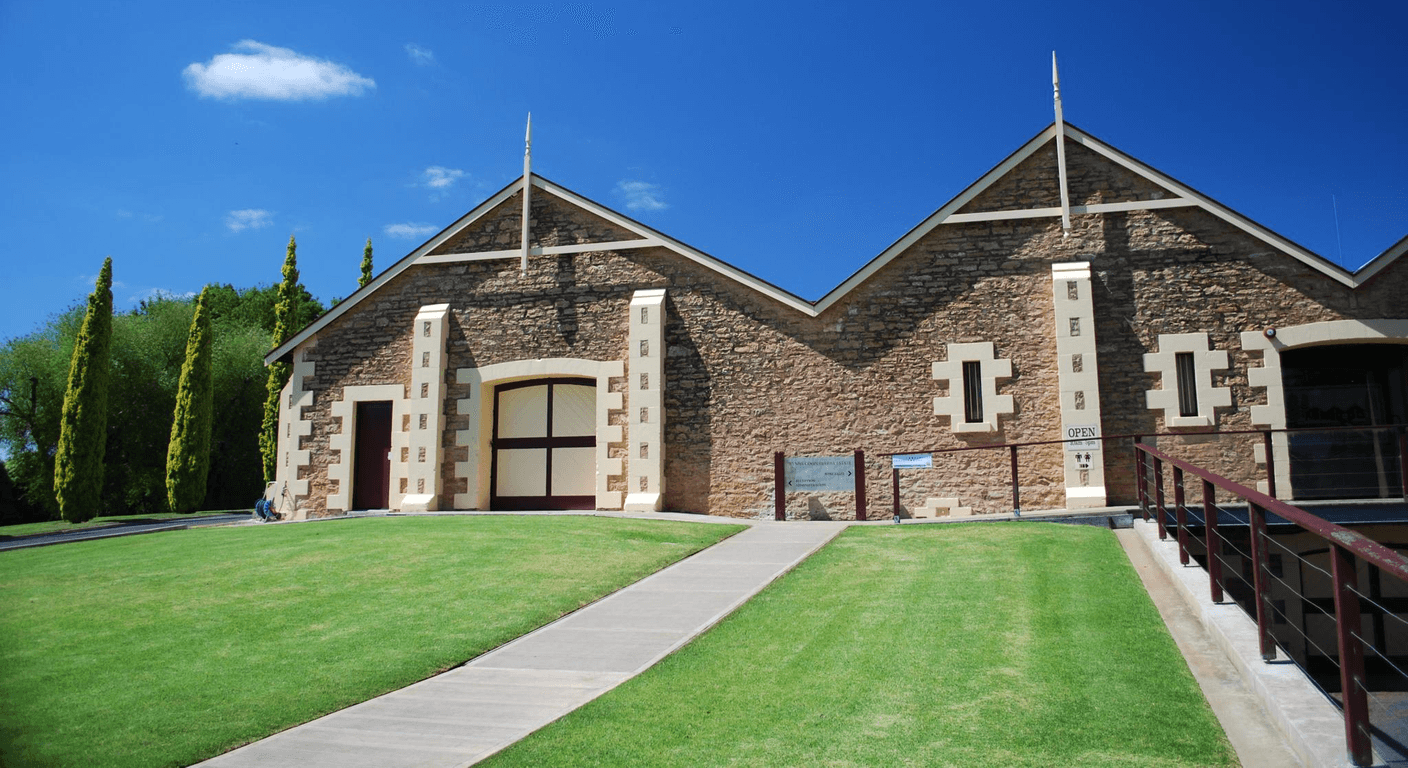
Wynns Coonawarra Estate is the most recognisable name in the region and with good reason. The historic bluestone winery building is well worth seeing, and the tasting room offers a range from entry-level to single-vineyard releases. It can be busier than the smaller producers, but the staff manage the room well and the quality of the pour is consistently reliable. Tasting fees run around $10–$15 per person and are often waived with a purchase — confirm current pricing directly with the cellar door before you visit.
Rymill Coonawarra is a family estate with a welcoming tasting space and a strong range of cabernet styles. It tends to attract a slightly quieter crowd than Wynns and has outdoor areas that work well for a group wanting to spread out. Majella Wines is a smaller, family-run operation that has earned a strong reputation for its Malleea cabernet-shiraz blend and its Cabernet. The team there is particularly good at taking the time to talk through the wines without rushing anyone to a decision. For something a little different, Katnook Estate has an interesting history — it operates out of a heritage woolshed building — and pours a range that includes some older vintages.
It is worth noting that cellar door hours, tasting fee structures, and booking requirements do change. Before the group sets out each morning, a quick call to confirm opening times and whether bookings are needed will save any disappointment. Most Coonawarra cellar doors appreciate a heads-up for groups of four or more.
How to base yourself: staying in Penola for two nights
Penola is the logical base. It is a small, genuinely pleasant town with a historic streetscape, a handful of good places to eat, and enough accommodation options to suit a group travelling together. The drive from the town centre to the nearest cellar doors is under ten minutes. Staying two nights gives the group a full day on the strip without anyone feeling the pressure of a single long day — there is time for a slow morning, a proper lunch at one of the cellar doors or in town, and an afternoon tasting without rushing.
Accommodation in Penola ranges from self-contained cottages — well suited to a group of friends who want their own space to debrief over a bottle at the end of the day — through to motel-style rooms and a small number of bed and breakfast options. Prices are indicative and seasonal; expect to pay roughly $150–$250 per room per night for comfortable mid-range options, but confirm current rates directly with providers. The South Australian Tourism Commission website at southaustralia.com is a reliable starting point for listings.
Penola also has the Coonawarra Cellar Door, a small collective tasting space in town that allows visitors to sample wines from several producers under one roof. This can be a useful first stop on arrival, before the group has settled on which full cellar door visits to prioritise the following day. It is also worth walking the heritage precinct around Petticoat Lane, which takes very little time and provides some context for the town's history.
Getting there: the drive from regional Victoria or Adelaide
From regional Victoria, Coonawarra is most easily reached by car. From Melbourne, the drive is roughly four and a half to five hours, with the most straightforward route running through Hamilton and then across the border. From Adelaide, the drive is close to four hours via the Dukes Highway and Naracoorte. Neither route is especially difficult, but both are long enough that splitting the drive with an overnight stop — Naracoorte is a reasonable option with its own attractions, including the World Heritage-listed fossil caves — makes the journey considerably more comfortable.
There is no direct public transport to Coonawarra itself. The nearest regional centres with bus connections are Mount Gambier and Naracoorte. For a group travelling together, hiring a car or arranging a local wine tour operator with a driver is the practical solution. A designated driver within the group is the most cost-effective option; local tour operators offer guided half-day and full-day experiences that handle transport and sequencing, which removes the logistical load entirely. Check southaustralia.com for current licensed tour operators in the region.
Accessibility, pacing, and what to know before you go
The flat terrain of the Coonawarra strip is one of its genuine advantages for older travellers. There are no hills to negotiate between cellar doors, and most of the major tasting rooms have level or near-level entry with adequate parking close to the door. That said, some of the smaller or heritage-listed properties have older buildings with uneven floors or limited bathroom facilities, so it is worth calling ahead if mobility or access is a specific consideration for anyone in the group.
Pacing is everything in a wine region. Two or three cellar doors in a day is a sensible limit if the group wants to actually taste and talk rather than rush through a checklist. Building in a proper lunch — either at a cellar door that offers food, or back in Penola — makes for a much better day than trying to fit in an extra tasting at the cost of sitting down properly. Drinking water between tastings and having something to eat before the first pour are the kinds of practical habits that keep an afternoon enjoyable rather than exhausting.
Tasting fees across the region are generally in the $10–$20 range per person, and at many cellar doors this fee is waived or credited if you purchase a bottle or more. These arrangements vary by producer and can change seasonally, so always confirm the current policy when you arrive or call ahead. Never assume a fee structure from a website is current — a quick phone call saves any awkwardness at the counter.
Where to eat and what else is nearby
Penola has a small but reliable dining scene. Fodder Food + Wine is a well-regarded spot in town that sources locally and pairs well with a post-cellar-door evening. For a more casual option, the town's cafes handle a good lunch without fuss. Some cellar doors offer their own food — cheese and charcuterie boards rather than full menus at most — and eating at the winery has an obvious appeal when the wines are already open in front of you.
If the group has a spare half-day, Naracoorte Caves National Park is about forty-five minutes north and is genuinely worth the detour. The World Heritage listing relates to the fossil deposits found in the cave system, and the guided tours are accessible to most fitness levels, though some cave passages are more restricted. Parks Victoria does not manage these caves — they fall under the South Australian National Parks and Wildlife Service — so check the National Parks SA website for current tour times and bookings.
Mount Gambier, about an hour from Coonawarra, offers the Blue Lake and a broader range of accommodation and dining if the group wants to extend the trip. It is a functioning regional city rather than a tourist town, which some travellers find refreshing after a few days in a small wine village.
Quick planning guide
| Ideal pace | Slow-paced — two to three cellar doors a day |
|---|---|
| Best months | Flexible; quieter and less rushed midweek and outside school holidays |
| Suggested stay | Two nights in Penola |
| Mobility level | Easy — flat terrain and level entry at most cellar doors, though some heritage buildings have uneven floors |
| Cost level | Mid-range — tasting fees around $10–$20 per person, accommodation roughly $150–$250 per night |
| Comfort level | Relaxed and unhurried, with time built in for proper lunches and conversation |
| Best for | Groups of friends who want to taste and talk without feeling rushed |
| Main planning consideration | No direct public transport — arrange a designated driver within the group or book a local tour operator |
Key takeaways
- Coonawarra's cellar doors line a single flat road along the terra rossa strip, making it one of the most manageable wine regions in Australia for a group travelling at their own pace.
- Two nights in Penola gives enough time to visit three to five cellar doors without rushing, with a proper lunch and evening meal built in each day.
- Tasting fees are typically around $10–$20 per person and are often waived with a purchase — always confirm the current policy directly with each cellar door.
- There is no direct public transport to Coonawarra; a designated driver within the group or a local licensed tour operator is the practical way to move between cellar doors.
- The flat terrain and short distances between producers make Coonawarra notably accessible for older travellers, though it is worth calling ahead if specific mobility access is needed.
- Coonawarra is close to four hours from Adelaide and four and a half to five hours from Melbourne, so building in a rest stop or overnight break on the drive each way is worth considering.
Recommended partners and links
Indicative prices only — always confirm with the operator before booking.
Frequently asked questions
Do you need to book Coonawarra cellar door tastings in advance?
For individual visitors or pairs, walk-ins are generally fine at most Coonawarra cellar doors, particularly midweek. For a group of four or more, calling ahead is strongly recommended and is considered good practice — some smaller producers appreciate the notice to ensure they can give the group proper attention. Hours and booking requirements can change seasonally, so always confirm directly with each cellar door before visiting.
How much do Coonawarra wine tastings cost?
Tasting fees at Coonawarra cellar doors are generally in the indicative range of $10–$20 per person, though this varies by producer and the tier of wines being poured. Many cellar doors waive the fee if you purchase one or more bottles. These arrangements are not universal and do change, so confirm the current policy when you arrive or when you call to book.
Is Coonawarra accessible for travellers with limited mobility?
The flat terrain of the Coonawarra terra rossa strip is genuinely helpful for travellers who find hilly wine regions difficult. Most of the major cellar doors have level or near-level access and parking close to the entrance. Some heritage buildings have older interiors with uneven surfaces or limited facilities, so if mobility access is a specific concern for anyone in the group, it is worth phoning ahead to check before visiting.
Where is the best place to stay for a Coonawarra cellar door trip?
Penola is the recommended base for a Coonawarra cellar door visit. It is a short drive from the main wine strip, has a range of accommodation including self-contained cottages suitable for a friends group, and offers enough dining options for a two-night stay. Confirm current accommodation availability and rates directly with providers or via southaustralia.com.
How far is Coonawarra from Melbourne and Adelaide?
Coonawarra is roughly four and a half to five hours by car from Melbourne, and close to four hours from Adelaide. Neither city has direct public transport to the region. The drive from Melbourne runs most conveniently through Hamilton; from Adelaide, the Dukes Highway via Naracoorte is the standard route. Building in a rest stop or an overnight break on a long driving day is a sensible approach.