Good to know: Rules checked for four lines only
Cruise packing rules differ by line, so check your own line's prohibited-items list before you pack. Irons, steamers, candles, drones and most outside alcohol are restricted by one or more lines, and confiscated items may be discarded. Keep medicines in carry-on, in original packaging. Mobility rating: Easy to Moderate. Confirm baggage allowances and 2027 rules directly with the airline and cruise line.
What can't you bring on a cruise from Australia?
Every line publishes its own prohibited-items list, and they don't match. Four were confirmed for this guide: Royal Caribbean, Princess, Carnival Australia and P&O Cruises. Celebrity, Holland America, Viking and Cunard weren't checked, so don't treat their rules as the same. Open each line's page before you pack.
Irons and steamers are the classic trap. Royal Caribbean lists clothing irons and garment steamers as prohibited. P&O Cruises says items with heating elements, such as irons, kettles and coffee machines, aren't allowed in cabins. It says hairdryers and straighteners are fine but should be used with care. Note that P&O Cruises Australia stopped sailing in March 2025, and its ships now sail as Carnival Cruise Line from Australian ports. The P&O help page is a guide to that brand's thinking, not a rule for your Australian sailing.
Power boards are less clear-cut. Princess lists multi-plug box outlets and adaptors, power strips and extension cords, and electrical devices with surge protectors (small fans, for example), as prohibited. Its own page also hints that some extension cords may pass an onboard electrical inspection, so the wording isn't tidy. Ask Princess before you pack one. Royal Caribbean's position on power boards wasn't confirmed.
Carnival Australia prohibits remotely controlled or autonomously flying devices, toys or drones. It also lists candles and incense, hover boards, scooters and segways, bicycles, large coolers and unsealed food items. Walkie-talkie rules weren't found for any line, so check before you pack a pair for the grandkids.
Royal Caribbean adds a catch-all. Items not expressly listed may still be prohibited if deemed unsafe, and everything brought onboard is subject to inspection by the ship's Security team. In other words, a list is a guide, not a guarantee.
How much alcohol can you take onboard?
It depends on the line, and the answer ranges from a bottle of wine to nothing. Carnival Australia allows wine or champagne up to one 750 ml bottle per adult (18 years or older). It prohibits hard liquor and beer, and fortified wines over 15% alcohol by volume aren't permitted.
Royal Caribbean states that alcoholic beverages of any type are prohibited onboard, except as permitted under its Beverage Policy. Princess says alcohol outside its policy will be removed and discarded. The allowances for Princess and Royal Caribbean weren't confirmed, so read the beverage policy itself.
Confiscated items aren't handled the same way everywhere. Carnival says non-compliant alcohol in carry-on or checked luggage at embarkation will be confiscated and discarded with no compensation. Princess says there's no monetary refund or replacement for prohibited items. Royal Caribbean says prohibited items may be confiscated at the terminal or onboard. Carnival also says alcohol bought in onboard shops is held for the voyage and returned at the end of the cruise. That's a different thing from confiscation, and worth knowing before you buy a duty-free bottle in port.
How should you carry medications on a cruise?
No cruise line medication pages were opened for this guide, so what follows is sensible practice, not a quoted rule. Keep every medicine in your carry-on, never in checked luggage. Checked bags can reach the cabin hours after boarding, and a missed evening dose is a poor start. Use original labelled pharmacy packaging, and take a current list of your prescriptions. A letter from your GP listing medicines, doses and conditions is a cheap precaution.
Medical equipment needs advance approval. If you use a CPAP machine or an oxygen concentrator, contact the line's accessibility or special-needs team well before departure and get approval in writing. Do the same for insulin pens, needles and other sharps, and for medicines that need a fridge. Ask what's allowed, how sharps are disposed of onboard and whether a cabin fridge can be supplied. The specific procedures weren't confirmed, so the line's answer is the one that counts.
One flag from the official pages. Carnival Australia lists medical marijuana among prohibited illegal narcotics and drugs. If you use a prescribed cannabis product, check with the line before you pack, and expect the answer to be no.
Ports of call are a separate issue. Countries set their own rules for importing prescription medicines, and some restrict items that are routine at home. Check the destination's rules on Smartraveller (smartraveller.gov.au), and read the TGA and Department of Health guidance on travelling with medicines. Neither was opened for this guide, so read the current pages yourself.
Insurance matters more than most packing decisions. Declare pre-existing conditions when you buy travel insurance, because an undeclared condition can void a claim. Onboard medical care is paid for, and a serious event at sea or an evacuation can run to many thousands of dollars without cover. No official insurance source was confirmed here, so read the product disclosure statement and ask the insurer directly.
What about luggage and the flight to the ship?
Fly-cruise departures add an airline's limits to the cruise line's. Baggage allowances for Qantas, Virgin Australia, Jetstar and Air New Zealand weren't confirmed for this guide, and they vary by fare type. Check the allowance on your booking and ask about excess baggage rates before you pack. Budget fares often include little or no checked baggage, and fees paid at the airport usually cost more than fees paid in advance.
Pack a day-one carry-on. Checked bags are collected and delivered to cabins by the crew, and they can arrive late. Put medicines, a change of clothes, swimmers, a light jacket, chargers, documents and glasses in the bag you carry yourself.
Cabins are compact, and under-bed space is limited. Cabin dimensions weren't confirmed, but a soft duffel that squashes flat usually beats a rigid wheelie case. Some travellers use one of each, with the hard case stowed once the duffel is emptied.
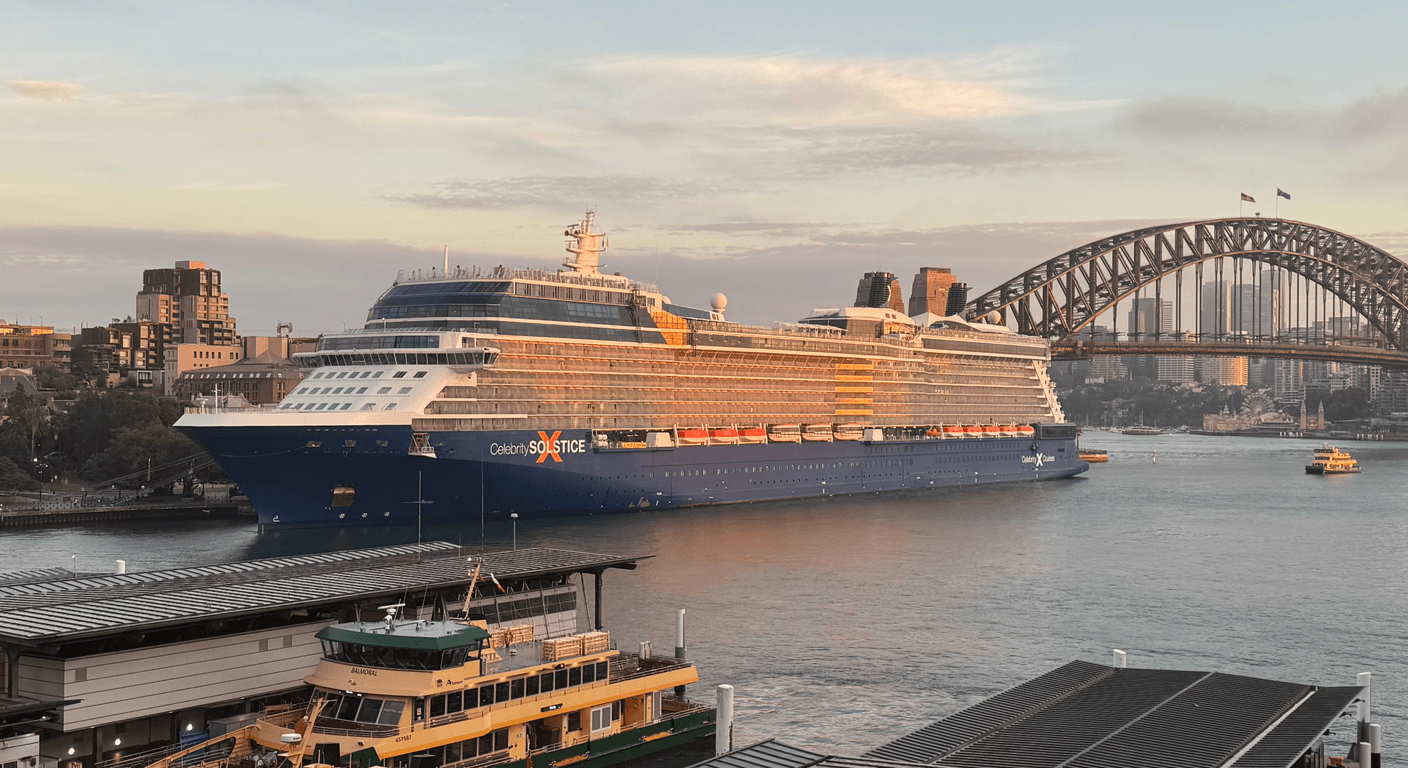
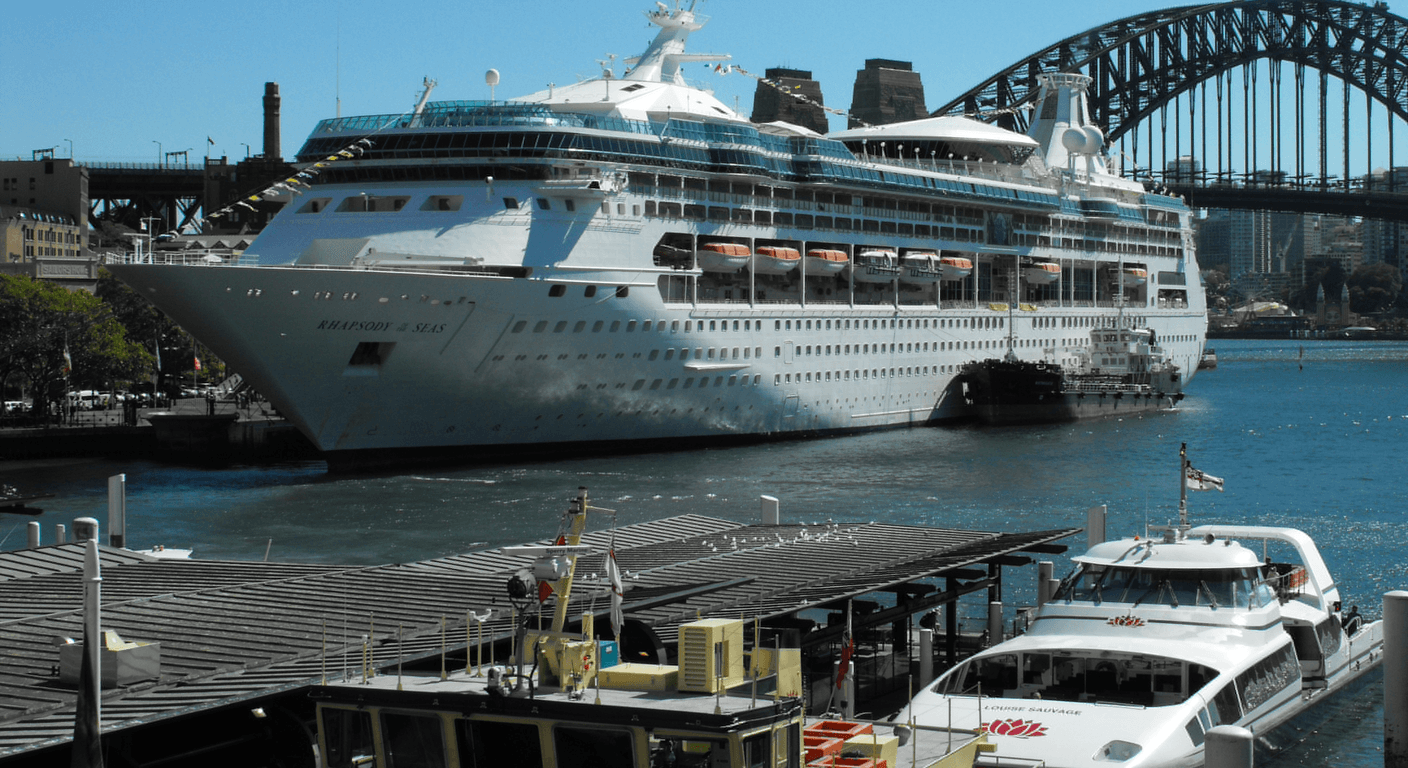
Terminals take planning. Sydney's Overseas Passenger Terminal and White Bay, Brisbane, Melbourne's Station Pier, Fremantle and Adelaide each have different transfers from the airport. Expect to need a taxi or rideshare in most cases, or a tram at Melbourne. Journey times weren't confirmed, so check the terminal's page and the relevant state journey planner. Porters usually take checked bags at the kerb. Tipping expectations weren't confirmed, so carry a little cash and ask the line.
What does embarkation day actually look like?
Clock times come from your boarding documents, not this guide, because lines allocate arrival windows. In general, you'll arrive at the terminal in your allocated slot, hand over checked bags, then have carry-on and checked luggage scanned. Then comes check-in with your passport and booking, a security photo, and boarding. The gap between your slot and a finished cabin tour can run well over an hour at busy terminals.
Scanned luggage is where confiscations happen. Carnival says it may confiscate any item at its sole discretion after security scanning of all luggage, and Princess says luggage will be scanned. If something is flagged, you won't get it back at the terminal on most lines. Pack the doubtful item at home instead.
Queues are the hard part. Ask for wheelchair or priority assistance in advance. If you can, take a seat while you wait, and keep medicines, documents and water in the bag you carry yourself. Cabins may not be ready on arrival, so most ships open the buffet and decks for early boarders. Eating lunch and waiting there is a perfectly good plan.
How do mobility, tenders and formal nights affect packing?
Terminals involve long corridors and gangways. If walking more than a short distance is tiring, book wheelchair assistance through the line's accessibility team before departure. Wheelchair and scooter booking procedures weren't confirmed. Note that Carnival prohibits hover boards, scooters and segways, so ask whether a mobility scooter is allowed under the line's own accessibility policy before you rely on one.
Tender ports use small boats from ship to shore, often with a step and a swell. Cabin step heights and bathroom dimensions weren't confirmed. Ask the line about accessible cabins, and look at deck plans with shower thresholds in mind. Wear flat, closed, non-slip shoes for tender days, and carry a small day bag with a hat, sunscreen and a lightweight rain jacket.
For clothes, think layers. Decks can be cool at night and in wind, even on warm itineraries. Formal nights are usually optional now, and dress codes vary, so check the line's guidance. A dark jacket or a dress that packs flat covers it.
A solo traveller's perspective: you carry everything yourself, and nobody holds your seat. Keep a photo of your medicines list on your phone, tell the line about any health needs when you book, and pack a small power adaptor (not a power board). A couple's perspective: split medicines between both carry-ons, so one lost bag doesn't leave you short, and share the heavy items across the bags.
What does a cruise cost, and what's the single supplement?
No fares or supplement percentages were confirmed for this guide, so none are quoted. Cruise fares are quoted per person on twin-share, and the price varies by line, cabin, season and itinerary. Ask the line or a travel agent for the all-in figure, including port charges, gratuities and drinks.
Solo travellers should look at the supplement before anything else. Many lines charge a single supplement, a loading on the twin-share fare for taking a cabin alone, and it can be steep. Some lines offer solo or studio cabins. For example, Royal Caribbean's Anthem of the Seas from Sydney in 2026-27 has studio cabins for one. Ask every line you consider whether it charges a supplement, what the loading is, and whether it offers solo fares or a share-match service.
Excess baggage can turn a cheap airfare into an expensive one. Rates weren't confirmed here, so check the airline's pricing for your fare type, and prepay online if possible. Ask about Seniors Card or pension-related discounts with the cruise line, an agent or a local transport provider. Some offers exist, and many travellers don't ask.
How reliable is any packing list?
Not completely. Confiscation is applied at the terminal's discretion, and no list can guarantee nothing will be flagged. Royal Caribbean says items not listed may still be prohibited, and Carnival says it may confiscate any item at its sole discretion. Staff can flag something that was fine on your last cruise.
Policies change. Many of these pages are Australian-site FAQs that the lines update. Confirm 2027 rules directly with your line before you pack, and keep a printout or screenshot of the page you relied on.
A YouTube video by LifeWellCruised on cruise packing was supplied as a reference. Its claims weren't confirmed, and nothing in this guide relies on it. Match anything you hear in videos against your line's own page.
Quick planning guide
| Ideal pace | Pack over a week, not the night before. Allow a day to sort medicines and paperwork. |
|---|---|
| Best months | Depends on the itinerary and season. Check the line's sailing calendar for your departure port. |
| Suggested stay | Fly in at least one night before a fly-cruise departure, so a delayed flight doesn't cost you the sailing. |
| Mobility level | Easy to Moderate. Terminal walks, gangways and tender ports are the pinch points. |
| Cost level | Varies widely. Ask the line for the twin-share fare, the solo fare and the airline's excess baggage rates in writing. |
| Comfort level | Cabins are compact. Soft bags and a packing list built around layers suit them better than hard cases. |
| Best for | First-time cruisers, solo travellers and anyone taking regular medication to sea. |
| Main planning consideration | Rules differ line by line, and security staff can confiscate items at their discretion. Check your own line's current list. |
Key takeaways
- Prohibited-items lists differ by cruise line, so check your own line's current page before you pack.
- Royal Caribbean lists clothing irons and garment steamers as prohibited.
- Carnival Australia allows one 750 ml bottle of wine or champagne per adult and prohibits hard liquor and beer.
- Princess and Carnival say non-compliant alcohol is discarded with no refund.
- Keep medicines in carry-on, in original packaging, and ask the line about CPAP, oxygen, sharps and fridge needs before you sail.
- Declare pre-existing conditions to your insurer, because onboard medical care is paid for.
Recommended partners and links
Indicative prices only — always confirm with the operator before booking.
Frequently asked questions
Can you take a power board on a cruise from Australia?
It depends on the line. Princess Cruises lists power strips, extension cords, multi-plug box outlets and surge-protected devices as prohibited, though its page hints some extension cords may pass inspection. Royal Caribbean's power board rule wasn't confirmed, so check your own line.
Can you bring alcohol on a Carnival cruise from Australia?
Carnival Australia allows wine or champagne up to one 750 ml bottle per adult aged 18 or over. It prohibits hard liquor and beer, and fortified wines over 15% alcohol by volume. Non-compliant alcohol is confiscated and discarded without compensation.
Should medications go in carry-on or checked luggage on a cruise?
Carry-on is the sensible choice, because checked bags can reach your cabin late. Keep medicines in original labelled packaging with a current prescription list. Carnival lists medical marijuana as prohibited, so check with your line if you use cannabis products.
Do you need approval to take a CPAP or oxygen concentrator on a cruise?
Contact the line's accessibility team well before departure and get approval in writing. The specific procedures weren't confirmed for this guide. Ask also about insulin pens, sharps disposal and fridge access.
Do solo cruisers pay a single supplement from Australian ports?
Many lines charge a loading on the twin-share fare for a cabin used by one person, and the amount varies. Some offer solo cabins, such as Royal Caribbean's Anthem of the Seas studio cabins from Sydney in 2026-27. Ask each line for the exact figure.
Want the next guide like this?
Choose your state, the subjects you care about, or both. We will let you know when a new guide lands. Email once a week at most, or a quiet phone notification on the day it publishes. No advertising, no sponsored content, and we never pass your details to anyone.
- Royal Caribbean Australia – What items are prohibited on a Royal Caribbean cruise ship?
- P&O Cruises Help Hub – Power outlets (cabins)
- Princess Cruises Australia – Pre-cruise FAQ
- Carnival Australia Help – Are there restrictions on what I can bring on board?
- Carnival Australia Help – (AU) Liquor and Beverage Policy
- LifeWellCruised (YouTube video, unconfirmed claims)