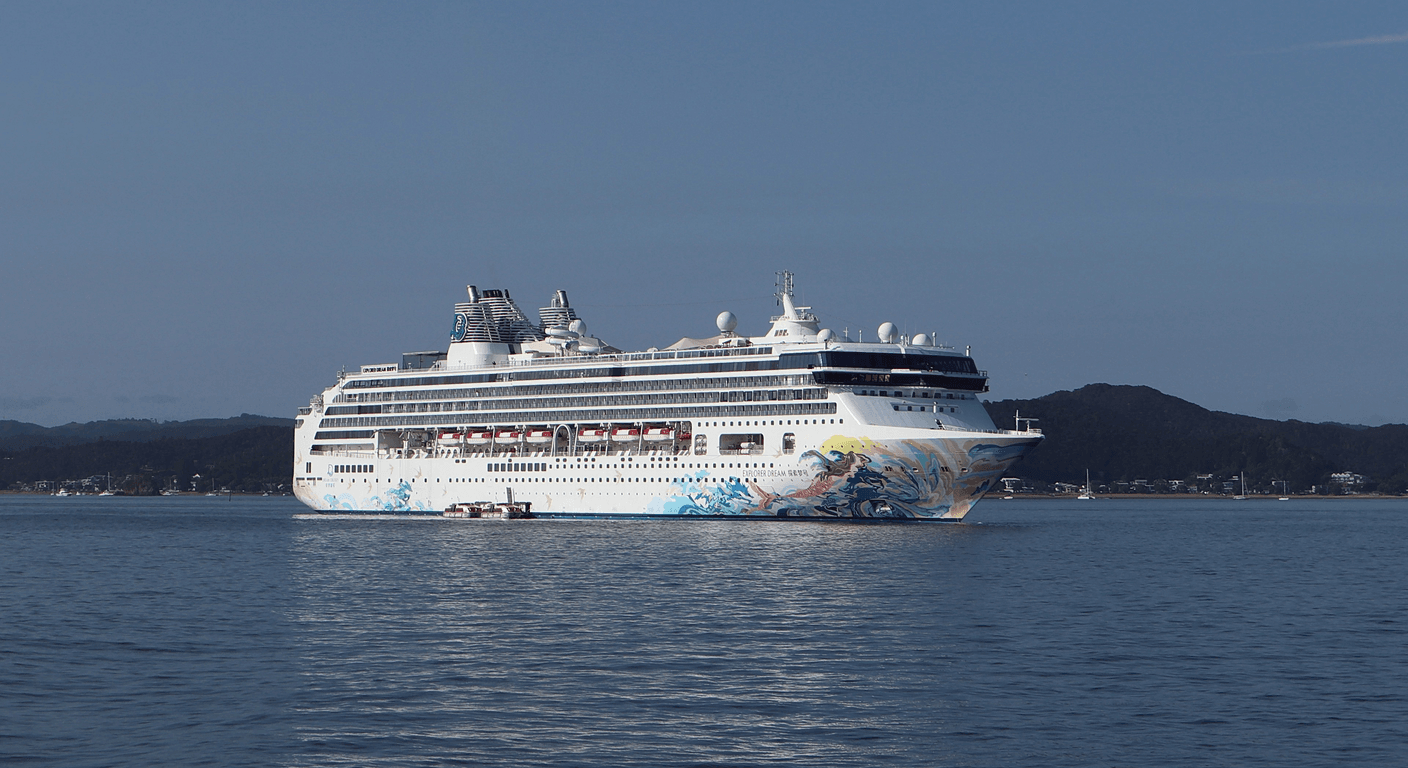
A cruise suits many first-time solo travellers over 50 because it solves the two biggest anxieties — daily logistics and the blank dinner hour — by combining accommodation, dining and built-in social opportunities on one ship. Australian homeport sailings from Sydney, Melbourne, Brisbane or Fremantle, reached by a simple domestic flight, are the easiest entry point, with a 5–10 night coastal itinerary ideal for a first trip. Ships are largely accessible, though tender ports can limit mobility, and the single supplement remains the main cost trade-off to plan for honestly.
Why a cruise suits first-time solo travellers so well
The single biggest anxiety for someone heading off alone for the first time isn't safety — it's the unstructured hours. What do you do with yourself at dinner when there's no one to turn to? A cruise answers that question before you even ask it. The ship is your hotel, your restaurant, your entertainment venue and, to a significant extent, your social club. You don't have to manufacture a plan for every moment.
There's also the practical relief of one unpacking. On a 10-night itinerary visiting four ports, you settle into your cabin on day one and that's it. No hauling luggage through unfamiliar train stations, no deciphering check-in procedures in a second language at 11pm. For someone managing a dodgy knee or just preferring to conserve energy for the things that matter, that's not a small thing.
Sociability is genuinely on tap rather than on demand. Shared dining tables, trivia nights, cooking demonstrations, shore excursion coaches — the ship provides constant, low-pressure opportunities to meet people. You can engage or retreat, and neither choice is awkward. Many first-time solo cruisers report that the social dimension surprised them: not overwhelming, just available.
The honest downsides — and they're real
The single supplement is the most significant financial reality. Most cruise cabins are priced per person based on double occupancy. When you travel alone, lines typically charge you between 50 and 100 percent extra to occupy that cabin solo. On a premium 14-night sailing, that can add AUD $2,000 or more to your fare. It's not a hidden fee — it's structural — but it catches first-timers off guard.
Some lines have responded with dedicated solo cabins, usually smaller interior rooms priced at or near the single-person rate without a supplement. Norwegian Cruise Line pioneered this with its Studio cabins. Princess and others have followed. These are worth seeking specifically, though availability is limited and they book out well ahead of departure. A 'guaranteed share' programme — where the line pairs you with a same-sex cabin-mate — exists on some itineraries and can eliminate the supplement entirely, though it's not for everyone.
The other honest downside is what some travellers discover mid-voyage: you can't easily leave. If the ship's social atmosphere doesn't suit you, if the entertainment grates, if you simply find the floating-resort environment more claustrophobic than liberating, there's nowhere to go until the next port. This is genuinely different from a land-based holiday where you can change hotels or routes. Go in with eyes open.
What does the ship day actually look like for a solo traveller?
Sea days are the test. Port days take care of themselves — there's somewhere to go and something to see. But a full day at sea, especially on a longer Pacific or repositioning voyage, is where you'll find out whether cruising suits your temperament. The ships themselves are designed to fill that time: pools, gyms, cooking classes, lectures, card rooms, libraries on some older vessels. The pace is genuinely relaxed rather than frenetic.
Dining arrangements vary by line. Some use open seating, meaning you turn up when you like and often share a table. Others assign fixed dining times and tables — which, for a solo traveller, can be either a gift (the same six people every night, conversation builds) or a mild ordeal (if the chemistry's wrong). It's worth asking the line's reservations team about dining flexibility before booking.
Most contemporary ships have a solo traveller meet-up — an informal gathering, usually on the first sea day, where the cruise director or a host brings solo passengers together. It sounds slightly organised, and it is, but it works. Many lasting cruise friendships start there. It's not compulsory, and you're under no obligation to stay beyond one drink.
How does it compare to a small-group land tour?
The main alternative that comes up for first-time solo travellers over 50 is the small-group guided tour — operators like Intrepid, APT, Scenic or Trafalgar, depending on budget and pace. These share some of the same advantages: built-in social structure, logistics handled, no daily decisions about where to sleep. The solo supplement issue is similar, though some operators offer guaranteed-share rooming.
Land tours tend to offer more cultural depth per day. You're moving through places, eating in local restaurants, spending real time in a neighbourhood rather than looking at it from a tender boat. If the destination is the point — if you're genuinely curious about, say, rural Japan or the Dalmatian coast — a land tour typically delivers more. A cruise delivers breadth: multiple ports, a sense of geographic sweep, and the ship itself as an experience.
Some experienced solo travellers do both, and in sequence. A first cruise to test the solo waters (and discover you actually enjoy your own company at sea), followed by a small-group land tour once confidence is established. Neither is inherently superior. They suit different moods and different moments in a solo travel life.
Which itineraries make sense for Australians departing solo?
Australian homeport sailings — departing Sydney, Melbourne, Brisbane or Fremantle — remove the complication of an international flight before you even board. Princess Cruises, Carnival and others operate regular Australian coastal and South Pacific itineraries that can be reached by domestic flight and a taxi. For a genuine first solo cruise, this is a sensible starting point: familiar currency, English everywhere, and a relatively short commitment of 7–10 nights.
For those wanting something further afield, Southeast Asia itineraries — typically departing or repositioning through Singapore — are well-suited to Australian travellers. Singapore is a straightforward 8-hour flight from Melbourne or Sydney, and the city itself is easy to navigate for a night or two pre-cruise. The itineraries often call at ports in Vietnam, Thailand, Malaysia and Japan, offering genuine variety without the Atlantic crossing that European cruises require.
Mediterranean sailings are the other popular choice, and they're excellent — but factor in the reality honestly. A Melbourne to Rome or Barcelona flight involves at least one stopover, roughly 22–26 hours of travel, and meaningful jet lag. A recovery night in the embarkation city before boarding is not optional; it's sensible planning. Travel insurance covering pre-existing conditions is essential, and Australian travellers should confirm their insurer's policy on this before any booking.
Practical considerations around accessibility and health
Modern cruise ships are among the more accessible travel environments available. Wide corridors, lifts to all decks, accessible cabin configurations, and medical facilities on board make them genuinely manageable for travellers with mobility considerations. That said, 'accessible ship' and 'accessible port' are two different things. Some tender ports — where passengers transfer from ship to shore in small boats — are awkward or impossible for travellers with significant mobility limitations. Ask the line specifically about tender versus pier ports on your itinerary.
The ship's medical centre is a reassurance, not a substitute for travel insurance. Cruise line medical care can be expensive, and evacuation costs in remote regions — the Pacific, Alaska, the Norwegian fjords — are substantial. Australian travellers with pre-existing conditions need to disclose these fully to their insurer and confirm coverage. The smartest travellers do this before they book the cruise, not after.
Solo travellers should also think about emergency contacts and ship communication. Mobile roaming at sea is expensive. Most ships offer Wi-Fi packages, which vary in quality and cost. Nominating a shore-based contact in Australia — someone who knows your itinerary and can be reached by the ship if needed — is basic prudent planning that's easy to overlook in the excitement of booking.
So — is it the best first solo holiday?
For a certain kind of traveller, yes. If you value structure, dislike the blank-page anxiety of fully independent travel, and are genuinely curious about the social dimension of cruising, it's hard to find a better introduction to solo travel. The logistics are handled, the social opportunity is built in, and you'll return with a clear sense of what you want from future trips.
For others — those who find organised environments slightly constraining, who prefer depth over breadth, or who simply want to disappear into a foreign city on their own terms — a cruise might feel like a comfortable cage. That's not a criticism of cruising; it's just an honest read of what the experience actually is.
The most useful thing is to be honest with yourself about which traveller you are before the deposit is paid. Talk to people who've done it. Read accounts from other solo travellers rather than marketing material. And if you're genuinely unsure, a short Australian coastal sailing — five or seven nights, departing from your nearest homeport — is a low-risk way to find out. You can always go further next time.
Quick planning guide
| Ideal pace | Slow-paced and relaxed, with sea days for downtime and port days for activity |
|---|---|
| Best months | Flexible — depends on itinerary type (Australian coastal, Southeast Asian or Mediterranean) |
| Suggested stay | 5–10 nights for a first solo cruise; longer premium sailings run to 14 nights |
| Mobility level | Easy on board (wide corridors, lifts, accessible cabins), though tender ports can be difficult for those with significant mobility limits |
| Cost level | Moderate to Premium — budget for a single supplement of 50–100% above the per-person double-occupancy fare |
| Comfort level | High — one unpacking, on-board medical facilities, and structured, low-pressure social opportunities |
| Best for | First-time solo travellers over 50 who want built-in structure and company without having to plan every day |
| Main planning consideration | Confirming travel insurance covers pre-existing conditions and budgeting honestly for the single supplement before booking |
Key takeaways
- A cruise eliminates the logistics that most intimidate first-time solo travellers: daily planning, nightly check-ins, and the blank-page dinner hour.
- The single supplement — typically 50–100% added to the per-person fare — is the biggest financial reality of solo cruising and must be budgeted for honestly.
- Dedicated solo cabins and guaranteed-share programmes exist on some lines and can significantly reduce or eliminate the single supplement.
- Australian homeport sailings are the lowest-friction starting point for a first solo cruise, removing the international flight from the equation.
- Mediterranean and Asian itineraries are popular with Australians, but long-haul flight time, jet lag and travel insurance for pre-existing conditions all need honest planning.
- Small-group land tours are the most comparable alternative: similar social structure, similar supplement issue, but typically more cultural depth per day.
Recommended partners and links
Indicative prices only — always confirm with the operator before booking.
Frequently asked questions
What is the single supplement on a cruise and how can I avoid it?
The single supplement is an additional charge — typically 50 to 100 percent of the per-person cabin fare — applied when one person occupies a cabin priced for two. You can reduce or avoid it by booking a dedicated solo cabin (offered by lines including Norwegian Cruise Line and, increasingly, Princess Cruises), joining a guaranteed-share programme where the line pairs you with a same-sex cabin-mate, or watching for promotional waivers that some lines offer in off-peak periods. Confirm availability and current pricing directly with the cruise line.
Are cruises safe for solo travellers over 50?
Cruise ships are among the more controlled and monitored travel environments available, with 24-hour security, onboard medical facilities and staff trained to assist passengers. For solo travellers over 50, the main safety considerations are practical rather than dramatic: ensuring travel insurance covers pre-existing conditions, knowing the medical centre's location on board, and having a shore-based emergency contact who knows your itinerary. Shore excursions in unfamiliar ports carry the same considerations as any international travel.
Which cruise lines offer solo cabins for Australian travellers?
Norwegian Cruise Line's Studio cabins are the best-known dedicated solo accommodation at sea, priced without a single supplement and including access to a solo-passenger lounge. Princess Cruises has added solo cabin options on several ships deployed in the Asia-Pacific region. Other lines periodically offer single-supplement waivers or smaller cabin categories at reduced solo rates. Availability changes with deployment, so confirm current options with each line's Australian reservations team or a cruise specialist before booking.
How does a cruise compare to a small-group tour for a first solo holiday?
Both offer built-in social structure and handled logistics, which is why they appeal to similar travellers. A cruise delivers breadth — multiple destinations, the ship as an experience in itself, and easy daily pacing. A small-group land tour typically offers more cultural depth, more time in each place, and more interaction with local environments. The single supplement issue applies to both. Travellers who prioritise destination experience over the journey itself often find a land tour more satisfying; those who enjoy the variety of ports and the self-contained nature of ship life tend to prefer cruising.
What should Australian solo travellers know about cruising to Europe or the Mediterranean?
Flying from Melbourne or Sydney to a Mediterranean embarkation port such as Rome, Barcelona or Athens involves at least one stopover and roughly 22–26 hours of travel each way. Jet lag is real and should be planned for: arriving at least one full day before boarding is strongly advisable. Travel insurance must be arranged before booking and must cover any pre-existing medical conditions — confirm this with your insurer in writing. Check current visa requirements for your specific ports of call through the Australian Department of Foreign Affairs and Trade at smartraveller.gov.au, as entry rules can change.