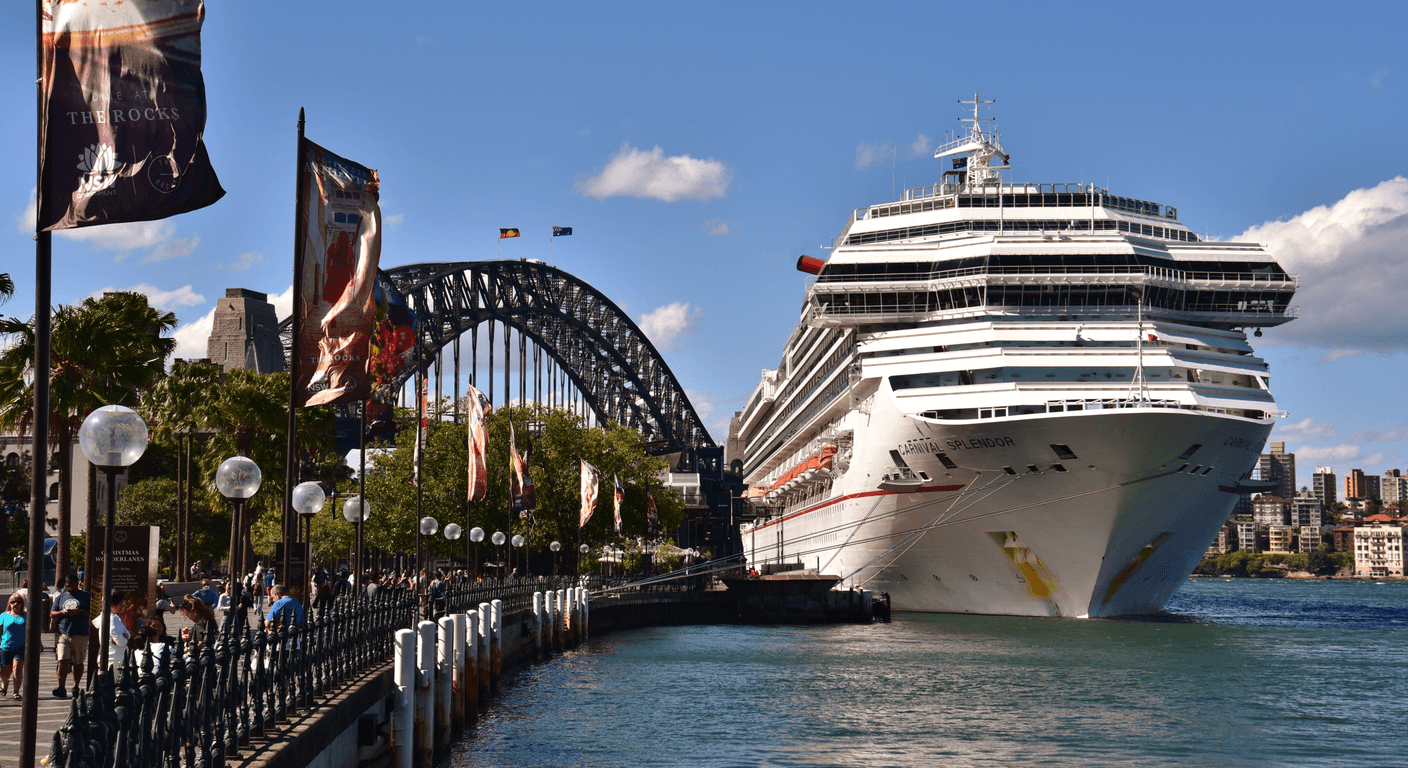
Cruising suits travellers over 50 with stable chronic conditions year-round, since the itinerary does the moving and meals and routines stay consistent onboard. The defining reality is the ship's medical centre — a well-equipped GP-style clinic that handles seasickness, minor injuries and stable conditions, but not major surgery or complex emergencies, which require costly evacuation ashore. Mobility is easy, though access depends on flights to embarkation ports and comprehensive travel insurance covering pre-existing conditions and evacuation.
What is actually on a cruise ship medical centre?
Most large cruise ships operate a medical centre staffed by at least one doctor and one or two nurses, typically located on a lower deck away from passenger areas. The setup varies considerably by ship size and operator, but a reasonably equipped centre will carry diagnostic equipment — ECG machines, X-ray capability, a small laboratory for blood tests — along with a dispensary of common medications and a few short-stay beds for observation.
This is not a hospital. Think of it more as a well-resourced GP clinic with some emergency first-response capability. For the kinds of issues that realistically arise on a voyage — a flare-up of a urinary tract infection, a twisted ankle on a shore excursion, an allergic reaction, a bout of gastroenteritis, seasickness that won't settle — the medical team is genuinely capable and professionally trained. For a 68-year-old woman travelling solo, that's meaningful peace of mind.
What it cannot do is equally worth understanding. There is no general anaesthetic theatre for major surgery. Complex cardiac interventions, serious strokes requiring clot-retrieval procedures, and major trauma are beyond what any ship's medical centre is equipped to manage definitively. The team can stabilise, but the next step is getting the patient ashore.
When does a serious case require evacuation to shore?
Medical evacuations from cruise ships are more common than passengers tend to realise — and they happen because the ship's medical team makes a sound clinical call, not because something has gone catastrophically wrong. A heart attack, a severe stroke, a suspected appendicitis, a major fall with possible spinal involvement: these are the scenarios where the captain and ship's doctor will coordinate with maritime rescue authorities or coast guard services to transfer the patient to a shore-based hospital.
The method of evacuation depends on where the ship is. If it's within reasonable distance of a port, the ship may divert and dock. In open water, a helicopter transfer or tender to a coast guard vessel may be arranged. In remote itineraries — parts of the South Pacific, Alaska's inside passage, some Antarctic voyages — the logistics can be complex and the nearest adequate hospital may be hours away. That reality should factor into destination choice, particularly for solo travellers who are managing serious health conditions.
Medical evacuation is expensive. A helicopter transfer alone can run into tens of thousands of dollars. Without travel insurance that specifically covers medical evacuation, you are personally liable for that cost. This is not a theoretical risk for travellers over 50 — it is the single most financially significant health scenario to plan for.
What does a consultation on board actually cost?
Here's the detail many first-time cruisers miss entirely: the medical centre is not included in your fare. Consultations are billed separately, typically at private rates, and charged to your onboard account. A standard consultation can run to around $150–$250 AUD or more depending on the cruise line and the nature of the visit — confirm indicative fees with your specific operator before sailing. Procedures, medications dispensed, IV fluids, diagnostic tests and any specialist equipment used are all itemised on top.
For Australian travellers, Medicare does not apply at sea beyond Australian territorial waters, and it provides no benefit for international cruise itineraries. Your private health insurance in Australia is similarly unlikely to cover you once you're offshore. The only financial safety net that realistically applies is comprehensive travel insurance taken out before departure.
Keep a copy of all receipts and medical documentation from any onboard treatment. Your insurer will require them. It's also worth checking whether your travel insurance policy requires you to notify the insurer before certain treatments — some do, even in emergencies. Read the product disclosure statement before you board, not after.
Prescription medications: what you need to bring and why
The ship's dispensary carries a range of common medications, but it is not a pharmacy. It will not reliably stock your specific brand of blood pressure medication, your particular formulation of thyroid medication, your cholesterol tablets or your diabetes management supplies. Do not plan to top up your regular prescriptions on board — plan to bring everything you need for the entire voyage, plus a buffer of at least five to seven extra days in case of delays, diversions or port disruptions.
For longer voyages of three weeks or more, this requires some forward planning with your GP and pharmacist in Australia. Medicare-subsidised prescriptions are sometimes limited in quantity per dispensing, so you may need to discuss a private script or a repeat authorisation to cover a longer supply. Do this at least four to six weeks before departure — not the week before sailing. Your GP may also be able to provide a letter summarising your conditions and current medications, which is useful both for the ship's doctor and for any shore-based hospital that might need to treat you.
Pack medications in their original labelled containers where possible, and split them across your carry-on luggage and checked bags if you're flying to the embarkation port — losing one bag should not mean losing all your medication. For passengers flying from Melbourne or Sydney to join a cruise in, say, Singapore or Athens, that pre-cruise flight is its own logistical consideration. The Australian Government's Smartraveller website has practical guidance on travelling with prescription medications internationally, including requirements for controlled substances.
Travel insurance: what to look for and what to disclose
Travel insurance for a cruise is not the same as standard travel insurance, and travel insurance for a traveller over 50 with any pre-existing conditions requires careful attention. Many standard policies exclude pre-existing conditions by default. If you have hypertension, type 2 diabetes, a history of cardiac events, arthritis, or any other ongoing condition — and most people in their late sixties have at least one — you need a policy that either covers those conditions or allows you to declare and cover them for an additional premium.
Non-disclosure is a serious risk. If you suffer a medical event on board that is connected to an undisclosed pre-existing condition, your insurer can decline the claim. That can leave you personally responsible for costs that run into hundreds of thousands of dollars for a complex evacuation and hospital admission overseas. The conversation with your insurer before you depart is not optional.
Look specifically for: medical evacuation cover (ideally unlimited or at least $1 million AUD), cover for pre-existing conditions, cruise-specific cover for missed ports and itinerary changes due to medical reasons, and 24-hour emergency assistance. Compare policies through a licensed insurance comparison service or directly with specialist travel insurers. CLIA Australia's website at cruising.org.au is a reasonable starting point for understanding what cruise-specific cover typically involves. Confirm all details with your chosen provider directly.
Managing chronic conditions at sea: practical considerations
Cruising is genuinely well-suited to many travellers managing stable chronic conditions. The itinerary does the moving for you; you sleep in the same bed each night; meals are readily available and dietary needs can often be catered for with advance notice. For someone managing, say, well-controlled type 2 diabetes or stable heart disease, a cruise is often a more medically manageable holiday than one involving constant travel between hotels.
That said, a few practical realities are worth noting. Altitude is not relevant at sea, but heat and humidity on tropical itineraries can affect hydration, blood pressure and energy levels more than passengers expect. Time zone changes on longer itineraries — particularly on repositioning cruises from Australia to Europe — can disrupt medication timing, especially for insulin-dependent diabetics and those on medications that require strict timing. Discuss this specifically with your GP before departure.
Seasickness, worth mentioning plainly, is a real possibility even for experienced cruisers, and it can be surprisingly debilitating. The ship's medical centre stocks anti-nausea medications, but coming prepared with your own supply — whether prescription patches, over-the-counter tablets or acupressure bands — is sensible. Modern large ships are stabilised and generally handle swell well, but a rough night in the Tasman or the Bay of Biscay is a different matter from a glassy harbour.
Before you board: a practical pre-cruise health checklist
A GP appointment four to six weeks before departure is worth every minute. Bring your itinerary, your full medication list, and any questions about destination-specific health risks — vaccinations required or recommended, malaria prophylaxis if relevant, food and water safety in ports of call. For Australian travellers, the Smartraveller website and the Therapeutic Goods Administration both carry destination health information worth reviewing.
Carry a written medical summary — one page, in plain English — with your conditions, medications (generic names, not just brand names), allergies, blood type if you know it, and the contact details of your GP back home. Keep one copy in your travel documents, one in your cabin, and consider emailing a copy to a trusted family member or friend in Australia. For a solo traveller, that simple document can make an enormous difference if you're ever unable to speak for yourself in a medical situation.
Finally, register with Smartraveller before any international cruise departure. It's free, takes five minutes at smartraveller.gov.au, and means the Australian Government can contact you or your nominated contacts in an emergency. It's the kind of quiet, sensible preparation that requires no drama and costs nothing — which is exactly the point.
Quick planning guide
| Ideal pace | Relaxed — the itinerary moves for you rather than requiring constant transfers |
|---|---|
| Best months | Year-round, though tropical heat/humidity and repositioning-cruise time-zone shifts need planning |
| Suggested stay | Standard voyages are manageable; trips of three weeks or more need extra medication planning |
| Mobility level | Easy — well suited to stable chronic conditions, with meals and routine staying consistent |
| Cost level | Premium extras apply — consultations run roughly $150–$250 AUD, evacuation can cost tens of thousands |
| Comfort level | High for stable, well-managed conditions; limited for complex or acute medical needs |
| Best for | Solo travellers over 50 managing stable chronic health conditions |
| Main planning consideration | Comprehensive travel insurance covering pre-existing conditions and medical evacuation, arranged before departure |
Key takeaways
- A cruise ship medical centre can manage seasickness, minor injuries and stable chronic conditions, but is not equipped for major surgery or complex emergencies.
- Medical evacuations to shore hospitals are arranged when the ship's doctor determines the patient needs care beyond what the vessel can provide — and they are expensive without adequate insurance.
- Onboard medical consultations are charged separately from your fare at private rates; Medicare and most Australian private health insurance do not apply at sea.
- Bring your full prescription medication supply for the entire voyage plus at least five to seven extra days — do not rely on the ship's dispensary for your regular medications.
- Travel insurance for cruisers over 50 must specifically cover pre-existing conditions and medical evacuation; non-disclosure of conditions can void a claim entirely.
- A one-page written medical summary — conditions, medications, allergies, GP contact — is one of the most practical things a solo traveller can carry on board.
Recommended partners and links
Indicative prices only — always confirm with the operator before booking.
Frequently asked questions
Does a cruise ship have a doctor on board?
Most large cruise ships carry at least one doctor and one or two nurses in an onboard medical centre. The centre is equipped to handle common issues such as seasickness, infections, minor injuries and monitoring of stable chronic conditions, but it is not a hospital and cannot perform major surgery.
Is the cruise ship medical centre included in the fare?
No. Consultations, medications dispensed, diagnostic tests and procedures are all charged separately to your onboard account at private rates. Medicare does not apply beyond Australian territorial waters, and most Australian private health insurance policies do not cover treatment at sea on international itineraries.
What happens if you have a medical emergency on a cruise?
The ship's medical team will stabilise the patient, and if the condition is beyond the ship's capability to manage — such as a serious cardiac event, stroke or major trauma — the captain will coordinate a medical evacuation to a shore-based hospital. This may involve diverting to the nearest port, a helicopter transfer or a coast guard handover, depending on location.
Can I get my prescription medications on a cruise ship?
The ship's dispensary carries a limited range of common medications, but you cannot rely on it to stock your specific regular prescriptions. Bring a full supply for the entire voyage plus several extra days as a buffer, in original labelled containers. Discuss obtaining an adequate supply with your GP and pharmacist at least four to six weeks before departure.
What travel insurance do I need for a cruise if I have pre-existing conditions?
You need a policy that specifically covers your pre-existing conditions — either by default or through a declared and accepted extension — as well as medical evacuation cover. Non-disclosure of pre-existing conditions can result in a claim being denied. Look for cruise-specific policies and compare options through licensed providers; confirm all terms directly with your insurer before purchasing.