Cruising from Station Pier in Melbourne suits travellers over 50 well: no flying required, embarkation is straightforward, and itineraries run from three-night Tasmanian hops to 14-night New Zealand roundtrips. Carnival, Princess, Royal Caribbean and P&O Australia are the main lines sailing ex-Melbourne seasonally, mostly October to April. Mobility rating: Moderate (gangways and tender ports require some agility). Fares start around $150–$200 per person per night for an inside cabin; confirm current sailings and pricing directly with each line.
Why Melbourne Is a Genuinely Good Place to Start a Cruise
Station Pier sits about six kilometres from Melbourne's CBD — a fifteen-minute taxi ride, a straightforward Skybus-to-tram connection, or a direct hire car from anywhere in metropolitan Victoria. No airport. No two-hour check-in queue at a terminal designed for someone half your age. You drive or ride in, hand over your bags at the drop zone, and walk aboard. That's a real advantage that Sydneysiders flying to Brisbane or Perth to join a ship don't have.
The pier itself is flat and accessible at street level, though the gangway angle varies with the tide and the size of the ship. On a larger vessel like a Princess Grand-class ship, the gangway is wide and gently graded; on a smaller expedition-style ship it can be a steeper, narrower affair. If you have a hip replacement, a dodgy knee or use a walking stick, tell the cruise line at booking — not at the pier. Request an accessible cabin (they go fast) and ask specifically about gangway access on your sailing date.
Port Melbourne has no grand cruise terminal shopping precinct, and that's fine. There's a small waiting lounge, toilets, and a café. The real virtue is speed: most passengers are aboard within ninety minutes of arriving at the pier. Compare that to a full international airport experience and the maths is obvious.
Which Lines Actually Sail From Melbourne, and When?
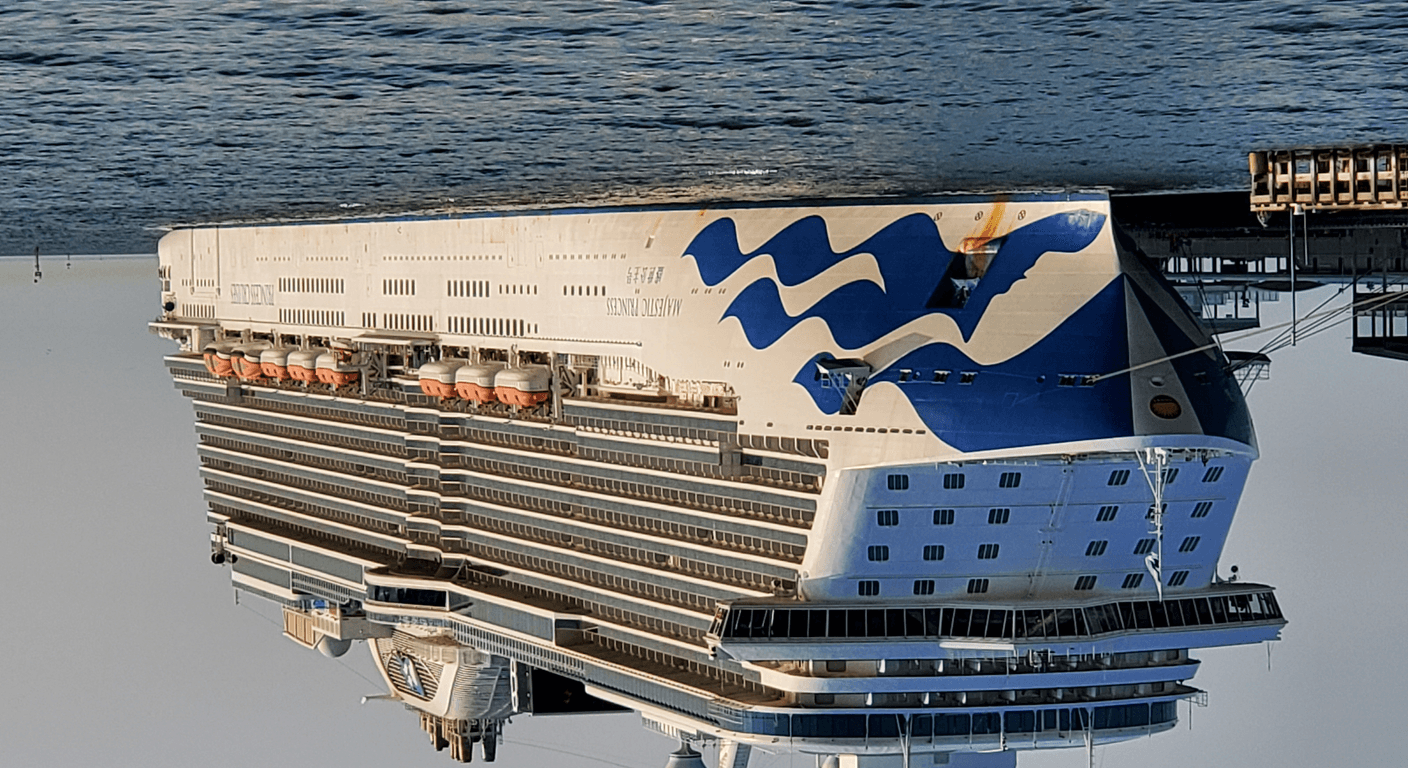
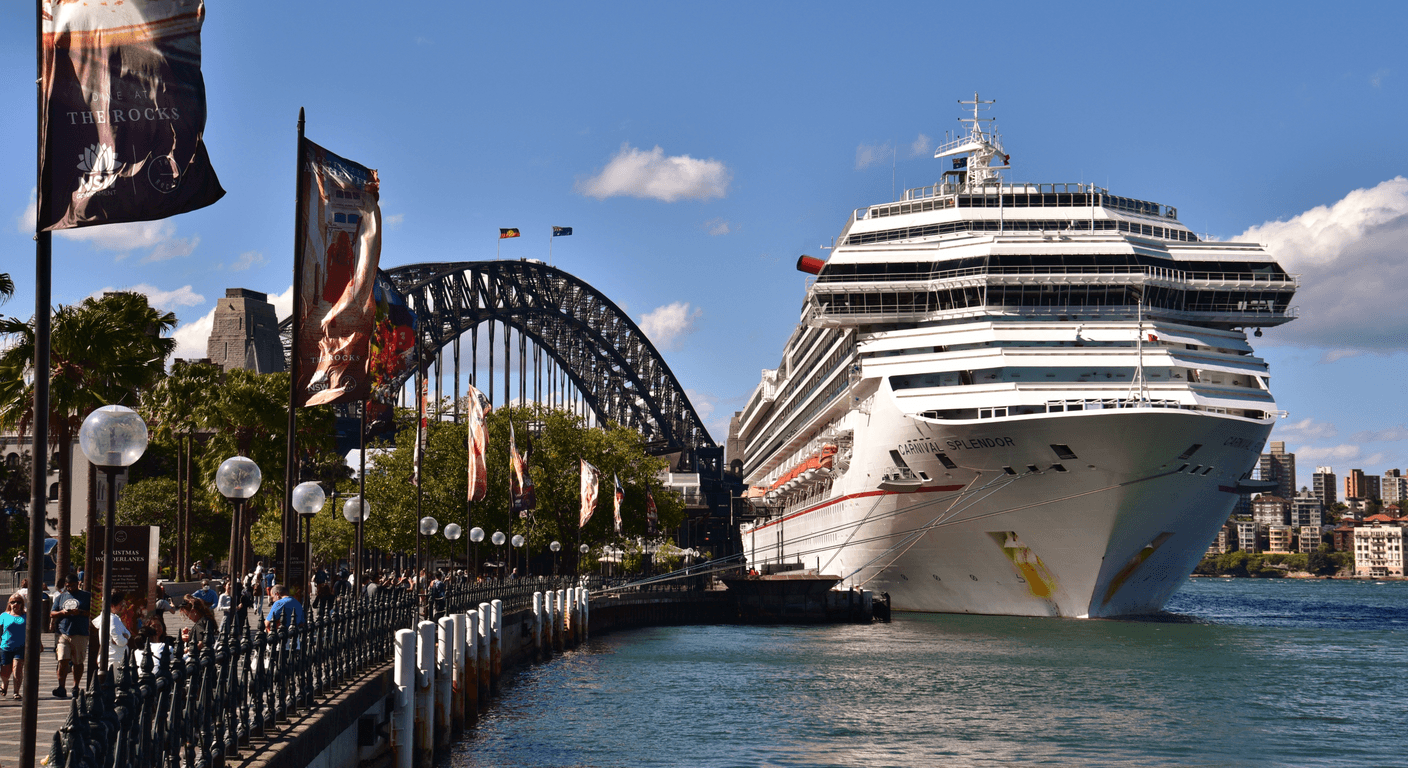
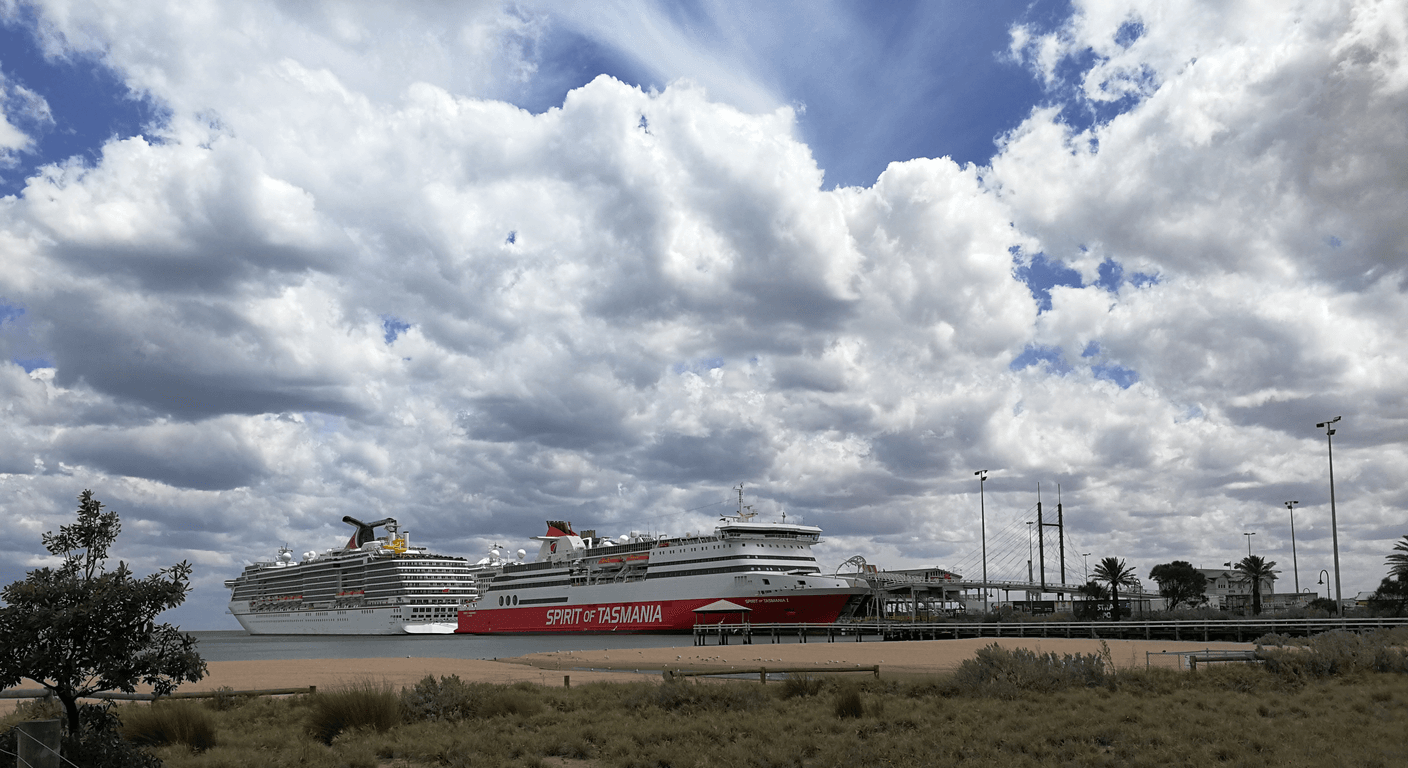
The honest answer is: fewer than you'd think, and more seasonally than most marketing implies. Princess Cruises is the most consistent ex-Melbourne operator, running Tasmanian, New Zealand and South Pacific itineraries aboard ships including Sun Princess and Grand-class vessels through the October-to-April season. Carnival Cruise Line runs shorter three-to-seven-night Tasmanian and Sydney runs, pitched at a slightly younger, louder demographic but perfectly fine for anyone who packs earplugs and books a quieter mid-ship cabin. Royal Caribbean has tested ex-Melbourne sailings with Ovation of the Seas and similar Quantum-class ships — spectacular vessels, though the activity-park atmosphere suits families more than a 69-year-old who wants to read on a balcony.
P&O Australia, now operating under the Carnival Corporation umbrella and sailing Pacific Explorer among other ships, has historically offered some of the more affordable ex-Melbourne options, including short Bass Strait runs. Confirm their current ex-Melbourne schedule directly, as the line's Australian deployment has shifted post-pandemic. Cunard's Queen Mary 2 and other world-voyage ships occasionally call at or depart from Melbourne on segment bookings — a very different proposition, more formal and considerably more expensive, but worth knowing about if you want a longer Atlantic or Asian segment without flying to a turnaround port.
Winter departures (June to August) from Melbourne are rare and mostly repositioning sailings. If you're flexible on timing, a repositioning cruise — say, Melbourne to Sydney or Melbourne to Singapore — can offer exceptional value, sometimes 30 to 40 percent below equivalent return fares, because the line needs to move the ship rather than fill a marquee itinerary. They're almost always one-way, so factor in a return flight or train.
What Do the Itineraries Actually Look Like?
The three most common ex-Melbourne itinerary shapes are: the Tasmanian loop (three to seven nights, calling at Hobart, Port Arthur by tender, sometimes Burnie or Devonport), the New Zealand roundtrip (ten to fourteen nights, typically Milford Sound, Dunedin, Christchurch/Akaroa, Wellington, Auckland — occasionally reversed), and the South Pacific run (twelve to eighteen nights, Noumea, Isle of Pines, Vanuatu, sometimes Fiji). A fourth option, less common, is the repositioning or world-voyage segment, which can take you as far as Singapore, Dubai or Southampton.
The Tasmanian run is the most accessible for a first-timer or someone who wants to test cruise life without committing to a fortnight. Hobart is a genuine port — you walk off the ship directly onto Sullivan's Cove — and the MONA ferry runs from the waterfront. Port Arthur, by contrast, is a tender port: a small boat ferries you from the ship to a jetty, which involves a step down and some swell. Anyone with significant mobility concerns should check with the line whether Port Arthur is a mandatory stop or skippable.
New Zealand itineraries are the sweet spot for many over-50 Victorians. Milford Sound is almost always done as a scenic cruising day (the ship sails in and out; you watch from deck or your balcony with a coffee), which means no tender, no walking tour, no pressure. Akaroa involves a tender to a charming French-inflected town; Dunedin docks at Port Chalmers, about twenty-five minutes by shuttle from the city centre. Wellington and Auckland are full berth ports with easy city access. The scenery on the Tasman crossing and through Fiordland is genuinely worth the two sea days each way.
What Does a Typical Embarkation Day Look Like?
Embarkation at Station Pier generally opens between 10:30 and 11:00 am, with staggered check-in times now standard across most lines. Your boarding group is assigned at booking — if you're in a balcony or suite category, you'll typically board earlier, which is worth the modest cabin upgrade price if you want a relaxed start. Aim to arrive at the pier about thirty minutes before your assigned window. Luggage drop happens at the kerb; your bags arrive in your cabin by early afternoon.
Allow roughly forty-five minutes from arriving at the pier to being aboard: bag drop (ten minutes), security screening (ten to fifteen minutes), check-in and photo (ten minutes), gangway (five minutes). The ship's buffet is open from the moment boarding begins. Cabins are typically available from 1:00 pm, sometimes 1:30 pm — the muster drill (now mostly done via the app or stateroom TV on modern ships, not the old full-deck assembly) needs to be completed before the ship sails, usually around 5:00 or 6:00 pm.
If you're driving to the pier, short-term drop-off is free; long-term parking at the pier is available and managed by Port of Melbourne — budget around $25–$35 per day (confirm current rates at portofmelbourne.com). A taxi from the CBD runs roughly $20–$30. An Uber is similar. The 109 tram from Collins Street runs to Port Melbourne but stops about 800 metres from the terminal, which is manageable with a carry-on but less ideal with a full suitcase. The direct option is the Skybus cruise transfer service, which picks up at Southern Cross Station — check skybus.com.au for current schedules and fares.
Costs, Cabins and the Single Supplement Reality
Inside cabins on a seven-night Tasmanian cruise with Carnival or Princess start at roughly $120–$160 per person per night based on double occupancy. A balcony cabin on the same sailing runs roughly $180–$260 per person per night. These are indicative figures only — cruise pricing is dynamic and shifts constantly with availability and demand. Always confirm current fares directly with the line. The all-inclusive nature of cruise pricing (meals, most entertainment, port charges on many lines) makes direct comparison with a land-based holiday genuinely complex: factor in what you're not paying for.
The single supplement is the issue no cruise brochure leads with. On most lines, a solo traveller occupying a double cabin pays 100 percent of the double rate — meaning you pay for two people and travel alone. That's the industry default, and it's punishing. Some lines (Princess, Royal Caribbean) offer a limited number of solo cabins — smaller, inside, but priced at a true single rate, sometimes with a single supplement of only 25–50 percent above the per-person double rate. These sell out fast and are rarely advertised prominently. Call the line directly and ask specifically about solo cabin availability on your sailing. Don't rely on the website alone.
Share-matching programmes — where the line pairs two same-gender solo travellers in a twin cabin to split the cost — exist on some older lines but are uncommon on mainstream contemporary cruise lines sailing from Australia. If budget is the constraint, a repositioning sailing in an inside cabin is often the best value-per-night available in Australian cruising. Watch for early-booking deals and last-minute inventory releases, though last-minute solo cabin availability is genuinely unpredictable.
Practical Considerations for Over-50 Travellers
Travel insurance is non-negotiable, and it's trickier than it sounds. Standard policies often exclude pre-existing conditions unless you declare them and pay the loading — and at 69, there's a reasonable chance you have something declarable (a stent, managed diabetes, a history of anything cardiac). Get a specialist policy through a provider like Cover-More, Insure4Less or the Australian Seniors Insurance Agency, and read the medical evacuation clause carefully. A medical evacuation from Milford Sound or mid-Tasman is not a hypothetical. It happens. The cost without cover is extraordinary.
Onboard medical centres on modern cruise ships are equipped for stabilisation and basic procedures, not surgery. The ship's doctor can handle seasickness, a sprained ankle, a blood pressure spike. They cannot perform a cardiac catheterisation. Understand that distinction before you sail. Carry a full list of your medications (generic names, not just brand names) and a letter from your GP summarising your medical history. Pharmacies in Hobart, Dunedin and Auckland are well-stocked; remote ports are not.
If you take prescription medications, carry enough for the full voyage plus five extra days. Some medications — particularly those containing pseudoephedrine or certain controlled substances — have different legal status in New Zealand and Pacific Island nations. Check with the relevant embassy or a travel medicine clinic before you sail. The Smartraveller website (smartraveller.gov.au) has country-specific medication advice and is worth reading for every destination on your itinerary. Victorian Seniors Card holders should also check whether their private health insurer offers any cruise-related travel benefit — a few do, and it's routinely missed.
A Solo Traveller's Perspective vs. A Couple's Perspective
Solo traveller perspective: The social architecture of a cruise ship is genuinely solo-friendly in a way that a resort is not. Dining is the key variable — most lines now offer flexible dining (choose your own time, sit at a shared table or alone), which means you can eat with company when you want it and with a book when you don't. The bar, the observation deck at dusk, the trivia nights — all easy to join without a partner. The single supplement is the main grievance, and it's legitimate. On a fourteen-night New Zealand sailing, paying solo supplement on a balcony cabin can add $2,000–$3,500 to the total cost. That's real money. A solo inside cabin, if available, changes the calculation entirely.
Couple's perspective: A cruise is close to the ideal structure for two people who want the same level of activity but aren't always sure what that is. One partner can do the shore excursion; the other stays aboard and reads. The ship is the base camp. Balcony cabins for couples are genuinely worth the premium — the ability to have breakfast on your own deck as you sail into Milford Sound is one of those experiences that earns its cost without needing superlatives. The main friction point for couples is cabin size: even a balcony cabin on a contemporary cruise ship is compact, and if you're used to a hotel suite, the storage requires organisation.
Both perspectives: Sea days are not wasted days on a well-run ship. A Tasman crossing in good weather, with a book, a decent coffee, a spa treatment and an afternoon nap, is a specific kind of pleasure that's hard to replicate on land. In rough weather — and the Tasman and the Southern Ocean can be rough — it's a different story. Seasickness patches (Scopolamine) prescribed by your GP before departure are far more effective than over-the-counter options. Don't wait until you're three hours out of Melbourne to discover this.
Quick planning guide
| Ideal pace | Allow one full day in Melbourne before embarkation; build in a rest day on arrival back |
|---|---|
| Best months | October to April for Southern Ocean crossings; July to August for rare winter departures |
| Suggested stay | 7 to 14 nights for a satisfying itinerary; shorter 3–5 night runs suit first-timers |
| Mobility level | Moderate — gangways, tender ports and some uneven dock surfaces; request accessible cabin early |
| Cost level | Around $150–$250 per person per night all-inclusive for a balcony cabin; inside cabins from roughly $120 per person per night |
| Comfort level | High on modern ships; gangway angle and tender transfers can challenge those with hip or knee issues |
| Best for | Victorians wanting a port-to-door holiday, solo male travellers managing their own logistics, couples wanting a stress-free Southern summer |
| Main planning consideration | Single supplement is steep on most lines — budget 50–100% above the per-person double rate unless you book a solo cabin or join a share-match programme |
Key takeaways
- Station Pier in Port Melbourne is one of Australia's most accessible cruise departure points — no airport, no flight, straightforward embarkation for Victorians.
- Princess Cruises is the most consistent ex-Melbourne operator; Carnival, Royal Caribbean and P&O Australia also sail seasonally — confirm current schedules directly with each line.
- Inside cabin fares start at roughly $120–$160 per person per night based on double occupancy; balcony cabins run roughly $180–$260 — all indicative, all subject to change.
- Solo travellers face a single supplement of up to 100% on most lines; ask specifically about solo cabin availability, which is limited and sells out fast.
- Travel insurance must cover pre-existing conditions and medical evacuation — standard policies often don't, so use a specialist provider and read the clause carefully.
- A repositioning sailing (Melbourne to Sydney, or Melbourne to Singapore) can offer 30–40% savings over a standard return itinerary and is worth considering if you're flexible on dates.
Recommended partners and links
Indicative prices only — always confirm with the operator before booking.
Frequently asked questions
Which cruise lines depart from Melbourne's Station Pier?
Princess Cruises, Carnival Cruise Line, Royal Caribbean and P&O Australia have all operated ex-Melbourne sailings, primarily between October and April. Cunard world-voyage ships occasionally offer Melbourne departure segments. Schedules change each season — confirm directly with each line's Australian website before booking.
How much does a cruise from Melbourne cost in Australian dollars?
Inside cabin fares on a seven-to-fourteen-night ex-Melbourne cruise start at roughly $120–$160 per person per night based on two people sharing. Balcony cabins run roughly $180–$260 per person per night. Pricing is dynamic; always confirm current fares with the cruise line directly, as these figures are indicative only.
Is cruising from Melbourne suitable for passengers with mobility issues?
Generally yes, with caveats. The pier is flat and accessible, but gangway angles vary with tide and ship size. Tender ports — Port Arthur, Akaroa — require stepping into a small boat, which can be difficult for those with hip or knee problems. Request an accessible cabin at booking, not on arrival, as they sell out early.
Do I pay a single supplement cruising from Melbourne as a solo traveller?
Yes, on most lines. The industry standard is 100% single supplement — you pay for two people and travel alone. Some lines offer a limited number of solo cabins at a reduced supplement (25–50% above the per-person double rate). Call the cruise line directly and ask about solo cabin availability on your specific sailing; the website often doesn't show them.
What travel insurance do I need for a cruise from Melbourne?
You need a policy that explicitly covers pre-existing medical conditions (declared and paid for) and includes medical evacuation cover. Standard travel insurance often excludes pre-existing conditions. Use a specialist provider — Cover-More, Insure4Less or the Australian Seniors Insurance Agency are worth comparing — and read the evacuation clause before purchasing.