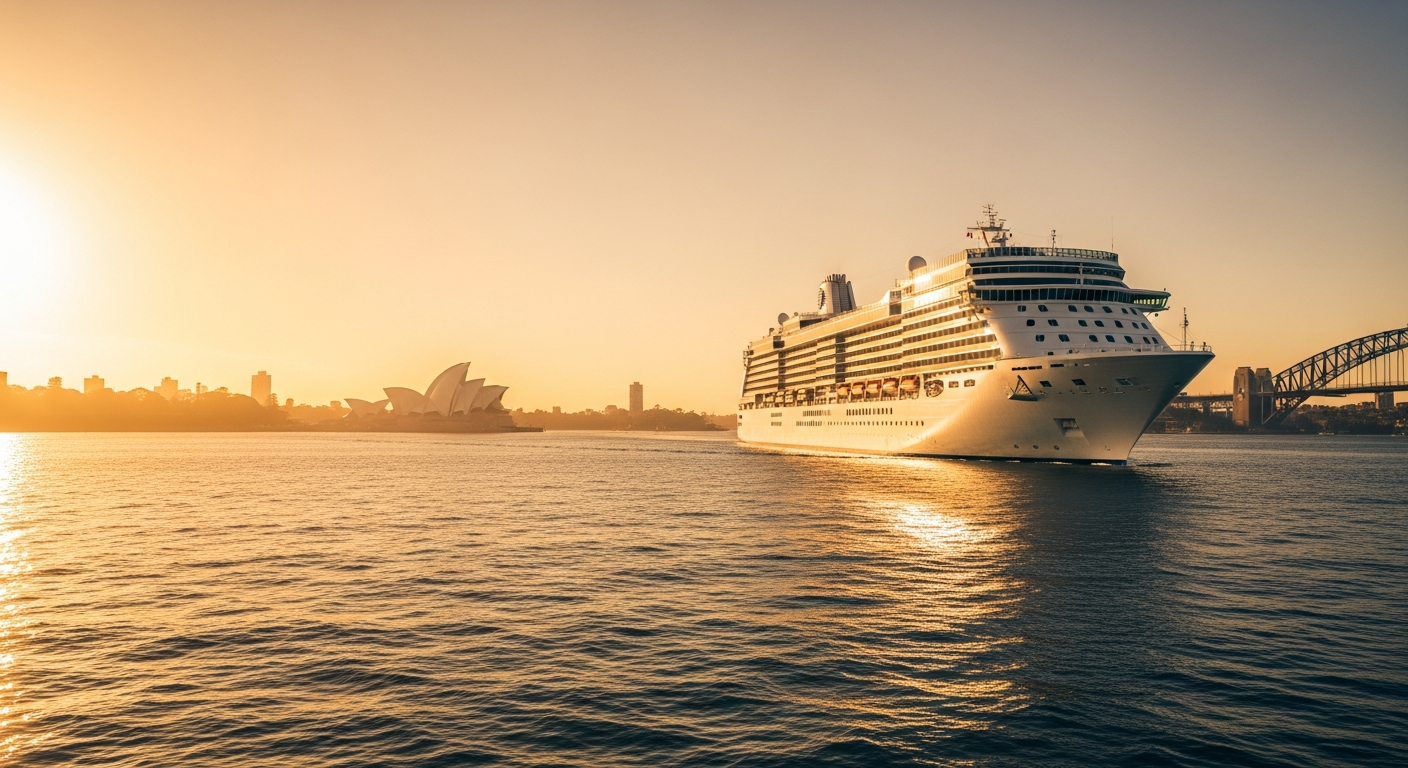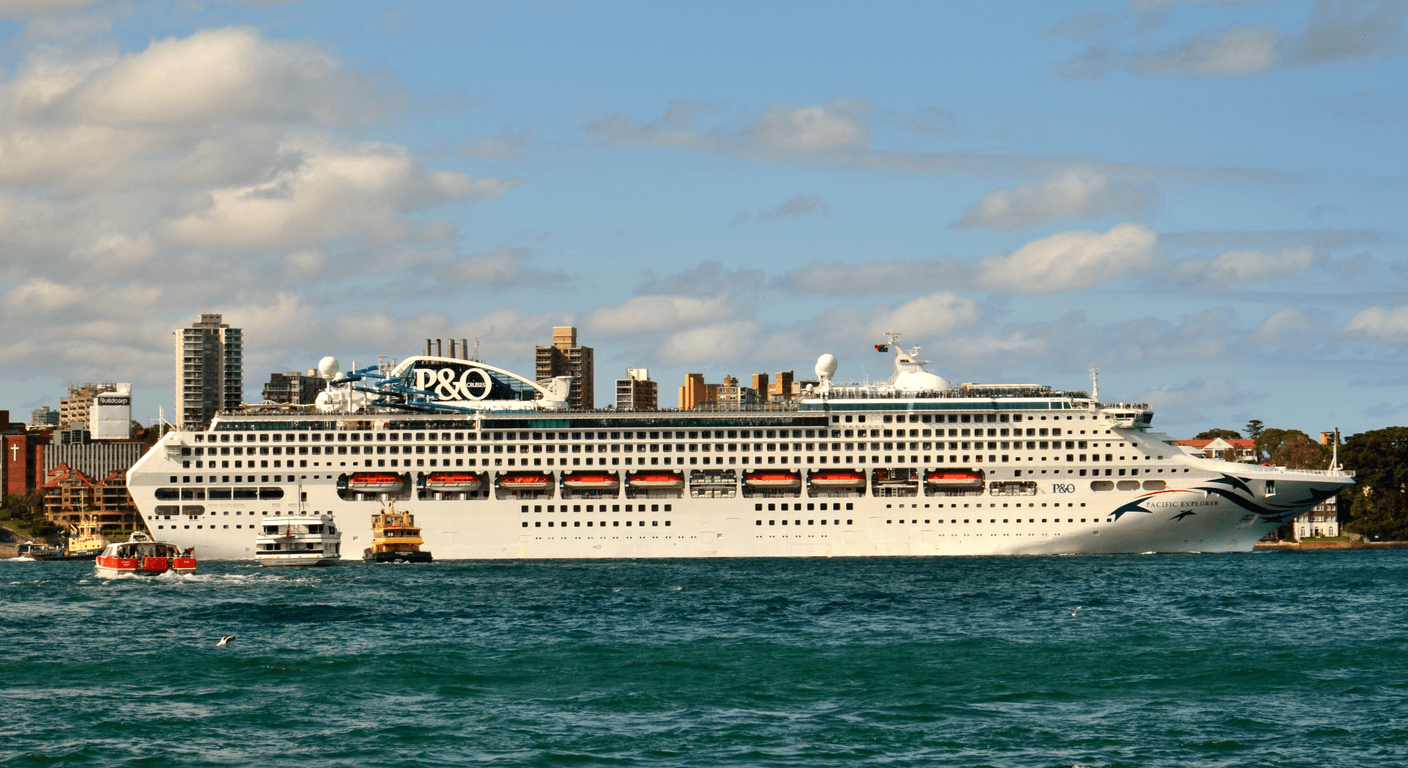
Sydney's Overseas Passenger Terminal and White Bay Cruise Terminal make it Australia's busiest cruise home port, letting Victorian travellers reach their ship by overnight XPT train rather than flying. Sailings run seven to fourteen nights to the South Pacific, or around two weeks to New Zealand, with the sailaway beneath the Harbour Bridge as the signature moment. Mobility is generally easy at OPT with lifts and wheelchair assist, though tendering into smaller Pacific islands and White Bay's lack of direct public transport both need advance planning.
Why Sydney Works So Well as a Home Port for Over-50s
The fundamental appeal of sailing from Sydney is straightforward: you sidestep the airport entirely. No early-morning security queues, no 23-kilogram baggage calculations, no middle seat between Melbourne and Los Angeles. You travel to Sydney by whatever means suits you, sleep in a proper bed the night before, and walk — or roll your suitcase — onto a ship the next day. For travellers in their 60s and early 70s, that reduction in pre-trip stress is not a small thing.
Sydney also offers genuine itinerary variety from a single port. The South Pacific circuit — Noumea, Isle of Pines, Mystery Island, Port Vila, Lifou — remains the bread-and-butter run, typically seven to fourteen nights. New Zealand voyages cover the Fiords, Wellington, and the South Island in a more substantial two-week format. Queensland coastal runs stopping at Brisbane, the Whitsundays, and Cairns suit travellers who want to see more of their own country without flying between stops. None of these require a repositioning flight, which is the point.
For solo travellers in particular, the home-port model reduces the logistical complexity that can make international cruise departures feel daunting. Arriving in Sydney the evening before, staying near Circular Quay or the CBD, and transferring to the terminal in the morning is a manageable, repeatable routine that gets easier with experience.
The Two Terminals: Overseas Passenger Terminal vs White Bay
Sydney operates two cruise terminals, and knowing which one your ship uses matters enormously on embarkation day. The Overseas Passenger Terminal (OPT) sits at Circular Quay, directly beneath the Harbour Bridge, which is one of the great embarkation views in world cruising. It is close to the CBD, within walking distance of most Circular Quay hotels, and well served by public transport. The terminal building has lifts and is generally accessible, though the gangway angle can vary with tide. Check with the Port Authority of NSW at portauthoritynsw.com.au for current accessibility detail before you travel.
White Bay Cruise Terminal sits about four kilometres west of the CBD in Rozelle. It handles larger ships and overflow scheduling but has no direct public transport link of its own — you will need a taxi, rideshare, or a shuttle service to get there. The Port Authority of NSW typically arranges a paid shuttle from the CBD on cruise days, and details are published on their website closer to each sailing date. Factor this into your embarkation morning plan and do not assume the logistics are identical to OPT.
Your cruise line will confirm your terminal allocation in your final documents, usually two to three weeks before departure. Do not rely on habit or assumption from a previous sailing — ships rotate between terminals based on scheduling and berth availability. Confirming this detail saves real frustration on the day.
Getting to Sydney From Victoria: Train vs Taxi vs Flight
The overnight XPT train from Melbourne to Sydney — operated by NSW TrainLink and bookable at nswtrainlink.info — is the classic no-fly approach for Victorian cruisers. Departing Southern Cross Station in the early evening and arriving at Sydney Central the following morning, it gives you a night's sleep and delivers you rested to the city with time to check into your hotel before the terminal opens. A private sleeper cabin, where available, is worth the cost difference for a 69-year-old travelling solo. Book well ahead as sleeper berths are limited and popular.
The daytime train is also an option if you prefer to arrive the day before and settle in at your own pace, which is the wiser approach for most over-50 travellers. Arriving a full day early gives you a buffer against delays, time to repack thoughtfully, and a proper meal before you board. Indicative NSW TrainLink fares vary by class and availability — confirm current pricing at nswtrainlink.info. The journey is around eleven hours by the faster services.
Taxis and rideshares from Sydney Central to Circular Quay are short — roughly fifteen minutes in light traffic, longer in morning peak. A pre-booked taxi or rideshare is the most straightforward option for a solo traveller with checked luggage. Uber and 13cabs both operate from Central. Driving yourself and parking near the OPT is possible but expensive and logistically unnecessary given the alternatives.
Which Cruise Lines Sail From Sydney, and What Suits Over-50s?
Carnival Cruise Line's Australian operations, which absorbed the former P&O Cruises Australia brand, operate shorter South Pacific and Queensland itineraries that suit first-time cruisers or those who want a more casual, lively atmosphere. The ships are well set up for Australian passengers and the pricing tends to be competitive. For a solo male traveller looking to meet other Australians of a similar age, these sailings have a broad demographic mix.
Princess Cruises is a consistently strong option for the over-50 demographic travelling from Sydney. Their Australian season typically brings mid-to-large ships with a more settled pace, a strong dining program, and itineraries that include New Zealand and the South Pacific. The MedallionClass technology — a wearable device that handles cabin access, ordering, and navigation — is genuinely useful for solo travellers and is accessible even if you are not especially tech-inclined. Confirm which ships are scheduled for Sydney in 2026 directly with Princess at princess.com/en-au.
Royal Caribbean deploys larger ships to Sydney seasonally, with Ovation of the Seas having been a regular presence. The onboard activity level is higher and the demographic skews slightly younger, though the ships are large enough that quieter spaces are always available. Celebrity Cruises appears in Sydney schedules on a more limited seasonal basis and tends to attract a slightly older, less activity-focused passenger. Check current Sydney deployments directly with each line, as ship assignments for 2026 and beyond are subject to change.
Cabin Choice: How to Secure That Harbour Sailaway View
Sailing out of Sydney Harbour under the Bridge is one of those genuinely worthwhile experiences, and your cabin choice determines whether you watch it from your own private balcony or jostle for deck space with several hundred other passengers. The key is knowing which side of the ship faces the Bridge and Opera House as you depart. Ships typically depart heading east through the Heads, which means the Bridge and Opera House are on your port side (left side of the ship as you face the bow) as you leave the OPT berth.
In practical terms, request a port-side balcony cabin when booking and mention the Sydney sailaway specifically to your travel agent or the cruise line's reservations team. Not all berth configurations are identical, and the OPT berth orientation can affect this — confirm with the cruise line once your berth is confirmed. A higher deck cabin is not strictly necessary for the view, but it does give you a less obstructed sightline over the lower deck railings.
For solo travellers, balcony cabins carry a significant single supplement (discussed in the next section), so some find that an inside cabin plus a strategic position on the upper open decks for the sailaway is a perfectly good compromise. The sailaway itself lasts only about forty minutes from departure to the Heads, and the entire harbour transit is visible from the open decks without any cabin upgrade required.
The Single Supplement: What to Expect and How to Reduce It
The single supplement is the most significant financial reality for solo cruisers, and it deserves honest treatment. Most cruise lines charge solo travellers between 75 and 200 percent of the per-person double-occupancy fare to occupy a cabin alone. On a two-week New Zealand sailing, that loading can add several thousand dollars to the cost. There is no industry-wide standard, and the rate varies by line, ship, sailing date, and cabin category.
The most reliable ways to reduce the loading are to book interior cabins (the supplement is lower in absolute dollar terms even if the percentage is the same), to look for dedicated solo cabins on ships that have them, and to travel in shoulder season when base fares are lower. Princess Cruises and Royal Caribbean both offer occasional solo-specific promotions — worth asking about directly rather than assuming they will appear on the main booking page. Some specialist Australian travel agents focus on solo cruising and know which sailings and lines are running reduced-supplement deals at any given time.
Solo cabin categories — purpose-built single-occupancy cabins with no supplement — exist on a small number of ships globally, but they are not yet a standard feature across the lines that predominantly home-port in Sydney. Norwegian Cruise Line has pioneered these on some of its ships, though Norwegian's Sydney schedule is limited. For the lines most commonly sailing from Sydney in 2026, the supplement is a real cost to factor into your budget from the outset.
Pacing, Accessibility, and Practical Notes for Over-50s
Embarkation day is more tiring than most people expect. You are managing luggage, waiting in queues, completing paperwork, finding your cabin, and orienting yourself on a large ship — all before the muster drill. A sensible approach is to check in during the middle of the embarkation window rather than the first hour (which is the most crowded) or the last hour (which is rushed). Most lines open embarkation between 11am and noon and close it two hours before departure. Arriving around 1pm tends to mean shorter queues and a cabin that is ready.
The OPT at Circular Quay is generally accessible with lifts, but the gangway can have a gradient depending on the tide, and the distance from the terminal entrance to the gangway on a large ship can be several hundred metres. If you use a walking stick, have a knee or hip issue, or simply want to pace yourself, it is worth requesting a wheelchair assist at check-in — this is a free service at most terminals and does not require you to use a wheelchair for the rest of the trip. Confirm current accessibility arrangements with the Port Authority of NSW and your cruise line before travel.
Onboard, the larger ships sailing from Sydney are generally well set up for mobility — lifts reach all public decks, and the bigger lines have accessible cabin categories with wider doors and roll-in showers. Confirm specific cabin accessibility requirements at booking and get written confirmation. South Pacific ports vary significantly in their accessibility: Noumea has reasonable pier infrastructure, while tendering into smaller islands like Mystery Island or Isle of Pines involves a small boat transfer that is not suitable for everyone. Check port-by-port tender requirements with your cruise line when reviewing your itinerary.
Quick planning guide
| Ideal pace | Relaxed, no-fly cruising with an overnight train transfer beforehand |
|---|---|
| Best months | Shoulder season for lower fares; sailings run year-round to the South Pacific, NZ, and Queensland |
| Suggested stay | 7 to 14 nights, or around two weeks for New Zealand itineraries |
| Mobility level | Easy at the Overseas Passenger Terminal with lifts and wheelchair assist; tendering at some South Pacific islands is not suitable for everyone |
| Cost level | Mid-range to premium, with a significant single-supplement surcharge for solo travellers |
| Comfort level | High — no flights, no airport queues, an overnight sleeper train option, and luggage handled at the terminal |
| Best for | Over-50s and solo Victorian travellers wanting a no-fly cruise departure |
| Main planning consideration | Confirm which terminal (OPT or White Bay) your ship uses and budget for the single supplement from the outset |
Key takeaways
- Sailing from Sydney means no flights, no airport queues, and no baggage weight anxiety — you board a train in Melbourne and a ship in Sydney.
- Sydney has two terminals: the Overseas Passenger Terminal at Circular Quay is close to public transport; White Bay requires a taxi, rideshare, or paid shuttle.
- For the Sydney Harbour sailaway view, request a port-side balcony cabin and confirm the orientation with your cruise line once your berth is locked in.
- Single supplements at most Sydney home-port lines run between 75 and 200 percent of the double-occupancy fare — budget for this from the start, not as an afterthought.
- Arriving in Sydney a full day before embarkation is the sensible buffer for Victorian travellers, especially those using the overnight XPT train.
- Tendering into smaller South Pacific islands is not accessible for everyone — check port-by-port tender requirements before committing to an itinerary.
Recommended partners and links
Indicative prices only — always confirm with the operator before booking.
Frequently asked questions
Which cruise lines depart from Sydney on a regular basis?
The cruise lines with the most consistent Sydney home-port presence include Carnival Cruise Line's Australian operations (successor to P&O Cruises Australia), Princess Cruises, and Royal Caribbean International. Celebrity Cruises appears seasonally. Ship assignments and schedules change year to year, so confirm current deployments directly with each line or through a licensed Australian travel agent.
How does a Victorian traveller get to the Sydney cruise terminal without flying?
The NSW TrainLink XPT overnight service from Melbourne's Southern Cross Station to Sydney Central is the most practical no-fly option. From Sydney Central, a taxi or rideshare to the Overseas Passenger Terminal at Circular Quay takes roughly fifteen minutes. Book the train well ahead, particularly if you want a sleeper berth. See nswtrainlink.info for current timetables and fares.
What is the single supplement on cruises from Sydney, and can it be reduced?
Most cruise lines charge solo travellers between 75 and 200 percent of the per-person double-occupancy fare to occupy a cabin alone. Booking an interior cabin, travelling in shoulder season, and asking cruise lines or specialist solo-travel agents about current single-supplement promotions are the most effective ways to reduce the cost. Dedicated solo cabins with no supplement are rare on ships that regularly home-port in Sydney.
Is the Overseas Passenger Terminal at Circular Quay accessible for travellers with mobility limitations?
The OPT has lifts and is broadly accessible, but the gangway gradient varies with the tide, and the walk from the terminal entrance to the gangway on a large ship can be several hundred metres. A free wheelchair assist service is available at check-in for those who need it. Confirm current accessibility arrangements with the Port Authority of NSW at portauthoritynsw.com.au and with your cruise line before travel.
What itineraries are available from Sydney for over-50s who want to avoid long flights?
The most common itineraries from Sydney are South Pacific circuits (typically seven to fourteen nights, visiting New Caledonia, Vanuatu, and nearby islands), New Zealand voyages of around fourteen nights covering the South Island and Fiords, and Queensland coastal runs stopping at Brisbane, the Whitsundays, and Cairns. All are reachable without any flight if you travel to Sydney by train or coach from Victoria.