Dark Mofo runs for roughly ten days each June, timed to the winter solstice, with the fire-lit Winter Feast — communal tables and Tasmanian produce on Hobart's waterfront — as its most rewarding entry point. Three to four nights based near the waterfront suits most visitors. Mobility is moderate: cold, exposed venues and uneven boardwalks call for sturdy, grippy boots. Hobart is a one-hour flight from Melbourne or around ninety minutes from Sydney, with a taxi or rideshare needed from the airport, as there's no rail link.
What Is Dark Mofo, Exactly?
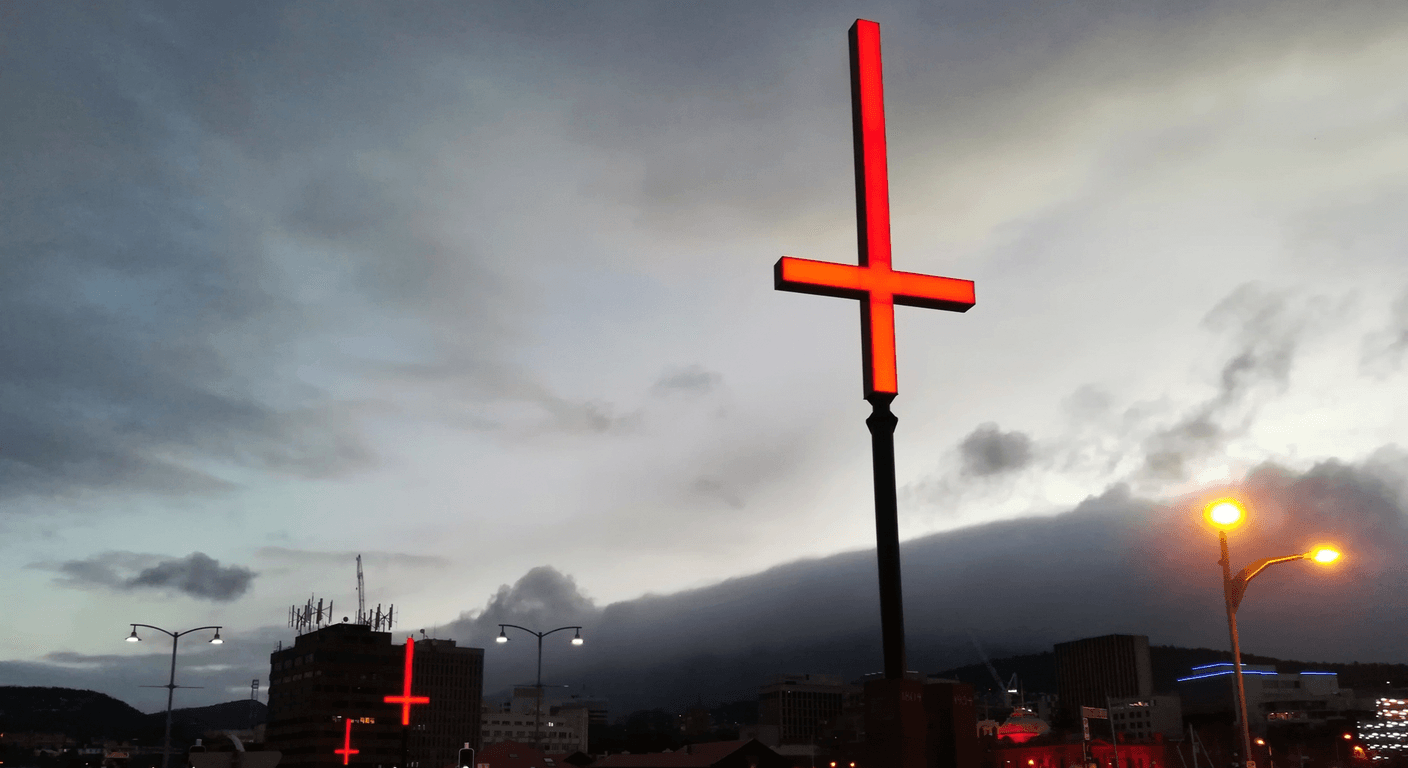
Dark Mofo is the annual midwinter festival produced by MONA — the Museum of Old and New Art — which has been reshaping how the world thinks about Tasmanian culture since its opening in 2011. Where MONA's summer festival, FOMO, leans into hedonism and heat, Dark Mofo leans into the dark. Literally. The festival is timed to the winter solstice, the longest night of the year in the Southern Hemisphere, and everything about its aesthetic — red light, fire, ritual, noise — is calibrated to that fact.
The program typically spans around ten days in June and crosses disciplines freely: large-scale art installations, international and local live music, performance art, film, communal dining and events that resist easy categorisation. It is produced with serious curatorial intent, and that means some of it will challenge you. That is not a warning to stay away — it is simply an honest description of what MONA does. Reading the content advisories in the program before you buy tickets is not overcaution; it is good planning.
For a traveller who has spent decades accumulating genuine cultural curiosity — who has maybe stood in front of a Caravaggio in Rome or eaten at a village table in the Peloponnese and understood why context changes everything — Dark Mofo offers something rare in Australian winter: a festival that takes its audience seriously.
The Winter Feast: The Gentlest and Most Rewarding Entry Point
If there is one event at Dark Mofo that suits almost every pace and preference, it is the Winter Feast. Held across several evenings in the waterfront precinct, the Feast brings together long communal tables lit by fire braziers, dozens of food and drink stalls from Tasmanian producers, live music and the kind of collective warmth that only happens when several thousand people decide to eat together in the cold. It is convivial in the oldest sense of the word.
The food is genuinely excellent. Tasmania's produce — oysters from the Huon Valley, smoked meats, artisan cheeses, sourdough, pickled everything — is showcased by producers who rarely get this kind of platform. Mulled wine and hot cider are staples, and there are non-alcoholic options. Stall prices are reasonable by festival standards, with most dishes indicatively in the $12–$20 range, though confirm current pricing on arrival. You buy what you want, find a seat at a long table and talk to whoever is sitting next to you.
Practically speaking: the Feast runs across multiple evenings so you are not locked into one night. Arrive early — around 5.30 or 6pm — before the crowds thicken and before the cold really bites. Wear more layers than you think you need. The waterfront is exposed, and June in Hobart is not a metaphor. Good boots with grip matter; the ground around the braziers can be uneven and, later in the evening, slippery.
Navigating the Program: Art, Performance and What to Expect
The full Dark Mofo program is released in the weeks before the festival opens, and this is where you want to spend an hour or two with a coffee and a clear head. The range is genuinely wide. In past years it has included large outdoor light and sound installations that are free to walk through, ticketed concerts in heritage buildings and unusual venues, film screenings, performance works, and events that blur the line between participation and observation.
Some of this work is confronting by design. Dark Mofo does not shy away from themes of mortality, sexuality, power or transgression — and it does not apologise for that. What it does do is provide content advisories, and those advisories are worth reading carefully. For most people over 50 who have a genuine appetite for contemporary art, the majority of the program will be stimulating rather than alienating. But knowing what you are walking into is always better than being surprised in a dark room.
The free or low-cost installations are often the most memorable. Large-scale projections on heritage buildings, sound works in public spaces, and outdoor sculptures reward slow walking and unhurried attention — which suits a pace that is not trying to tick every box. Pick three or four events that genuinely interest you, leave room for spontaneity, and resist the urge to fill every evening. Hobart's restaurants and bars in the surrounding streets are excellent, and a quiet dinner after an intense installation is part of the rhythm.
Getting to Hobart and Getting Around
From Melbourne, Hobart is roughly a one-hour flight — one of the easiest interstate trips in Australia. From Sydney, expect around ninety minutes. Jetstar, Qantas and Virgin all service the route; confirm current schedules and book well ahead for June, when festival demand is real. Hobart Airport is about twenty minutes from the city centre by taxi or rideshare; there is no direct rail link, so factor in a car or shuttle for the airport transfer.
Within Hobart, most Dark Mofo events cluster around the waterfront precinct, the CBD and the MONA site at Berriedale, about twelve kilometres north of the city. The MONA ferry, operated from Brooke Street Pier, is the most pleasant way to reach the museum and is worth taking for the experience alone — confirm schedules and fares via mona.net.au. For the waterfront Feast and CBD installations, the city is compact enough to walk between venues, though sensible footwear is non-negotiable on Hobart's mix of sandstone pavements and waterfront boardwalks after dark.
Accommodation books out early for Dark Mofo. The Sullivan's Cove area — closest to the waterfront precinct — is the most convenient base, putting you within easy walking distance of the Feast and most evening events. A room with good heating is not a luxury in June; it is a necessity. Confirm your booking directly with the property and check cancellation policies, as the festival program can occasionally shift events.
Dressing for a Tasmanian Winter Night (This Matters More Than You Think)
Hobart in June is cold. Average overnight temperatures sit around 4–5°C, and with wind off the Derwent it can feel sharper. The waterfront, where the Feast is held, is exposed. This is not the kind of cold that a light jacket handles — it is the kind that rewards thermal underlayers, a proper coat, a scarf, gloves and a hat. People who underestimate it spend the evening retreating to braziers and missing the art.
The fire installations and braziers at the Feast provide warmth in pockets, but you will be moving between them. Wool, merino or down layers work best. Comfortable, waterproof boots with a non-slip sole are worth prioritising over style — Hobart's waterfront can be damp, and some outdoor venues have grass or gravel underfoot. If you use a walking stick or have balance considerations in low light, the same principle applies: solid footwear and a torch on your phone are practical assets, not admissions of anything.
The payoff for dressing properly is that you get to stay out and actually experience the festival rather than retreating early. A cold, well-lit Hobart night with fire on the water and the smell of mulled wine is a genuine pleasure. Dress for it.
The Solstice Swim and Other Optional Extremities
Dark Mofo's solstice swim — nude, in the Derwent River, at dawn on the winter solstice — has become one of Australia's more photographed pieces of festival theatre. It is also entirely optional, and most attendees watch rather than participate. The water temperature in June is around 12–13°C. That is the full picture. Anyone who wants to participate can; anyone who prefers to stand on the shore with a thermos of tea and watch is having an equally valid Dark Mofo experience.
The broader point is that Dark Mofo is not a festival that demands total immersion. You can attend the Feast, see two or three installations, catch a concert in a warm venue and have a deeply satisfying cultural experience without engaging with any of its more challenging edges. The festival is layered — it rewards engagement at whatever depth suits you.
Beyond the Festival: Hobart in June
Hobart outside the festival is worth your time. Salamanca Market runs every Saturday morning, and while the crowds thin in winter, the quality does not. The permanent MONA collection — provocative, generous, occasionally baffling in the best way — deserves at least half a day outside of festival events. The Tasmanian Museum and Art Gallery on Dunn Place is free and covers everything from colonial history to natural history with genuine intelligence; confirm current hours via tmag.tas.gov.au.
For food, Hobart punches well above its size. The restaurant scene around Salamanca Place and the waterfront has matured considerably, with a strong emphasis on Tasmanian produce and wine. A long lunch at one of the established waterfront restaurants — unhurried, with a glass of Tasmanian pinot — is a reasonable way to spend a June afternoon before an evening at the Feast. Prices are generally more moderate than equivalent quality in Melbourne or Sydney.
A day trip to the Huon Valley, about forty minutes south of Hobart, is worth considering if you have a car and a free afternoon. Apple orchards, smoked salmon producers and the Wooden Boat Centre at Franklin offer a quieter counterpoint to festival evenings. The drive is straightforward, the scenery is genuinely fine, and the valley produces some of the best cider in Australia.
Quick planning guide
| Ideal pace | Slow — choose a handful of events and leave room for spontaneity |
|---|---|
| Best months | June, around the winter solstice (festival spans about ten days) |
| Suggested stay | 3-4 nights |
| Mobility level | Moderate — walking between venues on cold, sometimes uneven or slippery ground |
| Cost level | Mid-range (Feast dishes indicatively $12-$20; flights and accommodation should be booked well ahead) |
| Comfort level | Requires serious cold-weather layering; heated accommodation is a necessity, not a luxury |
| Best for | Culturally curious over-50 travellers open to confronting contemporary art and communal winter dining |
| Main planning consideration | Book flights and accommodation early, check the program's content advisories, and dress properly for near-freezing nights |
Key takeaways
- The Winter Feast — communal tables, fire braziers and Tasmanian produce — is the most accessible and reliably rewarding event at Dark Mofo.
- Dark Mofo's program includes genuinely confronting contemporary art; reading content advisories before buying tickets is straightforward good sense.
- Hobart in June averages around 4–5°C overnight — thermal layers, a proper coat and grip-soled boots are not optional.
- Most Dark Mofo events cluster around the waterfront and CBD, making the city centre the most convenient base; book accommodation well ahead.
- The solstice swim is a spectator event for most people, and watching from the shore is a perfectly complete experience.
- The full program changes each year and is released in the lead-up to the festival — confirm all dates and events at darkmofo.net.au before booking flights.
Recommended partners and links
Indicative prices only — always confirm with the operator before booking.
Frequently asked questions
When does Dark Mofo take place?
Dark Mofo runs for approximately ten days in June each year, centred on the winter solstice (around 21 June). Exact dates change annually. Confirm the current year's program and dates at darkmofo.net.au before making any bookings.
Is Dark Mofo suitable for travellers over 50?
Yes, with some honest caveats. Many events — particularly the Winter Feast, outdoor installations and ticketed concerts — are well suited to older travellers. Some works are deliberately confronting; reading content advisories in the program allows you to make informed choices. Cold weather and uneven outdoor surfaces after dark require sensible footwear and warm clothing.
How cold is Hobart during Dark Mofo?
Average overnight temperatures in Hobart in June sit around 4–5°C, and wind chill on the waterfront can make it feel colder. Thermal underlayers, a heavy coat, scarf, gloves and waterproof boots are strongly recommended for evening events.
Do you have to do the solstice swim?
No. The nude solstice swim in the Derwent River is voluntary and most festival-goers watch rather than participate. The water temperature is approximately 12–13°C in June. It is a piece of festival spectacle, not a requirement.
How do you get from Melbourne or Sydney to Hobart for Dark Mofo?
Direct flights from Melbourne to Hobart take approximately one hour; from Sydney, around ninety minutes. Jetstar, Qantas and Virgin all service the route. Book well ahead for June, as festival demand increases fares and availability. From Hobart Airport, a taxi or rideshare to the city centre takes around twenty minutes.