The Darwin Aviation Museum in Winnellie, about ten minutes from Darwin's CBD by taxi or rideshare, lets visitors stand beneath a complete, publicly accessible B-52 Stratofortress while covering the 1942 Japanese air raids and Cyclone Tracy. Best visited during the dry season (May–September) or as a cool indoor escape in the wet, it suits an unhurried two-hour visit. The hangar floor is flat concrete with no stairs, making access easy for most visitors.
Why This Museum Earns Two Serious Hours
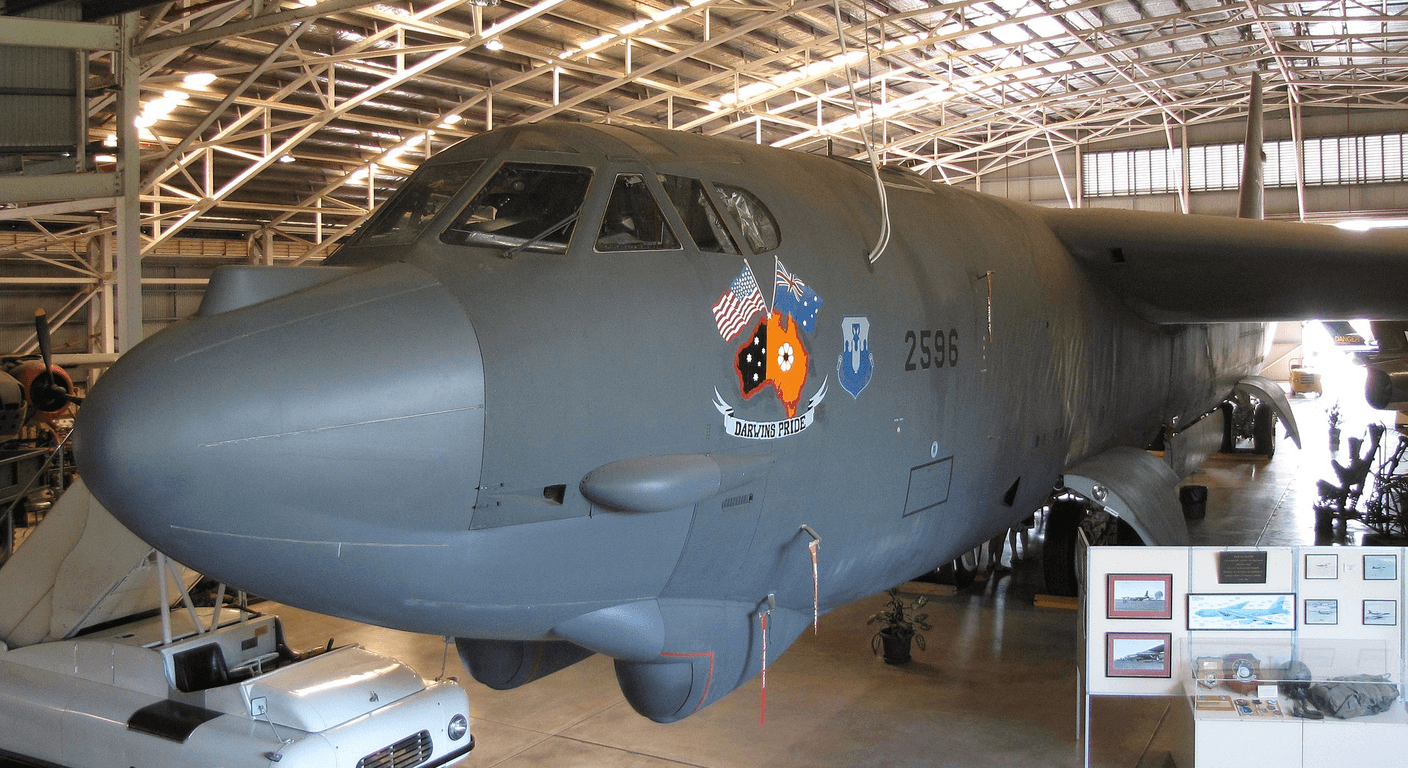
There are museums where you walk past things, and there are museums where things stop you. The Darwin Aviation Museum falls firmly into the second category. The moment you step through the main hangar doors, a B-52 Stratofortress fills your entire field of vision — not a replica, not a nose section, but a complete aircraft, its wings spanning wider than a suburban house block. For anyone who has only ever seen one in a photograph or at altitude, the physical reality of it is quietly startling.
The museum sits in Winnellie, an industrial suburb about ten minutes by taxi or rideshare from Darwin's waterfront precinct. It doesn't announce itself grandly from the road. That low-key approach suits the experience: once inside, the collection does the work. Beyond the B-52, the hangar contains a considered mix of WWII-era aircraft, recovered wreckage, and exhibits that trace Darwin's singular place in Australian military history.
Two hours is the right measure. Not rushed, not padded. The layout rewards a slow circuit — read the panels, sit with the photographs, double back to the aircraft you want to look at again. There are seats positioned throughout. Nobody is hurrying you.
The B-52: What You're Actually Looking At
The B-52 Stratofortress on display is a genuine USAF aircraft, not a mock-up. Its presence in Darwin is the result of a Cold War-era loan arrangement, and it remains one of only a handful accessible to the public anywhere in the southern hemisphere. Standing underneath the fuselage, the scale becomes almost architectural — the landing gear alone is taller than most people.
The museum provides context that makes the aircraft more than a showpiece. Interpretive panels explain the B-52's operational history, its role in the Pacific and South-East Asian theatres, and the strategic logic that brought American bombers through Darwin during the Cold War decades. For a traveller with Italian-Australian family history — a generation that lived through the anxieties of the mid-twentieth century — this kind of layered Cold War narrative carries its own particular resonance.
Visitors can walk around the full perimeter of the aircraft at hangar-floor level. The floor is flat concrete throughout. There are no stairs required to view the main exhibits, and the wide aisles between aircraft mean there's no need to squeeze or navigate around other visitors during quieter periods.
Darwin 1942: The Raids Most Australians Don't Know Well Enough
On 19 February 1942, Japanese forces launched two waves of air attacks on Darwin — more aircraft than struck Pearl Harbour two months earlier. The museum addresses this directly, and does so without sensationalism. Recovered wreckage, archival photographs and personal accounts are woven together in a way that gives the 1942 raids the weight they deserve.
Darwin was bombed more than 60 times during WWII, yet the raids rarely feature in the mainland Australian consciousness the way Kokoda or the fall of Singapore do. The museum quietly corrects that. For a solo traveller who came of age in an era when the Pacific War was still living memory for the adults around her, these exhibits carry an emotional register that goes beyond tourism.
Sections of recovered Japanese aircraft, alongside Allied wrecks salvaged from the harbour and surrounding country, give the collection a tangible, archaeological quality. These are not pristine restorations. The damage is part of the story.
Cyclone Tracy and the Aircraft That Survived
The museum also holds material relating to Cyclone Tracy, which struck Darwin on Christmas Eve 1974 and reshaped the city entirely. The aviation angle here is specific: some aircraft on display bear the marks of Tracy's winds, and the exhibits document the role of aviation in the emergency evacuation that followed — one of the largest airlifts in Australian peacetime history.
This section of the museum is smaller than the wartime displays, but it's well-considered. Darwin residents of a certain age carry Tracy as a defining collective memory, and visitors from elsewhere often find it the exhibit that most surprises them. The human detail — the logistics of evacuating tens of thousands of people in the days after Christmas — is handled with restraint and clarity.
Practicalities: Getting There, Getting Around, Staying Comfortable
The museum is in Winnellie, roughly ten minutes from Darwin's CBD by taxi or rideshare. There's no direct scheduled bus service to the front door — confirm current route options with Darwin's public transport authority before relying on a connection. A taxi or Uber from the waterfront precinct is the most straightforward choice, and the fare is modest. Driving is easy if you have a hire car; parking is available on site.
The hangar is fan-cooled and shaded throughout, which makes this a genuinely practical option during the build-up season (October to December) or the wet (January to April) when outdoor Darwin activities become uncomfortable for extended periods. Temperatures inside the hangar are meaningfully lower than outside. Comfortable flat shoes are the only real requirement — the floor is smooth concrete, and there's nothing uneven to navigate.
Entry is indicative around $20–$30 with concession pricing available; confirm the current rate directly with the museum before your visit as pricing can change. A small gift shop and basic refreshments are available. There's no café on site, so if you're combining this with a longer Darwin morning, plan lunch back in the city centre afterwards — the Smith Street Mall precinct is an easy rideshare away.
How to Pair This With a Darwin Day
The museum works well as a morning anchor before Darwin's midday heat peaks. An early rideshare out to Winnellie, two hours inside the hangar, then back to the city for lunch and an afternoon at the Museum and Art Gallery of the Northern Territory (MAGNT) — which is fully accessible, air-conditioned and free of charge — makes for a full, balanced day without overextending.
For a solo traveller staying in the CBD or at the Waterfront, this kind of self-directed day has a pleasing independence to it. You set the pace, you linger where you want, and you're never dependent on a tour group's schedule. Darwin is a city that rewards this approach — compact enough to navigate confidently, with enough substance at each stop to justify the effort.
If you're in Darwin for several days, consider the Aviation Museum on a day when you want something contained and intellectually engaging without physical exertion. Litchfield National Park and the Darwin Harbour cruise are better saved for your most energetic days. This one is for when you want to think, not stride.
A Note on Travelling to Darwin From Southern States
Darwin is a direct flight from Melbourne, Sydney, Brisbane and Adelaide — typically two to four hours depending on your departure city, with direct services available from major carriers including Qantas and Virgin Australia. There's no international connection to navigate, no significant time zone shift from the eastern states (Darwin runs on ACST, 30 minutes behind AEST in winter), and no jet lag to manage.
The practical consideration for southern-based travellers is Darwin's climate. The dry season (May to September) brings cooler, lower-humidity conditions that most visitors from Victoria or NSW find very comfortable. The wet season is hot, dramatic and genuinely beautiful in its own way — but outdoor plans need flexibility, and the museum's climate-managed interior becomes even more appealing as a reliable anchor point.
Travel insurance is worth confirming before any domestic trip, particularly for travellers managing pre-existing conditions. Standard policies vary considerably in what they cover, so reading the product disclosure statement before purchase — rather than after — is the practical move.
Quick planning guide
| Ideal pace | Slow, self-directed circuit |
|---|---|
| Best months | May to September (dry season); also a comfortable option in the wet given the climate-managed hangar |
| Suggested stay | Around two unhurried hours |
| Mobility level | Easy — flat concrete floor, no stairs, wide aisles, seating throughout |
| Cost level | Budget-friendly — indicative $20–$30 entry with concessions |
| Comfort level | High — fan-cooled, shaded hangar interior |
| Best for | Solo travellers and history-minded visitors wanting substance without a full-day commitment |
| Main planning consideration | No direct bus service — plan for a taxi or rideshare (around ten minutes from the CBD) and confirm current pricing before visiting |
Key takeaways
- The Darwin Aviation Museum holds one of the only complete, publicly accessible B-52 Stratofortresses in the southern hemisphere.
- The hangar is flat, fan-cooled and shaded — one of Darwin's most comfortable indoor options during the build-up or wet season.
- Entry is indicative around $20–$30 with concessions; confirm current pricing directly with the museum.
- Allow two unhurried hours; the layout suits a slow, self-directed circuit with seating available throughout.
- The museum's 1942 Darwin air raids exhibits cover a chapter of Australian wartime history that deserves more attention than it typically receives.
- Getting there is straightforward by taxi or rideshare from Darwin CBD — roughly ten minutes and an indicative $15–$25 one way.
Recommended partners and links
Indicative prices only — always confirm with the operator before booking.
Frequently asked questions
How much does it cost to enter the Darwin Aviation Museum?
Entry to the Darwin Aviation Museum is indicatively around $20–$30 for adults, with concession pricing available. Prices can change, so confirm the current rate directly with the museum at darwinaviationmuseum.com.au before your visit.
Is the Darwin Aviation Museum suitable for visitors with limited mobility?
Yes. The museum is rated Easy for mobility. The entire collection is housed in a single-level hangar with flat concrete floors, wide aisles and no stairs required to view the main exhibits. Seating is available throughout.
How do you get to the Darwin Aviation Museum from the city centre?
The museum is in Winnellie, about ten minutes from Darwin's CBD. The most practical option is a taxi or rideshare, with an indicative fare of roughly $15–$25 one way — confirm with your driver. There is on-site parking if you're driving a hire car. Confirm current public transport options with the Northern Territory's transport authority before relying on a bus connection.
Can you visit the Darwin Aviation Museum during the wet season?
Yes, and it's one of the better indoor options during Darwin's wet season (roughly November to April). The hangar is fan-cooled and fully shaded, so conditions inside are noticeably more comfortable than outdoors during the heat and humidity of the build-up and wet months.
What is the B-52 at the Darwin Aviation Museum?
The Darwin Aviation Museum displays a complete, authentic B-52 Stratofortress bomber — not a replica. It was loaned to Australia under a Cold War-era arrangement and is one of only a small number of complete B-52 aircraft accessible to the public in the southern hemisphere. Visitors can walk the full perimeter of the aircraft at hangar-floor level.