Berry Springs, about 45 minutes south of Darwin via the Stuart Highway, pairs the Territory Wildlife Park's shuttle-linked animal circuit with the shaded swimming holes of Berry Springs Nature Park. Best visited in the dry season (May-October) when pools are open and mornings are coolest, it suits a relaxed half-day to full day. Mobility is easy thanks to the wildlife park's shuttle; a hire car or guided tour is needed as there's no public bus.
Why Berry Springs suits travellers who want a genuinely easy day
Darwin's heat and humidity can flatten even seasoned travellers, and that is exactly why Berry Springs works so well for over-50s visiting the Top End. The two parks sit side by side off the Stuart Highway, roughly 45 kilometres south of Darwin's CBD, and between them they offer shade, seating, a shuttle bus, cool water, and a pace you control entirely. There is no pressure to walk long distances, no steep terrain, and no crowds of the kind you find at Kakadu or Litchfield.
For a solo traveller from Victoria, this kind of day has real appeal: structured enough to fill comfortably from mid-morning to mid-afternoon, yet flexible enough to linger where you like. The Territory Wildlife Park is a proper half-day destination on its own. Berry Springs Nature Park next door adds a swim and a picnic if the season is right. Together, they form a day that is both genuinely interesting and genuinely manageable.
Getting there: your transport options from Darwin
The most practical way to reach Berry Springs is by hire car or private vehicle. The drive south on the Stuart Highway is straightforward — mostly flat, well-signed, and takes around 45 minutes from Darwin's centre. Turn off at the Berry Springs township signs; the Territory Wildlife Park and Berry Springs Nature Park are within a few kilometres of each other on Cox Peninsula Road. Parking at both parks is free and plentiful, with spaces close to the main entry points.
There is no regular public bus service to Berry Springs from Darwin, so travellers without a hire car should look at small-group guided day tours that include both parks. Several Darwin-based operators run these in the dry season, typically departing in the morning and returning by late afternoon. Check Tourism Top End or ask at your Darwin accommodation for current operators and pricing, as the market changes seasonally. Guided tours suit those who prefer not to drive on unfamiliar Territory roads or who simply want commentary along the way.
If you do hire a car, an automatic transmission is strongly recommended — Darwin traffic is light by Melbourne standards, but the heat means you want driving to be effortless. Most major hire car companies operate from Darwin Airport. Book ahead in the dry season when demand is higher, and confirm whether your Australian driver's licence is sufficient (it is for NT roads).
Territory Wildlife Park: the shuttle does the walking for you
The Territory Wildlife Park covers around 400 hectares of natural bushland, which sounds daunting until you discover the internal shuttle bus that loops continuously around the circuit. You board at the main entry, ride to whichever exhibit interests you, spend as long as you like, then hop back on the next shuttle. The full circuit has multiple stops — the aviary walk-through, the aquarium, the nocturnal house, the wetlands boardwalk, and the grasslands area among them — and you can do all of them, or just the ones that appeal.
For travellers with mobility considerations, the shuttle removes the single biggest barrier to enjoying a large wildlife park. The paths between shuttle stops and exhibit entrances are mostly paved or compacted gravel and relatively flat. Some sections of the wetlands boardwalk involve gentle undulation, but nothing that would challenge someone who walks comfortably in daily life. Wheelchairs and mobility aids are catered for; confirm specifics with the park directly, as conditions and facilities can change.
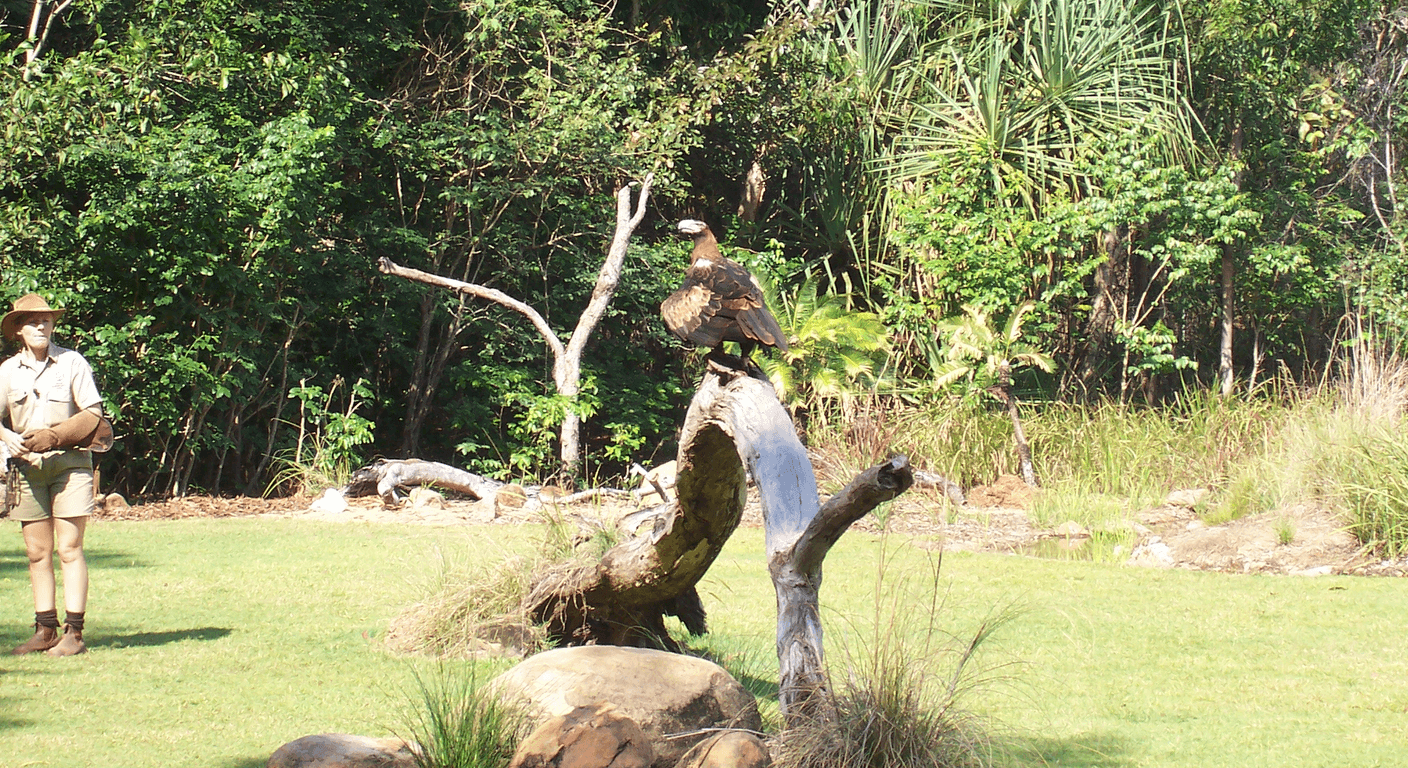
The animals are the real draw, and the Territory Wildlife Park does this well because the enclosures are large and naturalistic rather than zoo-like. Freshwater crocodiles, barramundi, bilbies, quolls, and an extraordinary range of Top End birdlife are all represented. The walk-through wetland aviary, where birds move freely around you, is particularly good for birdwatchers. Mornings are the best time for animal activity before the heat builds — aim to arrive when the park opens and take the shuttle for a full loop before deciding where to linger.
Concessions and entry: what to expect at the gate
The Territory Wildlife Park charges adult entry and offers concession rates for seniors and pensioners. Indicative adult pricing has been in the range of $25-$30 AUD, with concessions meaningfully lower, but these figures change and should be confirmed directly with the park before you visit — the Territory Wildlife Park website at territorywildlifepark.com.au carries current pricing. Bring your concession card; Australian state and territory concessions are generally recognised, but it is worth checking.
Berry Springs Nature Park has no entry fee at time of writing, which makes it an easy addition to the day. The picnic facilities, toilets, and change rooms are maintained by Parks and Wildlife NT. Facilities are modest but adequate — clean enough, shaded, and functional. Do not expect a resort experience; this is a bush park, and that is part of its appeal.
Berry Springs swimming holes: what you need to know before you get in
The swimming holes at Berry Springs Nature Park are spring-fed and genuinely refreshing — cooler than the ambient air, shaded by pandanus and paperbarks, and far less crowded than Litchfield's Buley Rockhole or Florence Falls. For a solo traveller on a warm dry-season afternoon, the experience of floating in clear thermal water while a blue-winged kookaburra watches from a branch overhead is one of those quietly memorable moments that Darwin delivers without fanfare.
The most important thing to understand about swimming here is the crocodile clearance system. Berry Springs is not always open for swimming. Parks and Wildlife NT monitors the pools for saltwater crocodile presence and posts clear signage at the entry — green signs mean swimming is permitted, red or yellow signs mean it is not. This is not bureaucratic caution; saltwater crocodiles are genuinely dangerous and do move through the area. Always read the signage on the day, regardless of what you have read online or been told elsewhere. Do not enter the water if closure signs are posted.
Swimming is a dry-season activity here — roughly May through October. In the wet season the pools flood, the park may close entirely, and the surrounding area becomes inaccessible or unpleasant. If you are visiting Darwin in the build-up (October-November) or wet season, skip Berry Springs and focus on the Territory Wildlife Park instead. Dry-season mornings are ideal: the water is clear, the light is good, and you have the place largely to yourself before midday visitors arrive.
Pacing the day: a practical sequence for over-50s
A sensible approach is to arrive at the Territory Wildlife Park when it opens — typically 8:30am, though confirm current hours on the website. Spend the morning on the shuttle circuit, taking in the aviaries and aquarium in the cooler part of the day. Most visitors find two to three hours is enough to see the highlights without fatigue; a full four-hour visit is possible if you are a dedicated birdwatcher or want to linger at the nocturnal house.
After the wildlife park, drive the short distance to Berry Springs Nature Park for a late morning or early afternoon swim and picnic. The parks are only a few kilometres apart. Bring your own food and water; the Territory Wildlife Park has a café and kiosk on site, but Berry Springs Nature Park has only basic facilities, so a packed lunch from Darwin is the reliable option. A cool bag with fruit, sandwiches, and plenty of water is worth the small effort.
Plan to be back in your car by around 2-3pm. Darwin-bound traffic on the Stuart Highway is light, but driving in the full afternoon heat is less pleasant than the morning run. If you are staying in Darwin's CBD, you will be back in time for a shower, a rest, and dinner at your leisure — which is exactly the kind of day that works well when you are travelling solo and setting your own tempo.
Honest notes on accessibility, heat, and what to bring
The Top End heat is the main physical consideration for over-50s at Berry Springs. Even in the dry season, temperatures in Darwin typically reach the low-to-mid 30s Celsius by late morning. Sun protection is not optional: a broad-brimmed hat, SPF 50+ sunscreen, and light long-sleeved clothing will make the difference between an enjoyable day and an uncomfortable one. Drink water consistently, not just when you feel thirsty.
Footwear matters more than people expect. The Territory Wildlife Park's shuttle stops and paths are manageable in comfortable walking shoes or supportive sandals. For Berry Springs, water shoes or old runners are useful — the pool entry points can be slippery and the rocks uneven underfoot. Thongs are not ideal for either park. A dry change of clothes and a small towel are worth packing if you plan to swim.
For travellers with significant mobility limitations — those who use a walking frame, for example, or who find uneven surfaces difficult — the Territory Wildlife Park is the better of the two destinations. The shuttle removes most of the walking burden, and the main exhibits are accessible. Berry Springs Nature Park involves a short walk from the car park to the pools and some uneven natural ground; it is manageable for most people who walk independently but may not suit those with significant balance or joint issues. If in doubt, call Parks and Wildlife NT ahead of your visit to ask about current conditions.
Quick planning guide
| Ideal pace | Slow-paced and self-directed |
|---|---|
| Best months | Dry season, May to October, for swimming; year-round for the wildlife park |
| Suggested stay | Half-day to full day, mid-morning to mid-afternoon |
| Mobility level | Easy, via the wildlife park's shuttle; Berry Springs has some uneven natural ground |
| Cost level | Budget-friendly, with free parking and no entry fee at Berry Springs Nature Park |
| Comfort level | Comfortable, with shade, seating and a shuttle to limit walking |
| Best for | Solo travellers, birdwatchers and those wanting genuine wildlife and a swim without a demanding itinerary |
| Main planning consideration | Check daily crocodile clearance signage before swimming, and arrange a hire car or guided tour since there is no public bus service |
Key takeaways
- Berry Springs sits around 45 kilometres south of Darwin — roughly a 45-minute drive on the Stuart Highway, with no regular public bus service.
- The Territory Wildlife Park's internal shuttle bus means you can see the full circuit without walking long distances, making it one of the more accessible wildlife parks in Australia.
- Swimming at Berry Springs Nature Park is only permitted when green clearance signs are posted — saltwater crocodile presence is monitored daily, and closure signs must be respected without exception.
- Berry Springs swimming is a dry-season activity; the pools are typically accessible May through October and may flood or close entirely during the wet season.
- Concession entry is available at the Territory Wildlife Park — bring your concession card and confirm current pricing at territorywildlifepark.com.au before visiting.
- Arriving at the Territory Wildlife Park when it opens and swimming at Berry Springs before early afternoon gives you the coolest, quietest experience of both parks in a single manageable day.
Recommended partners and links
Indicative prices only — always confirm with the operator before booking.
Frequently asked questions
Is it safe to swim at Berry Springs?
Swimming at Berry Springs Nature Park is safe when the official clearance signs indicate the pools are open. Parks and Wildlife NT monitors the area for saltwater crocodile activity and posts green signs when swimming is permitted and red or yellow signs when it is not. Always check the signage on the day you visit — do not rely on reports from previous days or other sources. Never enter the water if closure signs are displayed.
Do you need a car to visit Berry Springs and the Territory Wildlife Park from Darwin?
A hire car is the most practical option, as there is no regular public bus service to Berry Springs from Darwin. The drive is roughly 45 minutes on the Stuart Highway and is straightforward. Alternatively, small-group guided day tours from Darwin cover both parks in the dry season — check with Tourism Top End or your Darwin accommodation for current operators.
What is the best time of year to visit Berry Springs?
The dry season — roughly May through October — is the recommended time to visit Berry Springs. The swimming holes are accessible, the weather is clear and warm rather than oppressively humid, and the roads are reliable. In the wet season the pools can flood, the park may close, and the build-up period from October to November brings heat and humidity that most visitors find difficult.
Is the Territory Wildlife Park suitable for travellers with limited mobility?
The Territory Wildlife Park is one of the more accessible large wildlife parks in the Northern Territory. An internal shuttle bus loops the circuit continuously, so visitors can ride between exhibits rather than walking the full distance. Paths near the main exhibits are mostly paved or compacted and relatively flat. Travellers who use wheelchairs or mobility aids should contact the park directly at territorywildlifepark.com.au to confirm current accessibility arrangements before visiting.
Are there senior or concession discounts at the Territory Wildlife Park?
Yes, the Territory Wildlife Park offers concession pricing for seniors and pensioners. Indicative adult entry has been in the range of $25-$30 AUD with concessions available at a lower rate, but prices are subject to change — confirm current pricing directly with the park at territorywildlifepark.com.au before your visit. Bring your Australian concession card to present at the gate.