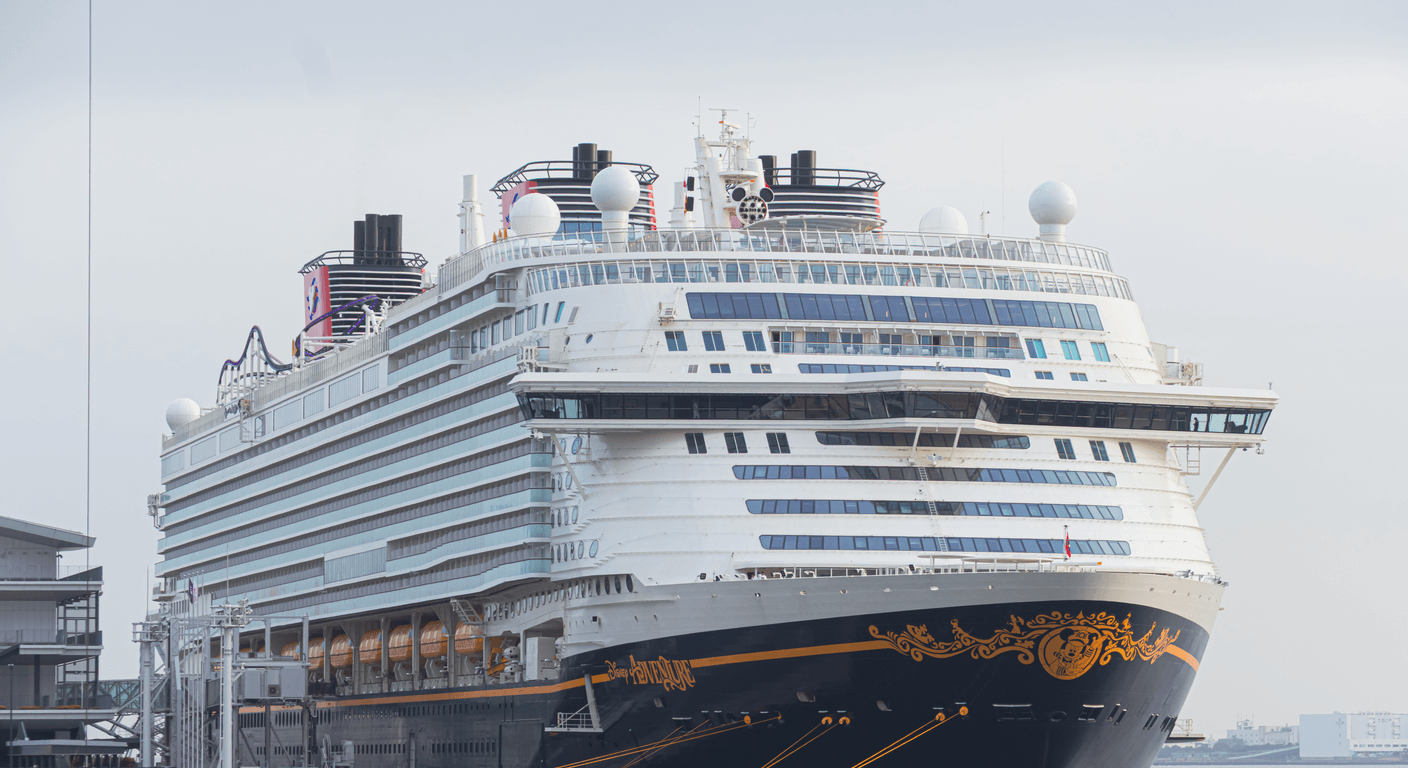
A Disney cruise suits over-50 Australians best on a 6–7 night Caribbean or Bahamas itinerary from Port Canaveral or Miami, blending sea days with stops such as Castaway Cay, where the ship docks directly rather than tendering. The defining highlight is genuine multigenerational balance — drop-off kids' clubs paired with adult-only pools, lounges and dining. Mobility is moderate: accessible cabins and direct-dock islands work well, but some Caribbean ports use tenders. Reaching a Florida homeport means a 20–24 hour flight via the US with a stopover.
Why Over-50 Australians Are Seriously Considering Disney Cruise Line
Disney Cruise Line occupies an unusual space in the cruise market. It's unmistakably a family product — characters roam the atrium, the pool deck is cheerfully chaotic by mid-morning, and the marketing imagery skews heavily towards young children. And yet, the ships consistently attract a meaningful number of adults travelling without children, along with grandparents who've discovered that a Disney cruise is one of the more logistically manageable ways to holiday with grandkids across a significant age gap.
For Italians and other community-minded Australians who centre family life around shared experience, the multigenerational appeal is real. The structure of the ships — dedicated kids' clubs that genuinely absorb children for hours, adult-only pool areas, Concierge lounges and refined dining options — means grandparents aren't simply chasing grandchildren around a vessel for seven nights. There's actual breathing room built in, if you know where to find it.
The newer ships in the fleet — the Disney Wish (2022), Disney Treasure (2024) and the upcoming Disney Destiny (2025) — have expanded adult-only programming and refined the Concierge experience considerably. That said, anyone expecting the quietude of an Oceania or Silversea sailing will need to calibrate expectations. Disney is a premium family cruise line. The adults-without-children experience is good, not separate.
What Does the Journey from Australia Actually Look Like?
Most Disney Caribbean and Bahamas itineraries depart from Port Canaveral (near Orlando) or Miami. From Melbourne or Sydney, that's a flight of roughly 20–24 hours, typically routed through Los Angeles, Dallas or Houston with one stopover. Direct flights to Orlando are rare from Australia; most travellers fly into Orlando International Airport and transfer, or fly into Miami for sailings departing from there.
Indicative return economy airfares from Melbourne or Sydney to Orlando or Miami run from around AUD 2,200–3,800 per person, with business class from around AUD 7,500–12,000 per person. These are highly variable by season, airline and how far in advance you book — confirm current fares with your airline or travel agent. A jet lag recovery night before embarkation isn't optional; it's sensible. Budget at least one night in a hotel near the port or in Orlando — accommodation around Port Canaveral or on International Drive in Orlando runs from around AUD 180–350 per night for a comfortable mid-range hotel.
Travel insurance is non-negotiable for a trip of this complexity and cost. For travellers over 60, and particularly those with pre-existing conditions, policies vary enormously. Don't rely on a generic comparison site — speak to a specialist insurer that covers cruise travel and US medical costs explicitly. The US healthcare system is extraordinarily expensive, and a cancelled cruise or medical event without appropriate cover could be financially devastating.
Pacing a 6–7 Night Itinerary: Sea Days Are Your Friend
A typical 6–7 night Disney Bahamas or Caribbean itinerary from Port Canaveral includes two or three sea days, two or three port stops (which may include Castaway Cay, Disney's private island in the Bahamas, and Nassau or a Caribbean port), and a day at Lighthouse Point, Disney's newer Bahamian destination. Sea days are genuinely restorative on a Disney ship if you know where to position yourself — the adult-only pool deck (Quiet Cove on most ships) is calmer than the family pool area, and the Concierge Lounge on upper decks offers a retreat with complimentary snacks and beverages for suite and Concierge-category guests.
The temptation with port days is to overload the itinerary. Resist it. A half-day excursion — a heritage walking tour of Nassau's colonial district, a catamaran snorkel trip, or simply a quiet morning at Castaway Cay's adult beach before the crowds fully arrive — is more satisfying than a packed schedule that leaves you exhausted by dinner. Disney's own shore excursions are easy to book through the app or onboard, and while they carry a premium, they're logistically straightforward and timed to return before the ship departs.
If you're travelling with grandchildren, the rhythm shifts. Kids' clubs — the Oceaneer Club and Lab for ages 3–12, Edge for tweens and Vibe for teens — operate on a drop-off model, meaning grandparents can hand over the grandchildren for structured, supervised programming and reclaim the afternoon for themselves. This is, genuinely, one of Disney's strongest practical advantages for multigenerational travel. The clubs are well-staffed, themed and engaging enough that most children go willingly.
Accessibility on Disney Ships and Private Islands: The Honest Picture
Disney Cruise Line's accessibility provisions are among the better ones in the industry. Accessible staterooms are available across multiple cabin categories — from inside cabins to Concierge-level suites — and feature roll-in showers, wider doorways, lowered beds, and hearing-loop or visual-alert systems. Request these at booking, not as an afterthought; they sell out early, particularly on shorter itineraries. Disney's official accessibility page (disneycruise.disney.go.com/guest-services/accessibility) details the specific configurations available on each ship.
On Castaway Cay, Disney's flagship private island, the ship docks directly — no tender required. That's a significant practical advantage for travellers with mobility considerations. The adult-only beach, Serenity Bay, is roughly a 10–15 minute tram ride from the ship (trams run regularly and are accessible), and the beach itself is flat with loungers and shade structures available. Walking the entire island is optional; you can do very little walking and still have a full, comfortable day. Lighthouse Point, the newer destination, similarly offers accessible facilities, though its layout is still being refined as of 2025 — confirm current accessibility details directly with Disney before sailing.
Tender ports — where the ship anchors offshore and passengers transfer to the destination by small boat — present a real challenge for travellers with limited mobility or balance concerns. Nassau on some itineraries docks directly, but other Caribbean ports may use tenders. Check your specific itinerary carefully. On tender days, the ship itself becomes a genuinely pleasant place to spend the morning, with fewer guests aboard and quieter access to pools, restaurants and spa facilities.
Travelling as Grandparents: The Logistics of Bringing the Grandchildren
The multigenerational cruise dynamic works best when expectations are set in advance — with the grandchildren, their parents and yourself. Disney cruises are structured environments, which helps. The muster drill (mandatory safety briefing before departure) is now conducted via the Disney Cruise Line app and completed in stages, rather than requiring everyone to stand in a large group on deck simultaneously. This is a genuine improvement for older travellers and those who find long standing periods uncomfortable.
Meeting points matter on a large ship. Establish a clear meeting spot with grandchildren — the atrium's central staircase or a specific restaurant lobby works well — and make sure older grandchildren have a way to contact you (the Navigator app, available on the ship's onboard Wi-Fi, allows messaging between guests at no extra data cost). For younger grandchildren, the Oceaneer Club has a formal sign-in and sign-out process, so there's no ambiguity about where they are.
One practical note: grandparents travelling without the children's parents will need to carry appropriate consent documentation for international travel with minors. Requirements vary by country and port of entry — consult the Australian Department of Foreign Affairs and Trade (smartraveller.gov.au) and the relevant US Customs guidelines well before departure. A travel agent with experience in multigenerational family travel can help you work through this.
Is Disney Cruise Line Worth It for Couples Without Children?
Honestly? It depends on the couple. Disney's ships are well-designed, the food quality across the main dining rooms and speciality restaurants is genuinely good (Palo on most ships — the adult-only Italian restaurant — is a highlight that justifies a reservation), and the entertainment programme, from Broadway-style shows to deck parties, is polished. If you have a fondness for Disney's storytelling or simply appreciate a well-run ship, you'll find enough to enjoy without ever setting foot in a kids' zone.
The atmosphere, however, is undeniably family-centred. Pool decks can be loud. Character meet-and-greets create queues in the atrium. Evenings are lively rather than refined. Couples seeking a quieter, more sophisticated ambience would find lines like Viking Ocean, Oceania Cruises or Scenic Eclipse better suited to their preferences. These alternatives also tend to offer more immersive destination-focused itineraries and smaller ship sizes that some travellers find more appealing.
Cost is another honest consideration. Disney Cruise Line sits at the premium end of the market. Indicative fares for a balcony cabin on a 6–7 night Caribbean or Bahamas itinerary from a US homeport start from around AUD 3,500–6,500 per person (based on double occupancy, not including flights, gratuities or extras) — these figures are approximate and subject to significant variation by ship, season, cabin category and availability. Confirm current pricing directly with Disney Cruise Line or a travel agent. Add gratuities (currently around USD 14.50–15.50 per person per night, payable in USD — check the Disney Cruise Line website for current rates), Wi-Fi packages (from around USD 25–35 per day for a single device, indicative), and excursions, and the overall cost of a Disney cruise from Australia is substantial. Whether it represents value depends entirely on what you're buying it for.
Booking Strategy: Why a Travel Agent Makes Sense Here
Disney Cruise Line can be booked directly through its website or app, and the booking interface is functional. But for over-50 Australians navigating accessible cabin selection, currency conversion, travel insurance requirements, pre-cruise hotel logistics and the complexity of multigenerational travel documentation, a travel agent with cruise expertise is worth the conversation. Australian agents who specialise in cruise travel — including Disney-authorised agents — can hold cabins, advise on accessible stateroom availability and often have access to onboard credit offers that aren't always visible on the direct booking site.
When selecting a cabin, position matters beyond just category. Mid-ship cabins on lower decks experience less motion — relevant if you or your travel companion is prone to seasickness. Concierge-level cabins, while considerably more expensive, include lounge access, priority embarkation and debarkation, and a dedicated concierge team who can manage reservations and requests during the cruise. For travellers who want a more managed, less-queue-dependent experience, the Concierge premium can be genuinely worthwhile.
The Disney Cruise Line app is central to the experience — reservations for speciality dining, kids' club check-in, shore excursion bookings and onboard messaging all flow through it. Download it and familiarise yourself before you sail. The app works on the ship's onboard Wi-Fi without requiring a paid internet package for basic functions, which is useful to know given that full internet access packages are an additional cost.
Quick planning guide
| Ideal pace | Slow-paced, with sea days built in deliberately for rest |
|---|---|
| Best months | Flexible – no single best season specified; itineraries run year-round from Port Canaveral or Miami |
| Suggested stay | 6–7 nights, plus a pre-cruise recovery night near the port |
| Mobility level | Moderate – accessible staterooms and a direct dock at Castaway Cay, but tender ports elsewhere need checking |
| Cost level | Premium – all-up costs from Australia can reach AUD 12,000–20,000+ per person |
| Comfort level | High, particularly in Concierge-level cabins and suites with lounge access |
| Best for | Grandparents cruising with grandchildren across a wide age gap, and couples who enjoy a polished, family-oriented ship |
| Main planning consideration | Long, stopover-heavy flights from Australia and confirming which ports use tenders before booking |
Key takeaways
- A 6–7 night Disney Caribbean or Bahamas itinerary from Port Canaveral or Miami is the practical sweet spot for over-50 Australians, offering enough sea days to rest without overscheduling.
- Castaway Cay's adult-only Serenity Bay beach is reached by accessible tram and requires no tender transfer — a genuine advantage for travellers with mobility considerations.
- Accessible staterooms on Disney ships must be requested at booking; they sell out early, particularly on shorter sailings.
- Couples travelling without children will find adult-only pools, Palo restaurant and Concierge lounges worthwhile, but should honestly assess whether a quieter cruise line better matches their preferred atmosphere.
- Indicative all-up costs from Australia for a Disney cruise (flights, accommodation, cruise fare, gratuities and extras) can reach AUD 12,000–20,000 or more per person — confirm all current pricing directly with Disney Cruise Line or a specialist travel agent.
- A travel agent experienced in cruise accessibility and multigenerational travel logistics is a practical asset for this kind of booking, not an unnecessary middleman.
Recommended partners and links
Indicative prices only — always confirm with the operator before booking.
Frequently asked questions
Is Disney Cruise Line suitable for adults over 50 travelling without grandchildren?
Yes, though with realistic expectations. Disney ships have adult-only pool areas, an adults-only Italian restaurant (Palo), Concierge lounges and evening entertainment that appeals broadly. The ship atmosphere is family-centred and can be lively, particularly around the main pool deck. Couples seeking a quieter or more destination-focused cruise experience may prefer lines like Oceania, Viking Ocean or Scenic Eclipse.
How long is the flight from Australia to a Disney Cruise Line homeport?
From Melbourne or Sydney to Orlando or Miami — the main Disney Cruise Line homeports — expect a total travel time of roughly 20–24 hours, typically with one stopover via Los Angeles, Dallas or Houston. A recovery night at a hotel near the port before embarkation is strongly recommended, particularly for travellers managing jet lag or pre-existing health conditions.
What accessible cabin options does Disney Cruise Line offer?
Disney Cruise Line offers accessible staterooms across multiple categories, including inside, oceanview, verandah and Concierge cabins. Features typically include roll-in showers, wider doorways, lowered beds and hearing or visual alert systems. These cabins must be requested at the time of booking and sell out quickly. Full details are available at disneycruise.disney.go.com/guest-services/accessibility.
Do grandparents need special documentation to travel on a cruise with grandchildren but without the children's parents?
Yes. Grandparents travelling internationally with grandchildren but without the children's parents typically need a notarised letter of consent from the parents, along with copies of the children's identification documents. Requirements vary by country and port of entry. Check the Australian Department of Foreign Affairs and Trade website (smartraveller.gov.au) and confirm requirements with your travel agent well before departure.
What is the approximate cost of a Disney cruise from Australia, including flights?
Indicative costs are substantial. A balcony cabin on a 6–7 night Disney Caribbean or Bahamas itinerary runs from around AUD 3,500–6,500 per person (based on double occupancy, excluding extras). Return flights from Melbourne or Sydney to Orlando or Miami add roughly AUD 2,200–3,800 per person in economy or AUD 7,500–12,000 in business class. Add gratuities, Wi-Fi, excursions and pre-cruise accommodation, and the all-up cost per person from Australia can reach AUD 10,000–20,000 or more. All figures are indicative and subject to change — confirm current pricing directly with Disney Cruise Line or a travel agent.