Ellenborough Falls, on the Comboyne Plateau near Taree, drops about 200 metres in a single plunge, fully visible from a flat 300-metre lookout walk suited to most mobility levels. Best visited late winter through spring after rain, it suits a half- to full-day self-drive trip, often paired with Wingham. The 600-plus-step descent to the gorge base is for fit, confident walkers only. Entry is free, though the drive includes a gravel section and kiosk hours are unpredictable.
What makes Ellenborough Falls worth the drive?
There's a particular satisfaction in arriving at a place and finding it exactly as dramatic as promised. Ellenborough Falls is one of those places. The water drops roughly 200 metres in a single unbroken fall off the edge of the Comboyne Plateau, landing in a forested gorge below — and you can see all of it, the full height, from the main lookout without descending a single step. That's rarer than it sounds.
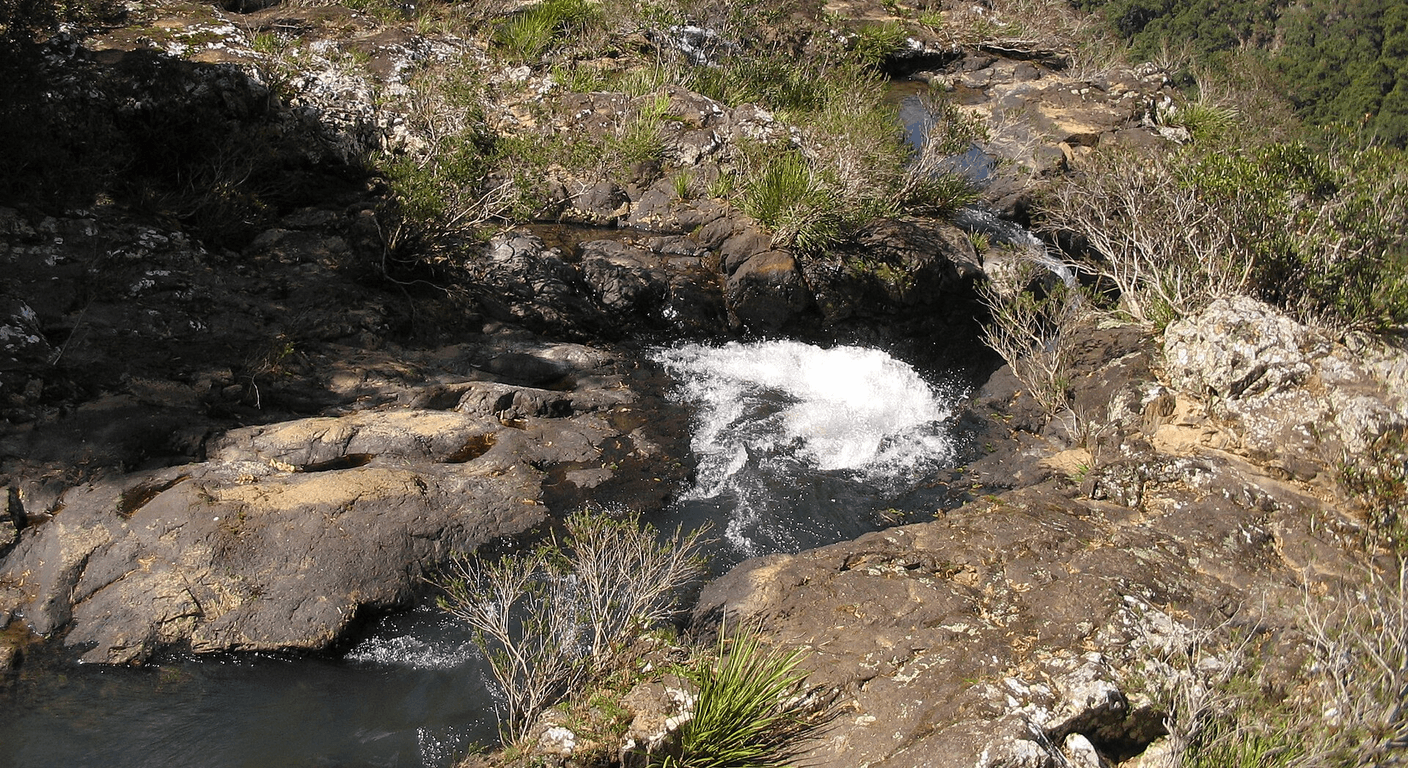
The falls sit in the Ellenborough Falls Scenic Reserve, managed by NSW National Parks and Wildlife Service, about 50 kilometres inland from Taree in the Manning Valley. The surrounding plateau country is green and rolling, dairy farming territory that feels a long way from the Pacific Highway even though you're not. On a clear winter morning, with mist rising from the gorge and the falls in full voice after recent rain, it's the kind of view that stops conversation for a moment.
Entry is free. There's no gate, no booking system, no park pass required — confirm this remains the case before you visit, but at the time of writing it's simply a place you drive to, park, and walk a short distance to experience something genuinely worth experiencing.
Getting there: what the drive actually involves
From Port Macquarie, allow roughly 90 minutes. From Taree, it's closer to an hour. The route from Taree takes you through Wingham — itself worth a stop — and then inland along the Wingham–Comboyne Road, climbing steadily onto the plateau. The road is sealed for most of the journey, but the final section approaching the falls reserve involves a stretch of gravel. It's manageable in a standard car driven at a sensible pace; nothing technical, but not a road to rush.
If you're coming from Sydney, build in a full day and consider an overnight stop in Taree or Port Macquarie either side of the trip. The Pacific Highway from Sydney to Taree is around four hours, and adding the falls run on top of that in a single day is possible but leaves little time to breathe. The Manning Valley rewards lingering.
Parking at the reserve is free and reasonably spacious. There are basic toilet facilities. A small kiosk operates on site, but its hours are genuinely limited and not always predictable — don't arrive counting on lunch or a coffee. Bring your own supplies, particularly if you're travelling as a group and want to picnic at the lookout.
The main lookout: who can do this walk?
The path from the car park to the main lookout is around 300 metres on a flat, well-maintained surface. It's short enough that most people complete it without thinking of it as a walk at all — more of a stroll to a very good view. The lookout itself has solid railings and enough room for a group to spread out comfortably. This section suits travellers with most mobility levels, including those who use walking poles or take things steadily.
The viewing platform delivers the full spectacle: the plateau edge, the long white ribbon of water, the green gorge below. Photography here is straightforward in the morning when light falls on the falls rather than behind them. If you've driven up from Wingham after breakfast, mid-morning arrival is ideal.
There are some uneven patches on the path and a gentle slope in places — nothing that requires special footwear, but sensible shoes are worth wearing rather than sandals. Anyone with significant balance concerns would benefit from a walking pole. The reserve is not specifically equipped for wheelchair access to the lookout, so it's worth checking current conditions with the Manning Valley Visitor Centre before the trip if that matters for your group.
The descent to the base: honest advice for over-50 travellers
The 600-plus steps down to the base of the falls exist, and they lead to a genuinely different perspective — up close to the water, in the cool of the gorge. But this is a serious physical undertaking and deserves honest description. The steps are steep in sections, the surface can be slippery after rain, and there is no halfway rest point with easy egress. Crucially, every step down is a step that must be climbed back up.
For fit, confident walkers in good health, it's a rewarding descent. Allow at least an hour and a half for the full return, wear proper hiking shoes with grip, and carry water. The gorge is enclosed and can be humid. If anyone in your group has knee concerns, heart or respiratory conditions, or simply prefers not to push it, the main lookout is not a consolation prize — it's genuinely the better view of the full fall.
A practical note for groups of friends: it's perfectly reasonable for some members to do the descent while others wait at the top with a thermos and a good book. The car park area and lookout are pleasant places to spend an hour, and the dynamic of 'you go, I'll be here when you get back' works well at Ellenborough.
Pairing the falls with Wingham: a natural combination
Wingham is 25 kilometres from the falls turnoff and deserves more than a drive-through. It's one of the oldest towns on the Mid North Coast — the main street retains a scale and character that's increasingly rare. The Wingham Brush, a pocket of subtropical rainforest in the centre of town, is home to a large flying fox colony and is genuinely atmospheric in the late afternoon. A short loop walk through the Brush takes around 20 minutes on flat ground.
The town has a good bakery, a couple of cafes suited to a leisurely lunch, and an unhurried pace that suits a mid-trip stop. The Wingham Museum, run by the Manning Valley Historical Society, is worth an hour if local history interests the group. Confirm current opening hours directly before visiting.
If you're building a full day, the sequence that works well is: Wingham for a late-morning coffee and browse, then the drive up to Comboyne Plateau and the falls for midday, then back through Wingham or a different route home via Taree for a late lunch. That rhythm allows time at the falls without rushing, and gives the drive its shape.
What about Comboyne village?
Comboyne itself is a small plateau village a few kilometres past the falls turnoff — so small that 'village' is generous, but it has a character worth five minutes of your time. The elevated position gives views across the plateau and down towards the coast on a clear day. There's a pub that operates on its own schedule; don't plan a meal around it without checking ahead.
The Comboyne Plateau as a whole is dairy country, and the drive through it has a cool, green, slightly other-worldly quality, particularly in winter when the plateau sits above a sea of low cloud in the valleys below. It doesn't feel like coastal NSW at all. That contrast — the familiar Pacific Highway world suddenly replaced by misty highland farming country — is part of what makes the trip interesting rather than just a waterfall tick.
For travellers based in regional Victoria, the Manning Valley offers a point of comparison: the plateau country around Comboyne has echoes of the Otways or the Strzelecki Ranges, that same sense of green density, but with a distinctly NSW quality to the light and the landscape.
Practical planning: what to sort before you go
The kiosk at Ellenborough Falls operates limited and variable hours — this is not a criticism, simply a fact. On weekdays, particularly outside school holidays, it may not be open at all. Bring water, snacks and anything you'll need for lunch. A small esky in the car is a sensible habit for any day trip in this part of the world.
Mobile reception on the plateau is limited in places. Download offline maps before departure, particularly if you're navigating back roads. The gravel section of the access road is manageable but worth noting for any travellers with low-clearance vehicles; a standard sedan is fine at a relaxed speed. Caravans and large motorhomes should check road conditions and turning space before committing to the route.
Travel insurance is worth reviewing for any Australian road trip, particularly for older travellers — ensure your policy covers medical evacuation from remote areas if relevant. If anyone in the group is attempting the descent to the falls base, comfortable footwear with ankle support is not optional. Finally, the best flows are typically after good rainfall; the falls are year-round but most impressive from late winter through spring. Check the Bureau of Meteorology for recent rainfall in the Manning Valley if timing is flexible.
Quick planning guide
| Ideal pace | Relaxed — a short lookout stroll, with an optional strenuous descent for the fitter members of a group |
|---|---|
| Best months | Late winter through spring, especially after good rainfall |
| Suggested stay | Half day to full day, easily paired with Wingham |
| Mobility level | Easy on the flat 300-metre lookout path; the 600-plus-step descent is strenuous and only for fit, confident walkers |
| Cost level | Free entry, no park pass or booking required |
| Comfort level | Basic — toilets on site but kiosk hours are limited and unpredictable, so bring your own food and water |
| Best for | Over-50 travellers and groups wanting an easy, high-impact view, with flexibility for some to attempt the descent while others wait at the top |
| Main planning consideration | Self-drive access with a gravel section on the final approach; check road conditions for caravans and confirm current facilities before travelling |
Key takeaways
- Ellenborough Falls drops roughly 200 metres in a single plunge — the full height is visible from the main lookout without descending a step.
- The flat 300-metre path to the lookout suits most mobility levels; the 600-plus steps to the base are for fit, confident walkers only.
- Entry to the Ellenborough Falls Scenic Reserve is free; no park pass or booking is required (confirm before visiting).
- The kiosk operates limited, unpredictable hours — bring your own food and water regardless of the season.
- The access road includes a gravel section that's manageable in a standard car driven at a sensible pace; caravans should check conditions first.
- Pairing the falls with a stop in Wingham makes for a well-rounded day trip with good food options and a short rainforest walk.
Recommended partners and links
Indicative prices only — always confirm with the operator before booking.
Frequently asked questions
How difficult is the walk at Ellenborough Falls for older travellers?
The walk to the main lookout is around 300 metres on a mostly flat path and suits most fitness levels, including those who take things steadily or use walking poles. The descent to the base of the falls involves 600-plus steep steps and is only appropriate for fit, active walkers — the climb back up is the harder part. Most travellers over 50 find the lookout entirely satisfying without attempting the descent.
Is there a café or kiosk at Ellenborough Falls?
A kiosk operates at the reserve, but its hours are limited and variable — it is often closed on weekdays outside school holidays. Visitors should bring their own water, snacks and lunch rather than relying on the kiosk being open.
What is the best time of year to visit Ellenborough Falls?
August to November generally offers the best combination of water flow and mild weather. The falls run year-round but are most impressive after good rainfall. Checking recent Bureau of Meteorology data for the Manning Valley before visiting gives a useful guide to current flow.
How do you get to Ellenborough Falls from Port Macquarie or Taree?
From Port Macquarie, allow around 90 minutes by car. From Taree, it's closer to an hour, travelling inland via Wingham and then along the Wingham–Comboyne Road. The final approach to the reserve includes a gravel section manageable in a standard car at a careful pace. Public transport does not serve the falls; a private vehicle is required.
Is Ellenborough Falls suitable for a day trip from Sydney?
It is possible but long. Sydney to Taree is around four hours by car, and the falls are a further hour inland. A day trip from Sydney means six-plus hours of driving in total. An overnight stay in Taree, Wingham or Port Macquarie makes for a more comfortable experience and allows time to explore the Manning Valley properly.