The Eyre Peninsula, on South Australia's remote west coast, is best visited in autumn (March–May) or spring (September–November) for mild weather. A stay of four to five nights suits a proper pace across Coffin Bay's oyster farms, Port Lincoln's tuna marina and a side trip toward Streaky Bay. Mobility is moderate — flat, car-friendly towns with some uneven ground at oyster leases. Flying into Port Lincoln via Rex Airlines is far more manageable than the 650km drive from Adelaide.
Why the Eyre Peninsula suits over-50 food travellers
The Eyre Peninsula is not a theme-park destination. It is a working landscape — fishing fleets, oyster leases, grain silos — and that is precisely what makes it satisfying for travellers who have been around long enough to prefer the real thing over a polished version of it. The seafood is exceptional not because someone has branded it that way, but because the Southern Ocean water that flows through these bays is cold, clear and relatively unpolluted, producing shellfish and fin fish with a clean, mineral character that is genuinely hard to find elsewhere in Australia.
For a couple travelling in their seventies, the rhythm here suits well. Towns are small, distances between them are real but manageable with a hire car, and the pace is naturally unhurried. There are no crowds demanding your attention. You eat well, you sleep well, and you spend a good part of each day looking at water. The Greek Australian instinct to sit at a table near the sea and eat fish that was alive this morning finds its South Australian expression here.
The honest caveat upfront: the Eyre Peninsula is remote. Port Lincoln is roughly 650 kilometres from Adelaide by road — a long day's drive on mostly two-lane highway. Flying is the sensible choice for most over-50 travellers, and the guide covers that option in detail. Once you are based in Port Lincoln or Coffin Bay, the key sites are all within a reasonable drive of each other.
Getting there: why flying into Port Lincoln beats the drive
Rex Airlines operates scheduled services between Melbourne (Tullamarine) and Port Lincoln, with connections also available via Adelaide. The flight from Melbourne takes roughly two hours to Adelaide and then a further hour or so to Port Lincoln, depending on routing. For travellers in their seventies, particularly those with lower back issues or who find long drives tiring, this is not a minor convenience — it is the difference between arriving ready to enjoy the trip and arriving exhausted. Confirm current schedules and fares directly with Rex at rex.com.au, as regional routes can change seasonally.
If you do prefer to drive — perhaps as part of a longer South Australian road trip — the route from Adelaide via Port Augusta and down the west coast of Spencer Gulf is manageable over two days, with a comfortable overnight stop in Whyalla or Cowell. The road is sealed all the way, but it is long and monotonous in stretches. A one-way fly-drive option, flying into Port Lincoln and driving back through the Flinders Ranges, is worth considering if time allows.
Once in Port Lincoln, a hire car is essentially necessary. The town itself is walkable for dining and the marina, but Coffin Bay is around 50 kilometres to the northwest, and Streaky Bay is a further 180 kilometres north again. Roads are good quality sealed highways. Those with mobility considerations will find flat terrain and easy parking throughout the region — this is not a place that requires scrambling over rocks to reach the good spots, though some oyster farm access points do involve uneven ground, which is covered below.
Coffin Bay: oysters at the source, with or without waders
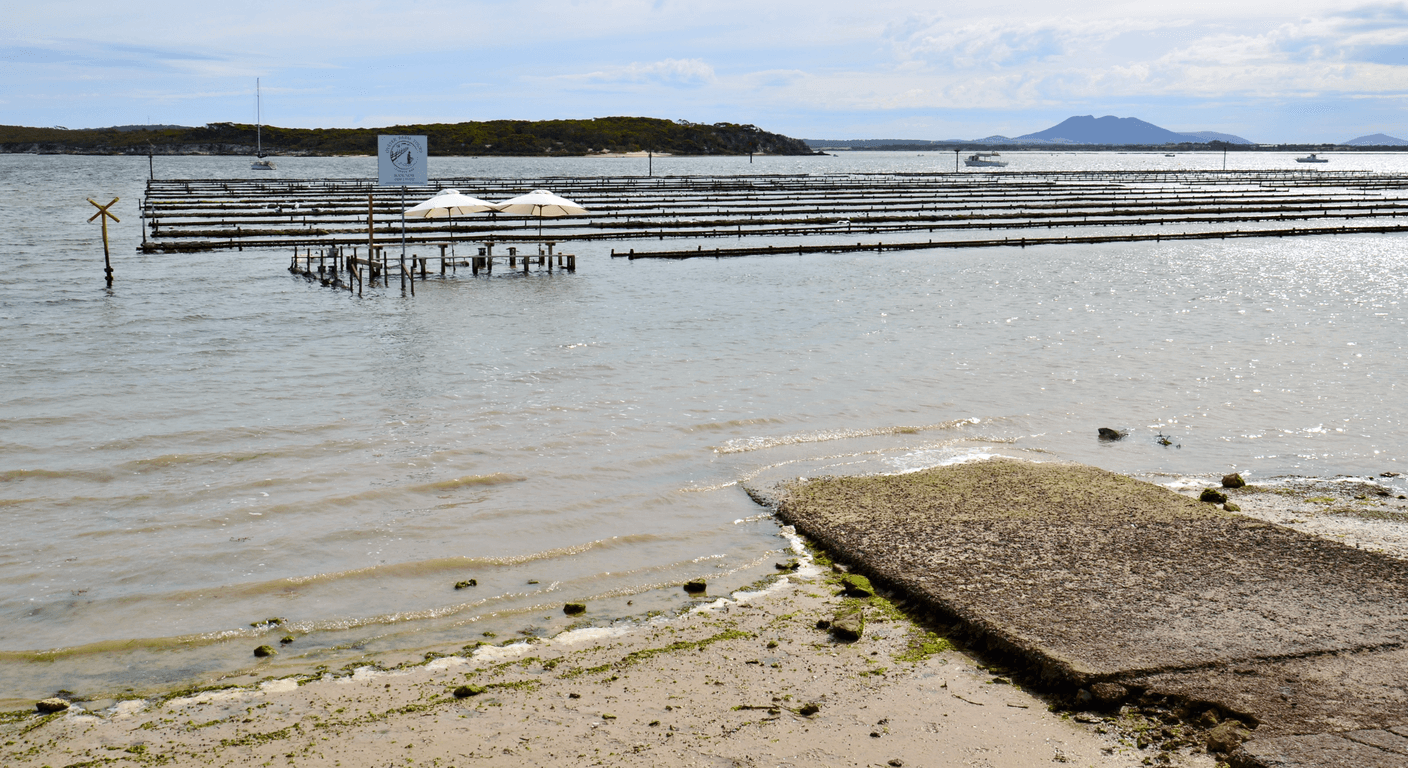
Coffin Bay is the name most people associate with the Eyre Peninsula's oyster industry, and for good reason. The Pacific oysters grown here have a reputation across Australia for their size, salinity balance and clean finish. The bay itself is shallow, protected and extraordinarily calm — on a clear autumn morning it looks like hammered pewter. The town of Coffin Bay is small and quiet, with a handful of accommodation options and a relaxed café culture that suits travellers who want to eat well without fuss.
The oyster farm tours are the centrepiece experience. Several operators run guided tours of working leases, and the format has evolved to suit visitors who may not want to pull on waders and wade through tidal shallows. Deck-based tasting experiences — where you sit on a platform or boat, shuck oysters fresh from the water, and eat them with a squeeze of lemon or a splash of mignonette — are now a standard offering alongside the wade-in versions. For travellers with knee replacements, hip issues or simply a preference for staying dry, ask operators directly about deck-only options when booking. Indicative tour costs run from around $60 to $100 per person, though pricing varies by operator and format — confirm current prices before booking.
Beyond the tours, Coffin Bay National Park borders the town and offers coastal walking trails ranging from short, flat strolls to longer hikes. The park entry fee applies; check current rates with Parks SA. For those whose walking is limited, the drive-through sections of the park still deliver wide coastal views without requiring extended time on foot. The town's oyster shacks and small restaurants serve the product simply and well — this is not the place for elaborate preparations. A dozen oysters, good bread and a local white wine is the appropriate meal.
Port Lincoln: tuna, the marina and serious dining
Port Lincoln is the commercial hub of the Eyre Peninsula and Australia's largest fishing port by tonnage. It is a working town with a genuine economy built on seafood — tuna farming in particular — and that working character gives it an authenticity that purely tourist towns sometimes lack. The marina is the natural gathering point, lined with fishing vessels and a strip of restaurants that serve the local catch with varying degrees of ambition.
Southern bluefin tuna is the signature product. Port Lincoln supplies much of Australia's sashimi-grade tuna, and several restaurants in town serve it raw, seared or simply grilled in ways that make clear why the Japanese market values it so highly. For a Greek Australian traveller with a lifetime of eating good fish, this is the kind of meal that lands quietly and memorably. Prices at marina restaurants are generally moderate to mid-range by Melbourne standards — expect to pay roughly $30–$50 for a main course at a sit-down restaurant, though this is indicative only and you should confirm current menus and prices directly with venues.
Port Lincoln also offers cage-diving and boat-based wildlife experiences (great white shark encounters, sea lion tours) that may appeal to more active travellers in the group, though these are not the focus of a food-centred itinerary. The town has solid accommodation options from motel-style to serviced apartments, and the flat terrain around the marina makes it accessible for travellers with mobility considerations. Most of the eating and walking you will want to do is within a short, flat distance of the waterfront.
Streaky Bay: the quieter north and the jetty ritual
Streaky Bay sits about 180 kilometres north of Port Lincoln along the Flinders Highway, and the drive is worth doing if your itinerary allows an extra day or two. The town is named for the streaky, kelp-stained colours the water takes on in certain lights, and it has the feel of a place that has not tried hard to attract visitors — which is to say, it feels genuine. The population is small, the pace is slow, and the jetty is the social and practical centre of town.
The jetty at Streaky Bay is the kind of place where you sit in the late afternoon with a coffee or something stronger and watch local fishermen work. King George whiting and garfish are caught here, and the town's small eateries serve both in straightforward preparations that let the fish speak. For travellers who find the more polished food tourism of Coffin Bay a little busy, Streaky Bay offers a quieter counterpoint. Accommodation is limited but adequate — a motel or caravan park with powered sites covers most options, and the caravan park option suits couples travelling with a campervan if that is the mode.
The drive between Port Lincoln and Streaky Bay passes through Elliston and past the clifftop sculptures of the Elliston Murals — a community outdoor gallery that makes for a natural break stop. The road is flat, sealed and straightforward, though long stretches between towns mean fuel and water planning matters. Fill the tank and carry water before leaving any major town. For older travellers, building in a lunch stop at Elliston rather than pushing straight through makes the drive more comfortable.
When to go: seasons and pacing for over-50 travellers
Autumn (March to May) and spring (September to November) are the most comfortable seasons for this trip. Summer on the Eyre Peninsula can be harsh — temperatures regularly exceed 35°C, and the exposed coastal landscapes offer little shade. Winter is mild and the seafood is excellent year-round, but some smaller operators reduce hours between June and August. For a couple in their seventies who want good weather, comfortable walking conditions and reliable operator availability, April or October are the practical sweet spots.
The oyster harvest is a year-round operation, so there is no single 'oyster season' to chase — you will eat well whenever you visit. The tuna farming calendar means that fresh tuna is generally available through the warmer months in particular, though again, Port Lincoln restaurants serve it year-round in various preparations. Confirm with individual restaurants and tour operators about current seasonal availability when you book.
In terms of trip length, four to five nights is a sensible minimum for a food-focused itinerary that covers Coffin Bay, Port Lincoln and a day trip toward Streaky Bay. Trying to rush it into a long weekend leaves no room for the slow meals and unhurried mornings that make this kind of travel worthwhile. If you have a week, you can add Streaky Bay as an overnight rather than a day trip, which changes the experience considerably.
Accessibility, pacing and practical notes for seniors
The Eyre Peninsula is broadly accessible for older travellers with moderate mobility. The main towns are flat, car-centric and easy to navigate. The challenges are specific rather than general: some oyster farm access points involve walking on uneven sandy or gravelled surfaces, boarding small boats, or stepping down onto floating pontoons. If either traveller uses a walking frame, has significant balance issues or is not confident on unstable surfaces, confirm the specific physical requirements of any tour before booking — reputable operators will be honest about what is involved and can often suggest alternatives.
Self-pacing is one of the genuine advantages of driving your own hire car through this region. There is no schedule to keep, no tour group waiting. If one afternoon's plan feels too ambitious, you sit on the jetty instead. The distances between towns are real and should be respected — do not plan more than two to three hours of driving on any single day if you want to arrive somewhere and actually enjoy it. Build rest time into each afternoon. The light is extraordinary in the late afternoon, and the best oysters you will eat on this trip will probably be consumed while sitting still.
Medical facilities on the Eyre Peninsula are limited outside Port Lincoln, which has a regional hospital. Carry sufficient prescription medication for the full trip plus a few extra days, and ensure travel insurance covers the region — some policies have limitations around remote areas. Flying home from Port Lincoln rather than driving back gives a clean exit if health or fatigue becomes a consideration mid-trip. These are not reasons to avoid the trip; they are reasons to plan it properly.
Quick planning guide
| Ideal pace | Slow-paced, self-driven with rest afternoons built in |
|---|---|
| Best months | Autumn (March–May) or spring (September–November); April or October ideal |
| Suggested stay | Four to five nights minimum |
| Mobility level | Moderate — flat, car-centric towns, but some uneven ground at oyster farm access points |
| Cost level | Mid-range — oyster tours around $60–$100pp, restaurant mains roughly $30–$50 |
| Comfort level | Relaxed and unhurried, with quiet towns and easy pacing |
| Best for | Food-focused over-50 travellers and couples who prefer slow, authentic travel over crowds |
| Main planning consideration | Fly into Port Lincoln rather than drive from Adelaide, and confirm deck-only tasting options for mobility before booking oyster tours |
Key takeaways
- Flying into Port Lincoln with Rex Airlines saves a full day of driving each way and is the practical choice for most over-50 Victorian travellers.
- Coffin Bay oyster farm tours now include deck-tasting options that do not require waders — confirm with operators before booking if mobility is a consideration.
- Indicative oyster tour costs run from around $60 per person; always confirm current pricing directly with operators before booking.
- Autumn (March–May) and spring (September–November) offer the most comfortable temperatures for food-focused travel on the Eyre Peninsula.
- A minimum of four to five nights allows a proper pace across Coffin Bay, Port Lincoln and a day trip toward Streaky Bay.
- Carry prescription medication for the full trip plus a buffer, and ensure travel insurance covers remote South Australian regions.
Recommended partners and links
Indicative prices only — always confirm with the operator before booking.
Frequently asked questions
Do I need to get into the water to do an oyster farm tour at Coffin Bay?
No. Several Coffin Bay operators offer deck-based or boat-based tasting experiences where you stay dry and still shuck and eat oysters fresh from the water. If you prefer this format, confirm the specific tour type with the operator when you book, as offerings vary.
How do I get from Melbourne to Port Lincoln?
Rex Airlines operates scheduled flights between Melbourne and Port Lincoln, typically connecting via Adelaide. The alternative is a long drive from Adelaide — roughly 650 kilometres on sealed roads — which most over-50 travellers find significantly more tiring than flying. Check current Rex schedules and fares at rex.com.au.
What is the best time of year to visit the Eyre Peninsula for food travel?
Autumn (March to May) and spring (September to November) are the most comfortable seasons. Summer temperatures frequently exceed 35°C and some smaller operators reduce winter hours, though seafood quality is consistent year-round. April and October are generally the most reliable months.
Is the Eyre Peninsula accessible for older travellers with mobility limitations?
The main towns are flat and car-accessible, which suits most older travellers well. Specific challenges exist at some oyster farm access points, which may involve uneven ground or boarding small boats. Confirm the physical requirements of any tour with the operator in advance — most can advise on the most suitable format for your needs.
How many nights should I allow for an Eyre Peninsula food trip?
Four to five nights is a sensible minimum to cover Coffin Bay, Port Lincoln and a day trip toward Streaky Bay without rushing. A full week allows Streaky Bay as an overnight stop rather than a day trip, which gives a more relaxed experience of the region's quieter north.