Fitzroy Island is a 45-minute catamaran ride from Cairns' Reef Fleet Terminal, making it one of the most accessible Great Barrier Reef day trips on offer. April to October, the dry season, is the best time to go, and a single day is enough to cover reef snorkelling, a glass-bottom kayak, and the Cairns Turtle Rehabilitation Centre. Footing is moderate — beaches are coral rubble requiring reef shoes — though the resort area itself is flat and easy.
Why Fitzroy Island Works for a Day Trip
There's a particular pleasure in a reef experience that doesn't demand a 6am departure, a two-hour open-water crossing, and a return home feeling vaguely seasick. Fitzroy Island is 29 kilometres southeast of Cairns, well inside the reef's outer edge, and the fast catamaran ride takes around 45 minutes each way. You're on the island by mid-morning, back in Cairns well before dinner. For a solo traveller who's flown up from Melbourne and wants one genuinely memorable reef day without committing to a full offshore expedition, this is a sensible, rewarding choice.
The island itself is a continental island — granite and rainforest, not a low coral cay — with a small resort, a national park campground, and the kind of fringing reef that rewards a snorkel mask and an hour of patience. It's not the outer reef's walls of coral, but it's real, it's accessible, and on a calm dry-season day the water is clear enough to make you glad you bothered. The ferry departs from the Cairns Reef Fleet Terminal, which is a short walk or taxi from the CBD and most hotels.
Getting There: The Ferry and What to Expect on Board
The catamaran to Fitzroy Island is operated by Reef Edge and departs from the Cairns Reef Fleet Terminal on the foreshore. The crossing is sheltered by the reef system, so it's generally calm — though anyone prone to motion sickness should still take precautions on choppier days in the wet season. The vessel is comfortable with indoor and outdoor seating, and the 45-minute crossing goes quickly. Multiple departures run daily; confirm the current schedule when booking, as times shift seasonally.
Return fares are roughly $90–$110 per adult at the time of writing — confirm current pricing directly with the operator and ask specifically about concession rates for seniors or pension cardholders, as these can apply and aren't always prominently advertised. Booking ahead online is straightforward and avoids any last-minute scramble at the terminal, though outside school holidays the service rarely turns people away.
Honest Footing: What the Beaches Are Actually Like
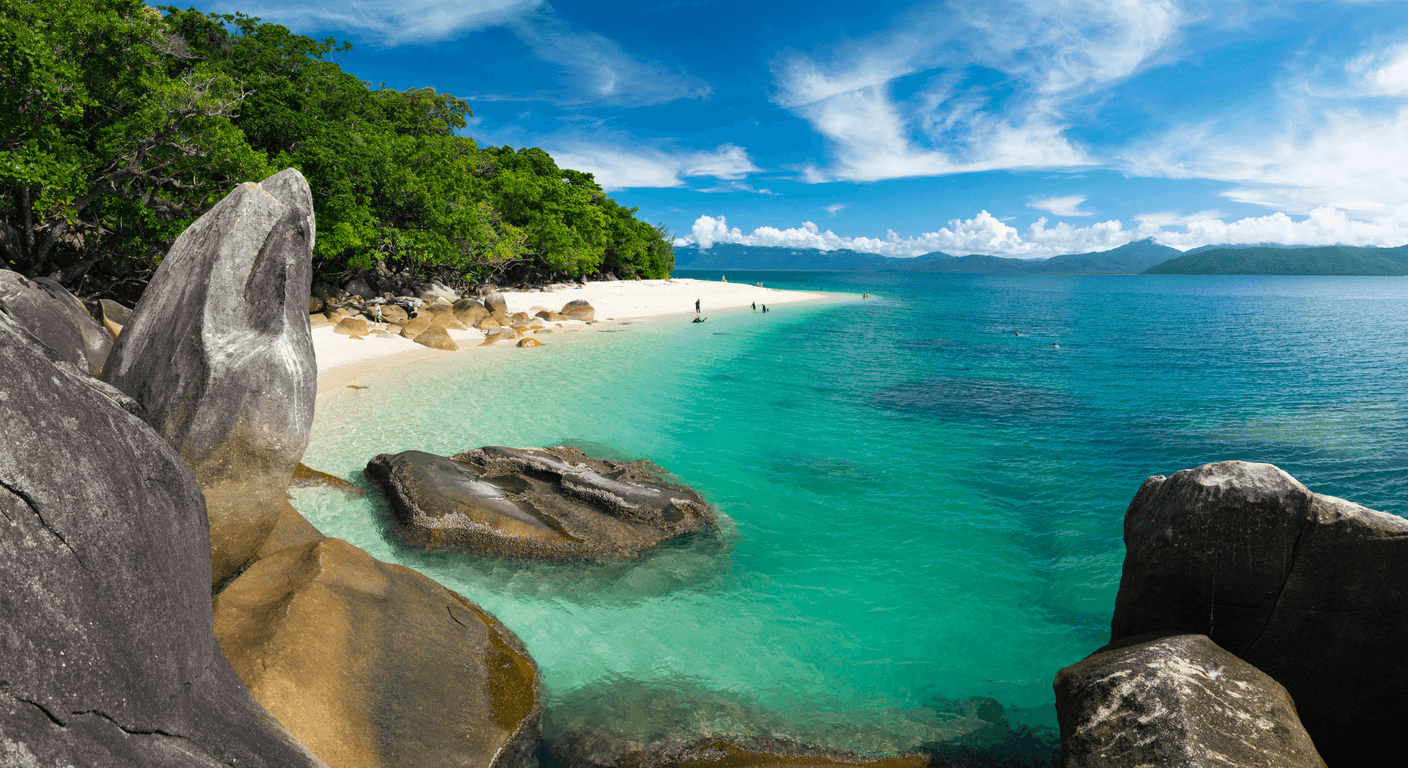
This is worth saying plainly before you picture yourself padding across white sand: the beaches on Fitzroy Island are coral rubble, not sand. Nudey Beach — the island's most photographed spot, a short walk through rainforest from the resort — is a beautiful crescent of crushed coral and small reef fragments. It's striking, and the snorkelling directly off it is excellent. But walking on it barefoot is uncomfortable, and for anyone with balance considerations or uncertain ankles, it can be genuinely tricky.
Reef shoes are not optional here — they're the difference between enjoying yourself and wincing through the afternoon. Pack a pair, or hire them from the resort. The foreshore near the resort has similar coral rubble in the shallows. The good news is that the resort area itself — the cafe, bar, deck, and shaded seating — is on flat, firm ground and poses no difficulty at all. You can have a perfectly good day on Fitzroy Island without ever setting foot on a beach, if that's what suits you.
The walk to Nudey Beach takes around 10 to 15 minutes on a formed path through rainforest. It's not steep, but the path is uneven in sections and can be slippery after rain. Take it slowly, wear closed shoes for the walk and swap to reef shoes at the beach. There's no signage suggesting it's a difficult walk, but for anyone with hip or knee concerns, it's worth factoring in before you commit to the round trip.
Snorkelling, Kayaking, and Getting in the Water
The snorkelling off Fitzroy Island is the reason most people make the trip, and it delivers. The fringing reef around the island supports fish life, coral formations, and the occasional sea turtle — encounters that feel genuinely lucky rather than staged. Equipment hire is available from the resort: mask, snorkel, fins and reef shoes can be hired as a set for a roughly indicative $25–$45 (confirm current prices on arrival or when booking). For anyone who hasn't snorkelled in a while, the calm, shallow water near the beach is a forgiving place to get comfortable again.
Glass-bottom kayaks are one of the better options for travellers who want to see the reef without getting wet. You paddle over the coral and look straight down through the transparent hull — no swimming ability required, and you control the pace entirely. Hire is available from the resort beach area. It's worth going out in the morning when the water is calmer and the light is at its best for visibility. Afternoons can pick up a breeze.
For those who prefer to stay dry altogether, the shaded seating on the resort deck offers a genuine view over the water, and there's something to be said for sitting with a cold drink watching the reef through binoculars while everyone else does the hard work.
The Turtle Rehabilitation Centre: Worth the Small Fee
One of the more unexpected and genuinely moving parts of a Fitzroy Island day is the Cairns Turtle Rehabilitation Centre, located on the island and run by a dedicated team of wildlife carers. The centre takes in injured and sick sea turtles — most with boat-strike injuries or entanglement trauma — rehabilitates them, and releases them back into the wild when ready. It's not a tourist attraction in the commercial sense; it's a working facility that opens its doors to visitors via guided tours.
Tours run at set times and involve a small admission fee; confirm current tour times and pricing directly with the centre before your trip, as schedules can change. The guides are knowledgeable and unsentimental — they'll tell you exactly what's wrong with each patient and what recovery looks like. For a solo traveller with any interest in wildlife, it's a highlight of the day that most people don't know to expect. Allow around 30 to 45 minutes for the tour.
Food, Drink, and Pacing the Day
The Fitzroy Island Resort cafe and bar handles the food and drink side of the day, and it does so without pretension. The menu covers the basics — burgers, salads, fish and chips, cold drinks, and a decent coffee — at resort prices that are reasonable given there's no competition on the island. The bar is licensed and the deck is shaded. It's a good place to decompress after a snorkel or before the ferry home.
A well-paced day on Fitzroy Island might look like this: morning ferry, reef shoes on and a glass-bottom kayak out before the crowds arrive, turtle centre tour mid-morning, Nudey Beach walk and a snorkel before lunch, then a long lunch on the deck and a quiet hour in the shade before the afternoon ferry. That's a full day without rushing a single part of it. Check the ferry return times when you book and plan your afternoon accordingly — missing the last ferry would be an expensive inconvenience.
There are no ATMs on the island, so carry cash or ensure your card works. Mobile coverage can be patchy. Neither of these things is a problem if you know about them in advance.
Practical Matters for Travelling from Victoria
Flying to Cairns from Melbourne takes roughly three to three and a half hours on a direct service, with Qantas, Jetstar, and Virgin Australia all operating the route. Direct flights are available most days; confirm schedules when booking. Cairns is in the Australian Eastern Standard Time zone, so there's no time-zone adjustment — one less thing to think about.
The dry season, April through October, is the clear choice for a trip like this. Cairns in the wet season (November to March) is hot, humid, and prone to afternoon storms that can affect ferry services and make a day outdoors genuinely uncomfortable. The stinger season — when box jellyfish and irukandji are present in the water — also runs through the wet months, which limits swimming at the island's beaches without a stinger suit. In the dry season, stinger risk is low but not zero; ask the resort staff about current conditions on the day.
Travel insurance is essential and worth reviewing carefully if you have any pre-existing conditions. Confirm that your policy covers water activities including snorkelling and kayaking. Medicare covers emergency medical care in Queensland, but evacuation from an island, if needed, is a different matter. The standard advice applies: read the policy document, not just the brochure.
Quick planning guide
| Ideal pace | Relaxed single-day itinerary with time built in for lunch and rest |
|---|---|
| Best months | April to October (dry season, calmer seas, outside stinger season) |
| Suggested stay | Full day trip from Cairns |
| Mobility level | Moderate — flat resort area, but coral rubble beaches and an uneven rainforest path to Nudey Beach |
| Cost level | Mid-range (ferry roughly $90–$110 return, plus optional equipment hire and centre admission) |
| Comfort level | Comfortable, with shaded resort deck, cafe and bar; reef shoes recommended for beach areas |
| Best for | Solo or independent travellers wanting a genuine reef and wildlife experience without a full offshore expedition |
| Main planning consideration | Confirm ferry return times and current pricing in advance, and pack reef shoes for coral rubble beaches |
Key takeaways
- Fitzroy Island is a 45-minute catamaran ride from Cairns — one of the most accessible Great Barrier Reef day trips available without a full offshore expedition.
- Return ferry fares are roughly $90–$110; confirm current pricing and ask about senior or concession rates when booking.
- Nudey Beach and the foreshore are coral rubble, not sand — reef shoes are essential, and confident footing matters.
- The glass-bottom kayak is one of the best options for seeing the reef without swimming, at your own pace and in calm water.
- The Cairns Turtle Rehabilitation Centre runs guided tours for a small fee and is a genuine wildlife encounter, not a tourist show.
- April to October is the right time to visit: dry, lower humidity, calmer seas, and outside the marine stinger season.
Recommended partners and links
Indicative prices only — always confirm with the operator before booking.
Frequently asked questions
How long is the ferry from Cairns to Fitzroy Island?
The fast catamaran from the Cairns Reef Fleet Terminal to Fitzroy Island takes approximately 45 minutes each way. The crossing is generally calm as it's sheltered within the reef system, though conditions can vary in the wet season.
Is Fitzroy Island suitable for travellers with mobility concerns?
The resort area — cafe, bar, deck, and shaded seating — is flat and accessible. The beaches, including Nudey Beach, are coral rubble rather than sand, which makes footing uneven and can be challenging for anyone with balance, hip, or knee concerns. Reef shoes are essential. The walk to Nudey Beach is around 10–15 minutes on an uneven rainforest path.
Do I need to be a strong swimmer to enjoy Fitzroy Island?
No. The glass-bottom kayaks allow you to view the reef without getting in the water at all. The snorkelling is in relatively calm, shallow water suitable for occasional or returning snorkellers. If you prefer to stay completely dry, the resort deck and cafe are comfortable places to spend the day.
What is the best time of year to visit Fitzroy Island from Victoria?
April to October is the recommended window. This is Cairns' dry season: lower humidity, calmer seas, and outside the marine stinger season that runs through the wetter summer months. Avoid the wet season (November to March) for comfort and to reduce disruption risk to ferry services.
Is the Cairns Turtle Rehabilitation Centre worth visiting on a day trip?
Yes. The centre rehabilitates injured sea turtles and runs guided tours for a small admission fee. Tours last around 30–45 minutes and are led by knowledgeable staff. Confirm current tour times and pricing directly with the centre before your trip, as schedules can change.