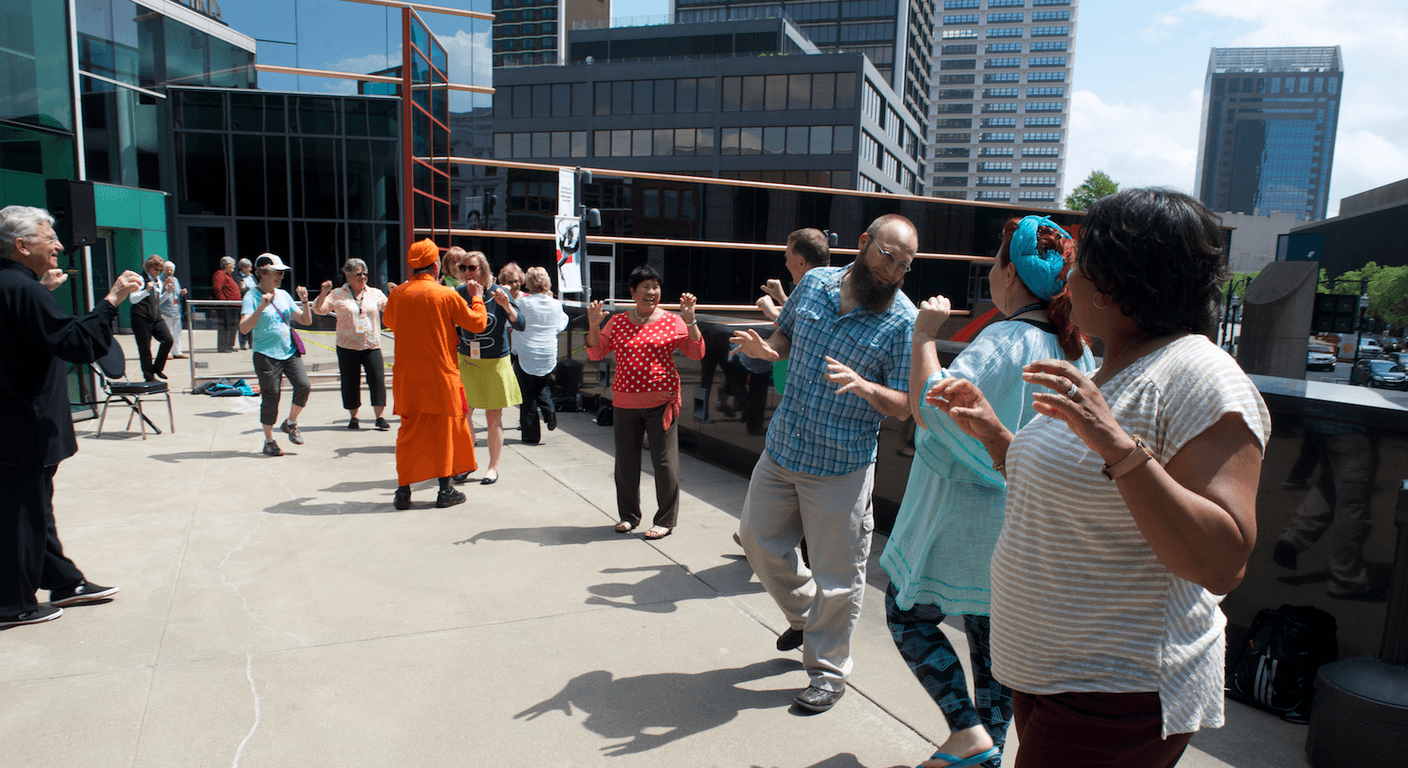
Free or gold-coin tai chi and gentle yoga sessions run in parks and community spaces across Australia, organised by local councils, community health services, and neighbourhood houses (Victoria alone has more than 400). Aimed at people over 50, including grey nomads moving between towns, sessions typically run 45 to 60 minutes from around 7:30am. Confirm current times directly with the local council or neighbourhood house before attending, since schedules shift seasonally and websites aren't always up to date.
Why These Classes Exist — and Who They're Really For
Most Australians over 50 walk past these sessions without realising what they are. A group of older adults moving slowly through a park at eight in the morning, following an instructor who appears to be in no particular hurry — it looks informal because it is. That's the point. These programs are funded or facilitated by local councils, community health services, and national bodies like the Heart Foundation precisely because they lower the barrier to movement. No membership. No activewear required. No fitness assessment at the door.
Tai chi in particular has a long history of community delivery in Australia, partly because of the country's significant Chinese Australian population and the cultural familiarity that brings, and partly because the evidence base for its benefits in older adults — balance, joint mobility, reduced fall risk — is solid enough that health departments take it seriously. Gentle yoga classes operate in the same space: low-impact, adaptable, and run by instructors who understand that a 73-year-old's body is not a 35-year-old's body. They're not watering it down. They're doing it properly.
For couples, these sessions offer something beyond exercise. A shared routine, a familiar face each week, a reason to be outside in the morning. For grey nomads moving through towns, dropping into a local session is one of the faster ways to get a genuine read on a community — who shows up, how they talk to each other, what the town is actually like beneath the main street.
Where Do You Actually Find These Sessions?
The honest answer is that these programs are chronically under-marketed. They're funded for community benefit, not for audience growth, so you won't find them running Facebook ads or appearing in travel listicles. The places to look are quieter and more reliable: your local council's community events page or active ageing directory, the noticeboard inside your nearest library branch, and the front desk of your neighbourhood house.
Neighbourhood Houses are particularly useful. Victoria alone has more than 400 of them, each functioning as a community hub with rotating programs. Many partner directly with local councils or Medicare-linked health services to run free wellness classes. The national directory at neighbourhoodhouses.org.au is a reasonable starting point, but walking in and asking is faster. The person at the front desk will almost certainly know of at least one tai chi or yoga session within easy distance.
The Heart Foundation's Walking program (heartfoundation.org.au/activities/walking) also maintains a national register of free group walks, some of which incorporate gentle movement or stretching components. It's worth checking even if walking isn't the primary goal — the social infrastructure around these groups often connects you to other programs you'd never have found otherwise. Word of mouth, in this world, still travels faster than any website.
What to Expect When You Turn Up
Most outdoor sessions run for 45 to 60 minutes, starting early — often 7:30 or 8am — to avoid the heat. In Victoria, spring and autumn are the sweet spots for outdoor classes; through summer, many councils shift sessions indoors or into shaded venues. Participants bring their own water and wear comfortable clothing. There's no sign-in sheet in many cases, and no obligation to return the following week, though most people do.
Instructors at council-funded sessions are generally qualified in their discipline and experienced with older adult groups. If you or your partner have a specific joint issue or balance concern, mention it quietly before the session starts. A good instructor will quietly adjust cues for you. This isn't a class where anyone is keeping track of who can touch their toes.
Gold coin donation sessions — common at neighbourhood house-run programs — are just that. A dollar or two, a tin near the door, entirely optional if finances are tight. Nobody checks. The culture around these programs tends to be quietly egalitarian, which is part of what makes them work.
A Note on Grey Nomads: Finding Classes on the Road
For couples travelling Australia by caravan or motorhome, the rhythm of these classes can become a pleasant ritual in each new town. Pull into a caravan park on a Tuesday, find the local library or council website by Wednesday, and there's a reasonable chance of a session on Thursday morning. It doesn't always work out that way, but it works out often enough to be worth the habit.
Smaller regional towns sometimes run classes through their local RSL, Men's Shed adjacent programs, or community health centre — bodies that don't always appear in national directories. The caravan park manager or tourist information centre staff, particularly in towns with significant retiree populations, often know exactly where and when these sessions happen. Ask directly.
One practical note: in remote or very small communities, formal programs may not exist. That's the honest reality. But even then, a flat park and a YouTube tai chi sequence on a tablet is a reasonable substitute — and costs nothing.
The Cost Question — and What 'Free' Actually Means
When a council or community health service describes a class as free, it generally means free at the point of attendance. The program is funded through council budgets, state government active ageing grants, or Medicare-linked primary health network funding. For participants, there's no invoice, no direct debit, no annual registration fee. That's a meaningful distinction for retirees managing fixed incomes.
Some programs ask for a Health Care Card or Pension Card at initial registration — not to charge you, but to access the correct funding stream. Others require nothing at all. If a session at a neighbourhood house asks for a gold coin, that contribution goes toward the cost of the venue or a small thank-you for the instructor, not to a profit margin. The economics here are genuinely different from a commercial yoga studio.
For travellers, the fairness of this system is worth noting: you don't need to be a local ratepayer to attend a council-facilitated outdoor class. The sessions are community-facing, not resident-only. A couple from Melbourne attending a tai chi session in a Ballarat park on a Tuesday morning is entirely welcome. No one will ask for your postcode.
Building a Routine — At Home and Away
The real value of these sessions compounds over time. A couple who attends the same park tai chi session each Wednesday morning for six months knows the instructor's name, has met the other regulars, and has built a gentle, non-negotiable structure into the week. That structure — modest as it sounds — is associated with better physical and mental outcomes in older adults. The research on social connection and longevity is consistent on this point.
For Greek Australian families — and many multicultural communities more broadly — the social dimension of these sessions often mirrors something familiar: the gathering, the conversation before and after, the sense of shared effort without competition. Some councils, particularly in Melbourne's western and northern suburbs, run tai chi sessions with instructors who speak community languages. Worth asking.
If the goal is to maintain a routine while travelling, the approach is simple: build the habit of looking for a session in each new location as part of arrival. Check the local council website, ask at the information centre, look at the library noticeboard. It takes twenty minutes and occasionally yields nothing — but often enough, there's a group in a park somewhere, at eight in the morning, doing exactly what you'd like to be doing.
Practical Steps Before Your First Session
Confirm the session is still running before you go. This is the single most important step. Council programs change with the seasons, instructors move on, venues shift. A phone call to the neighbourhood house or a quick email to the council's active ageing team takes two minutes and saves a wasted trip. Do not rely solely on a website that may not have been updated since last autumn.
Wear flat, non-slip shoes — not thongs, not runners with thick cushioning that throws off your balance. Bring water and, in summer, a hat. Arrive five minutes early on your first visit to introduce yourself to the instructor. Most instructors appreciate knowing who's new, and it's a natural way to mention any physical considerations.
If you're a couple, go together. The shared experience of learning something new — even something as gentle as tai chi's basic forms — tends to generate genuine conversation on the walk home. That, too, is part of the value.
Quick planning guide
| Who it's for | People over 50, including couples and grey nomads travelling Australia, looking for low-cost outdoor exercise and community connection. |
|---|---|
| How to start | Check the local council's community events or active ageing directory, the noticeboard at the nearest neighbourhood house or library, or ask staff directly. |
| Typical cost | Free at the point of attendance; some neighbourhood house sessions ask for an optional gold coin donation. |
| Time required | Sessions typically run 45 to 60 minutes, often starting between 7:30 and 8am to avoid the heat. |
| Where to get help | Local council's active ageing team, neighbourhood house front desk, neighbourhoodhouses.org.au, or the Heart Foundation's walking program register at heartfoundation.org.au/activities/walking. |
| Key documents needed | None generally required; some programs ask for a Health Care Card or Pension Card at registration to access the correct funding stream. |
| Main planning consideration | Confirm the session is still running before turning up — instructors, venues and schedules change seasonally and councils don't always update websites promptly. |
| Renewal or review | Not applicable — sessions aren't a one-off enrolment, but it's worth re-checking each season as many councils move classes indoors over summer. |
Key takeaways
- Most Australian councils and community health centres run free or gold-coin tai chi and gentle yoga sessions — the programs exist, they're just quietly advertised.
- Your local council's community directory, neighbourhood house noticeboard, and library branch are the most reliable places to find current sessions.
- Grey nomads can build a habit of finding a local session in each new town by checking council websites and asking at tourist information centres on arrival.
- Gold coin donation sessions are genuinely low-cost: a dollar or two, no obligation, no one checking your postcode or pension status.
- Always confirm session times directly before attending — instructors and schedules change seasonally and websites are not always current.
- These classes are community-facing, not resident-only: travellers are welcome at council-facilitated outdoor sessions regardless of where they live.
Recommended partners and links
Indicative prices only — always confirm with the operator before booking.
Frequently asked questions
Are free tai chi and yoga park sessions available across all of Australia, or mainly in cities?
Free and low-cost outdoor tai chi and yoga sessions are available in most Australian states and territories, including regional towns, not just capital cities. Coverage is strongest in Victoria, New South Wales, and Queensland, where council active ageing programs are well-funded. In smaller towns, sessions may run through community health centres or RSLs rather than councils directly. Remote communities may have limited or no formal programs. Always check your specific local council's community directory to confirm what's available in that area.
Do you need to register or book in advance for a free council tai chi session?
Many free outdoor sessions require no registration — you simply turn up. Some neighbourhood house or community health centre programs ask for a one-time registration to access funding streams, which may involve showing a Health Care Card or Pension Card. Others have no requirements at all. Confirm with the specific provider before attending, as policies vary between programs and councils.
How do grey nomads find tai chi or yoga sessions when travelling through regional Australia?
The most reliable approach is to check the local council's website or community events page shortly after arriving in a new town, then ask at the library, tourist information centre, or caravan park office. Community health centres in regional towns often run free movement classes for older adults. The Heart Foundation's walking group register at heartfoundation.org.au/activities/walking is also a useful national starting point, as walking groups sometimes connect participants to broader wellness programs.
Are these sessions suitable if you have joint issues, balance problems, or limited mobility?
Tai chi and gentle yoga sessions delivered through council and community health programs are specifically designed for older adults, including those with joint concerns, balance challenges, or limited mobility. Instructors at these sessions are generally experienced with adaptive delivery. It's worth mentioning any specific concerns to the instructor before the session starts — most will quietly adjust cues or offer modified movements without drawing attention to it. If you have significant mobility limitations, contact the session organiser in advance to confirm the setting is accessible.
What if there's no free session in the area where you're staying?
If no formal program exists in a particular location — which can happen in very small or remote communities — a flat, shaded park and a reputable tai chi or gentle yoga video on a tablet or phone is a practical alternative at no cost. YouTube channels from established Australian health organisations offer guided sessions. The social element is lost, but the physical routine can continue. In this case, the Heart Foundation walking group register is still worth checking, as group walks sometimes fill a similar social and movement function.