George Town, Penang is best visited between December and February, when humidity is slightly lower. Allow four to five days to eat your way through the heritage precinct without rushing. The defining draw is the extraordinary layering of Nyonya, Chinese hawker, Indian Muslim and Malay street food in one walkable district. Mobility rating: Moderate — footpaths are uneven and heat is real. Australians fly via Kuala Lumpur or Singapore; total door-to-door travel is typically ten to fourteen hours.
Getting There: The Flight Reality from Australian Cities
There are no direct flights from Australia to Penang International Airport. Every routing — from Sydney, Melbourne, Brisbane or Perth — involves a connection, either through Kuala Lumpur (KUL) on Malaysia Airlines or AirAsia, or through Singapore (SIN) on Singapore Airlines or Scoot. The Kuala Lumpur connection is usually shorter in total flying time (roughly ninety minutes onward to Penang), but the transfer at KLIA can involve significant walking between terminals. The Singapore routing adds distance but KLIA Changi is one of the easiest airports in the world to transit — lifts everywhere, clean rest areas, and English spoken fluently.
Total door-to-door travel time from Melbourne or Sydney is typically eleven to fourteen hours. From Perth it's closer to ten. From Brisbane, add an hour. That's a meaningful amount of travel for any age group, and for over-50 travellers arriving in thirty-degree humidity, the advice is simple: book a night in Kuala Lumpur or Singapore on the way through if your schedule allows it, or at minimum book an airport hotel at your connecting city if you have a long layover. Arriving in George Town exhausted and walking straight into a food crawl is a recipe for a bad first day.
Jet lag from the time difference (Malaysia is three hours behind Sydney, two hours behind Melbourne in AEST) is relatively mild — most travellers adjust within a day or two. The bigger physical challenge is the heat and humidity, not the time zone. Confirm current visa requirements with the Australian Department of Foreign Affairs and Trade (smartraveller.gov.au) before booking — Malaysian e-visa and visa-on-arrival rules have changed more than once in recent years and you want current information, not last year's forum posts.
Why the Heat Changes Everything — and How to Plan Around It
George Town sits close to the equator. The temperature in the heritage precinct hovers between thirty and thirty-three degrees Celsius for most of the year, and the humidity means it feels warmer. December to February is marginally drier and slightly more comfortable — that's the window most experienced Penang visitors recommend. But even then, walking the five-foot ways of Lebuh Chulia or Armenian Street between ten in the morning and four in the afternoon is tiring work. The footpaths are narrow, frequently obstructed by parked motorbikes, signage and the overhanging eaves of shophouses, and they're uneven underfoot. A rolled ankle is not the souvenir you came for.
The practical solution is to eat in two distinct shifts: early morning, from around seven until nine-thirty or ten, when the air is cooler and the hawker stalls are at their freshest; and late afternoon from about four-thirty, once the worst of the heat has broken. The gap between those windows is yours to spend in air-conditioned comfort — your hotel room, a heritage café, one of the air-conditioned kopitiam (coffee shop) chains, or the Penang State Museum. This isn't a compromise. It's how the locals eat. Lunch, if you want it, is best taken somewhere with proper seating and a ceiling fan at minimum.
Carry water constantly and consider bringing electrolyte sachets or rehydration tablets from Australia — the ones you can dissolve in a bottle of water. They're available in Malaysian pharmacies too (Guardian and Watsons chains are common in George Town), but having them in your daypack from day one is sensible. Lightweight, loose-fitting clothing in natural fibres is far more useful here than anything synthetic.
What to Eat — and Where to Sit Down to Do It
The food in George Town is the whole point. It's a city where Hokkien Chinese, Nyonya (Peranakan), Tamil Muslim, Malay and South Indian cuisines have been cooking alongside each other for two centuries, and the cross-pollination is delicious. For travellers with Indian-Australian backgrounds, there's something particularly resonant about the Tamil Muslim hawker stalls — the mamak culture, the roti canai, the fish curries — that carry echoes of South Indian cooking but have evolved into something distinctly Penangite. Char kway teow, asam laksa, Hokkien mee, cendol, nasi kandar: these are the benchmarks, and George Town is the place to eat them.
Hawker stalls are the heart of it, but they come with practical realities worth naming plainly. Most hawker centres — Gurney Drive Hawker Centre, New Lane (Lorong Baru), Red Garden Food Paradise — have shared plastic stools and low tables with no back support. Standing for long periods while waiting is common. English menus exist at many stalls but not all; pointing at what the next table is eating works perfectly well, and most hawkers will confirm what's in a dish if you ask clearly. Hygiene standards vary — the reliable indicator is turnover. A stall with a queue and a hot wok going constantly is a far safer bet than one sitting quiet at peak mealtime.
Sit-down restaurants are the gentler alternative for evenings. Nyonya restaurants like Auntie Gaik Lean's Old School Eatery (book ahead — it fills quickly) and the various heritage restaurants along Armenian Street and Jalan Penang offer proper chairs, menus with photographs, English-speaking staff and a more relaxed pace. Budget roughly twenty-five to fifty Australian dollars per person for a proper dinner with drinks. That's not cheap by hawker standards but it's excellent value by any reasonable measure, and the seating alone is worth it after a day on your feet.
The Shape of a Gentler Food Day in George Town
A well-paced food day might look like this — times are indicative and will vary by your hotel location and chosen stops, so treat them as a framework rather than a timetable. By seven in the morning, head to a kopitiam near your hotel for coffee and toast with kaya (coconut jam) or a bowl of congee. The morning air is the coolest it'll get. By eight-thirty, you're at a hawker centre for a proper breakfast — char kway teow or Hokkien mee if you're going savoury, cendol or chendol if you want something sweet and cold. You're done and back in air-conditioning by ten.
From ten until four, that's your rest window. This is when you visit an air-conditioned museum (the Penang State Museum on Farquhar Street, or the Pinang Peranakan Mansion on Church Street — confirm opening hours before you go), sit in a heritage café with a slow coffee, or simply return to your hotel for a nap. Do not feel any obligation to be productive in the midday heat. Experienced travellers don't.
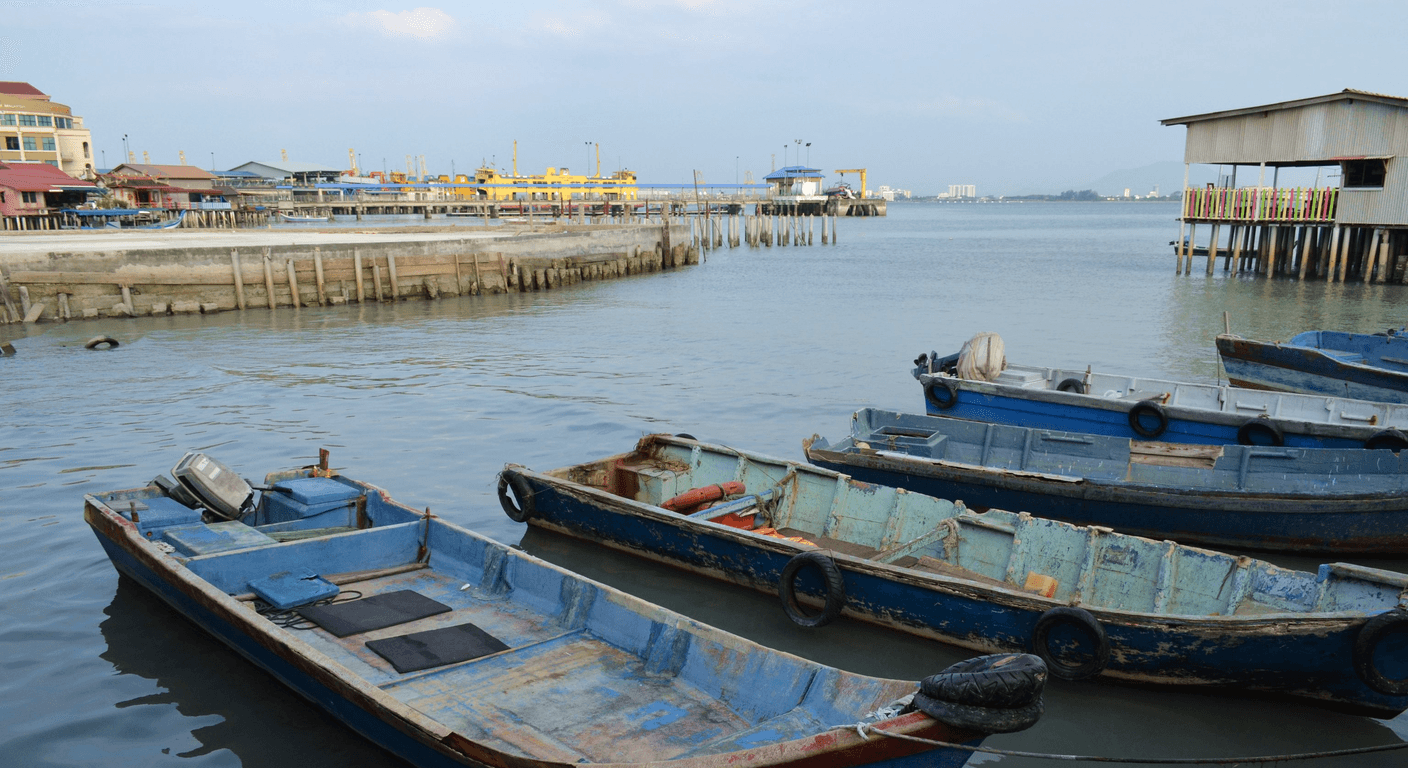
From four-thirty, head out again. This is the best time for a slow walk along Armenian Street or Chew Jetty — the light is better for photographs too. By six, the hawker centres are coming to life for dinner. At a sit-down restaurant, aim for a six-thirty reservation to avoid the peak crowd. You're back at your hotel by nine, and you've had a genuinely good food day without exhausting yourself. Note: public toilets in George Town's heritage precinct can be hard to find and variable in quality — your hotel lobby, the larger coffee chains, and shopping centres like Gurney Plaza are the reliable fallbacks. Know where they are before you need them.
Guided Food Tours — the Smarter Option for Pacing
A half-day guided food tour is worth serious consideration, particularly for first-time visitors. The better operators in George Town — and there are several with strong reputations — structure their tours around regular sit-downs rather than constant walking. A trishaw food tour, where a local guide takes you between three or four stops by covered trishaw rather than on foot, removes the footpath navigation entirely and is genuinely enjoyable at any age. Walking food tours that are specifically designed to include rest stops every thirty to forty minutes are a different experience from the generic 'eat everything in four hours' tours aimed at backpackers.
Budget roughly sixty to ninety Australian dollars per person for a quality half-day guided tour — confirm current pricing directly with operators as rates shift. That price typically includes the food at each stop, the guide, and transport between venues. It is, frankly, one of the better-value ways to spend a morning in George Town: you'll eat well, learn the history of each dish, and not have to make any decisions about where to go or whether that stall is a good one. The guide has already made those calls.
Look for tours that explicitly mention smaller group sizes (eight to twelve people maximum) and that describe their pace as 'leisurely' or 'unhurried'. Ask the operator directly whether the tour involves extended standing periods, and whether the route includes steps or significant uneven surfaces. A good operator will answer these questions honestly. One worth researching is the Penang Heritage Trust's guided experiences (pht.org.my), and Tourism Malaysia's website (tourism.gov.my) lists licensed tour operators. Always confirm current licensing and insurance with any operator before booking.
Healthcare, Hygiene and the Honest Stomach-Upset Conversation
Traveller's diarrhoea is a real possibility in any destination with a diverse street food scene, and George Town is no exception. The risk is manageable — busy stalls, freshly cooked food, avoiding raw salads and ice from uncertain sources — but it's not zero. If you're on medications that interact with stomach upsets (certain blood pressure medications, for instance, can be complicated by dehydration), discuss this with your GP before you travel and carry a basic traveller's medical kit.
If something does go wrong, Penang has two hospitals well used to treating international tourists: Penang Adventist Hospital on Jalan Burma and Gleneagles Penang on Jalan Pangkor. Both have English-speaking staff, international patient services, and experience with travel-related illness. They are private hospitals — your travel insurance will need to cover private medical costs, and that means comprehensive travel insurance with pre-existing condition cover is not optional. Check that your policy covers medical evacuation too. The Australian Government's Smartraveller advisory for Malaysia (smartraveller.gov.au) is the right place to check current health and safety advisories before you travel.
On the subject of insurance: if you have any pre-existing conditions, declare them fully when purchasing your policy. An undeclared condition that leads to a claim being rejected in a Malaysian hospital is a situation nobody wants to be in. The cost of comprehensive cover is real but it is not the place to economise.
Solo Travellers and Couples: Costs, Hotels and What Plays Differently
Comfortable four-star hotels in George Town's heritage precinct — think heritage shophouse conversions with proper air-conditioning, good beds and reliable hot water — run from around one hundred and twenty to one hundred and eighty Australian dollars a night for a twin or double room. Confirm current rates directly with hotels, as pricing fluctuates significantly with season and demand. The heritage zone is compact enough that almost any hotel in it puts you within a short walk or trishaw ride of the main food streets.
Solo travellers face the standard single-supplement reality: booking a room alone in a hotel priced for two typically adds thirty to eighty percent to the per-person cost. A room advertised at one hundred and fifty dollars a night for two people may cost one hundred and twenty to one hundred and forty dollars for one — you're not saving much and you're paying for space you don't use. Some boutique heritage hotels offer genuine single rooms at lower rates; it's worth asking specifically rather than assuming the double-room rate is your only option. There is no formal share-match programme for hotel accommodation in George Town — that's a cruise-industry concept — so solo travellers are simply booking a room for one.
For couples, George Town is genuinely excellent value. Two people sharing a decent hotel room, eating two hawker meals a day and one sit-down dinner, doing one guided tour and visiting a couple of museums, can expect to spend around two hundred and fifty to three hundred and fifty Australian dollars a day for the two of them — all in, including accommodation. That's a reasonable benchmark, not a guarantee; confirm everything with current operators and factor in exchange rate movement. For solo travellers, the honest daily figure is higher on a per-person basis simply because accommodation costs don't halve.
Quick planning guide
| Ideal pace | Slow — two food outings a day, rest midday in air-conditioning |
|---|---|
| Best months | December to February (drier, marginally cooler) |
| Suggested stay | 4-5 nights minimum |
| Mobility level | Moderate — uneven five-foot ways, heat and humidity are the main challenges |
| Cost level | Low to moderate — hawker meals from around $3-8 AUD, restaurant dinners $25-50 AUD per person |
| Comfort level | High if you choose your hotel and food stops carefully |
| Best for | Food-curious couples and solo travellers, culturally curious over-50s, Indian-Australian travellers who'll recognise echoes of South Indian and Tamil Muslim cuisine |
| Main planning consideration | No direct flights from Australia — all routings connect via Kuala Lumpur or Singapore, adding a transfer and 2-4 hours to your journey |
Key takeaways
- There are no direct flights from Australia to Penang — all routings connect via Kuala Lumpur or Singapore, with total travel time typically ten to fourteen hours door to door.
- George Town's heat and humidity make midday walking genuinely tiring; a two-session food day — early morning and late afternoon — is how experienced travellers pace it.
- Hawker meals cost roughly $3-8 AUD; a sit-down Nyonya or seafood restaurant dinner runs around $25-50 AUD per person — both represent strong value by Australian standards.
- A guided half-day food tour ($60-90 AUD per person, indicative) that sits travellers down regularly is a smarter choice than a self-guided food marathon on unfamiliar footpaths.
- Penang Adventist Hospital and Gleneagles Penang both have English-speaking staff and experience with international patients — know where they are before you need them.
- Solo travellers should ask heritage hotels directly about single-room rates; the default double-room single supplement can add 30-80% to your accommodation cost.
Recommended partners and links
Indicative prices only — always confirm with the operator before booking.
Frequently asked questions
Do I need a visa to visit Penang as an Australian citizen?
Australian passport holders have historically been able to enter Malaysia visa-free for short stays, but visa rules can change. Confirm current requirements with the Australian Department of Foreign Affairs and Trade at smartraveller.gov.au before booking — do not rely on forum posts or older travel guides for this information.
What is the best time of year for Australians to visit George Town, Penang?
December to February is generally the most comfortable period, with marginally lower humidity and a drier spell on the northwest coast of Peninsular Malaysia. George Town is warm and humid year-round (30-33°C), so there is no truly cool season — the difference between months is a matter of degree, not kind.
Is George Town suitable for travellers with limited mobility?
George Town's heritage precinct is rated Moderate for mobility. The streets are generally flat but footpaths (five-foot ways) are narrow, uneven, and often obstructed. A trishaw food tour removes most of the walking challenge. Travellers who use a walking frame or wheelchair will find independent navigation of the heritage streets genuinely difficult — a guided tour with a vehicle component is strongly recommended.
How do I avoid stomach upsets eating at hawker stalls in George Town?
Stick to stalls with high turnover and a hot wok going constantly — these are the safest bets. Avoid raw salads, ice from uncertain sources, and shellfish at stalls where you can't see the product moving quickly. Carry electrolyte sachets, drink bottled water, and have a basic traveller's medical kit. If you become unwell, Penang Adventist Hospital and Gleneagles Penang both have English-speaking staff experienced with tourist illness.
Are there food tours in George Town designed for older or less mobile travellers?
Yes. Trishaw food tours and walking food tours with regular seated stops are available in George Town and are well suited to over-50 travellers who want to eat well without constant standing or walking. Budget roughly $60-90 AUD per person for a quality half-day tour. Ask operators specifically about group size, walking distance, and whether the route includes steps or uneven surfaces before booking — a good operator will answer directly.
- Smartraveller — Malaysia travel advisory (Australian Government)
- Penang Global Tourism — official destination information
- Penang Heritage Trust — guided tours and heritage information
- Tourism Malaysia — official visitor information
- BrittAndMitchWorldwide — George Town, Penang food guide (YouTube)
- Penang Adventist Hospital — international patient services
- Gleneagles Penang Hospital