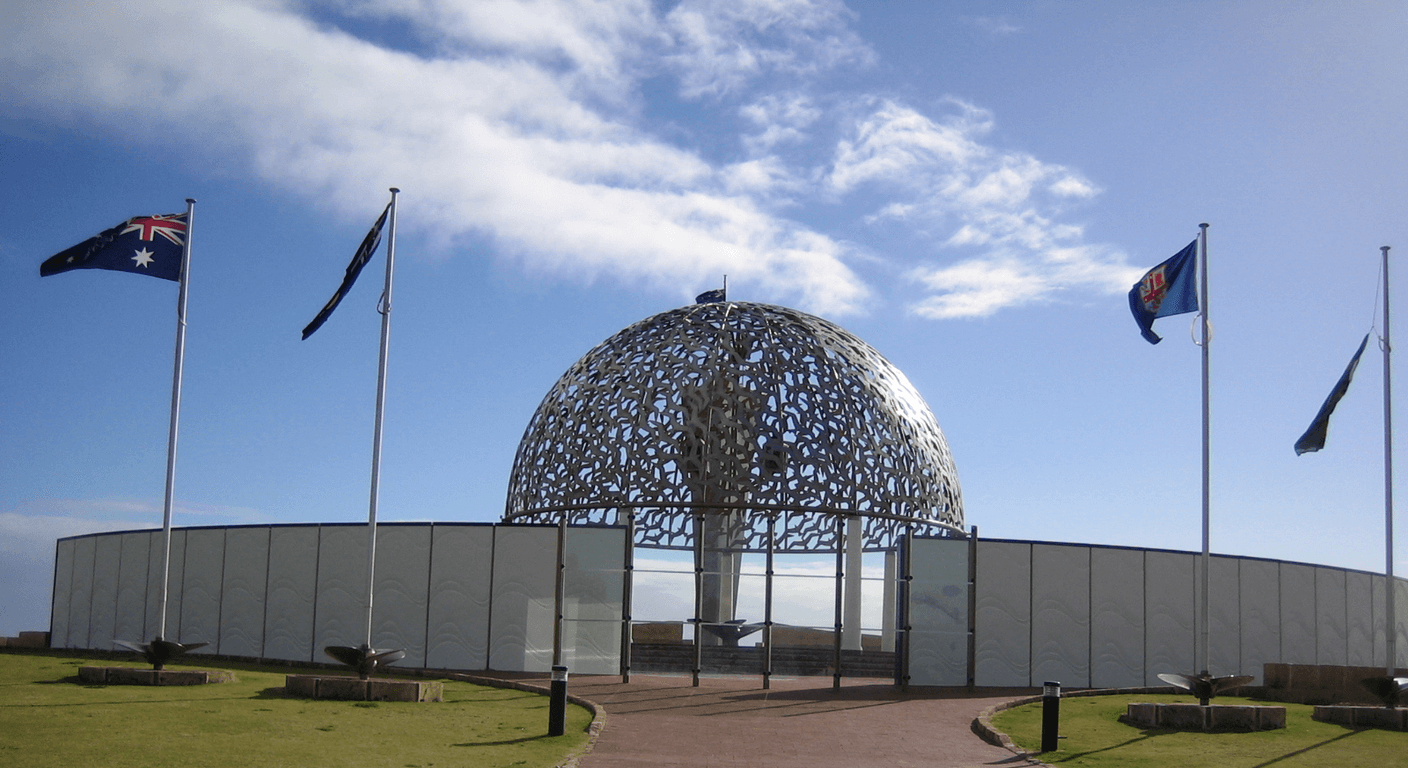
Geraldton, on Western Australia's mid-coast about four hours north of Perth, is best visited from April to October, when the climate is mild and wildflower season (peaking August–September) can be combined with the stay. The HMAS Sydney II Memorial, with its dome of 645 steel gulls honouring the ship's lost crew, is the defining highlight. Four to five nights suits a measured pace. Mobility is easy, with flat foreshore paths and one paved incline; access is via a Melbourne–Perth flight, then a hire car, Transwa coach, or short regional flight to Geraldton.
Why Geraldton works well for over-50 travellers from Victoria
Geraldton sits on Yamaji Country, about 420 kilometres north of Perth on the Batavia Coast. It is a working regional city — not a resort — which means genuine local character, affordable accommodation, and a pace that does not feel manufactured for tourists. For travellers from Victoria who are accustomed to Melbourne's density, the open sky and wide foreshore come as a welcome change of register.
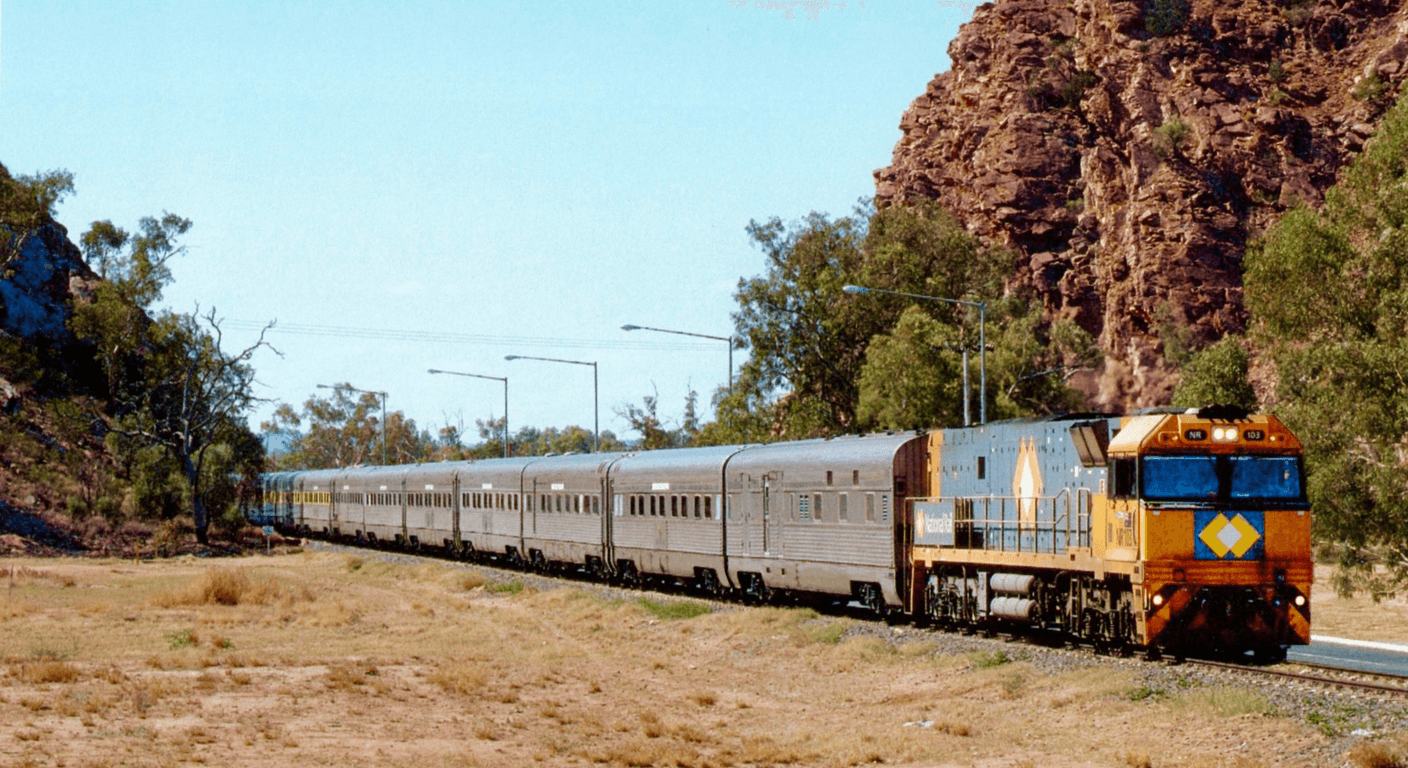
The city is compact enough to navigate without a car if you choose central accommodation, though hiring a vehicle in Perth and driving north gives you considerably more freedom, particularly if wildflower detours inland appeal. The Brand Highway north from Perth is straightforward and well-serviced. Alternatively, Transwa runs a coach service from Perth that is comfortable and reasonably priced — a practical option for solo travellers who would rather not drive a long stretch alone.
For a solo female traveller, Geraldton has the reassuring quality of a place where people notice each other. The foreshore precinct, the main street cafes, and the memorial itself all feel safe and well-frequented during daylight hours. Accommodation ranges from motels and holiday apartments close to the water to a small number of boutique guesthouses. Confirm your preferred option early, especially if you are timing a visit around the November anniversary or the August–September wildflower season, when demand increases.
Getting there from Victoria: flights, driving, and the coach option
Most travellers from Victoria fly into Perth Airport, then either hire a car or connect to Geraldton by Transwa coach. Direct flights from Melbourne (Tullamarine) to Perth operate daily with Qantas and Virgin Australia; indicative return fares run from roughly $350 to $700 depending on season and how far in advance you book, though you should confirm current prices before planning. Flying time is around three hours and forty minutes.
From Perth, the drive north to Geraldton via the Brand Highway takes approximately four hours and is largely flat and well-signposted. The route passes through small towns including Jurien Bay and Cervantes — both worth a short stop if your schedule allows. If you are not comfortable driving long distances alone or would prefer to arrive without the effort of a hire car, Transwa's coach service departs from the Perth city bus terminal and takes around five to six hours, with a stop at Dongara. Indicative one-way fares are around $45, but confirm current pricing and timetables directly with Transwa at transwa.wa.gov.au.
Geraldton Airport also accepts regional flights from Perth, operated by Qantas-linked regional carriers. Flight time is under an hour, which is a genuine option if the drive feels like too much on arrival. Check current schedules and fares directly with the relevant carrier, as regional routes do change.
The HMAS Sydney II Memorial: what to expect when you visit
The HMAS Sydney II Memorial occupies a prominent hill on the southern edge of Geraldton's foreshore precinct, at Mount Scott Reserve. It is free to enter and open daily. The memorial was dedicated in 2001, sixty years after the ship was lost with all 645 hands on 19 November 1941 — Australia's greatest naval loss in the Second World War. The wreck site was located in 2008, and the memorial has since been updated to reflect that discovery.
The centrepiece is the dome: a stainless-steel structure formed from 645 individual seagull figures, one for each crew member lost. Standing beneath it is a genuinely affecting experience — not dramatic in a loud way, but quietly absorbing. The pool of remembrance, the wall of names, and the separate Tears for Athena sculpture (a woman looking out to sea, representing those who waited at home) each carry their own weight. Allow at least an hour and a half to move through the site at a comfortable pace.
Free guided tours run on most mornings; the memorial's own signage and local visitor information suggest confirming times directly with the Geraldton Visitor Centre or via the City of Greater Geraldton website before you go, as schedules can vary seasonally. The site is on a hill, but the main paths are paved and manageable for most walkers with reasonable mobility. Parking is available close to the entrance, which matters if steps or long walks on uneven ground are a consideration. The views across the Indian Ocean from the memorial grounds are wide and unobstructed.
The Museum of Geraldton: shipwrecks, Yamaji culture, and honest history
The Museum of Geraldton, part of the Museums of History WA network, sits on the foreshore at Museum Place and is the best single indoor destination in the city. Its permanent galleries cover the 1629 wreck of the Batavia — one of the most dramatic and violent episodes in Australian maritime history — with artefacts recovered from the wreck site off the Abrolhos Islands, including a reconstructed section of the ship's hull. The detail and quality of the presentation are on a par with major city museums.
There are also galleries dedicated to Yamaji peoples and their long connection to this part of the coast, and a substantial HMAS Sydney II section that complements rather than duplicates what you see at the memorial. Taken together, the memorial and the museum give you a rounded understanding of the region's history — the ancient, the colonial, and the wartime — without overwhelming a single afternoon.
Indicative adult entry is around $15, though you should confirm current admission prices at museum.wa.gov.au before visiting, as fees are reviewed periodically. The building is fully accessible with lift access between levels. The museum café is a practical lunch stop; the foreshore is directly outside if you prefer to sit outside with something from a nearby cafe. Plan for two to three hours if you want to move through the galleries properly rather than skim them.
The foreshore walk and town orientation
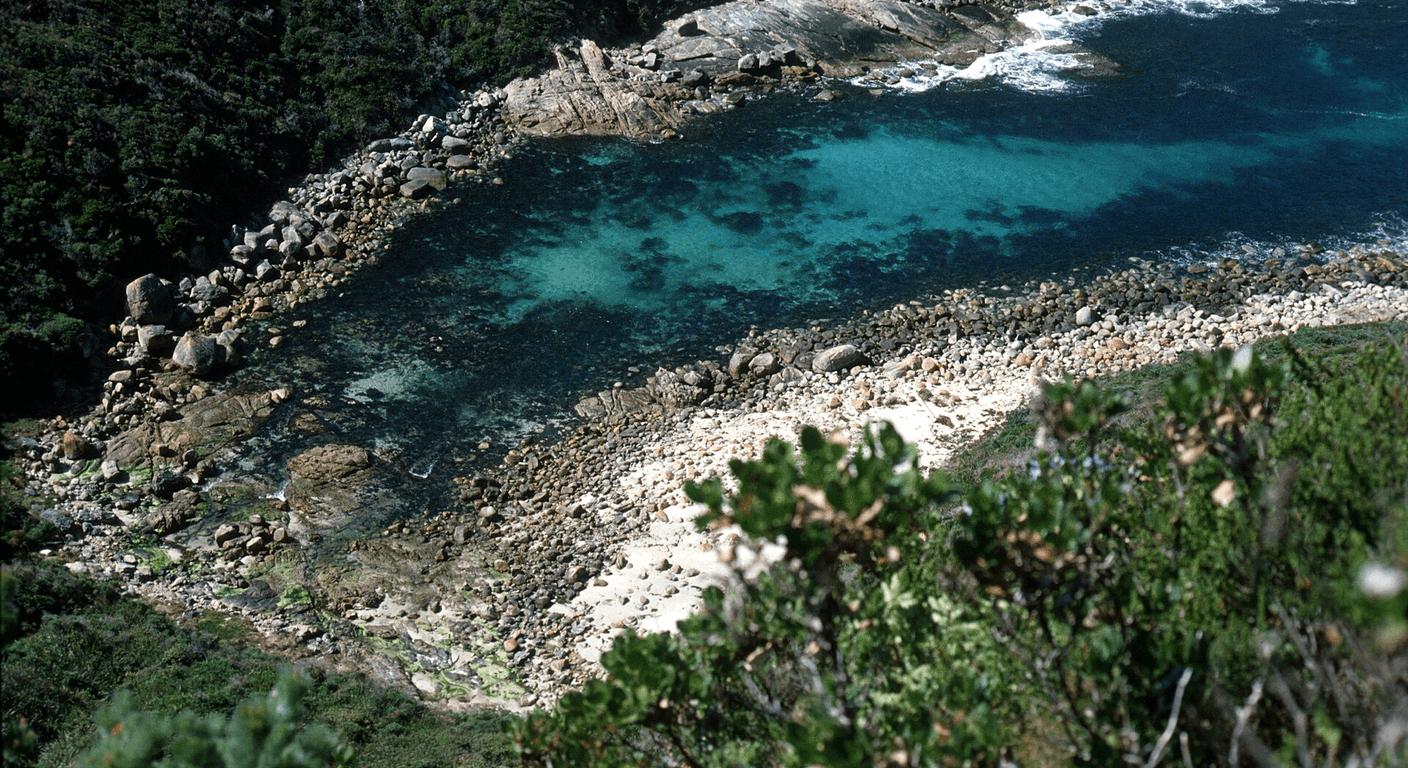
Geraldton's foreshore is flat, wide, and well-maintained — one of its genuine pleasures for a traveller who values a daily walk without hills or traffic. The path runs for several kilometres along the waterfront, past the marina, the historic lighthouse precinct, and the town's main beach areas. Early mornings are particularly pleasant: the light on the Indian Ocean at this latitude has a particular quality, and the foreshore is quiet enough to feel like your own.
The St Francis Xavier Cathedral, designed by Monsignor John Hawes and completed in 1938, is worth a visit for anyone with an interest in architecture or religious heritage. Hawes was an English convert-priest-architect whose work in the Geraldton region is recognised by the National Trust; the cathedral's Romanesque-Byzantine interior is unlike anything else in regional Western Australia. It sits a short walk from the main street, on Cathedral Avenue.
The town centre along Marine Terrace has cafes, bakeries, and a good independent bookshop. The covered market runs on weekend mornings and draws local producers from the surrounding agricultural districts. For a solo traveller, the rhythm of a Geraldton morning — memorial or museum in the late morning, foreshore walk, lunch, afternoon rest — is genuinely restorative rather than demanding.
Wildflower season: the inland detour worth planning around
Western Australia's wildflower season runs broadly from late July through to October, peaking in August and September depending on rainfall. The country inland and south of Geraldton — around the Coalseam Conservation Park and the Mullewa district — produces displays of everlastings, wattles, and native orchids that have attracted visitors for generations. Parks Victoria manages equivalent reserves in Victoria, but the scale and variety of wildflowers in WA's mid-west is of a different order entirely.
Coalseam Conservation Park, managed by Parks WA, is roughly 80 kilometres south-east of Geraldton and accessible on sealed roads. The park is known for its pink and white everlastings along the Irwin River gorge. Confirm current access and conditions at parks.wa.gov.au before visiting, particularly if rainfall has been unusual. Mullewa, a small wheat-belt town about 100 kilometres east of Geraldton, holds an annual wildflower show in August that is a genuinely local event rather than a tourist production.
Timing a Geraldton visit to overlap with wildflower season adds a full dimension to the trip without requiring a major change of base. You can spend two or three days in Geraldton itself, make a day trip inland during peak bloom, and return to the coast. For a traveller who has driven the Great Ocean Road in Victoria and knows the pleasure of stopping on a whim, this kind of self-directed inland excursion is familiar and comfortable.
Practical notes on pacing, accommodation, and accessibility
Four nights in Geraldton is a comfortable minimum if you want to visit the memorial properly, spend meaningful time in the museum, walk the foreshore at leisure, and make one inland excursion. Five nights is better if wildflower season is a priority or if you simply value a day with no agenda. The city is not exhausting — this is a place that rewards slowing down rather than ticking off a list.
Accommodation options include serviced apartments and motels along the foreshore precinct, several of which are within walking distance of both the museum and the town centre. For solo travellers, a studio or one-bedroom apartment with a small kitchen is often more practical and economical than a hotel room; self-catering for breakfasts and some dinners keeps costs manageable on an extended trip. Confirm accessibility features — lift access, shower configurations, parking — directly with your chosen property before booking, as standards vary.
The memorial's hill location means a short uphill walk from the car park; the path is paved but has a gradient. Most travellers with average mobility manage it without difficulty, but if walking on inclines is a concern, it is worth calling the Geraldton Visitor Centre in advance to discuss the current access arrangements. The museum and foreshore are fully flat. Geraldton's climate is warm and dry; summer (December–February) is very hot, and late autumn through spring (April–October) is the most comfortable window for visiting.
Quick planning guide
| Ideal pace | Slow and unhurried, not a rushed day trip |
|---|---|
| Best months | April to October, with wildflowers peaking August–September |
| Suggested stay | Four nights minimum, five if wildflowers or an unplanned day matter |
| Mobility level | Easy — flat foreshore and museum, one paved but gently graded hill at the memorial |
| Cost level | Budget-friendly, with a free memorial and affordable regional accommodation |
| Comfort level | Comfortable and low-key, a working regional city rather than a resort |
| Best for | Over-50s and solo travellers wanting history, heritage and gentle coastal walking |
| Main planning consideration | Choosing between driving, Transwa coach, or a short regional flight from Perth, and booking early around wildflower season or the November anniversary |
Key takeaways
- The HMAS Sydney II Memorial is free to enter, open daily, and honours all 645 crew members through a dome of individual steel gull figures.
- Free guided tours of the memorial run most mornings — confirm current times with the Geraldton Visitor Centre or City of Greater Geraldton before visiting.
- The Museum of Geraldton's Batavia shipwreck galleries hold internationally significant artefacts and are comparable in quality to major city museums.
- Geraldton's foreshore walk is flat, well-maintained, and manageable for travellers who value a daily walk without hills.
- Wildflower season from late July to October makes an inland day trip to Coalseam Conservation Park or Mullewa a natural extension of a Geraldton stay.
- Transwa's coach service from Perth to Geraldton is a practical option for solo travellers who prefer not to drive the four-hour route independently.
Recommended partners and links
Indicative prices only — always confirm with the operator before booking.
Frequently asked questions
Is the HMAS Sydney II Memorial free to visit?
Yes, the HMAS Sydney II Memorial is free to enter and is open to the public daily. It sits on Mount Scott Reserve on the southern edge of Geraldton's foreshore precinct, with parking available near the entrance.
How long does it take to visit the HMAS Sydney II Memorial properly?
Allow at least an hour and a half to move through the memorial site at a comfortable pace, taking in the dome of 645 steel gulls, the pool of remembrance, the wall of names, and the Tears for Athena sculpture. Free guided tours run most mornings; confirm current tour times with the Geraldton Visitor Centre before your visit.
Is the HMAS Sydney II Memorial accessible for people with limited mobility?
The main paths within the memorial are paved, and parking is available close to the entrance. The site is on a hill with a gentle gradient from the car park; most people with average mobility manage it without difficulty. If walking on inclines is a concern, contact the Geraldton Visitor Centre in advance to discuss current access arrangements.
How do you get from Perth to Geraldton without driving?
Transwa operates a coach service from Perth's city bus terminal to Geraldton, taking approximately five to six hours with stops along the way. Indicative one-way fares are around $45, but confirm current prices and timetables at transwa.wa.gov.au. Regional flights from Perth to Geraldton Airport are also available and take under an hour.
When is the best time to visit Geraldton for wildflowers?
Western Australia's wildflower season runs broadly from late July through to October, with August and September typically the peak months in the Geraldton region. The Coalseam Conservation Park, about 80 kilometres south-east of Geraldton, and the Mullewa district are both worth visiting during this window. Check current conditions at parks.wa.gov.au before making the inland detour.
- HMAS Sydney II Memorial — City of Greater Geraldton
- Museum of Geraldton — Museums of History WA
- Transwa — Perth to Geraldton coach and rail services
- Coalseam Conservation Park — Parks and Wildlife WA
- Tourism Western Australia — Geraldton and the Batavia Coast
- National Trust of Australia (WA) — Monsignor Hawes Heritage Trail