Gulgong, 26 kilometres north of Mudgee in Central West NSW, is best visited on a weekday morning, arriving by 10am to avoid summer heat or winter's early dusk. A half-day of three to four hours suits its Pioneers Museum, Henry Lawson Centre and the ten-dollar-note streetscape of Mayne Street. Mobility is moderate — footpaths are narrow and uneven, though the main street itself is flat. Access is by car via Sydney or Mudgee; there's no direct rail link to the town.
Why Gulgong Still Matters
When Australia introduced decimal currency in 1966, someone had to choose what went on the ten dollar note. The answer, eventually, was Mayne Street, Gulgong — a photograph of that gold-rush streetscape, all iron-lace verandas and irregular rooflines, became one of the most-handled images in the country. The note was retired in 1993, but the street it depicted is still there, more or less intact. That's either good heritage management or benign neglect, depending on your view. Either way, walking it feels like stepping into a sepia photograph that forgot to fade.
Gulgong sits in the Central West of New South Wales, 26 kilometres north of Mudgee along a road that winds through dry eucalypt country. It's a town of roughly 2,000 people and an outsized historical footprint. Gold was found here in the early 1870s, the population briefly swelled to tens of thousands, and then the rush moved on — leaving behind churches, hotels, a courthouse, a surprisingly ambitious opera house, and the childhood of one of Australia's most significant writers.
The Streets: What to Expect Underfoot
Before anything else, a practical word about the footpaths. Gulgong's heritage streetscape is charming precisely because it hasn't been smoothed over for modern convenience. That means narrow timber and bluestone footways, uneven joins between sections, and the occasional step that appears without warning. Sensible flat shoes are not a suggestion — they're the difference between enjoying the architecture and watching the ground. Anyone using a walking stick will want to take their time. Those using a mobility aid should be aware that some sections of the main street are genuinely challenging; the wider road itself may be easier in parts.
That said, the overall terrain is flat. Mayne Street and Herbert Street, where most of the historic buildings cluster, don't ask much of you in terms of hills. The pleasure is in moving slowly anyway — pausing to read the historical plaques, peering into shopfronts, and noticing the way the veranda posts lean at angles that no building regulation would permit today. There's a satisfying unhurriedness to the place that suits a relaxed morning.
The Henry Lawson Centre: A Childhood Explained
Henry Lawson was born in a tent on the Grenfell goldfields in 1867, but it was Gulgong where he spent his formative years. His mother, Louisa, ran a small business here while his father worked the fields — and the town's rough edges, its itinerant workers, its hard-scrabble dignity, seeped into every short story and poem Lawson would later write. The mateship and melancholy that define so much of his work have a specific address, and it's this one.
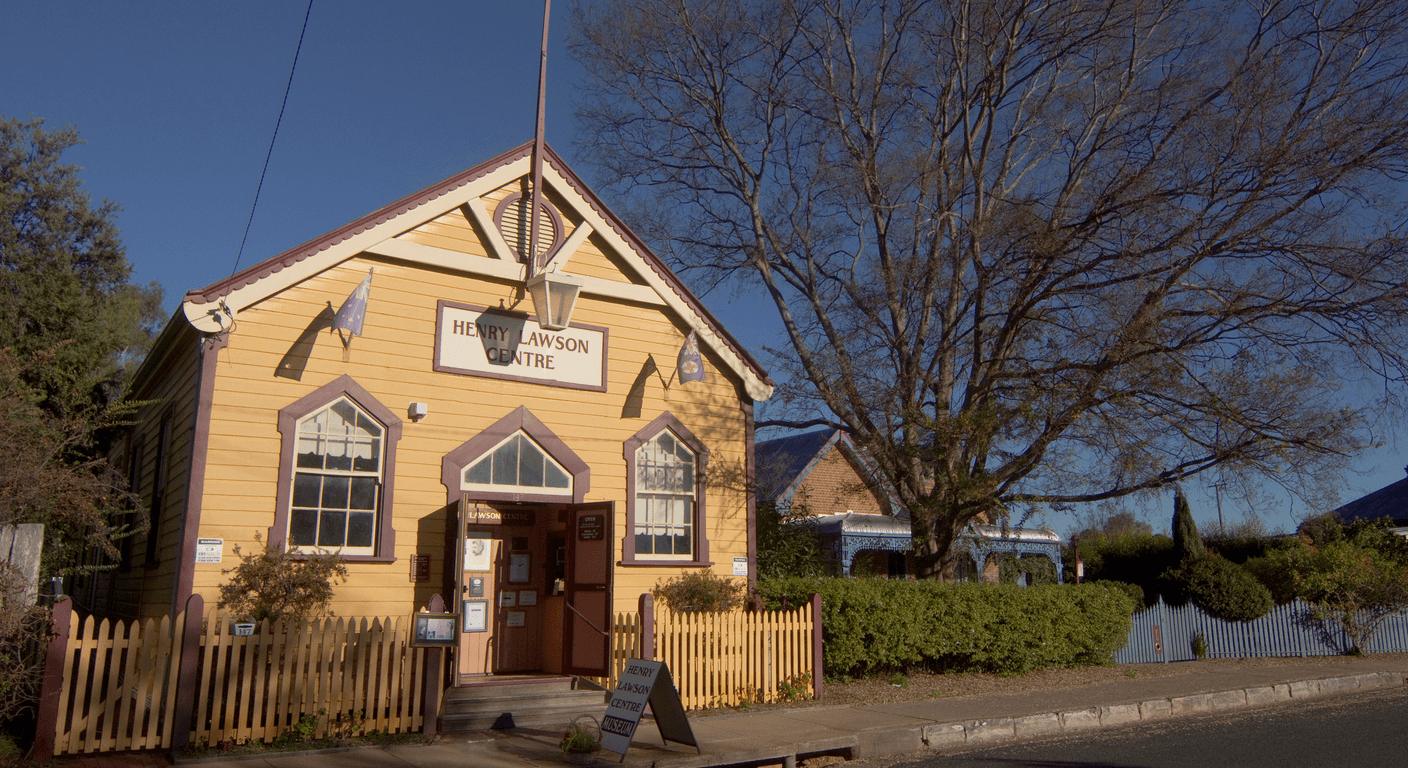
The Henry Lawson Centre on Mayne Street holds a focused collection — manuscripts, personal effects, family photographs, and context that connects the biography to the literature. It's not a large space, but it's well-curated, and the staff (often volunteers with genuine knowledge) are worth talking to. For anyone who read 'The Drover's Wife' or 'Joe Wilson' at school and wondered where that voice came from, this is the answer in three dimensions. Entry is modest; concessions apply — confirm current pricing before visiting.
There's something quietly moving about standing in a place that shaped a national literary voice. Lawson died in 1922, largely forgotten by the establishment that later put his face on the ten dollar note that came after the street he grew up on. The irony is not lost on the town.
The Pioneers Museum: Depth You Don't Expect
The Gulgong Pioneers Museum is the kind of institution that makes you revise your assumptions about volunteer-run regional collections. Spread across several buildings on Herbert Street, it houses thousands of objects from the goldfields era and beyond — tools, clothing, photographs, domestic items, a recreated pharmacy, and a genuine breadth of social history that puts many larger museums to shame.
The volunteers who run it are the collection's real asset. They know what's in the cases, they know the stories behind individual objects, and they're not in any hurry. Allow at least 90 minutes, more if you're the sort of person who reads every label. Entry is very reasonable, with concessions for seniors — but hours can be irregular, particularly in quieter seasons, so check ahead rather than assuming it'll be open when you arrive. The museum's website or a quick phone call will save disappointment.
One detail worth noting for travellers who've done a lot of regional museums: the photographic collection here is exceptional. The goldfields-era images of Gulgong — many taken by the photographer Holtermann — are historically significant documents, not just local curiosities. You'll recognise some of them without realising why, which is a particular kind of pleasure.
The Prince of Wales Opera House: A Reasonable Claim
Gulgong makes a claim that deserves a moment's consideration: the Prince of Wales Opera House on Mayne Street is sometimes described as the oldest continuously operating theatre in Australia. It's a claim that other venues also make, and the definition of 'continuously operating' does considerable heavy lifting in all of them. What's beyond dispute is that this is a genuinely old theatre — built in 1871 — that still hosts performances, which is remarkable by any measure.
The interior is intimate and atmospheric, seating a few hundred people in a space that feels like it belongs to another century. Performances range from local productions to occasional touring acts; the schedule is seasonal and variable. Check the current programme directly before building your visit around a show — but even without a performance, the building itself is worth a look. It's one of those places where the room does most of the talking.
Lunch, Coffee, and the Pace of a Small Town
Gulgong's cafe scene is small but solid. A handful of cafes along Mayne Street do good coffee and straightforward lunch menus — toasted sandwiches, house-made soups, the kind of food that fits a mid-morning stop or a post-museum lunch without requiring a reservation or a lengthy wait. The town doesn't have the restaurant depth of Mudgee, nor does it pretend to. What it has is a genuine local character — the kind of place where the person taking your order has lived here for thirty years and knows everyone who walks in.
For travellers from Melbourne or Sydney accustomed to a certain level of culinary ambition, recalibrating expectations is part of the experience. A bowl of soup and a quiet half-hour on a veranda overlooking a street that hasn't changed much since the 1870s is its own reward. Prices are notably gentle — a full lunch for two with coffee is well within the under-$30 bracket that makes this an honest day-trip proposition.
Combining Gulgong with Mudgee: The Practical Shape of a Day
Mudgee is the logical base for a Gulgong visit — 26 kilometres south, it has a wider range of accommodation (from comfortable motels to boutique stays on the edge of vineyards), good restaurants, and its own heritage streetscape. Driving to Gulgong in the morning, spending three to four hours across the museum and the Lawson Centre, having lunch, and returning to Mudgee for the afternoon is a well-proportioned day. Add the opera house or a longer wander if the schedule allows.
From Melbourne, the most practical approach is to fly to Sydney and hire a car, or take the train to Lithgow and connect by road — though the drive from Sydney (around four to five hours via Bathurst or the Bells Line of Road) is genuinely pleasant through the Blue Mountains. Confirm current coach connections via Transport NSW if you'd prefer not to drive; Mudgee is serviced by regional coaches from Sydney, and local hire cars may be available in Mudgee itself. Day tours from Mudgee to Gulgong are also worth investigating through local visitor information.
A note on timing: Gulgong on a weekday is quieter than weekends, which suits a relaxed pace. The volunteer-run museum is more likely to have knowledgeable staff available during standard morning hours. Arriving by 10am gives you the best of the day before the afternoon heat of summer — or the early dusk of winter — changes the equation.
Quick planning guide
| Ideal pace | Slow and unhurried — a relaxed half-day |
|---|---|
| Best months | Any season, but arrive by 10am to avoid summer afternoon heat and winter's early dusk |
| Suggested stay | Three to four hours as a day trip from Mudgee |
| Mobility level | Moderate — flat main street but narrow, uneven heritage footpaths; flat shoes recommended |
| Cost level | Budget-friendly (day trip and lunch comfortably under $30) |
| Comfort level | Casual small-town pace, low crowds on weekdays |
| Best for | History and literature lovers, gold-rush heritage seekers, museum enthusiasts |
| Main planning consideration | Confirm Pioneers Museum opening hours and Opera House performance schedule before visiting |
Key takeaways
- Gulgong's Mayne Street appeared on Australia's original paper ten dollar note and remains largely intact as a gold-rush era streetscape.
- The Pioneers Museum is a volunteer-run collection of genuine historical depth — confirm opening hours before visiting as they can vary.
- Henry Lawson spent his formative years in Gulgong, and the town's social landscape directly shaped his writing.
- The Prince of Wales Opera House, built in 1871, still hosts live performances — check the current schedule before your visit.
- Footpaths in the heritage precinct are narrow and uneven; flat, supportive shoes are essential for comfortable exploration.
- Combining Gulgong with Mudgee (26 km south) makes for a well-rounded day with lunch options, wine country, and comfortable overnight accommodation.
Recommended partners and links
Indicative prices only — always confirm with the operator before booking.
Frequently asked questions
Why was Gulgong on the ten dollar note?
A photograph of Gulgong's Mayne Street — its distinctive gold-rush veranda streetscape — appeared on Australia's original paper ten dollar note, introduced in 1966. The note featured the image alongside a portrait of Francis Greenway. It was retired in 1993 when polymer notes were introduced, but the streetscape it depicted remains largely unchanged.
Is Gulgong suitable for travellers with mobility considerations?
Gulgong is rated Moderate for mobility. The town is largely flat, but heritage footpaths along Mayne and Herbert Streets are narrow, uneven, and have irregular joins. Flat, supportive shoes are strongly recommended. Travellers using walking aids should take their time; those using wheelchairs or scooters may find some sections of footpath challenging and may prefer to use the road in parts.
How do you get to Gulgong from Melbourne or Sydney?
From Sydney, Gulgong is approximately 280 km (around three to four hours) by car via Lithgow and Mudgee, or via Bathurst. Regional coaches connect Sydney to Mudgee; confirm current routes and timetables at transportnsw.info. From Melbourne, the most practical option is to fly to Sydney and hire a car, or take the train to Lithgow and travel by road from there. Gulgong itself is 26 km north of Mudgee.
What are the opening hours for the Gulgong Pioneers Museum?
The Pioneers Museum is volunteer-run, and hours can vary — particularly in quieter seasons or on public holidays. Check the museum's website at gulgongmuseum.com.au or phone ahead before visiting to confirm they'll be open. Arriving during standard morning hours on a weekday gives the best chance of a full experience with knowledgeable staff available.
What is the best time of year to visit Gulgong?
Spring (September to November) and autumn (March to May) are the most comfortable times to visit Gulgong. Summer temperatures in the Central West of NSW can be high, and the town's outdoor streetscape exploration is best enjoyed in mild conditions. Winter days are often clear and cool, which can be pleasant, but some volunteer-run attractions may have reduced hours.