Hay, in the far southwest Riverina, rewards a slow one- to two-night stay best taken between April and October, when the saltbush plain escapes its brutal 40°C-plus summer heat. The defining highlight is Shear Outback, the Australian Shearers' Hall of Fame, paired with the moving Dunera internment story at the old railway station. The town is flat and level throughout, making it easy on mobility, though there's no passenger rail — visitors need their own vehicle, with Wagga Wagga (three hours away) or Melbourne (around 540km) as the realistic starting points.
Why Hay Earns Your Time
There's a particular kind of quiet that only comes with real distance from everything — and Hay has it in abundance. The town sits on the Murrumbidgee River in the far southwest of New South Wales, roughly where the Riverina gives way to saltbush plain. The horizon here is not a suggestion; it's the whole point. For a traveller who has spent decades navigating crowds and calendars, a day or two in Hay can feel unexpectedly restorative.
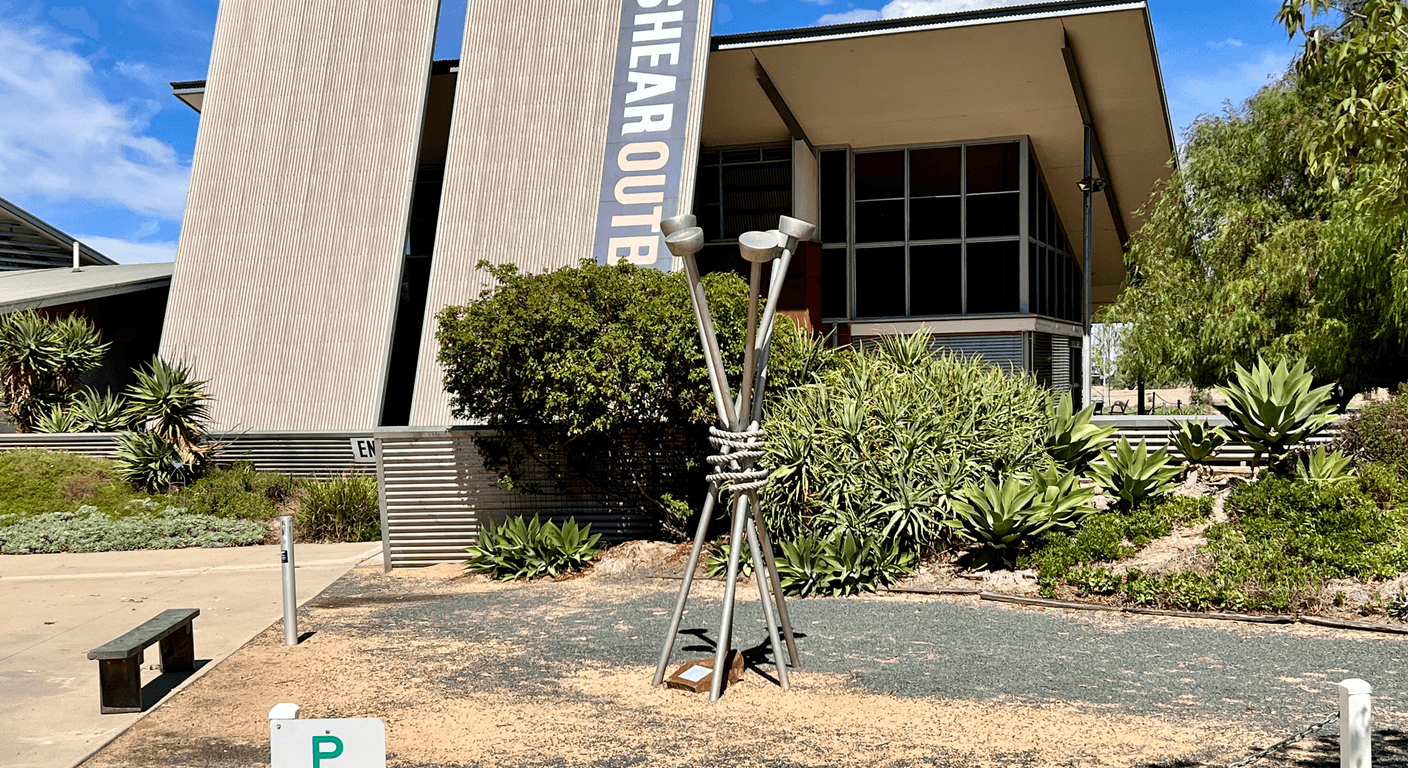
What distinguishes Hay from other small outback towns is the quality of what's actually here. Shear Outback — formally the Australian Shearers' Hall of Fame — is a genuinely serious cultural institution, not a folksy tourist trap. The Dunera internment story, told in the old railway station, is moving and little known outside specialist circles. And the Murrumbidgee, lined with river red gums, offers a gentle morning walk that puts the landscape in proper perspective.
The town is flat. The streets are wide. Parking is free and plentiful. For a solo traveller who values ease of movement and the freedom to linger without negotiating steps or crowds, Hay is close to ideal.
Shear Outback: What to Expect at the Australian Shearers' Hall of Fame
Shear Outback is housed in a purpose-built heritage woolshed on the edge of town, and the building itself sets the tone — corrugated iron, timber boards, the smell of lanolin faintly in the air. The museum traces the history of the Australian wool industry and the men and women who built it, from the great shearing strikes of the 1890s to the mechanised present. The displays are well-curated and accessible, with clear text panels and good lighting throughout.
The daily shearing demonstration is the centrepiece. A working shearer takes a Merino from pen to board, and the commentary is knowledgeable without being breathless. It's the kind of thing that sounds modest on paper and turns out to be genuinely absorbing — particularly for anyone with Italian-Australian family connections to the wool trade, which employed thousands of postwar migrants across the Riverina. The link between Italian immigration and the Australian pastoral industry is part of this region's texture, even if it's not always foregrounded.
Entry is modest — around $20 for adults, with concession rates available — though you should confirm current pricing and demonstration times directly with Shear Outback before visiting, as schedules can vary seasonally. The museum is fully accessible, with level floors and seating throughout the main exhibition spaces.
The Dunera Story: A Chapter of History Worth Knowing
In 1940, the British troopship HMT Dunera transported more than 2,500 men — mostly Jewish refugees who had fled Nazi Europe — from England to Australia, interning them first at Hay and then at Tatura in Victoria. The conditions on the voyage were brutal. The internment, in a country that was supposed to be an ally, was a bureaucratic injustice that took decades to be properly acknowledged.
The Dunera story is told at the Hay Internment and Prisoner of War Interpretive Centre, housed in the town's original railway station on Murray Street. The centre is small but handled with care. Among the internees were artists, academics, musicians and scientists — people who would go on to make significant contributions to Australian cultural and intellectual life. The display doesn't sentimentalise; it simply tells the story clearly.
For a traveller with European heritage, or simply for anyone interested in twentieth-century Australian history beyond the familiar narratives, this is the kind of stop that stays with you. Entry is low-cost; confirm current hours with the Hay Visitor Information Centre before visiting.
The Murrumbidgee and the Landscape Around Town
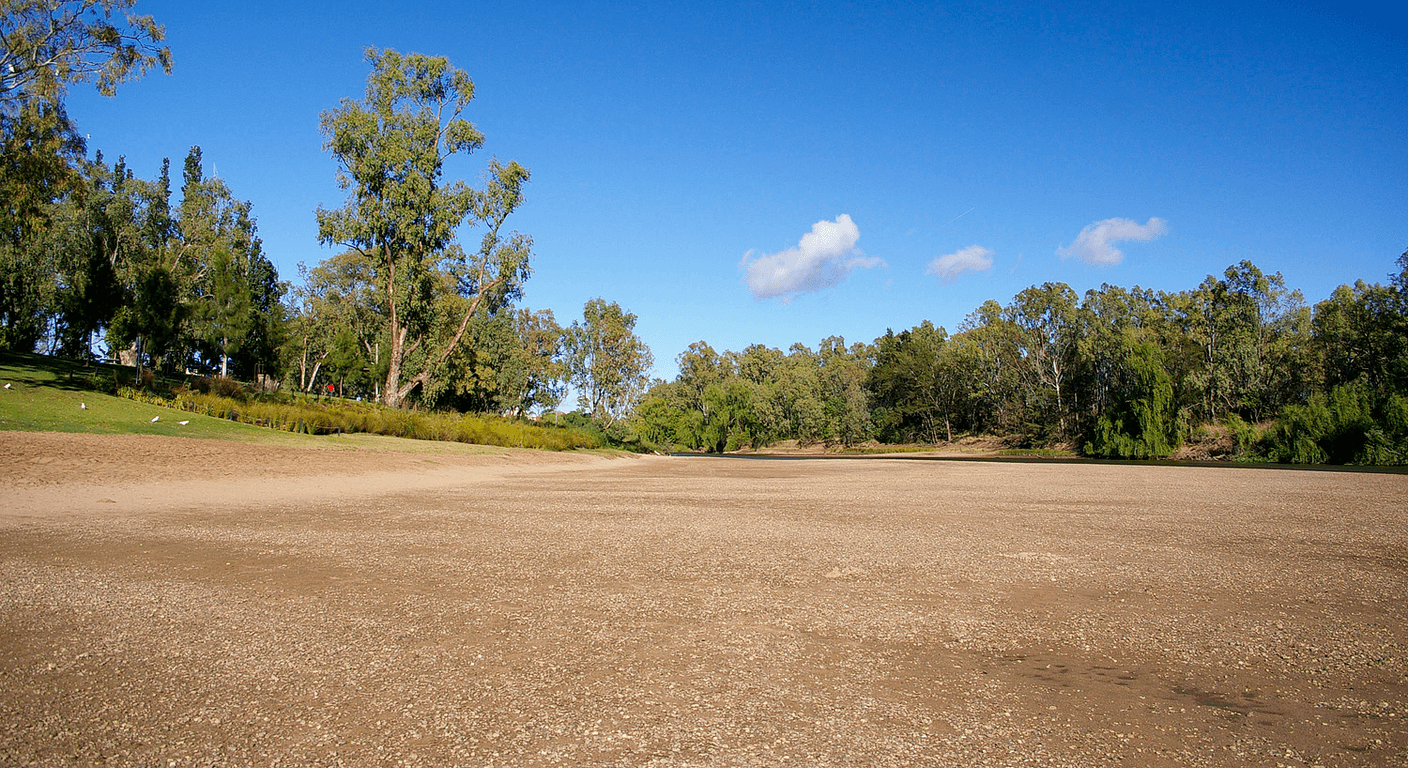
The Murrumbidgee River runs along the southern edge of Hay, and the red gum corridor along its banks is the town's natural counterpoint to its flat, open surrounds. A morning walk along the river — level, well-maintained and genuinely peaceful — gives a sense of how the landscape has sustained both Indigenous communities and pastoral settlers over generations. The Wiradjuri people have lived along this river for thousands of years; interpretive signage at the riverbank acknowledges this history.
Away from the river, the saltbush plain extends in every direction. The light in the late afternoon turns extraordinary — long, golden, slightly surreal. Photographers, whether serious or casual, tend to find themselves stopping the car repeatedly on the road into or out of town. The sky is not a metaphor here; it's a physical presence.
Birdlife along the Murrumbidgee is worth noting. Corellas, cockatoos and various honeyeaters are common, and the river corridor supports a surprising density of wildlife for such an arid-looking landscape. A pair of binoculars earns its weight in the bag.
Getting There: The Honest Distance Conversation
Hay is around 270 km west of Wagga Wagga via the Sturt Highway — roughly three hours of driving through open, largely flat country. From Albury, add another hour or so. From Melbourne, the total distance via the Hume and Sturt highways is around 540 km, which makes it a long single day each way and a much more comfortable two-night trip. The road is sealed and in reasonable condition, but the distances are real and should not be underestimated.
There is no passenger rail service to Hay. NSW TrainLink services reach Wagga Wagga, from which a hire car or the occasional coach connection becomes necessary — confirm current options with NSW TrainLink and the Hay Visitor Information Centre. Travelling by your own vehicle, or as part of a self-drive itinerary through the Riverina, is the most practical approach for most visitors.
Fuel up before leaving Wagga Wagga or Narrandera, and carry water. The highway towns between Wagga and Hay are small, and services are limited. This is outback-adjacent country, and a degree of self-sufficiency is simply sensible.
When to Go, and How to Pace the Visit
The Riverina summer is not gentle. Hay regularly records temperatures above 40°C from December through February, and the heat on the plain can feel more intense than the thermometer suggests — there's no shade, no sea breeze, nothing to interrupt it. The cooler months, April through October, are when the town comes into its own. Autumn light on the saltbush is something worth planning around.
A single overnight stay is the comfortable minimum. Arrive mid-morning, spend the day between Shear Outback and the Dunera centre, walk the river at dusk, and stay at one of the town's motels or the caravan park along the Murrumbidgee. A second day allows a slower morning, a longer river walk, and time to browse the main street without feeling rushed. The Hay Shire Council tourism pages carry current accommodation listings.
Hay's main street has a handful of cafés and a bakery that locals speak well of. Dining options are limited compared to larger regional centres — this is not a place to arrive hungry at 8pm expecting a full restaurant. Lunch at one of the cafés, a self-catered picnic by the river, and an early dinner suits the pace of the town and the traveller who doesn't need the evening to be an event.
Practical Notes for the Solo Traveller
Hay is a safe, friendly and genuinely welcoming town. Solo travellers — particularly women travelling alone — consistently report feeling comfortable here. The scale of the place means you're never far from other people, and the Visitor Information Centre staff are knowledgeable and unhurried. It's the sort of town where someone will notice if you look slightly lost and offer directions without being asked.
Mobile coverage in Hay itself is reasonable on the major networks, but it can be patchy on the highway between smaller towns. Download offline maps before leaving Wagga Wagga, and let someone know your itinerary if you're travelling solo. Travel insurance that covers medical evacuation is sensible for any remote or semi-remote itinerary — confirm that your policy covers pre-existing conditions, as many standard policies require this to be declared and endorsed.
The flat terrain and accessible facilities make Hay genuinely suitable for travellers managing mobility considerations — whether that's a replaced hip, a dodgy knee, or simply the reasonable preference for not climbing unnecessary stairs. The woolshed at Shear Outback has some uneven flooring near the demonstration area; the main museum spaces are level throughout. Worth confirming specific accessibility needs directly with the venue before your visit.
Quick planning guide
| Ideal pace | Slow-paced, one to two unhurried days |
|---|---|
| Best months | April to October, avoiding the summer heat |
| Suggested stay | One to two nights |
| Mobility level | Easy — flat terrain, level museum floors and river walk |
| Cost level | Budget-friendly, museum entry under $30 |
| Comfort level | Relaxed and unhurried, with limited dining options |
| Best for | Solo travellers, history enthusiasts and those seeking quiet, open landscapes |
| Main planning consideration | No passenger rail — requires self-drive access from Wagga Wagga or a longer trip from Melbourne |
Key takeaways
- Shear Outback — the Australian Shearers' Hall of Fame — is a serious, accessible cultural institution with daily shearing demonstrations and concession entry around $20.
- The Dunera internment story at Hay's old railway station is one of the most significant and underknown chapters of twentieth-century Australian history.
- Hay is best visited between April and October; summer temperatures regularly exceed 40°C on the saltbush plain.
- The town is entirely flat and accessible, making it one of inland NSW's most comfortable destinations for travellers managing mobility considerations.
- From Melbourne, Hay is roughly 540 km — plan for at least one overnight stay rather than a single long day of driving.
- There is no passenger rail to Hay; a hire car from Wagga Wagga or your own vehicle is the practical way to visit.
Recommended partners and links
Indicative prices only — always confirm with the operator before booking.
Frequently asked questions
What is Shear Outback in Hay NSW?
Shear Outback is the Australian Shearers' Hall of Fame, a heritage woolshed museum in Hay, NSW, that traces the history of the wool industry and the shearers who built it. It offers daily shearing demonstrations and accessible exhibition spaces. Entry is around $20 for adults with concession rates available — confirm current prices and demonstration times at shearoutback.com.au before visiting.
What is the Dunera story and where is it told in Hay?
In 1940, the HMT Dunera transported more than 2,500 men — mostly Jewish refugees from Nazi Europe — to Australia, where they were interned at Hay and Tatura. The Hay Internment and Prisoner of War Interpretive Centre, in the town's historic railway station on Murray Street, tells this story through photographs, documents and personal accounts. Confirm opening hours with the Hay Visitor Information Centre before your visit.
How do you get to Hay NSW from Melbourne or Wagga Wagga?
Hay is around 540 km from Melbourne via the Hume and Sturt highways — a long day's drive that is more comfortably done as an overnight trip. From Wagga Wagga, it's roughly 270 km west, about three hours by road. There is no passenger rail service to Hay; a hire car from Wagga Wagga or your own vehicle is the most practical option. Confirm coach connections with NSW TrainLink and the Hay Visitor Information Centre.
What is the best time of year to visit Hay?
April to October are the most comfortable months to visit Hay. Summer temperatures regularly exceed 40°C, and the flat, open plain offers no shade or relief. Autumn is particularly appealing for the quality of light on the saltbush landscape. Winter days are mild and clear, though nights can be cold — pack a layer.
Is Hay NSW suitable for solo female travellers over 50?
Yes. Hay is a safe, friendly and accessible town with flat terrain throughout. Solo women travellers consistently report feeling welcome and comfortable. The Visitor Information Centre is a reliable first stop for orientation. Mobile coverage in town is reasonable; carry offline maps and water for highway driving. Travel insurance covering pre-existing conditions and medical evacuation is recommended for any semi-remote itinerary.