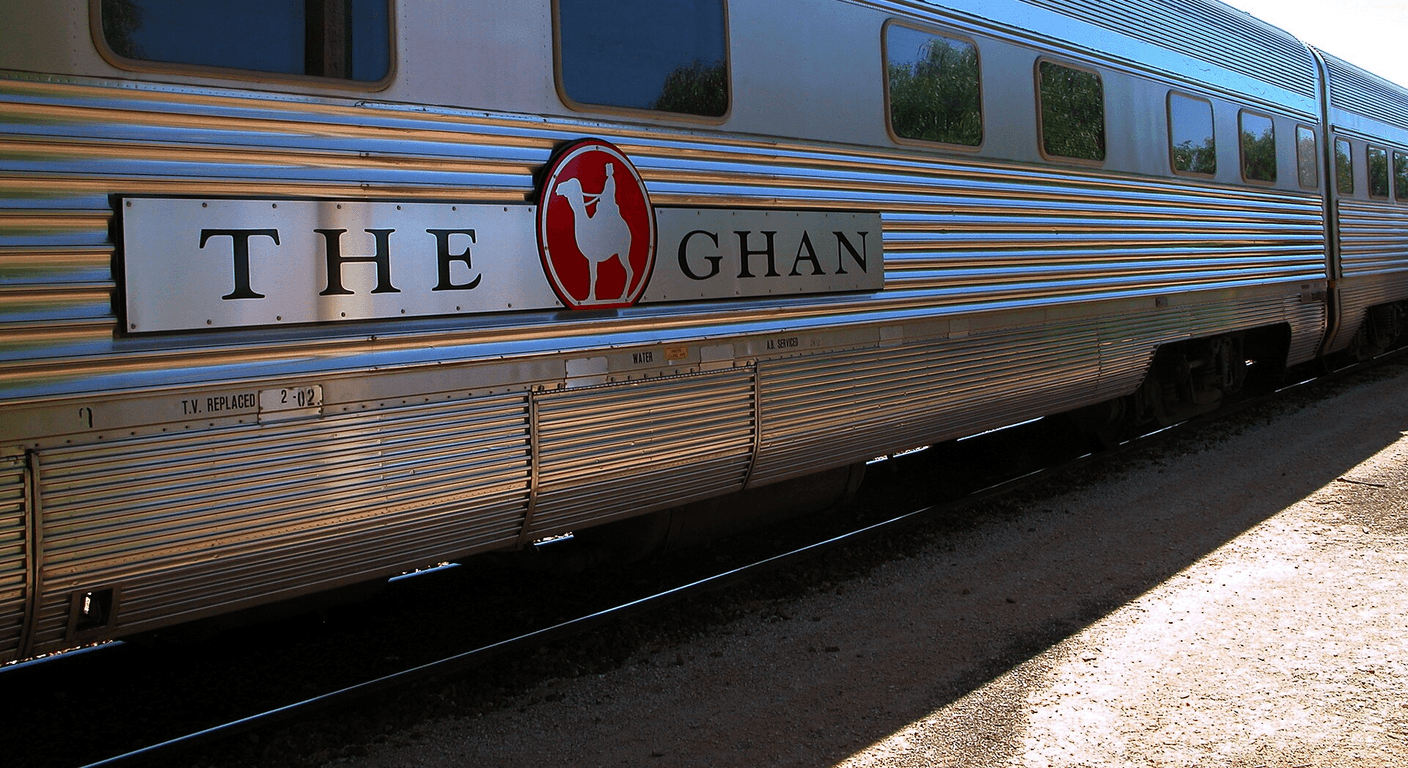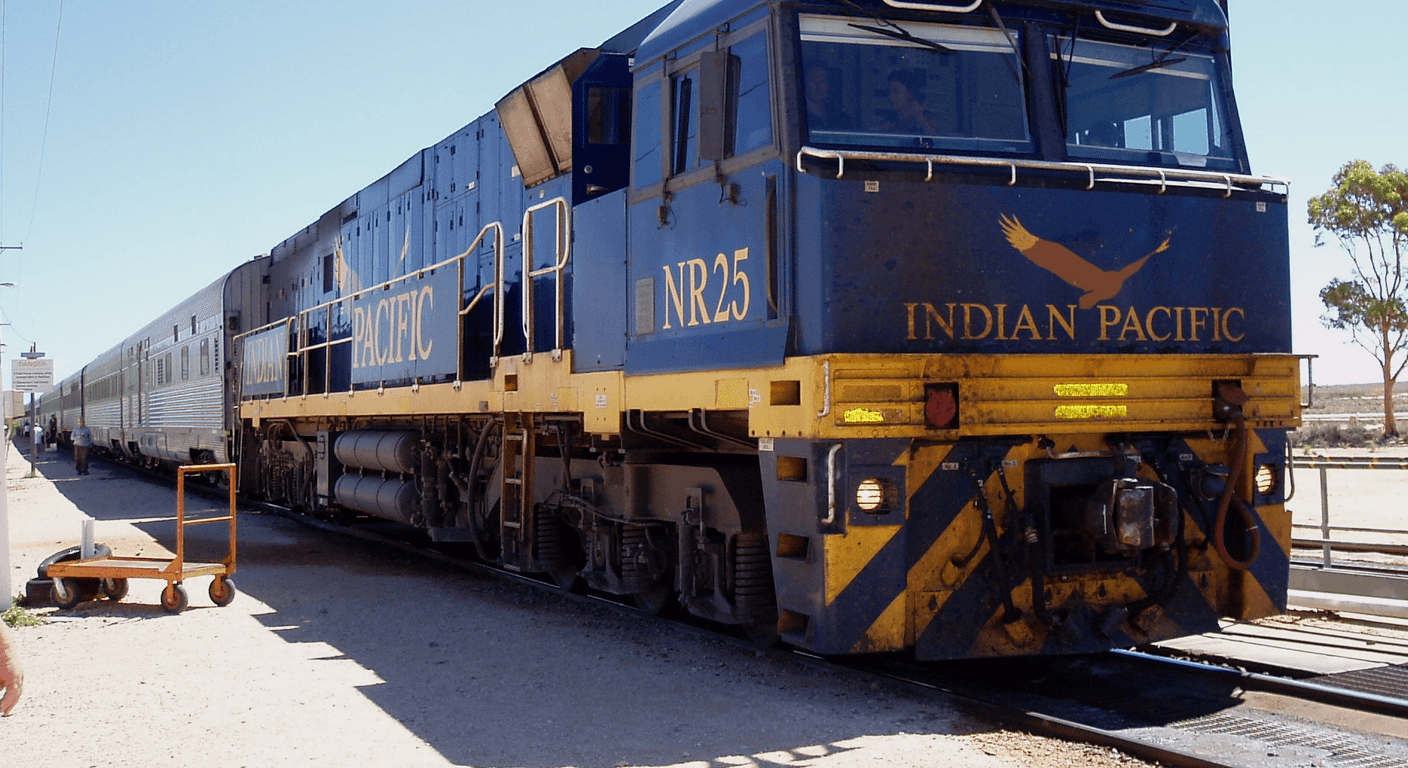
The Indian Pacific crosses Australia from Sydney to Perth in roughly 65 hours, best travelled in winter (June to August) when Nullarbor temperatures are mild rather than extreme. Most travellers do it one-way, flying back rather than repeating the crossing, and allow a recovery night in Perth afterwards. The defining highlight is stepping off at Cook, a genuine ghost town in the desert. Mobility is moderate — corridors are narrow, suiting walking frames but not standard wheelchairs or scooters unless an Accessibility cabin is booked ahead.
Why the Indian Pacific works so well for travellers over 50
There's a particular kind of travel that suits a certain stage of life — unhurried, self-contained, genuinely interesting rather than just ticked off. The Indian Pacific is that journey. You board in Sydney, and roughly 65 hours later you step off in Perth having crossed a continent. No airports after the first one. No packing and unpacking. Your cabin is your base; the lounge car is your living room.
For a solo male traveller, the train removes a lot of the friction that can make independent travel tiring. Meals arrive. The landscape changes outside the window without any effort from you. Conversations happen naturally in the lounge — fellow passengers tend to be curious, well-travelled people who've earned their opinions. The Indian Pacific attracts that sort of traveller.
The journey is divided into two broad cabin classes: Gold and Platinum. Understanding the difference properly — not just the room size, but what's actually included — is the most important piece of planning you'll do before booking.
Gold versus Platinum: what's the real difference?
Gold cabins are comfortable, private, and practical. During the day, you have a seat and a fold-down table; at night, a steward converts the space into a berth. The cabin is compact — roughly the width of a narrow single bed — with a sliding door that locks. A shared shower and toilet are at the end of the carriage. Gold passengers dine in the Queen Adelaide Restaurant and have access to the Outback Explorer Lounge. What Gold does not include: meals and most off-train excursions are at additional cost. That's not a criticism of the product — it's simply the structure. Confirm the current inclusions list with Journey Beyond before booking, because it can change.
Platinum cabins are a meaningful step up. The room is wider, with a private ensuite (shower and toilet within the cabin), and the bed configuration is more generous. More significantly for a longer journey, Platinum includes all meals in the dedicated Platinum Club dining area, and most off-train excursions are covered in the fare. For a 65-hour crossing, having meals included simplifies things considerably — and the food quality in Platinum is genuinely good. The indicative fare difference is substantial: Platinum one-way Sydney to Perth runs roughly $3,500 to $5,000 or more depending on season and availability, compared to Gold from around $1,500. These are indicative figures only — confirm current pricing directly with Journey Beyond.
The honest calculus: if you're likely to take most of the excursions and eat in the restaurant every sitting, Platinum's all-in pricing may represent better value than it first appears. If you're a light eater who'd rather read in your cabin and only step off at one stop, Gold is perfectly comfortable and considerably cheaper. Neither choice is wrong — they're just different journeys.
Accessibility: what the train is honest about
The Indian Pacific is an older train operating on a long-distance network, and accessibility reflects that honestly. Corridors between carriages are narrow — typically around 60–65 cm — which means a standard adult walking frame fits with care, but a wider mobility scooter or large wheelchair will not navigate the train independently. Journey Beyond does offer an Accessibility cabin (sometimes called the accessible Gold cabin), which is wider and designed for passengers who use a wheelchair or have significant mobility needs. This must be requested specifically when booking — it is not the default Gold product.
Boarding at stations involves steps. At major stops like Sydney, Adelaide and Perth, platform-level boarding assistance is available and can be arranged. At smaller stops — Cook, for instance — boarding is more rudimentary. If you use a walking stick, take it easy on gravel platforms after dark. If you use a frame or require step-free boarding, contact Journey Beyond's accessibility team well before travel to confirm what's manageable and what isn't. They're generally straightforward about this.
The train also has limited medical facilities onboard, which is worth noting for anyone with complex health needs. Travel insurance that covers pre-existing conditions is not optional on a journey this long and this remote — the Nullarbor is exactly as far from a hospital as it looks on the map.
Off-train stops: Broken Hill, Cook and Kalgoorlie
Three stops define the journey beyond the train itself. Broken Hill, in outback New South Wales, is a proper town with genuine character — a working mining city that's also become an unlikely arts centre. The Pro Hart Gallery and the Broken Hill Regional Art Gallery are both worth the time. The light in Broken Hill is famously clear and warm, the kind of light that explains why artists kept arriving. An organised excursion covers the main sites; those travelling Gold will typically pay separately for this, so confirm current pricing. If you have extra time, Broken Hill rewards a night or two as a standalone stopover — the Palace Hotel alone justifies the detour.
Cook, in South Australia, is something else entirely. It was once a railway town of 4,000 people; now it has a population that hovers around zero, depending on the week. The train stops here and passengers walk through a ghost town — the hospital still has medical equipment in place, the school's desks are still there, the swimming pool is dry and cracked. It's eerie in the best possible way. No amount of tourist language quite prepares you for standing in the middle of a functioning ghost town in the middle of the Nullarbor. Allow yourself a quiet moment with it.
Kalgoorlie, in Western Australia's goldfields, is the final major stop before Perth. The Super Pit — one of the largest open-cut gold mines in the world — is visible from a dedicated lookout and is genuinely dramatic in scale. The town itself has a particular frontier energy that's survived from the gold rush era, and the York Hotel's famous two-storey pub facade is worth a photograph. The off-train excursion here typically includes the mine lookout and a town tour. Again, Gold passengers should confirm whether this is included or costs extra.
Why winter is the right time to cross the Nullarbor
The Nullarbor in summer is brutal — daytime temperatures above 40°C are routine, and even with air conditioning the heat pressing against the windows is relentless. In winter, June through August, the crossing is a different experience: mild days, cool nights, and the extraordinary clarity of the desert sky after sunset. At Cook or any other nighttime stop, the stars are worth stepping outside for.
Winter also means better conditions for the off-train excursions. Walking around Kalgoorlie or Broken Hill in July is pleasant; doing it in January is not. If you have any flexibility in travel dates, the June-to-August window is the clear recommendation. September and October are also reasonable before the heat builds again.
Planning the journey: one-way or return?
Most experienced travellers do the Indian Pacific one-way and return by a different mode. Flying back from Perth (or flying to Sydney and returning by rail) avoids the fatigue of a back-to-back 65-hour crossing, and gives the journey a sense of occasion rather than a commute. A one-way rail plus one-way flight is also often comparable in total cost to a return rail ticket, depending on timing.
From Melbourne, the practical approach is to travel to Sydney first (by train on the NSW TrainLink XPT or by flight), then join the Indian Pacific. The train departs Sydney on Sundays and Wednesdays — confirm the current schedule with Journey Beyond, as departure days have varied. Adelaide passengers can also board there, which cuts roughly 14 hours from the journey if Perth is the goal rather than the full crossing.
Allow a recovery night in Perth before doing anything strenuous. After 65 hours on a train, even a comfortable one, your body will appreciate a proper bed that isn't moving. Perth's CBD hotels are a short taxi or rideshare from the East Perth terminal — it's not a central station, so don't assume you can walk to the city easily with luggage.
Practical notes before you book
Luggage is the first thing to sort out. Each passenger has a baggage allowance — confirm the current limit with Journey Beyond — and the cabin storage is not large. A soft bag that compresses is more practical than a hard-shell suitcase. You'll be living out of it for four nights, so pack as you would for a cruise: enough for comfort, not everything you own.
Wi-Fi on the Indian Pacific is limited and unreliable across the Nullarbor — this is not a working trip. Download podcasts, books, and films before you board. The disconnection is, for many passengers, part of the appeal. The lounge car has good conversation if you want company; your cabin has a door that locks if you don't.
Travel insurance is essential and worth repeating. The remoteness of the route means that any medical evacuation would be complex and expensive. Ensure your policy covers pre-existing conditions and includes emergency evacuation — standard domestic travel policies sometimes exclude the latter. Compare policies through a reputable comparison service and read the product disclosure statement carefully.
Quick planning guide
| Ideal pace | Slow-paced and unhurried, self-contained |
|---|---|
| Best months | June to August, with September–October reasonable |
| Suggested stay | One-way, roughly 65 hours, plus a recovery night in Perth |
| Mobility level | Moderate — narrow corridors, steps at boarding, Accessibility cabin available on request |
| Cost level | Gold from around $1,500; Platinum roughly $3,500–$5,000+ one-way |
| Comfort level | High in Platinum with meals and excursions included; more basic and self-managed in Gold |
| Best for | Independent travellers over 50, including solo travellers, who prefer unhurried, all-in-one travel |
| Main planning consideration | Choosing Gold versus Platinum based on meals and excursions, and confirming accessibility and insurance needs before booking |
Key takeaways
- Platinum fares include meals and most excursions; Gold does not — confirm exactly what's covered before booking to avoid surprise costs.
- Winter (June–August) is the most comfortable time to cross the Nullarbor, with mild temperatures ideal for off-train excursions.
- The Indian Pacific takes roughly 65 hours Sydney to Perth; most experienced travellers do it one-way and fly back.
- An accessible cabin is available for passengers with mobility aids but must be requested specifically — corridors are too narrow for most mobility scooters.
- Cook is a functioning ghost town on the Nullarbor and one of the most genuinely strange and memorable stops on any Australian rail journey.
- Travel insurance covering pre-existing conditions and emergency evacuation is not optional on a route this remote.
Recommended partners and links
Indicative prices only — always confirm with the operator before booking.
Frequently asked questions
How long does the Indian Pacific take from Sydney to Perth?
The Indian Pacific takes approximately 65 hours (around four nights) to travel from Sydney to Perth, stopping at Broken Hill, Adelaide, Cook and Kalgoorlie along the way. Confirm the current timetable with Journey Beyond Rail Expeditions, as schedules can vary by season.
What is the difference between Gold and Platinum on the Indian Pacific?
Gold cabins are private and comfortable with shared shower facilities, but meals and most off-train excursions are at additional cost. Platinum cabins include a private ensuite, all meals in the Platinum Club dining car, and most excursions in the fare. The price difference is significant — Platinum runs roughly two to three times the Gold fare — but the all-inclusive structure may suit travellers who plan to participate fully in the journey.
Is the Indian Pacific suitable for travellers with limited mobility?
The Indian Pacific has a dedicated accessible cabin that is wider and better suited to passengers who use a wheelchair or walking frame, but it must be requested at the time of booking. Standard cabin corridors are narrow (roughly 60–65 cm), and boarding at smaller stops involves steps. Passengers with mobility aids should contact Journey Beyond's accessibility team before booking to confirm what the train can accommodate.
What is the best time of year to travel on the Indian Pacific across the Nullarbor?
June to August is the most comfortable time to cross the Nullarbor by train. Summer temperatures in the outback regularly exceed 40°C, making off-train excursions unpleasant and the overall crossing more draining. Winter days are mild and the desert night sky — visible at stops like Cook — is clearest in the cooler months.
What are the off-train excursions on the Indian Pacific?
The three main off-train stops are Broken Hill (outback arts town with galleries and distinctive desert light), Cook (an abandoned railway ghost town on the Nullarbor), and Kalgoorlie (Western Australian goldfields city with the Super Pit mine lookout). Platinum passengers have most excursions included; Gold passengers typically pay separately. Confirm current inclusions with Journey Beyond before booking.