John Forrest National Park, Western Australia's oldest national park, sits 26 kilometres east of Perth in the Darling Range. Best visited April to October, with the waterfall running strongest June to September, a half-day to full-day trip suits most travellers, combining National Park Falls, a heritage railway precinct and a stone tavern. Trails range from easy flat loops to steeper ridge walks, so mobility is moderate. Access is by car via the Great Eastern Highway or train to Midland plus a taxi, as no direct bus serves the park gate.
Why John Forrest National Park is worth the detour from Perth
There's something quietly satisfying about visiting a place that has been welcoming visitors for well over a hundred years. John Forrest National Park was gazetted in 1900, making it Western Australia's first national park — a fact that tends to recalibrate your sense of the landscape the moment you read the signage near the old railway station. The jarrah and marri forest here isn't dramatic in the way that Karijini or the Kimberley demand your attention. It's subtler than that. Dappled light, granite outcrops, birdsong that a solo traveller notices more acutely than someone in a group.
The park sits in the Darling Range about 26 kilometres east of Perth's CBD, which means you can be standing under a canopy of jarrah by mid-morning after a relaxed breakfast in the city. That proximity is part of its appeal for visitors based in Perth for a few nights — no early alarm, no lengthy drive, no need to pack a tent.
Getting there from Perth: what a Victorian visitor needs to know
Flying into Perth from Melbourne or Sydney takes roughly three to four hours depending on the route and carrier. There's no jet lag to manage — same time zone in winter, one hour behind eastern states during daylight saving — which means you can realistically plan a park visit for your second day without feeling wrecked. A recovery night in Perth is still sensible after any flight over three hours.
Driving to John Forrest is the most practical option. The Great Eastern Highway runs directly through the Perth Hills and the park entrance is well signed. Car rental from Perth Airport is straightforward; confirm current rates and book in advance during school holidays. If you'd rather not drive, the Transperth rail network runs to Midland station, which is the closest train stop, but the park gate is still a meaningful distance from there. A taxi or rideshare from Midland is the logical bridge — check current availability before relying on it. There is no direct bus service to the park entrance, so confirm your plan with the Parks and Wildlife Service or your accommodation before the day.
What to see and do: trails, falls and a heritage tavern
National Park Falls is the centrepiece for most visitors, and it earns that status. The walk from the main picnic area to the falls is manageable for most reasonably fit travellers — relatively short, with some uneven ground on the approach. After winter or spring rain, the falls run well; in a dry summer, the flow can be modest, so timing your visit between June and September gives you the best chance of seeing them at their most rewarding. Wear shoes with a grip you trust.
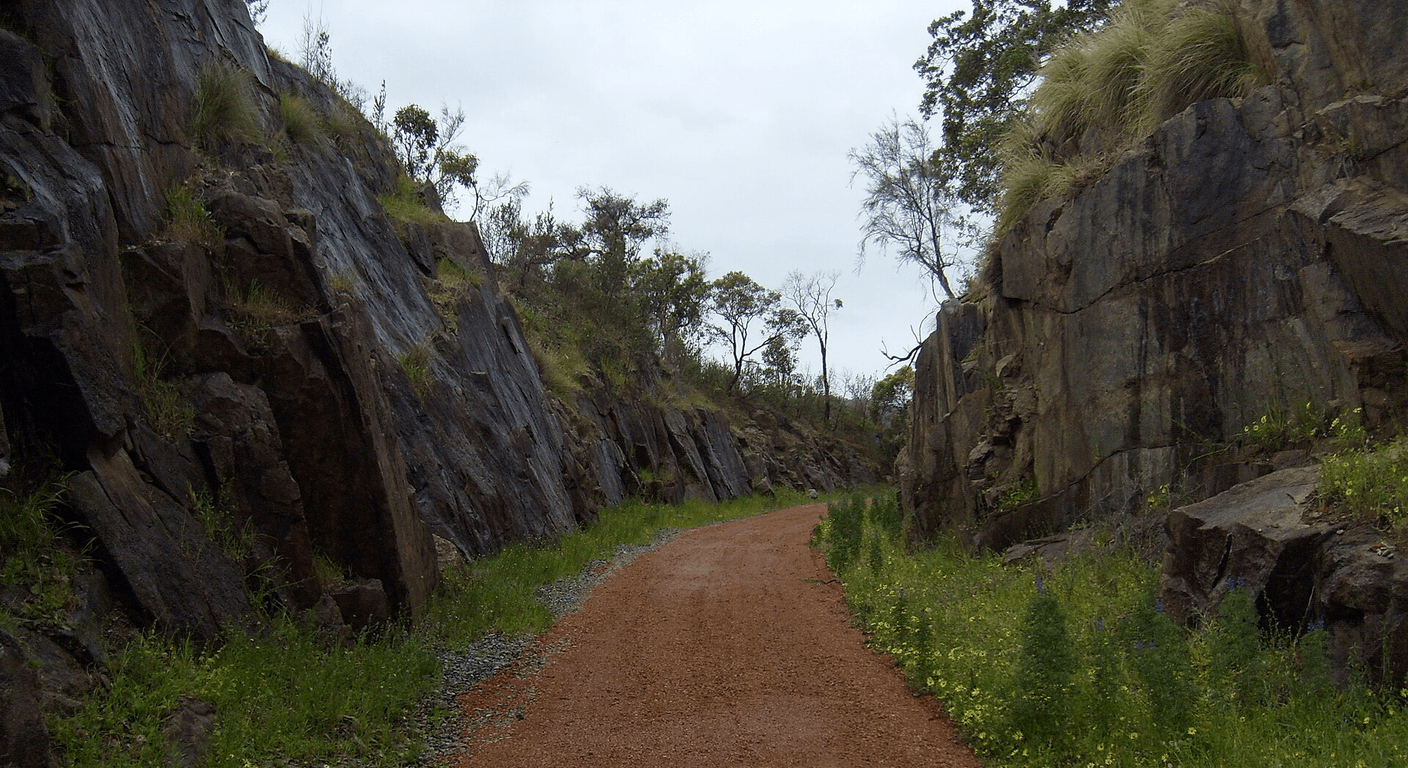
The park also includes a section of the Bibbulmun Track, the 1,000-kilometre trail that runs from Kalamunda to Albany. You don't need to be a long-distance walker to appreciate it — a few kilometres along the track through jarrah forest, then back, is a complete experience in itself. The Bibbulmun Track Foundation's website has detailed day-walk options for this section, including distance and elevation notes that help you choose according to how your knees are feeling that morning.
Near the old Mundaring Weir railway alignment, the heritage tavern is a genuine asset for a solo day tripper. It operates on-site and provides a logical anchor for the visit — arrive, walk to the falls, explore the railway heritage area, and then sit somewhere comfortable with something warm. The exact operating hours and menu can change seasonally, so confirm before you go. It's worth it.
Choosing the right trail for your fitness on the day
One of the more honest things you can say about John Forrest is that it doesn't force a single experience on you. The trails range from short, largely flat loops near the picnic and tavern precinct to steeper, more demanding walks further into the park. That range matters when you're travelling solo and there's no one to negotiate with — or anyone to notice if you quietly choose the easier option.
The flatter walking near the main facilities area is genuinely suitable for those who want a relaxed outing with good birdwatching and forest atmosphere without technical terrain. Steeper sections toward the ridge offer broader views across the Darling Range, but involve a real ascent and should be approached honestly. Carry water regardless of which trail you choose — the jarrah forest can feel deceptively cool but the Western Australian sun is not subtle. A hat, sunscreen and a fully charged phone are basics, not optional extras.
The best time of year to visit John Forrest
Perth's climate is Mediterranean, which means the ideal visiting window for most over-50 travellers is April through October. Autumn and spring bring mild temperatures, green understorey and the falls at their best. Winter (June to August) is cool and occasionally wet — not unpleasant if you're dressed for it, and the forest looks its most lush. Summer (December to February) can push above 35 degrees in the hills, which changes the calculus considerably.
For a Victorian visitor, there's something satisfying about crossing the country to enjoy weather that's genuinely warmer and drier than home in the middle of May. A Perth Hills day trip in autumn has a particular quality — the light in the jarrah forest in the afternoon, the smell after morning rain — that's specific to this place and season.
Practical planning: entry fees, facilities and what to bring
A per-vehicle entry fee applies to John Forrest National Park. The fee is paid at the entry station; confirm the current amount directly with the Department of Biodiversity, Conservation and Attractions (DBCA) at parks.dpaw.wa.gov.au before your visit, as fees are reviewed periodically. At the time this guide was written, the entry cost was well under $20 per vehicle — genuinely low for a day of this quality. If you're planning to visit multiple WA national parks during a stay, a holiday pass may offer better value; check the DBCA site for current options.
The park has toilets, picnic tables and barbecue facilities in the main day-use area. Mobile phone coverage is generally reasonable near the main facilities but can drop off on more remote sections of trail — download an offline map before you leave Perth. There is no petrol station within the park, so fill the tank in the suburbs before heading out on the Great Eastern Highway.
Making a day of it: pairing John Forrest with the wider Perth Hills
John Forrest works well as a standalone morning, but the Perth Hills corridor offers enough to turn it into a fuller day if the mood takes you. The heritage towns of Mundaring and Kalamunda are both within a short drive and have cafes, local galleries and produce worth exploring. The Kalamunda History Village and the Zig Zag Scenic Drive near Gooseberry Hill are the kinds of detours that reveal themselves at a relaxed pace rather than a scheduled one.
For a solo traveller who has flown over from Melbourne for a few nights, structuring a day around John Forrest in the morning and a slow drive back through the hills in the afternoon — stopping where something catches the eye — is a more satisfying use of time than cramming in three parks before lunch. Perth is not a city that rewards rushing.
Quick planning guide
| Ideal pace | Slow-paced and unhurried |
|---|---|
| Best months | April to October, with the falls at their best June to September |
| Suggested stay | Half a day, extendable to a full day with the wider Perth Hills |
| Mobility level | Moderate — flat loops near the picnic area, steeper ascents further in |
| Cost level | Budget-friendly (well under $20 per vehicle) |
| Comfort level | Casual, with a heritage tavern on-site for a warm break |
| Best for | Solo travellers and nature lovers wanting an unhurried heritage day trip |
| Main planning consideration | No direct public transport to the gate — drive or taxi from Midland, and confirm current entry fees with DBCA |
Key takeaways
- John Forrest National Park, gazetted in 1900, is Western Australia's oldest national park and sits 26 kilometres east of Perth in the Darling Range.
- National Park Falls and the heritage tavern near the old railway station are the two anchors of a comfortable day visit.
- Trails range from short flat loops near the picnic area to steeper ridge walks — choose according to fitness and conditions on the day.
- April to October is the ideal visiting window; the falls run best after winter and spring rain, June to September.
- A per-vehicle entry fee applies — confirm current pricing with DBCA at parks.dpaw.wa.gov.au before your visit.
- There is no direct public transport to the park gate; driving or a taxi from Midland station are the realistic options.
Recommended partners and links
Indicative prices only — always confirm with the operator before booking.
Frequently asked questions
How far is John Forrest National Park from Perth CBD?
John Forrest National Park is approximately 26 kilometres east of Perth's CBD via the Great Eastern Highway. The drive typically takes around 30 to 40 minutes depending on traffic.
Is there public transport to John Forrest National Park?
There is no direct bus service to the park entrance. The closest Transperth rail station is Midland, from which a taxi or rideshare to the park gate is the practical option. Confirm current rideshare availability in the area before relying on it.
Is John Forrest National Park suitable for older travellers with moderate fitness?
Yes. The park offers short, relatively flat walking trails near the main picnic and tavern area that are accessible to most reasonably fit visitors. Steeper trails are available for those who want more challenge but are entirely optional. Wear supportive shoes and carry water regardless of which trail you choose.
What is the entry fee for John Forrest National Park?
A per-vehicle entry fee applies. The indicative cost has historically been under $20, but fees are reviewed periodically. Confirm the current fee at parks.dpaw.wa.gov.au before your visit.
When is the best time to see National Park Falls at John Forrest?
The falls flow most reliably between June and September, following winter and spring rainfall. Visiting in summer (December to February) may result in reduced or negligible water flow, and temperatures in the hills can exceed 35 degrees during that period.