Kalamunda History Village, a cluster of relocated colonial buildings in the Perth Hills about 30–40 minutes' drive east of Perth, is best visited between April and October when conditions are mild. A half-day suits it well, anchored by volunteer guides who bring genuine local knowledge to the schoolhouse, church and old timber tramway story. The flat gravel and grass grounds make it easy for most mobility levels, though a hire car is the practical way to get there, since public transport to Kalamunda is limited.
What is Kalamunda History Village?
Kalamunda History Village is a heritage precinct managed by the City of Kalamunda, located in the Perth Hills roughly 24 kilometres east of the CBD. Rather than a conventional museum with display cases and roped-off rooms, it's a collection of original colonial-era buildings that have been relocated to a single site — among them an old schoolhouse, a church, and structures tied to the district's timber and railway past. The effect is of a small settlement frozen in time, which is far more affecting than it sounds.
What distinguishes it from similar ventures is the volunteer guide presence on open days. These are local people with genuine knowledge and, often, personal connection to the history they're describing. A conversation about the Kalamunda Tramway — which once carried timber down from the hills — lands differently when the person explaining it grew up hearing stories about it. That's the kind of encounter that stays with you longer than a printed panel.
The precinct is compact and entirely walkable. Paths are flat gravel and grass, which makes it accessible for most visitors including those who prefer to take their time or use a walking stick. There are no steep gradients, no cobblestones, and no pressure to keep pace with a guided group.
The Heritage Buildings: What You'll Actually See
The schoolhouse is one of the precinct's most evocative structures. Furnished as it would have been in the late nineteenth or early twentieth century, it gives a clear sense of how remote and self-reliant these hill communities were. The church, similarly restored, carries the quiet authority of a building that served generations of the same families. Together they make the settlement feel inhabited rather than curated.
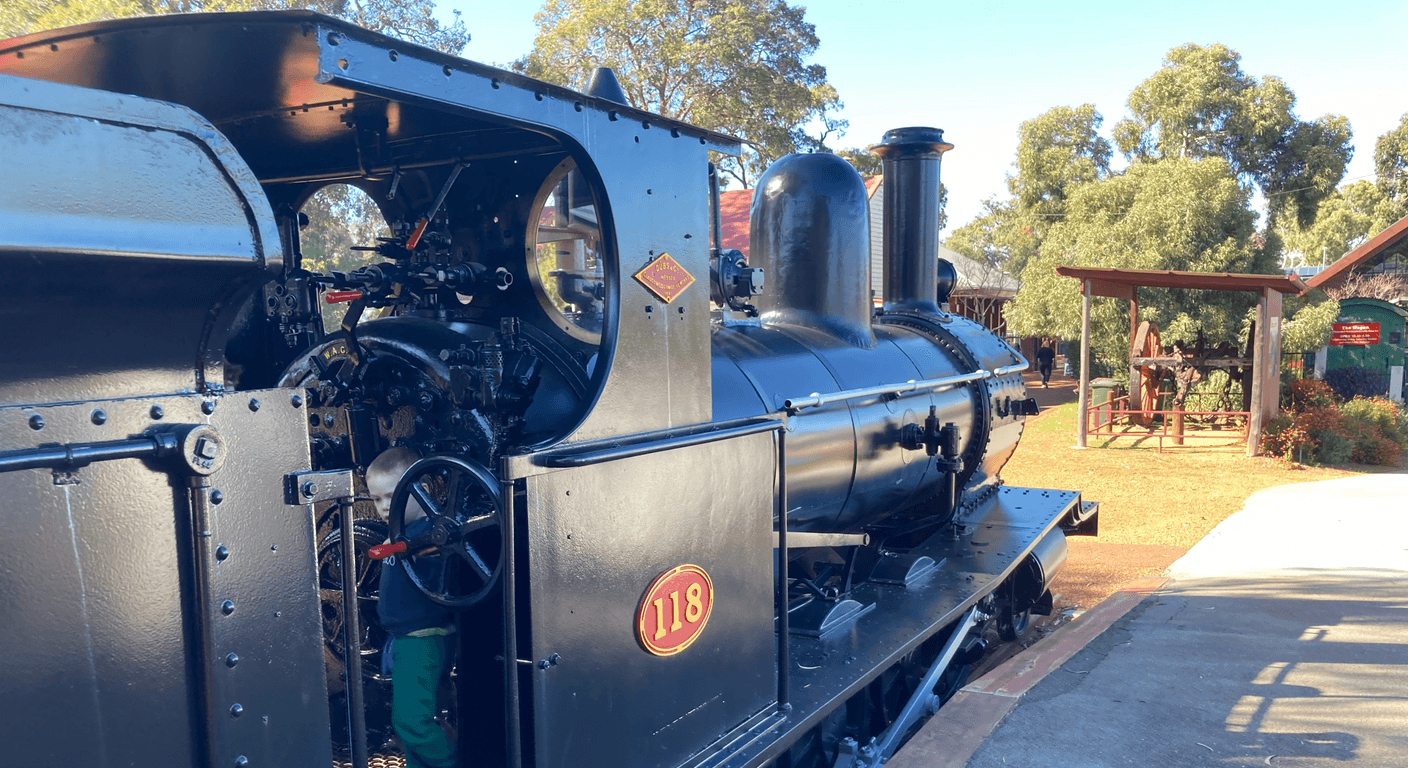
The railway and timber history is particularly well represented, which makes sense — the Kalamunda district's economy was built on jarrah timber, and the tramway that moved it was an engineering feat of its era. For anyone with an interest in industrial or social history, this is the thread worth pulling. Ask the volunteer guides about it directly; they tend to know details that don't appear in any brochure.
Beyond the key buildings, the grounds themselves reward a slow circuit. There are smaller outbuildings, period equipment, and interpretive displays that fill in the context without overwhelming it. The pacing is entirely visitor-led, which suits a couple who want to linger at one building and move quickly past another.
Getting There from Perth — and from the East Coast
For visitors based in Victoria, the practical starting point is a direct flight from Melbourne to Perth — roughly three hours and forty minutes, which is manageable in a single day. Perth's CBD is then about a thirty-minute drive from the airport, and Kalamunda is a further thirty to forty minutes east through the hills. Most interstate visitors hire a car, which is the sensible approach given that Kalamunda itself is a hills town without frequent public transport connections.
The drive up into the Perth Hills is genuinely pleasant — jarrah forest, ridge views, the temperature dropping a degree or two as you climb. It's worth factoring in a stop at the Kalamunda town centre itself, a compact main street with good cafes and a small produce market on weekends. The village and the town together make a comfortable half-day, with time left for a drive through the hills or a relaxed lunch before heading back to Perth.
For those who prefer not to drive, confirm with the Perth Hills Visitor Centre whether any tour operators currently service Kalamunda as part of a hills day trip. Options change seasonally and it's worth checking rather than assuming.
Planning Your Visit: Open Days, Hours and What to Confirm
This is the single most important practical point: Kalamunda History Village is not open every day of the week. It operates on specific open days — typically weekends — and is staffed by volunteers, which means hours can vary and occasional closures do happen. Before travelling from Perth, let alone from interstate, confirm current opening days and times directly with the City of Kalamunda or via the Perth Hills Visitor Centre. A quick phone call or website check takes two minutes and saves a wasted journey.
Entry is a small ticketed fee, currently indicative of under $20 per adult — confirm the exact figure when you check opening hours. There's no booking system for individuals; it's a turn-up-on-the-day experience, which is part of its charm. Arrive reasonably early in the open period to give yourself time without rushing.
April through to October is the recommended window for a Perth Hills visit. Summer in the hills can be warm to hot, and while the village grounds are partly shaded, a January afternoon is not the ideal time for a slow outdoor heritage walk. The mild autumn and spring months offer the best combination of comfortable temperatures and the landscape looking its best.
A Day in the Perth Hills: Combining Kalamunda with Other Experiences
The history village works well as the anchor of a broader Perth Hills day. Kalamunda town centre is five minutes away and has a handful of cafes worth knowing — the kind of places that do a proper breakfast and don't rush you out. The Saturday morning market in Kalamunda is a local institution, so if your visit falls on a weekend, the timing aligns neatly.
Lesmurdie Falls, about fifteen minutes from Kalamunda, is worth the detour if you're visiting during the wetter months when the falls are flowing. The main lookout is accessible without a difficult walk, though the lower trail to the falls base is rougher. John Forrest National Park, the oldest national park in Western Australia, is also in this corridor and offers easy scenic drives through jarrah and marri forest.
For those interested in extending the Perth Hills experience into a longer itinerary, the Swan Valley wine region sits at the foot of the hills to the northwest — a logical afternoon addition for a couple who enjoy a relaxed cellar door visit. The Swan Valley is lower-key than Margaret River and considerably closer to Perth, which suits a half-day extension without the long drive.
Accessibility and Comfort: What to Expect on the Ground
The grounds at Kalamunda History Village are genuinely flat and manageable. Gravel and grass surfaces are the norm; there are no significant steps or inclines within the main precinct. For visitors who walk comfortably but prefer not to cover long distances, the compact layout is ideal — you can see the whole site without covering more than a kilometre in total, at a generous estimate.
Some of the heritage buildings have period-appropriate doorways and interiors, which may mean low thresholds or modest internal space. If mobility is a specific consideration — for either partner — it's worth mentioning this when you call ahead to confirm opening hours. The volunteer team is generally accommodating and can advise on which buildings are most accessible.
Seating is available within the precinct, and the open-air setting means ventilation is not a concern. Wear comfortable shoes with grip on gravel, and bring a hat and water during the warmer months. The precinct is not large enough to require a mobility scooter for most visitors, but if in doubt, the City of Kalamunda is the right contact for specific accessibility questions.
Why This Kind of Heritage Experience Resonates
There's a particular satisfaction in a heritage site that doesn't try too hard. Kalamunda History Village doesn't have an app, a gift shop with branded tote bags, or an entry queue. What it has is a handful of honest old buildings, people who care about them, and enough quiet to actually think about what you're looking at. For a traveller who has been coming to Western Australia for decades, or who is making the journey from Victoria for the first time, that restraint is a quality.
The Greek Australian community has had a presence in Perth since the post-war migration era, and the broader story of how communities built institutions — schools, churches, halls — in regional and semi-rural Australia is one that many visitors will find personally resonant, whatever their background. The schoolhouse and church at Kalamunda are part of that universal story, told through a specifically West Australian lens.
Heritage villages of this kind rely on volunteer commitment that can be invisible until you're standing there talking to someone who has given years to keeping a building standing and a story alive. That's worth acknowledging, and worth supporting — which, at under $20 for entry, is about as low-effort a form of cultural patronage as you'll find.
Quick planning guide
| Ideal pace | Slow-paced and self-guided |
|---|---|
| Best months | April to October, for mild Perth Hills weather |
| Suggested stay | Half-day, extendable to a full day with Kalamunda town, Lesmurdie Falls or Swan Valley |
| Mobility level | Easy – flat gravel and grass paths, no steps or steep gradients |
| Cost level | Budget-friendly – entry under $20 |
| Comfort level | Comfortable – open-air setting with seating, best avoided on hot summer days |
| Best for | Couples and travellers with an interest in heritage and social history who prefer an unhurried, low-key outing |
| Main planning consideration | Confirm current open days and hours with the City of Kalamunda before travelling, as it's volunteer-staffed and not open every day |
Key takeaways
- Kalamunda History Village is a flat, easy-access heritage precinct in the Perth Hills, suitable for most mobility levels.
- The site is not open every day — confirm current open days and hours with the City of Kalamunda before visiting.
- Entry is indicatively under $20; the volunteer guides on open days are the experience's real asset.
- The drive from Perth takes around 30 to 40 minutes east through jarrah forest; a hire car is the most practical option for interstate visitors.
- April to October offers the most comfortable visiting conditions in the Perth Hills.
- The village pairs naturally with Kalamunda town, Lesmurdie Falls, or the Swan Valley for a well-rounded half-day or full-day itinerary.
Recommended partners and links
Indicative prices only — always confirm with the operator before booking.
Frequently asked questions
Is Kalamunda History Village open every day?
No. Kalamunda History Village operates on specific open days, typically weekends, and is staffed by volunteers. Hours and availability can vary. Always confirm current opening days and times directly with the City of Kalamunda or the Perth Hills Visitor Centre before making the trip.
How much does entry to Kalamunda History Village cost?
Entry is a small ticketed fee, indicatively under $20 per adult. Confirm the current admission price when you check opening hours, as fees can be updated.
Is Kalamunda History Village accessible for visitors with limited mobility?
The grounds are flat gravel and grass with no significant steps or steep gradients, making the precinct accessible for most visitors. Some heritage building interiors have period-style features such as low thresholds. Contact the City of Kalamunda directly if you have specific accessibility requirements.
How do you get to Kalamunda History Village from Perth?
Kalamunda is around 24 kilometres east of Perth CBD, approximately a 30 to 40-minute drive through the hills. Most visitors hire a car. Public transport connections to Kalamunda are limited; check with the Perth Hills Visitor Centre about any current tour operator options if you prefer not to drive.
What is the best time of year to visit the Perth Hills and Kalamunda?
April through October offers the most comfortable conditions — mild temperatures and, in the earlier months, green post-winter landscape. Perth Hills summers can be hot, making outdoor heritage walks less pleasant from December to February.