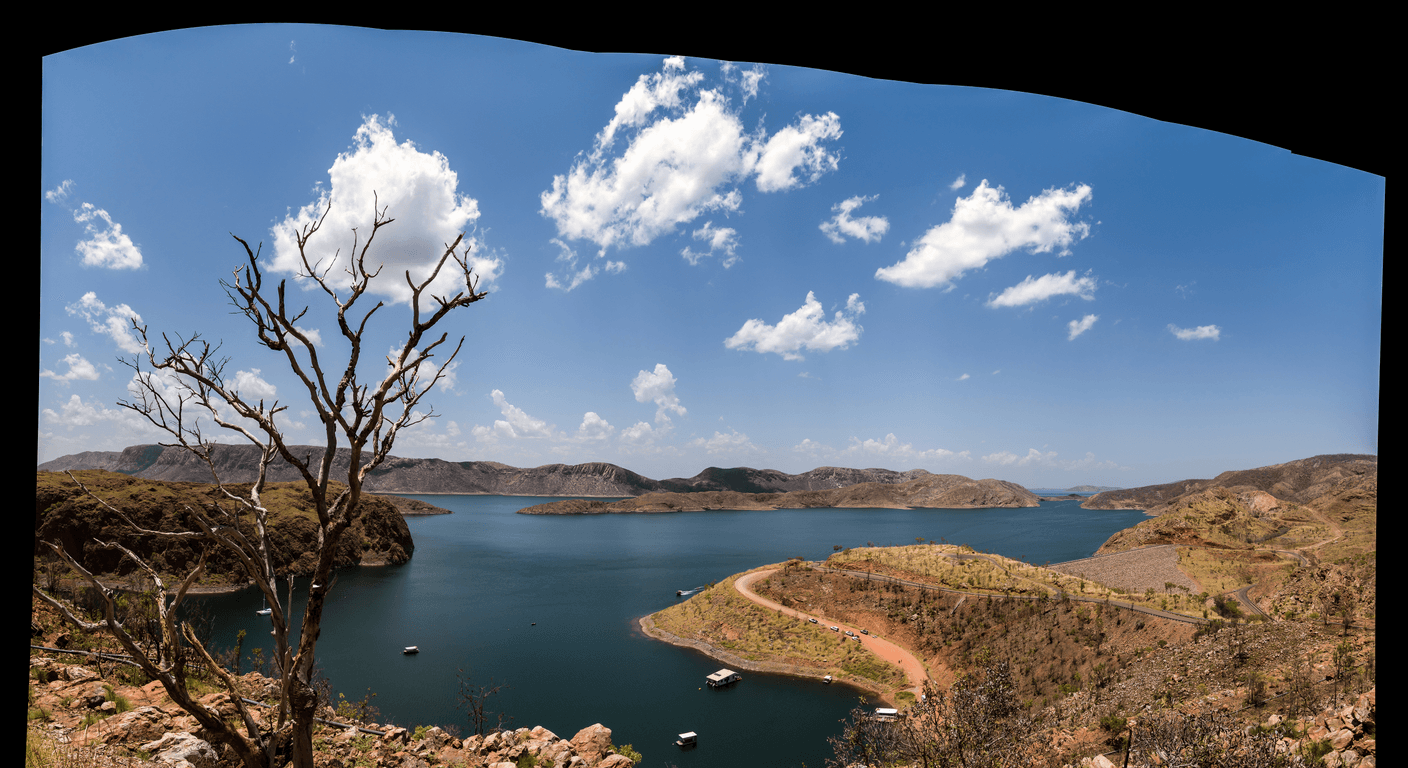
August is the peak month for Kimberley coast expedition cruising, offering the most settled weather, lowest humidity and fullest tidal access to sites like Montgomery Reef, Horizontal Falls and the Mitchell Falls rock art plateau. A 7–10 night voyage, preceded by two nights in Broome, is the ideal format. Mobility demands are moderate, involving Zodiac tender landings on uneven ground, so reasonable balance and fitness are needed. Access is by flight via Perth to Broome, then tender transfer to the ship.
Why the Dry Season Is Non-Negotiable
The Kimberley operates on its own terms. Between October and April, the wet season brings cyclonic rainfall, flash flooding and sea conditions that close most of the coast to vessel traffic entirely. Expedition ships don't run. It's not a scheduling quirk — it's a physical reality of one of the world's most dramatic tidal and weather environments.
From May, the skies clear and the winds settle. By August, you're in the sweet spot: daytime temperatures in Broome hover around 28–30°C, humidity is low by tropical standards, and the tidal windows that govern access to places like Horizontal Falls, Montgomery Reef and the Prince Frederick Harbour are at their most predictable. August also means the wildflower bloom has softened the red rock country, and birdlife along the coast and waterways is extraordinary.
September remains excellent and is slightly quieter than August. June and July are also popular — cooler overnight temperatures, occasionally brisker winds at sea. For most travellers, August offers the best balance of settled conditions and full itinerary access. If you're flexible, it's the month to target.
The Two Operators Worth Knowing — and How They Differ
Coral Expeditions and True North are the names that come up consistently, and for good reason — both have operated in these waters for decades. But they suit different travellers. Coral Expeditions runs the Coral Adventurer and Coral Geographer, expedition-style ships carrying around 72–120 passengers. The atmosphere is convivial and social; the onboard naturalists and guides are strong; and the itineraries balance wildlife, geology and Indigenous cultural experiences. For a solo traveller, the communal dining and lecture programme make it genuinely easy to connect with fellow passengers.
True North is a smaller, more intimate operation — its flagship carries just 36 passengers — and the experience feels closer to a private charter. The ship carries its own fleet of small tender boats and a helicopter, which opens up gorge and waterfall access that larger vessels simply can't offer. The trade-off is cost: True North voyages are among the most expensive expedition experiences in Australia. The exclusivity is real, though, and for those who want the Mitchell Plateau by air and a private gorge swim before breakfast, it delivers.
A third option worth noting for travellers seeking a gentler introduction is APT (Australian Pacific Touring), which has offered Kimberley cruising on larger, more comfortable vessels — though itineraries and vessel configurations change seasonally, so confirm current offerings directly with the operator at aptgroup.com.au. Larger vessels may mean fewer Zodiac landings but more onboard comfort.
What Zodiac Transfers Actually Involve — and Who Should Think Carefully
This is the part of the brochure that deserves plain language. Zodiac inflatable tenders are the standard method for getting passengers ashore along the Kimberley coast, where there are no wharves and the tidal range — up to 11 metres in some locations — means conditions change rapidly. Boarding a Zodiac from a ship's platform typically involves stepping down into a moving, low-sided rubber boat, often with a crew member steadying your arm. Disembarking onto a beach or rock ledge can require stepping onto uneven, sometimes slippery surfaces.
For most reasonably fit travellers over 50, this is entirely manageable. The crew are experienced and attentive, and you're not expected to leap. That said, anyone with significant balance issues, recent joint replacements, or a strong aversion to instability should have an honest conversation with the operator before booking. Both Coral Expeditions and True North are accustomed to this conversation and can advise on which excursions involve more demanding landings versus those that are gentler.
Tidal walks — particularly at Montgomery Reef, where you walk across an exposed reef platform as the tide retreats — require confident footing on irregular terrain. These are not compulsory, and staying aboard or in the Zodiac is always an option. The point is to know before you go, not to be surprised at the platform. Operators will send pre-departure information; read it, and if in doubt, call them directly.
The Highlights That Make It Worth Every Bit of Effort
Montgomery Reef is one of those experiences that's almost impossible to describe without reaching for words that have been banned from this guide. So: it's a large offshore reef that appears to rise from the sea as the tide drops, with waterfalls cascading off its edges and green sea turtles and dugongs riding the outflow. It is genuinely unlike anywhere else. The Zodiac ride out, the reef walk, the sheer scale of the tidal movement — this is the kind of thing you'll still be talking about at dinner six months later.
The Mitchell Falls — Punamii-Unpuu in Ngarinyin — involve either a helicopter flight (the True North approach) or a walk of roughly 8.5 kilometres return from the airstrip. The walk is classified as moderate, on a marked trail through sandstone country. For those who can manage it, the four-tiered falls cascading into a plunge pool is a profound experience. Those who can't manage the full walk can often access the lower falls. The surrounding plateau contains ancient Wandjina and Gwion Gwion rock art sites, and guides from local Traditional Owner groups provide context that no guidebook can replicate.
Horizontal Falls — Tahla in Dambimangari — is a tidal phenomenon in which water is forced through two narrow gorges in the McLarty Range, creating a visible difference in water level on either side. The speedboat ride through the falls is optional and high-adrenaline; viewing from the Zodiac is the more common and perfectly satisfying experience. King Cascades, Hunter River and the Lacepede Islands (a major sea bird rookery) are among the other set pieces, and the night skies in this part of Western Australia are a destination in themselves.
Broome: The Pre-Cruise Night (or Two) You Shouldn't Skip
Most Kimberley voyages depart from Broome's Dampier Creek or the outer anchorage, with passengers transferring by tender. Flights from Melbourne, Sydney and Brisbane connect through Perth to Broome — total travel time from Melbourne is typically around five to six hours including the connection. Arriving the day before embarkation is the minimum; two nights gives you time to recover from travel, sort any last-minute gear, and actually see a town that rewards attention.
Cable Beach at sunset, with camels silhouetted against the Indian Ocean sky, is the image Broome is known for — and it earns it. But the town also has Chinatown's pearling history, the outdoor Sun Pictures cinema (reputedly the world's oldest operating outdoor cinema, a claim worth exploring at sunpictures.com.au), the Broome Historical Museum, and a genuinely good food scene shaped by the town's multicultural pearling heritage. For a solo traveller, Broome is comfortable and walkable in the cooler morning hours.
Accommodation ranges from the historic Cable Beach Club Resort and Spa (cablebeachclub.com) at the premium end to solid mid-range hotels in town. Indicative costs for a comfortable room in August run from around $200 to $400+ per night — confirm current rates, as August is peak season and prices reflect it. Transfers to the embarkation point are generally arranged by the cruise operator; confirm the logistics when you receive your pre-departure documentation.
Fares, What's Included and the Insurance Conversation
Kimberley expedition cruising is not a budget category, and there's no point pretending otherwise. Indicative fares for a 7–10 night voyage start at roughly $8,000 per person for Coral Expeditions in a lower-deck cabin, and can exceed $20,000 per person for True North's premium configurations. These fares are typically all-inclusive of meals, guided excursions, transfers and lecture programmes. What varies is the cabin standard, the helicopter access (True North), and the single supplement — which, for solo travellers, is the figure to interrogate carefully. Some operators offer single cabins or waive the supplement on select departures; ask directly.
Travel insurance is not optional here. The Kimberley is remote — genuinely remote — and medical evacuation by air from a vessel in the Bonaparte Archipelago to the nearest major hospital is a real possibility, not a theoretical one. Standard travel insurance policies often have gaps around pre-existing conditions, and policies purchased after a diagnosis may exclude related claims. The Australian Government's Smartraveller website (smartraveller.gov.au) has clear guidance on what to look for. For travellers managing conditions common in the over-50 cohort — cardiac, respiratory, musculoskeletal — specialist insurers such as Cover-More or Nib Travel offer policies designed for this situation. Compare carefully and disclose fully.
Most operators include a pre-departure information pack that details what to bring: lightweight, quick-dry clothing in neutral colours (not white — red Kimberley mud is unforgiving), a good wide-brimmed hat, reef-safe sunscreen, closed-toe water shoes for landings, and any personal medications in sufficient supply for the voyage plus a buffer. Pharmacies in remote areas are not a contingency plan.
Practical Considerations for Solo Female Travellers
Expedition ships are among the more comfortable solo travel formats available. The structured nature of the day — morning excursion, lunch, afternoon excursion, dinner with communal seating — means social connection happens naturally without requiring effort. Coral Expeditions in particular has a strong track record with solo travellers, and the passenger demographic on Kimberley voyages skews heavily towards the 50-plus cohort, often with a notable proportion of women travelling alone or in pairs.
Safety aboard and ashore is not a concern in the conventional sense — the environment is the variable, not the social one. Crew-to-passenger ratios on expedition ships are high, and guides accompany every shore excursion. The practical advice for solo female travellers is the same as for all passengers: be honest with the operator about fitness and any conditions, don't push beyond your comfort on landings, and carry a dry bag for your camera and phone on every Zodiac transfer. The Kimberley has a way of making expensive electronics regret their life choices.
For travellers of Italian Australian heritage who appreciate food and conviviality, expedition ship cuisine has improved considerably. Coral Expeditions in particular has invested in its galley programme, with menus that reflect local produce where possible. It's not a fine dining cruise, but it's far from institutional. The conversations at dinner, with passengers who've come from across Australia and beyond, tend to be the other kind of nourishment that makes a voyage like this stay with you.
Quick planning guide
| Ideal pace | Slow, structured expedition days with morning and afternoon excursions |
|---|---|
| Best months | August (dry season, May to September, with August the peak) |
| Suggested stay | 7–10 night cruise plus two nights in Broome beforehand |
| Mobility level | Moderate — Zodiac landings and uneven terrain, with gentler alternatives available |
| Cost level | Premium — roughly $8,000 to $20,000+ per person |
| Comfort level | Comfortable to premium, depending on operator and cabin |
| Best for | Reasonably fit over-50 travellers, including solo travellers |
| Main planning consideration | Confirming fitness for Zodiac transfers and securing insurance that covers remote medical evacuation and pre-existing conditions |
Key takeaways
- August is the peak of the Kimberley's dry season — settled weather, low humidity and full tidal access make it the most reliable month for expedition cruising.
- Coral Expeditions suits those who want a social, naturalist-led experience; True North suits those who want exclusivity, a helicopter and 36 fellow passengers.
- Zodiac landings require confident balance on moving platforms and uneven terrain — honest conversations with operators before booking prevent unpleasant surprises.
- Indicative fares range from roughly $8,000 to $20,000+ per person for 7–10 nights; single supplements for solo travellers vary significantly by operator and departure.
- Two nights in Broome before embarkation is the practical and pleasurable minimum — August is peak season, so book accommodation early.
- Travel insurance covering pre-existing conditions and remote medical evacuation is essential, not optional, for any Kimberley expedition voyage.
Recommended partners and links
Indicative prices only — always confirm with the operator before booking.
Frequently asked questions
When do Kimberley expedition cruises run, and why?
Kimberley expedition cruises operate during the dry season, roughly May to September, because the wet season (October to April) brings cyclonic weather, flooding and sea conditions that make coastal navigation unsafe. August is considered peak season for its settled skies, low humidity and optimal tidal conditions for shore excursions.
How physically demanding is a Kimberley expedition cruise for someone over 50?
The mobility rating is Moderate. Zodiac transfers require stepping into and out of a moving inflatable tender, and some shore excursions involve walking on uneven, rocky or reef terrain. Most reasonably fit travellers over 50 manage comfortably. Both Coral Expeditions and True North offer gentler excursion options for passengers with lower mobility, and remaining aboard or in the Zodiac is always an alternative.
What does a Kimberley expedition cruise cost for an Australian traveller?
Indicative fares for a 7–10 night Kimberley voyage start at around $8,000 per person with Coral Expeditions and can exceed $20,000 per person with True North for premium cabins. Fares are typically all-inclusive of meals, guided excursions and transfers. Solo travellers should ask specifically about single cabin availability and supplement costs. Confirm current pricing directly with operators.
Where do Kimberley cruises depart from, and how do you get there?
Most Kimberley expedition voyages depart from Broome, Western Australia. Flights connect from Melbourne, Sydney and Brisbane via Perth, with total travel time from Melbourne typically around five to six hours. Arriving in Broome at least one night — ideally two — before embarkation is strongly recommended.
Is travel insurance essential for a Kimberley expedition cruise?
Yes. The Kimberley coast is remote, and medical evacuation by air to a major hospital is a realistic scenario. Standard travel insurance policies may not cover pre-existing conditions, so travellers over 50 managing health conditions should seek specialist policies that cover remote medical evacuation and pre-existing conditions. Smartraveller.gov.au provides guidance on what to look for.