Kuala Lumpur's street food is manageable for over-50 Australians if you eat early, travel between areas by taxi or ride-hailing, and use air-conditioned food courts when the heat bites. Plan four nights, with a rest break each afternoon. Heat is constant, so rate this trip Moderate. Direct flights exist from several Australian cities, but confirm schedules and arrival times with the airlines.
How do you get to Kuala Lumpur from Australia?
Kuala Lumpur International Airport (KUL) is served from Australia by full-service and low-cost carriers. Perth is the shortest hop. Sydney, Melbourne and Brisbane are longer. Adelaide and some other cities may need a connection. Flight times, airlines and routes change by season, so check current schedules with the airlines before booking. This guide hasn't verified them.
Fares vary widely by season and carrier. Treat any figure you see as indicative and compare the full price. Low-cost carriers commonly charge extra for bags, meals and seat selection, and those extras can close the gap with a full-service fare. Add them up before you decide.
Check arrival times carefully. Some flights land at night or in the early hours, and that's a rough way to start a heat-heavy trip. Book your first night near KL Sentral or the Bukit Bintang area so you can sleep straight away. Ask the hotel about early check-in, or book the night before so a room is waiting. A recovery night is a smart choice, not a luxury.
What's the easiest way from the airport to the city?
The KLIA Ekspres is a non-stop train linking KL Sentral with KLIA Terminal 1 and Terminal 2. The operator's guideline gives the journey from KL Sentral to KLIA T1 as approximately 28 minutes, over a 57 km route. It says trains run every 20 minutes, seven days a week, including weekends and public holidays. The same document also mentions other frequencies for peak and off-peak, so confirm the current timetable on kliaekspres.com.
Tickets come as single or return, for adults and children. The guideline says standard fare tickets are valid for 31 days from the selected travel date unless stated otherwise. Third-party sites quote an adult fare, but the official page opened for this guide didn't show the amount. Check the current fare on the official site rather than trusting a figure from a blog.
Taxis and ride-hailing are the alternative, especially for a late arrival with luggage. Fares depend on the app, the time and the traffic, and the airport has its own rules for taxi coupons and surcharges. Check the Malaysia Airports site or your app for a quote before you travel. For station access, look at the official ERL, Rapid KL and Malaysia Airports accessibility pages to find lifts and escalators at KL Sentral and interchange stations. Don't assume a lift is next to every platform.
How do you handle the heat and the footpaths?
Kuala Lumpur is hot and humid year-round, with afternoon storms common. Check the Malaysian Meteorological Department for current conditions. The practical response is to flip your day. Do your sightseeing in the morning, rest in the middle of the day, and eat from about 5:30pm, when the heat starts to ease and many stalls are setting up.
Footpaths can be uneven, with gaps, drains and patchy covered walkways. Wear closed, grippy shoes and watch your feet. Use taxis or ride-hailing between areas rather than walking long distances in the heat. It's cheap enough to be a sensible habit, and you arrive at the stall fresher.
Air-conditioned food courts in malls are the gentler version of a hawker street. You get proper tables, backs on chairs, clean toilets and a wide choice of dishes, usually with the same sort of food. They lack the street atmosphere, but they're a fair option on a hot or wet day, or when your knees have had enough.
Which food areas suit a slower pace?
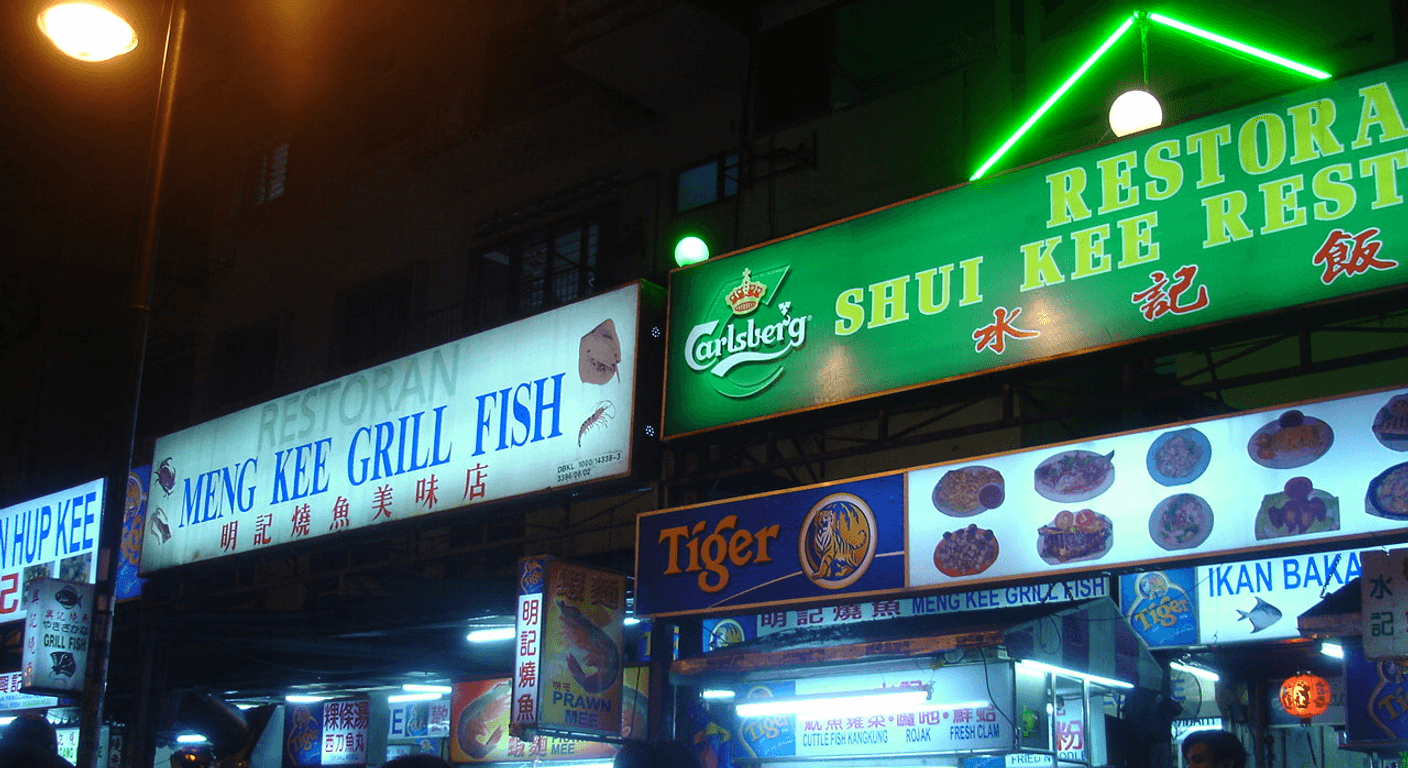
Jalan Alor in the Bukit Bintang area is the famous hawker street. Expect crowds, noise, touts, plastic stools and tables set out along the road. It can be fun for an hour and exhausting for three. Go early, choose a stall with a steady flow of customers and hot food coming off the wok, and don't feel obliged to stay. Confirm current opening times on a Google listing before you go.
For a daytime option, Petaling Street in Chinatown and the kopitiam (traditional coffee shop) breakfast spots nearby are easier on the body. Mornings are cooler, you can sit on a proper chair, and a kopitiam breakfast of coffee, toast and eggs is a gentle start. Opening hours vary by venue, so check each listing.
A one- or two-hour guided food walk is usually easier than self-guiding, because someone else handles the choosing and the route. Before booking, ask the operator about seating, the total walking distance, the pace and whether they'll adjust for slower walkers. Check these details with the operator, as no tour was verified for this guide.
A solo traveller's perspective: small group walks are a sensible way to eat widely without ordering a whole dish for one, and they add company. A couple's perspective: sharing plates at a hawker stall lets you taste more for the same money, and you can split the walk and the rest stops between you.
How do you eat safely and stay well?
Choose busy stalls with high turnover and food cooked hot in front of you. Be careful with ice and raw salads, and drink sealed or bottled water. Carry oral rehydration salts, and keep regular medications in original packaging with a copy of your prescription or a doctor's letter.
If you don't want chilli, ask for 'tak pedas' (not spicy). Spice levels vary, and sambal often comes on the side or mixed through. Halal and vegetarian options are widely available, but pork is sold at Chinese stalls, so ask if it matters to you. A vegetarian dish may still use shrimp paste or meat stock, so ask.
Kuala Lumpur has well-regarded private hospitals, including Prince Court, Gleneagles and Pantai. Care is generally paid upfront, so travel insurance with medical cover is essential. Disclose pre-existing conditions, or the policy may not respond when you need it. Confirm each hospital's international patient and payment policy directly. Read the Malaysia advice on Smartraveller before you go, and register your trip.
What does it cost, and what about going solo?
These figures are indicative only, based on common ranges, and none were verified against official pages for this guide. Hawker meals are roughly A$3 to A$8. A sit-down restaurant meal often starts from around A$12 a person and climbs with the venue. Guided food tours vary widely by length and group size, and many start from around A$60 a person. Four-star hotels often start from around A$90 a night, with prices rising by location and season. Get current prices from each venue or operator, and convert at a current Reserve Bank of Australia or Bank Negara Malaysia rate, as the ringgit moves.
The single-supplement reality: hotels price per room, so a solo traveller pays the full rate or close to it. That's the real cost of travelling alone, and it's worth choosing a modest, well-located hotel rather than a grand one. Many food tours are priced per person with no supplement, though small private tours can cost more for one. Ask before you book, and look for small group departures.
Carry some cash. Many stalls are cash-only, and queues and noise are normal. Check whether your card charges foreign transaction fees, which can be steep.
What does a gentle four-night plan look like?
Night one: arrive, take the KLIA Ekspres or a ride-hail to your hotel near KL Sentral or Bukit Bintang, eat something simple nearby and sleep. Day two: kopitiam breakfast, a short morning around Petaling Street, then back to the hotel to rest through the heat. Around 5:30pm, take a ride to a hawker street such as Jalan Alor for an early dinner, then a ride home.
Day three: a slow morning, then a guided food walk of one to two hours, booked in advance after you've checked seating and walking distance. Rest in the afternoon. Day four: a mall food court lunch in air-conditioning, an easy afternoon, and an early evening meal at a sit-down restaurant, so a night without stools is built in.
Day five: a late breakfast, pack, and allow plenty of time for the airport. The BrittAndMitchWorldwide YouTube video on Kuala Lumpur street food offers the creator's own view of the city's food scene. Treat its claims as one person's opinion, and cross-check venues and prices against official or operator sources before you go. Skipping any item here is fine. A rest day is a good use of a day.
Quick planning guide
| Ideal pace | One main food outing a day, early evening, with a rest in air-conditioned comfort in the afternoon. |
|---|---|
| Best months | Warm and humid all year, with afternoon storms common. Check the Malaysian Meteorological Department for current conditions. |
| Suggested stay | Four nights, plus a recovery night if your flight lands late. |
| Mobility level | Moderate. Uneven footpaths, drains and gaps, patchy covered walkways, and low plastic stools at many hawker stalls. |
| Cost level | Hawker meals are cheap by Australian standards. Hotels and guided tours are where the budget goes. Figures here are indicative only. |
| Comfort level | Good with planning. Private hospitals, air-conditioned malls and ride-hailing make the city easy to manage. |
| Best for | Curious eaters who like variety, can handle heat with breaks, and are happy to choose busy, freshly cooked stalls. |
| Main planning consideration | Heat and humidity, and the fatigue they add to a long-haul arrival, matter more than the food itself. |
Key takeaways
- Eat from about 5:30pm, when the heat eases and the stalls are busy.
- The KLIA Ekspres is non-stop to KL Sentral, with the operator giving about 28 minutes to Terminal 1.
- Check the current KLIA Ekspres fare and timetable on kliaekspres.com before travelling.
- Air-conditioned mall food courts are a comfortable alternative to hawker streets.
- Choose busy stalls with hot, fresh food, and drink only sealed or bottled water.
- Hotels charge per room, so solo travellers pay close to the full rate.
Recommended partners and links
Indicative prices only — always confirm with the operator before booking.
Frequently asked questions
How long does the KLIA Ekspres take to reach Kuala Lumpur?
The operator's guideline gives the journey from KL Sentral to KLIA Terminal 1 as approximately 28 minutes. The service is non-stop. Confirm the current timetable and fare on kliaekspres.com.
Is Kuala Lumpur street food safe for older travellers?
It can be, with sensible choices. Pick busy stalls serving hot, freshly cooked food, avoid ice and raw salads, and drink sealed or bottled water. Carry oral rehydration salts and your regular medications in original packaging.
Do I need travel insurance for Kuala Lumpur?
Yes. Private hospitals in Kuala Lumpur are well regarded, but care is generally paid upfront. Take a policy with medical cover and disclose any pre-existing conditions. Check the Smartraveller advice for Malaysia before you go.
What's the best time of day to eat street food in Kuala Lumpur?
Early evening, from about 5:30pm, is gentler because the heat eases and stalls are setting up. For a cooler option, try a kopitiam breakfast in the morning.
Do solo travellers pay extra on food tours in Kuala Lumpur?
Many food tours are priced per person with no single supplement, though small private tours can cost more for one. Hotels charge per room, so solo travellers pay the full rate or close to it. Confirm with each operator.
Want the next guide like this?
Choose your state, the subjects you care about, or both. We will let you know when a new guide lands. Email once a week at most, or a quiet phone notification on the day it publishes. No advertising, no sponsored content, and we never pass your details to anyone.