La Perouse, at the end of Anzac Parade, suits a two- to three-hour visit, best on a quiet weekday between October and April for calm swimming at Congwong Beach. Its highlight is the headland where La Pérouse's expedition arrived the same day the First Fleet sailed for Port Jackson in 1788, plus the 1885 Bare Island fort. Walking is Easy on flat, sealed paths, reached via the 394 bus from Circular Quay in 45 minutes.
Why La Perouse still surprises people
Most Sydneysiders know the name La Perouse the way they know a street they've never turned down — vaguely, in passing. That's their loss. The headland at the northern entrance to Botany Bay is one of the few places in Australia where the collision of European arrival, Indigenous presence and colonial engineering all occupy the same few hundred metres of ground, and where you can absorb that history at your own pace, mostly for free.
The French angle alone is extraordinary. Jean-François de Galaup, comte de La Pérouse, arrived in Botany Bay on 26 January 1788 — the very day the First Fleet was sailing north to Port Jackson. Governor Phillip and La Pérouse exchanged courtesies, the French camped on the headland for six weeks repairing their ships, and then sailed away into the Pacific, never to be seen again. The mystery of their disappearance was only partially resolved 40 years later. Standing on the headland now, knowing that, gives the view across the bay a different weight.
For a solo traveller who values substance over spectacle, this is exactly the kind of place that repays a slow morning. There's no queue, no ticket gate at the headland itself, and no pressure to move on.
Getting there: the direct bus is easier than you'd think
From central Sydney, route 394 runs directly from Circular Quay to La Perouse, taking around 45 minutes depending on traffic. It's a straightforward journey on a single bus with no changes required — sit on the left side heading south for glimpses of Randwick and Maroubra along the way. The Opal card fare is modest; confirm current pricing at transportnsw.info. There's a bus stop right at the headland.
Driving is an option if you're visiting from elsewhere in Sydney, and parking is generally available near the museum and along the foreshore road, though it fills on warm weekend afternoons. From Victoria, La Perouse works well as a day trip built around a Sydney stay — fly into Sydney, settle in for a night, then head south-east the next morning. It pairs well with a Botany Bay walk or a drive along the coast to Cronulla.
One practical note: the end of Anzac Parade is genuinely the end. There's no through road. That geographic finality is part of what makes the place feel distinct — you've arrived somewhere, not passed through it.
The La Pérouse Museum: small, serious and worth your time
The museum occupies a modest building near the bus stop and covers the French expedition, the history of the Bidjigal and Gweagal peoples of the bay, and the colonial period that followed. It doesn't try to do too much, which is a virtue. The displays on La Pérouse's voyage — he'd circumnavigated much of the Pacific before arriving at Botany Bay — put the encounter with the First Fleet into genuine global context.
An entry fee applies; confirm the current amount and opening days via the NSW National Parks website before visiting, as hours can vary by season. The museum is small enough to cover thoroughly in an hour, and there's seating inside — welcome on a hot afternoon or a blustery winter day.
For anyone with Italian Australian heritage, there's something quietly resonant about standing in a place where French, British and Aboriginal histories intersect so dramatically, and where the official narrative has slowly — not always gracefully — expanded to include more than one point of view. The museum reflects that ongoing reckoning with reasonable honesty.
Bare Island: the 1885 fort and the timber footbridge
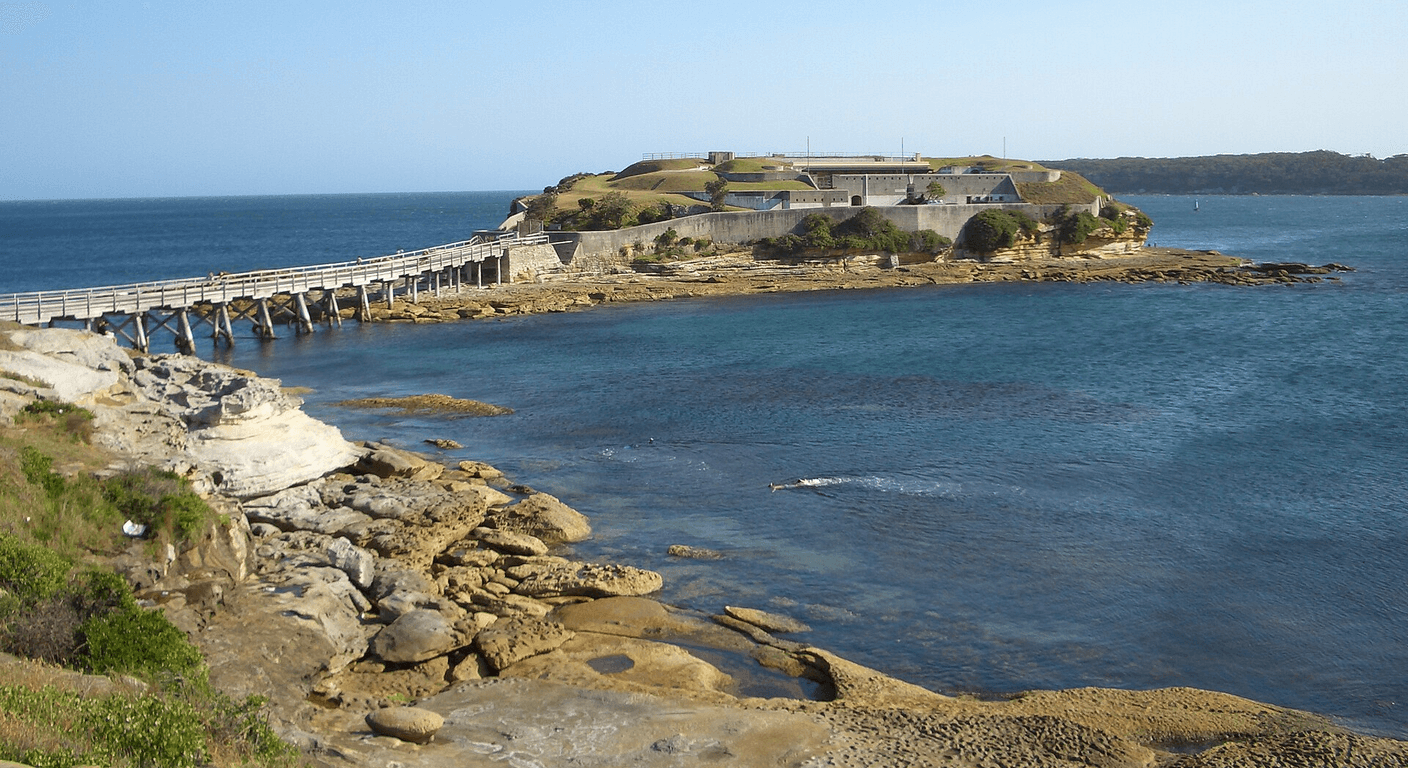
Bare Island sits just off the headland, connected by a narrow timber footbridge that wobbles pleasantly underfoot and delivers you to a small, self-contained Victorian-era fort built when the colony genuinely feared Russian naval attack. The threat never materialised — the fort was decommissioned within a few decades — but the structure remains in solid condition, and a guided tour is the way to see the interior.
Tours run on limited days only, so this is the one element of the visit that requires advance planning. Check the NSW National Parks website for current days, times and pricing before making the trip. The tour fee is modest and the guides tend to be well-informed, with the kind of dry commentary that suits the absurdity of a fort built for a war that never arrived.
The footbridge itself is accessible to most walkers, though the timber grating and slight incline mean those with balance concerns may want to take it steadily. Once on the island, the views back across the headland and out to the open ocean are among the best in Botany Bay. On a clear day, you can see across to Kurnell, where Cook landed in 1770 — another layer of history visible from the same spot.
Congwong Beach and the Sunday snake show tradition
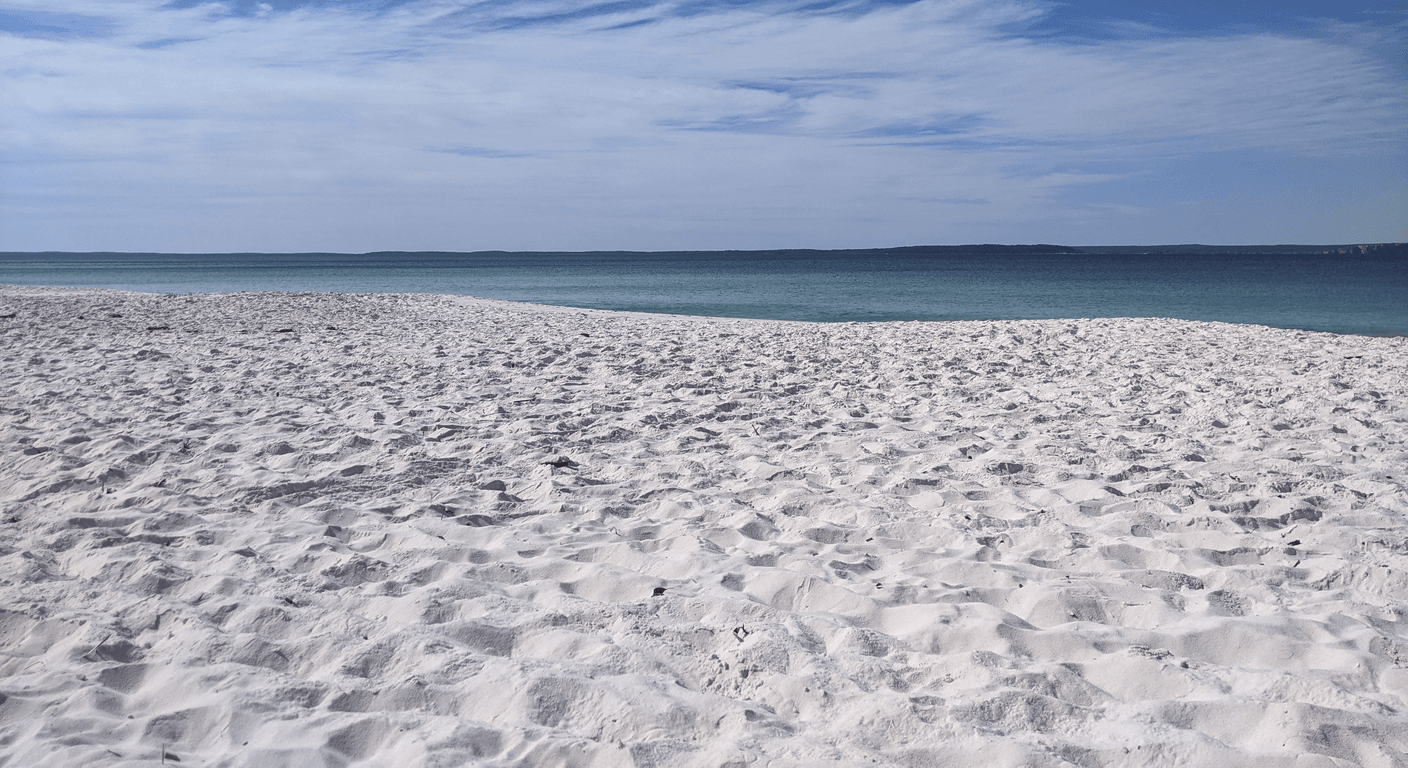
Tucked just south of the main headland, Congwong Beach is one of Sydney's quieter and more sheltered swimming spots — calm water, a small sandy crescent and none of the surf-beach energy that can feel relentless elsewhere. It's an ideal spot for a swim between October and April, when water temperatures are warm enough to linger. The beach has basic facilities and is generally uncrowded on weekdays.
The snake show is a tradition that has been running at La Perouse since the early twentieth century, when Aboriginal men from the local community began demonstrating their handling of venomous snakes to visiting crowds. It became a Sunday institution. The shows are less frequent now than they once were, and schedules vary — check locally before planning around it. But if you happen to arrive on the right Sunday, it's a genuine piece of living cultural history, not a staged tourist performance.
Both the beach and the headland have enough seating and shade that a solo traveller can settle comfortably for a few hours without feeling marooned. A good book, a thermos of coffee and a bench facing the bay is a perfectly reasonable way to spend a Sydney morning.
Walking the headland: sealed paths, bay views and a sensible pace
The headland circuit is largely sealed and reasonably flat, with benches positioned at intervals where the view opens up. It's the kind of walk that rewards a slow pace — there's no summit to reach, no marker to photograph. The pleasure is in the layered views: the bay to the south, the open ocean to the east, the city faintly visible to the north.
Distances are short enough that you can cover the main points — museum, Bare Island footbridge, Congwong Beach, the monument to La Pérouse — in a comfortable two to three hours without feeling rushed. The walking is Easy by any reasonable measure, though the coastal exposure means wind is a genuine factor. A light jacket or a scarf is worth carrying year-round; even a warm Sydney day can turn fresh once you're out on the point.
There are also the ruins of a cable station and various interpretive signs along the route that explain the site's layered history without demanding too much reading time. For a solo traveller who prefers to move at her own speed and stop when something catches her attention, this is an ideal format.
Practical advice: what to bring and what to know
Water and snacks are worth bringing — there's a small kiosk near the headland but don't rely on it being open. Sunscreen is essential in summer; the headland offers limited shade on the exposed sections. Comfortable, flat-soled shoes are all that's needed for the sealed paths; save the walking boots for another day.
The wind at La Perouse can be significant, particularly in winter and spring. A light but wind-resistant layer makes a real difference to comfort. Mornings tend to be calmer than afternoons, and weekdays are noticeably quieter than weekends — if you have flexibility, a Tuesday or Wednesday morning is close to ideal.
Travel insurance is worth reviewing if you're visiting as part of a broader trip. For Victorian travellers making the journey to Sydney, confirm that your policy covers any day-trip activities. And as always with a Sydney visit, factor in that the city moves at its own pace — leave more time between connections than you think you need.
Quick planning guide
| Ideal pace | Slow-paced, self-directed |
|---|---|
| Best months | October to April for swimming; the headland walk suits any season |
| Suggested stay | Half a day — around two to three hours for the headland, museum and beach, longer if a Bare Island tour is running |
| Mobility level | Easy — flat, sealed paths with benches throughout |
| Cost level | Budget-friendly — the headland is free, with modest fees for the museum and fort tour |
| Comfort level | Casual — flat shoes and a wind-resistant layer are all that's needed |
| Best for | History-minded solo travellers who prefer a quiet, unhurried day trip |
| Main planning consideration | Bare Island fort tours run on limited days, so check the NSW National Parks schedule before travelling |
Key takeaways
- La Pérouse arrived at Botany Bay on the same day the First Fleet sailed north to Port Jackson — 26 January 1788 — making this headland one of the most historically loaded spots in Australia.
- The headland circuit is mostly sealed and flat, with benches throughout, making it genuinely accessible for Easy-pace walkers.
- Bare Island fort tours run on limited days only — confirm the schedule and fee via NSW National Parks before making the trip.
- Route 394 bus runs direct from Circular Quay to La Perouse in around 45 minutes on a single service with no changes.
- Congwong Beach offers calm, sheltered swimming between October and April — one of Sydney's quieter and more pleasant spots for a midday dip.
- Most of the La Perouse headland experience is free; the museum entry and fort tour carry modest fees that are worth confirming in advance.
Recommended partners and links
Indicative prices only — always confirm with the operator before booking.
Frequently asked questions
Is La Perouse suitable for older travellers with limited mobility?
Yes. The main headland paths are sealed and mostly flat, with benches placed at regular intervals. The Bare Island footbridge has a slight incline and timber grating, which some visitors prefer to take slowly, but it's manageable for most walkers without significant mobility limitations. The overall experience rates as Easy.
How do you get to La Perouse by public transport from Sydney CBD?
Route 394 bus runs directly from Circular Quay to La Perouse, taking approximately 45 minutes. It's a single-service journey with no changes. Use an Opal card and confirm current fares at transportnsw.info before travelling.
When do Bare Island fort tours run, and how much do they cost?
Bare Island fort tours operate on limited days only, and the schedule can vary by season. The tour fee is modest. Check the current timetable and pricing directly with NSW National Parks at nationalparks.nsw.gov.au before planning your visit — don't rely on third-party information for this one.
What is the best time of year to visit La Perouse?
La Perouse is worth visiting year-round. October to April offers warm weather and comfortable swimming at Congwong Beach. Winter visits are cooler and windier but quieter, and the historical sites are just as rewarding. Bring a wind-resistant layer regardless of season — the headland is exposed.
Is there still a snake show at La Perouse?
The La Perouse snake show is a genuine cultural tradition with roots going back to the early twentieth century, when Aboriginal community members began demonstrating venomous snake handling to visitors. Shows still occur but are less frequent than historically. Schedules vary — check locally or inquire at the museum on arrival rather than planning your whole visit around it.