Lesmurdie Falls National Park, about 30 minutes east of Perth, is best visited in winter or spring (June–September) when the seasonal falls flow. A short, flat upper lookout walk (500m return) gives sweeping city views and suits most mobility levels, while the steeper unsealed track to the falls' base needs solid fitness. Entry and parking are free, but no public transport reaches the site, so a car is essential; allow a morning before lunch in Kalamunda.
What is Lesmurdie Falls National Park?
Lesmurdie Falls National Park protects a narrow slice of the Darling Escarpment about 30 kilometres east of Perth's CBD — roughly a 30-minute drive from the city centre depending on traffic. The park surrounds a seasonal waterfall that drops around 50 metres over granite into a jarrah and marri forest gully. It's a small park by WA standards, but the combination of the lookout views and the forest atmosphere gives it a presence that feels larger than the map suggests.
For a group of friends making the drive from the city — or from somewhere further afield, say, a regional Victorian base using Perth as a gateway — this is the kind of place that works beautifully as a morning out. It's not a full-day proposition, but that's the point. The park pairs naturally with the nearby township of Kalamunda, which has decent cafés, a heritage precinct and a Saturday market that draws a loyal local crowd. Think of Lesmurdie as the fresh air, and Kalamunda as the reward.
Getting There from Perth: What to Expect on the Drive
From central Perth, the most straightforward route takes you east via the Roe Highway, then north through Lesmurdie township to Lesmurdie Road and Falls Road. The drive winds up through quiet suburban streets before the bushland begins to close in — it's a pleasant transition. A GPS is useful because the final approach isn't always well signed from the main roads.
There's a free car park at the end of Falls Road with space for perhaps 20 to 30 vehicles. On winter weekends it fills by mid-morning, so an earlier start — say, 9am — is sensible if you're travelling with a group. There's no public transport to the falls themselves, so a hire car or a friend with wheels is necessary. If you're flying in from eastern Australia and don't have a car, rideshare services can get you to the area, though the return wait from a national park car park is unpredictable. A hire car remains the practical choice for a Perth Hills day.
For travellers based in regional Victoria — or anywhere in eastern Australia — Perth requires a flight of around four to five hours from Melbourne. Factor in a recovery day on arrival before heading into the hills. Jet lag isn't the issue, but genuine tiredness after an early-morning Jetstar or Virgin departure is, and the Perth Hills are better appreciated when you're not dragging your feet.
The Upper Lookout Walk: The Easy Option Worth Doing
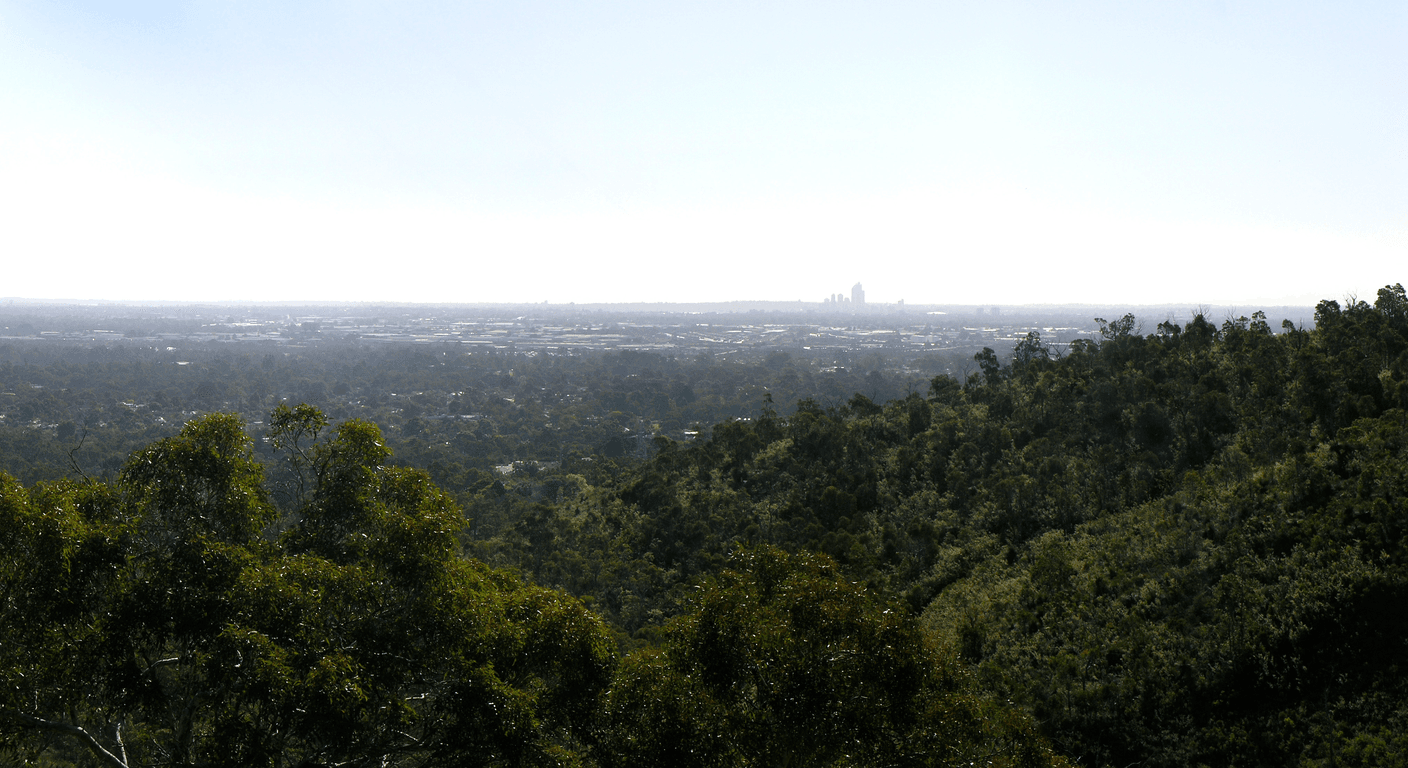
The upper lookout is the clear choice for travellers who want a comfortable, rewarding experience without technical terrain. From the car park, a short path — roughly 500 metres return, mostly flat with a gentle sealed surface for much of its length — leads to a viewing platform that looks west across the coastal plain to Perth and, on clear days, to the ocean. The Darling Escarpment drops away beneath you and the scale of the city laid out below is quietly striking.
The path itself is manageable for most mobility levels, though there are some uneven sections closer to the lookout where the surface becomes compacted gravel. Sturdy flat shoes are fine; hiking boots aren't necessary. There's no railing along the entire route, so anyone with significant balance concerns should walk with a companion. The lookout platform itself is fenced and safe.
Morning light is best for the views — the city sits to the west and the sun is behind you in the early hours, making for clear sightlines rather than glare. The jarrah forest on either side of the path is aromatic after rain, and the birdlife — including red-tailed black cockatoos if you're fortunate — is reason enough to pause and listen.
The Lower Falls Track: Honest Advice on the Steeper Route
The track to the base of the falls is a different proposition entirely. It descends steeply on an unsealed, rocky surface through the gully, and in wet conditions the path can be slippery enough to be genuinely hazardous. Parks and Wildlife WA periodically closes the lower track after heavy rain for exactly this reason. Even in dry conditions, the descent and return climb demand reasonable fitness and confident footing.
For a group travelling together, it's worth being honest with each other about this before setting out. The falls at the base are undeniably more dramatic than the view from above — you're standing beneath the drop, in the cool of the gully, with the sound of water around you. But the experience doesn't justify a twisted ankle or a difficult return up a steep slope. If anyone in the group has knee issues, uses walking poles, or finds steep unsealed tracks uncomfortable, the upper lookout is the better call and there's nothing consolation-prize about it.
If the lower track is the goal, go in winter or spring when the falls are flowing, go early before the path is churned by other walkers, wear shoes with grip, and bring a walking pole if that's your habit. Allow around 45 minutes to an hour for the full descent and return, including time at the base.
When Should You Visit? The Honest Truth About Water Flow
This is the question worth answering plainly before anyone books flights or plans a schedule around the falls. Lesmurdie Falls is seasonal. In a good winter — June to August — the falls run strongly and the sight is genuinely impressive. In spring, flow tapers but is often still satisfying. By November, in most years, the falls are reduced to a trickle or have stopped entirely. In summer, there may be nothing flowing at all.
Perth's rainfall is concentrated in the winter months, which is the reverse of many eastern Australian cities. Travellers from Victoria or Queensland who assume year-round flow will be disappointed if they visit in January or February. Check the Parks WA website or the Lesmurdie Falls page before committing the drive — some visitors report that local community Facebook groups also give real-time flow updates, which is more useful than any official forecast.
This doesn't mean a summer visit is pointless. The forest walk is pleasant regardless of flow, the lookout views don't change with the seasons, and Kalamunda is worth visiting any time of year. But if seeing water falling over rock is the main motivation, plan for winter and confirm conditions closer to the date.
Kalamunda: Where to Go After the Walk
The township of Kalamunda is about five minutes by car from the falls car park and functions as the natural second act for the morning. It's a small, well-kept Perth Hills town with a compact heritage precinct along Haynes Street, a handful of independent cafés, and a strong local arts community. The Kalamunda History Village is run by the National Trust and offers a low-key, genuinely interesting look at the district's settler history — worth an hour if the group has the appetite for it.
The Saturday Kalamunda Farmers Market draws locals and visitors alike and is a good reason to time a visit for the weekend. Local produce, artisan food and the relaxed pace of a Perth Hills community morning make it a satisfying pairing with the park. For lunch, the cafés along Haynes Street offer a range of options from simple sandwiches to proper sit-down meals. Confirm current opening hours directly with venues, as trading hours in smaller towns shift seasonally.
For travellers who want to extend the day further, the Perth Hills Orchard Trail and Pickering Brook wine region are both within 20 to 30 minutes of Kalamunda and add a pleasant afternoon layer to what might otherwise be a half-day. The Swan Valley — Perth's closest wine and food precinct — is around 30 minutes to the north and is worth a separate day trip in its own right.
Practical Tips for the Day
Pack water regardless of the season — the car park has no facilities, and the walk, even the short upper lookout route, is more comfortable with a drink on hand. There are no toilets at the falls car park itself; the nearest public facilities are in Lesmurdie township or Kalamunda. Plan accordingly, particularly for a group.
The park is dog-friendly on leash, which is worth knowing if you're travelling with a companion who brings their dog. Parking is free and there's no entry fee or permit required. Mobile phone reception at the car park is generally adequate for navigation apps, though it can drop in the gully on the lower track.
Travel insurance is straightforward for a domestic day trip, but travellers with mobility considerations should be aware that the lower falls track is rough enough that a fall is a genuine possibility. If you're managing a pre-existing condition that affects balance or joints, the upper lookout is genuinely the smarter option — and the views from there are the better payoff anyway.
Quick planning guide
| Ideal pace | Slow, unhurried morning outing |
|---|---|
| Best months | June to September (winter–spring) for reliable water flow |
| Suggested stay | Half a day, including lunch in Kalamunda |
| Mobility level | Easy on the upper lookout track; active/steep on the lower falls track |
| Cost level | Free entry and parking |
| Comfort level | Casual — sturdy flat shoes sufficient for the upper walk |
| Best for | Over-50s wanting an easy lookout walk with the option of a steeper falls track for the fitter members of the group |
| Main planning consideration | Falls are seasonal, so check current flow before travelling and note there's no public transport to the site |
Key takeaways
- Lesmurdie Falls National Park is free to enter with free parking — one of Perth's most cost-effective half-day outings.
- The upper lookout is a short, mostly flat walk with wide views across Perth and suits most mobility levels.
- The lower falls track is steep and unsealed — avoid it after rain and assess honestly before descending.
- The falls are seasonal: winter and spring (June to September) offer reliable flow; summer visits may find no water at all.
- Kalamunda township, five minutes from the park, provides cafés, a Saturday market and the National Trust History Village for a full morning.
- There's no public transport to the falls — a hire car or private vehicle is essential for the day.
Recommended partners and links
Indicative prices only — always confirm with the operator before booking.
Frequently asked questions
Is Lesmurdie Falls suitable for seniors with limited mobility?
The upper lookout walk — around 500 metres return on a mostly flat, partly sealed path — is suitable for most travellers with limited mobility who can walk short distances on occasionally uneven ground. The lower falls track is steep, rocky and unsealed, and is not recommended for anyone with knee problems, balance concerns or reduced confidence on rough terrain. Sturdy flat shoes are adequate for the lookout; the lower track warrants shoes with grip and, ideally, a walking pole.
Is there an entry fee for Lesmurdie Falls National Park?
No. Entry to Lesmurdie Falls National Park is free, and parking at the Falls Road car park costs nothing. There are no ticketing or booking requirements. Confirm current arrangements on the Parks and Wildlife WA website before visiting, as conditions and access can change.
When is the best time to visit Lesmurdie Falls to see water flowing?
June to September — Perth's winter and early spring — is the best time to see the falls flowing well. Rainfall in Perth is concentrated in the winter months, and by November flow typically reduces significantly. Summer visits often find the falls dry or reduced to a trickle. Check current conditions on the Parks WA website or local community sources before making the falls the main reason for the trip.
How do I get to Lesmurdie Falls from Perth?
Drive east from central Perth via the Roe Highway, then north through Lesmurdie to Falls Road — roughly 30 minutes in normal traffic. There is no public transport to the falls car park. A hire car or private vehicle is necessary. GPS navigation is recommended as the final approach is not always clearly signed from main roads.
What else is near Lesmurdie Falls for a full half-day out?
Kalamunda township is about five minutes by car from the falls and has independent cafés, a heritage precinct along Haynes Street, and the Kalamunda History Village operated by the National Trust. A Saturday Farmers Market runs in Kalamunda and suits an early-morning visit paired with the park walk. The Pickering Brook wine region and the Swan Valley are both within 30 minutes for travellers wanting to extend the day.