Lombok's dry season, May to October, is the best window for this quieter alternative to Bali, with two or three nights in Senggigi followed by time on the southern coast around Kuta Lombok. The defining highlight is Tanjung Aan, an uncrowded turquoise bay, with Mount Rinjani admired from a distance rather than climbed. Mobility is moderate — footpaths are scarce and a private driver is essential — while access is via Bali with a short flight or boat, or a direct service to Lombok from Perth.
Why Lombok, and Why Now?
Bali has been many things to Australian travellers over the decades — first discovery, honeymoon, group trip, annual ritual. By the time you're in your late sixties, you may have done Seminyak several times over. Lombok offers the same warm water, the same rice-paddy green, the same generous Indonesian welcome — with considerably less traffic and none of the selfie-stick density around the rice terraces.
The island is predominantly Muslim, which gives it a distinctly different cultural texture from Hindu Bali. That's worth knowing, not as a caution but as context. The call to prayer carries across quiet mornings in Senggigi. Local dress expectations outside resort areas lean conservative. A sarong in your day bag costs nothing and signals respect that locals notice and appreciate.
For a solo male traveller in his late sixties, Lombok's lower-key atmosphere tends to feel easier rather than duller. There's genuine space to sit, read, watch the straits, and decide what to do next without any particular pressure from touts or traffic. That's rarer than it sounds in this part of the world.
Getting There: Routing from Victoria and Other Australian Cities
Melbourne travellers have two main routing options. The first is a direct service to Bali (Ngurah Rai/DPS), then either a short domestic flight to Lombok's Zainuddin Abdul Madjid International Airport (LOP) — roughly 30 minutes in the air — or the scenic alternative: the Gili Island fast-boat service from Padang Bai on Bali's east coast to the Gili Islands, then onward to Lombok's Bangsal or Teluk Nare. The fast-boat route takes around two hours total and is genuinely pleasant in calm dry-season conditions, though it can be choppy in the wet season and is not the right choice if mobility or balance is a concern.
Melbourne to Bali is typically eight to nine hours, often overnight. Factor in at least one recovery night in Bali or upon arrival in Lombok before doing anything ambitious. Jet lag between Victoria and Lombok is modest — the time difference is only two hours ahead of AEST in the dry season — but the heat and humidity on arrival deserve respect. Book a room with reliable air conditioning and give yourself a slow first day.
Perth travellers have the most straightforward path: direct services to Lombok (LOP) exist on some carriers, making it a genuine non-stop option at around three and a half hours. Check current schedules with Scoot and other carriers, as capacity on this route changes seasonally. Confirm all visa and entry requirements at smartraveller.gov.au and directly with the Indonesian Embassy before purchasing flights — entry rules can and do change.
Senggigi: The Comfortable Starting Point
Senggigi is Lombok's most developed tourist strip, running along the island's northwest coast with a long sunset view across the strait toward the Bali volcano Gunung Agung. It's not flashy, but it works. The main road carries a modest parade of restaurants, small spas, dive shops, and the kind of unhurried café culture where a long lunch is entirely acceptable. Two or three nights here at the start of a trip lets you settle, adjust to the pace, and sort out a driver before venturing further.
The beach at Senggigi itself is pleasant but not the island's finest — the real attraction is the ease of the place. The Sheraton Senggigi and a handful of mid-range boutique properties offer international-standard comfort, reliable Wi-Fi, and the sort of pool that justifies an afternoon doing nothing in particular. For a solo traveller, the hotel restaurants here are comfortable enough for dinner without the slight awkwardness of navigating a local warung alone on the first night.
The coastal road south of Senggigi passes through a series of small bays — Mangsit, Kerandangan — each with its own quiet character. These are short drives, easy afternoon outings, and worth doing with your driver rather than on foot. The road surface is reasonable by local standards but footpaths are essentially absent, and traffic moves with the confident unpredictability common to Indonesian roads everywhere.
Kuta Lombok: The Southern Coast at Its Own Pace
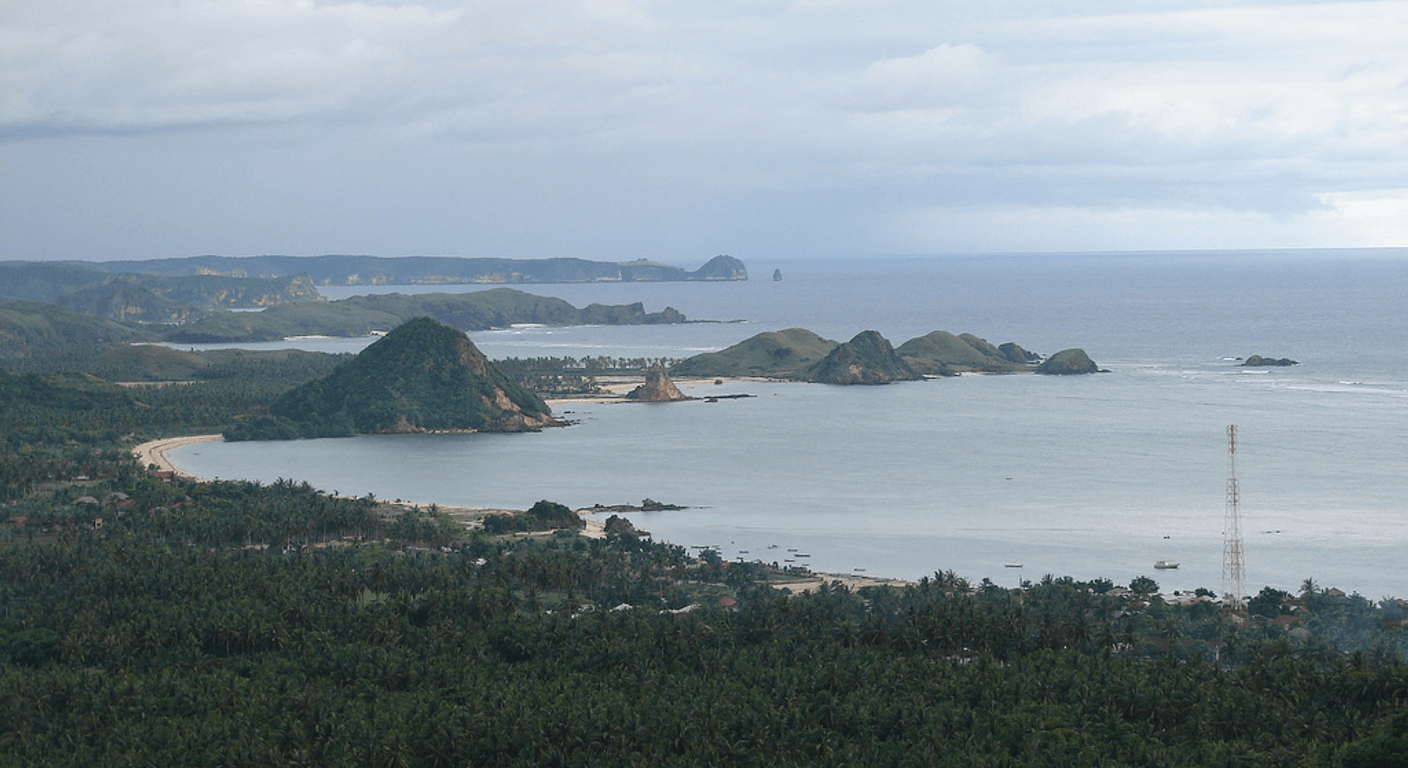
Not to be confused with Kuta in Bali — which it emphatically is not — Kuta Lombok sits on the island's southern coast and has been quietly developing for the better part of a decade. The beaches here are genuinely exceptional: wide arcs of pale sand, turquoise water that shifts colour through the day, and a coastline that stretches east and west with almost no one on it. Tanjung Aan, a short drive from Kuta town, is the standout — two adjacent bays divided by a headland, each with a different sand texture. It's the kind of place where you arrive, sit down, and stay considerably longer than planned.
Kuta Lombok town itself is small and functional. The main street has cafés, a handful of surf shops, and the kind of local warungs that serve excellent nasi goreng at prices that feel almost implausibly reasonable. Development has increased in recent years — the Mandalika precinct nearby has attracted significant resort investment, including international hotel brands — so there are now comfortable options for travellers who want proper air conditioning and a pool alongside the remoteness.
The drive from Senggigi to Kuta takes roughly two hours depending on road conditions and how many stops you make. This is where a trusted private driver earns every rupiah. The route crosses the island's central terrain and offers views of rice paddies and distant hills that are worth pausing for. Your driver can recommend where to stop, handles the road with local knowledge you simply don't have, and waits while you spend forty minutes at a beach you hadn't planned to visit.
Mount Rinjani: Watching, Not Climbing
Mount Rinjani is the second-highest volcano in Indonesia at 3,726 metres, and the full summit trek is a serious multi-day undertaking that most experienced hikers half your age would find demanding. For the vast majority of over-50 visitors, Rinjani is something else entirely: a magnificent piece of scenery that improves every view on the island's northern half. From Senggigi on a clear morning, the summit catches the early light above the cloud line. It's one of those sights that rewards simply being awake before seven o'clock.
If there's genuine interest in getting closer to the mountain without the summit attempt, the village of Senaru on Rinjani's northern slopes is accessible by road and offers views down into the caldera lake from the crater rim — a half-day guided walk that is rated Moderate to Active depending on pace and conditions. Confirm current trail access and guide requirements with local operators or the Rinjani National Park office, as post-eruption closures and permit requirements have changed periodically in recent years.
The honest reality is that Rinjani's greatest gift to the over-50 traveller who isn't climbing it is perspective. The island feels less domesticated, less managed, than Bali — partly because that volcano is sitting there, large and genuinely wild, reminding you that this is still a place with its own geological agenda.
Getting Around: The Case for a Private Driver
Self-driving in Lombok is legal for visitors with an International Driving Permit, but it is not recommended for most first-time visitors, and particularly not for a solo traveller navigating unfamiliar roads in a left-hand-drive country where road markings are inconsistent and local driving style requires a certain fluency to read. Motorbike hire is popular among younger travellers and is not a sensible option on unfamiliar terrain at any age.
A private driver hired through your hotel or a reputable local agency is the practical solution. Expect to pay roughly AUD 50–80 per day for a car and driver, though rates vary — confirm in advance what's included (fuel, tolls, waiting time). Many drivers speak enough English for basic communication, and a good one becomes an informal guide, knowing which warungs are worth stopping at and which roads to avoid after rain. Ask your hotel to recommend someone they use regularly; that chain of accountability matters.
Ride-hailing apps including Gojek operate in Lombok's more developed areas, which is useful for short trips within Senggigi or Kuta town. Coverage thins considerably outside those centres. Taxis exist but metered services are less consistent than in Bali — agree on a price before getting in if a meter isn't running. For inter-region travel across the island, stick with the pre-arranged driver.
Practical Matters: Health, Insurance, and Honest Infrastructure
Travel insurance with pre-existing condition cover is non-negotiable for any Australian over 50 travelling to Indonesia. Medical facilities in Lombok's main towns are adequate for minor issues; anything serious requires evacuation to Bali or Singapore. Several specialist insurers serve the over-50 market and will cover pre-existing conditions with appropriate disclosure — shop carefully and read the policy, not just the headline premium. The Australian Government's Smartraveller website (smartraveller.gov.au) is the correct starting point for both insurance guidance and current travel advisories for Indonesia.
Tap water is not safe to drink. Bottled water is cheap and available everywhere. Stomach issues are common in the first day or two for travellers not accustomed to the local food environment — a conservative approach to street food in the first 48 hours is sensible, not timid. Standard Indonesian vaccinations recommended for Australian travellers typically include hepatitis A and typhoid at minimum; confirm current recommendations with your GP or a travel medicine clinic well before departure.
The honestNote on this guide is worth taking seriously: outside resort areas and the main tourist strips, footpaths are rare, English signage is limited, and the gap between what looks walkable on a map and what is actually walkable on the ground can be significant. That's not a reason to avoid Lombok — it's a reason to plan with a driver, wear good shoes, and resist the instinct to navigate independently on unfamiliar roads. The island rewards travellers who work with its infrastructure rather than against it.
Quick planning guide
| Ideal pace | Slow and unhurried, with driver-led day trips |
|---|---|
| Best months | May to October, the dry season |
| Suggested stay | A week or more, split between Senggigi and Kuta Lombok |
| Mobility level | Moderate — limited footpaths, uneven roads, best explored with a driver |
| Cost level | Budget-friendly overall, with mid-range and premium resort options |
| Comfort level | Comfortable in resort areas with air conditioning; simpler beyond them |
| Best for | Over-50 travellers who've done Bali and want a calmer, less developed pace |
| Main planning consideration | Arrange a trusted private driver in advance and confirm current visa and entry rules at smartraveller.gov.au |
Key takeaways
- Lombok's dry season runs May to October — the only sensible window for beach-focused travel from Australia.
- Most Melbourne travellers route via Bali; Perth travellers have direct options to Lombok's LOP airport worth checking.
- A private driver costs roughly AUD 50–80 per day and is the most practical, safest way to explore beyond resort areas.
- Tanjung Aan near Kuta Lombok is among the finest and least crowded beaches in Indonesia accessible without a hike.
- Travel insurance covering pre-existing conditions is essential — medical evacuation from Lombok to Bali or Singapore is the realistic emergency scenario.
- Indonesian entry requirements change: always confirm current visa and health conditions at smartraveller.gov.au before booking flights.
Recommended partners and links
Indicative prices only — always confirm with the operator before booking.
Frequently asked questions
Do Australians need a visa to visit Lombok, Indonesia?
Australian passport holders have generally been eligible for a visa on arrival at Indonesian airports, but entry requirements are subject to change. Always confirm current visa conditions at smartraveller.gov.au and through the Indonesian Embassy in Canberra before purchasing flights.
How do you get from Bali to Lombok?
There are two main options: a short domestic flight from Bali's Ngurah Rai Airport (DPS) to Lombok's Zainuddin Abdul Madjid International Airport (LOP), taking around 30 minutes; or a fast-boat service from Padang Bai on Bali's east coast to the Gili Islands or Lombok's northwest coast, taking roughly two hours. The fast-boat is scenic in calm conditions but can be rough in the wet season and is not suitable for travellers with significant mobility concerns.
Is Lombok suitable for solo travellers over 60?
Yes, with realistic preparation. Lombok is generally safe and the pace suits independent travellers who prefer quiet over nightlife. The practical keys are arranging a trusted private driver, choosing accommodation in Senggigi or the Mandalika/Kuta area for reliable comfort, and ensuring travel insurance covers pre-existing conditions and medical evacuation.
What is the best area to stay in Lombok for older travellers?
Senggigi on the northwest coast offers the most developed tourist infrastructure — restaurants, spas, and international-standard hotels within easy reach. Kuta Lombok in the south suits travellers who prioritise exceptional beaches and don't mind a more limited dining scene. Many visitors spend two or three nights in each area.
Can you climb Mount Rinjani if you're over 50?
The full summit trek to 3,726 metres is a demanding multi-day climb suitable only for fit, experienced trekkers of any age. Most over-50 visitors appreciate Rinjani as scenery rather than a climbing objective. The crater rim walk from Senaru village is a shorter, Moderate-rated option for those wanting to get closer to the mountain — confirm current access and permit requirements with local operators before planning this.