Mataranka's spring-fed thermal pools, an hour south of Katherine in the Northern Territory, stay a constant 34 degrees year-round, but the dry season (May to September) is the only practical time to visit. Two nights is a sensible minimum. The main pool, framed by cabbage palms, has concrete steps and handrails and is free to enter, rating as easy-to-moderate mobility. Most Victorian travellers fly into Darwin, hire a car, and drive south on the Stuart Highway, a comfortable four-hour trip.
Why Mataranka deserves more than a passing glance
There is a tendency to treat Mataranka as a quick detour — something to tick off between Darwin and Tennant Creek. That undersells it. The thermal pools here are genuinely lovely: spring-fed, constant at around 34 degrees Celsius, and fringed by tall cabbage palms that filter the afternoon light in a way that makes the place feel almost theatrical. For a couple travelling the Stuart Highway, stopping here overnight allows you to experience the pools at their best — early morning, before tour groups arrive, and again at dusk when the light changes and the water glows.
Mataranka township sits about 420 kilometres south of Darwin and roughly 110 kilometres south of Katherine. It is not remote by Top End standards, but it is genuinely away from it all. The town itself is small — a roadhouse, a resort, a pub — but the surrounding Elsey National Park holds two distinct pool experiences that reward a leisurely pace. For travellers in their sixties and seventies who prefer depth over distance, Mataranka rewards those who slow down.
The main thermal pool: what to expect on arrival
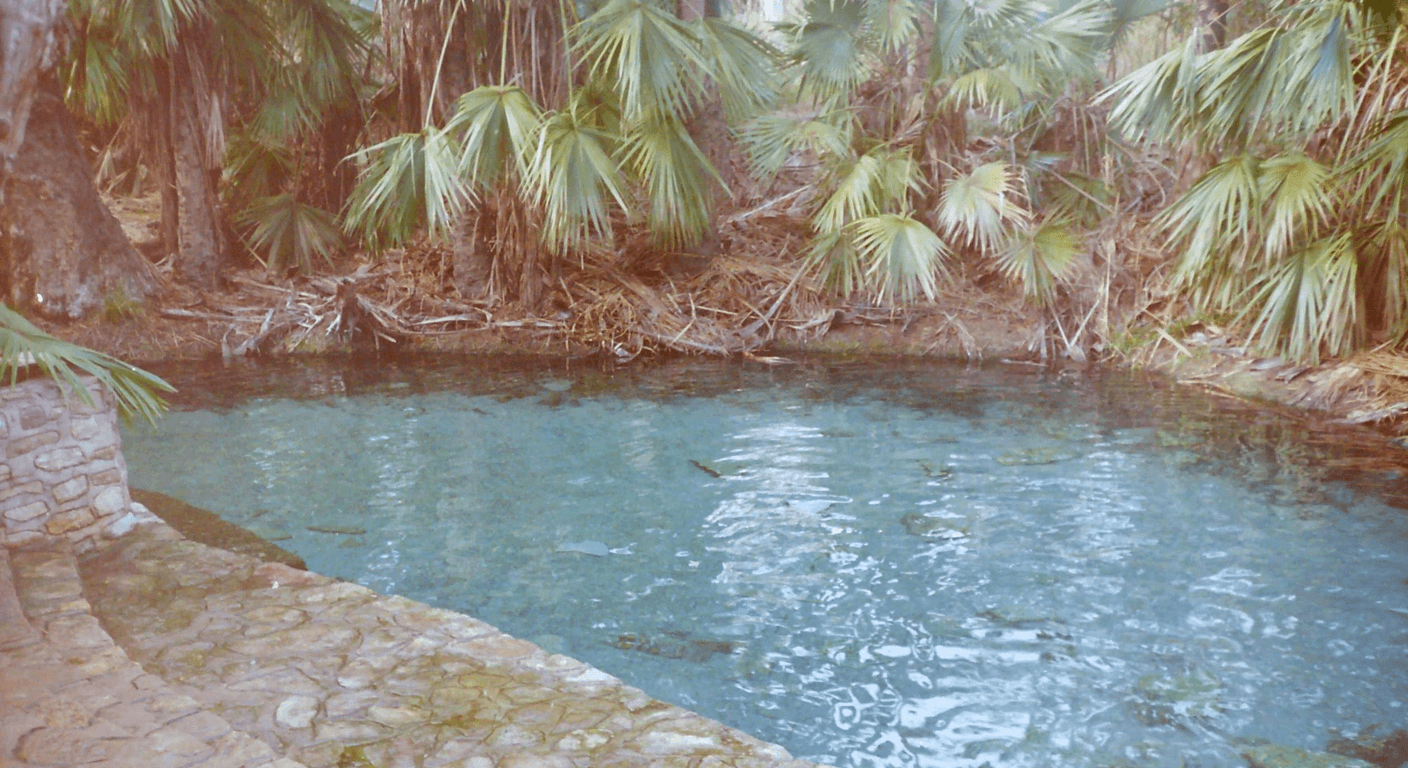
The Mataranka Thermal Pool sits within the grounds of the Mataranka Homestead Resort, accessed via a short, well-maintained path through dense palm forest. The walk itself sets the mood — the air cools noticeably under the canopy, and the sound of the water reaches you before you see it. Entry to the pool is free and open to the public, though the path passes through the resort grounds.
The pool is roughly the size of a large backyard swimming pool, with clear turquoise water and a sandy bottom. Entry is via concrete steps with sturdy handrails on both sides — a practical detail that matters when the steps are slippery from constant water flow. The depth is manageable, generally around chest height for most adults, and the current is gentle enough to stand in comfortably. Water shoes or sandals with grip are worth packing; the entry steps and surrounding rocks can be slick.
Facilities near the main pool include change rooms, toilets, and shaded seating areas — basic but functional. There is no lifeguard on duty, so travellers with any health conditions affecting swimming should consult their doctor before visiting. The pool is popular with families and tour groups in peak season; arriving before 9am or after 3pm typically means a quieter experience.
Bitter Springs: the quieter choice for confident swimmers
About five kilometres from the main pool, Bitter Springs offers a different experience altogether. Here the spring feeds a narrow, palm-lined channel where the current is strong enough to carry you gently downstream over a distance of roughly 200 metres. The effect is a slow, effortless drift through clear warm water with sky palms overhead — one of those experiences that is hard to describe and easy to remember.
Bitter Springs suits travellers who are comfortable in moving water and confident swimmers. The entry and exit points involve stepping over rocks and uneven ground, and there are no handrails at the water's edge in the same way as the main pool. That said, the current is not fast, and many older travellers manage it without difficulty — it simply requires more care and a steady companion nearby. Water shoes are particularly useful here.
The site has basic facilities including toilets and a car park. It tends to be quieter than the main pool throughout the day, partly because it requires a separate short drive. If the main pool is crowded, Bitter Springs is almost always the calmer option. Confirm current access and any temporary closures through NT Parks and Wildlife before visiting, as water conditions can change after wet season rain.
When to go and how long to stay
The dry season — May through September — is the only practical time to visit Mataranka for most travellers. Temperatures are warm but manageable, the roads are clear, and the pools are at their most inviting. July is peak season across the Top End, which means accommodation in Mataranka fills quickly and prices reflect the demand. Booking accommodation two to three months ahead for a July visit is sensible; for May, June, August, or September, a few weeks ahead is generally sufficient.
Two nights is a comfortable minimum. One evening and morning at the main pool, an afternoon at Bitter Springs, a walk through the palm forest at Elsey National Park, and a quiet dinner at the homestead — that fills two days without rushing. For those who want to explore the broader Elsey National Park, including the Roper River and the historic homestead site that inspired Jeannie Gunn's 'We of the Never Never', three nights allows a more leisurely pace.
The wet season (October through April) brings heat, humidity, and the possibility of flooding that closes roads and affects pool access. Some infrastructure also shuts down during this period. Unless you are an experienced Top End traveller who understands the risks and logistics, the wet season is not the time for a first visit to Mataranka.
Getting there from Victoria: the practical picture
Most Victorian travellers reach Mataranka by flying into Darwin, hiring a vehicle, and driving south on the Stuart Highway. The drive from Darwin to Mataranka takes around four hours in comfortable conditions — a manageable first day if you fly in the morning and stop for lunch in Katherine. Katherine itself is worth at least a half-day for the gorge, which adds nicely to an itinerary that positions Mataranka as the second night.
Flights between Melbourne and Darwin operate through major carriers; check Qantas, Virgin Australia, and Jetstar for current schedules. Indicative return fares vary considerably by season — dry season flights cost more, so booking well ahead matters. Hire car availability in Darwin tightens in July, so organising the vehicle at the same time as flights is practical. An automatic transmission is worth requesting if manual driving is not comfortable.
For those who prefer not to self-drive, some small-group touring operators include Mataranka on Top End itineraries departing Darwin. Tourism NT's website lists current operators and itinerary options. Bus services via Greyhound Australia do stop at Mataranka on the Darwin–Alice Springs route, though the timetable and luggage practicalities make this less straightforward for travellers carrying swimming gear and luggage for a longer holiday.
Accommodation and eating: what is realistic to expect
Accommodation in Mataranka is roadside and practical rather than boutique. The Mataranka Homestead Resort is the main option, offering cabins, powered caravan sites, and a camping area set among the palms. The cabins are air-conditioned and comfortable enough for a couple wanting a bed, a bathroom, and a ceiling fan — do not expect hotel-style finishes. The resort also has a bar and restaurant serving straightforward meals, which is the main dining option in town.
The Territory Manor Motel is another option a few kilometres out of town, offering motel-style rooms with en suites. It is quieter than the homestead and suits those who prefer a bit of distance from the resort atmosphere. Confirm current availability and facilities directly with the property, as smaller regional operations can change their offerings between seasons.
There is a small general store and roadhouse in Mataranka for basics, but the grocery range is limited. If you are self-catering or have particular dietary requirements — and for travellers managing conditions like diabetes or heart health, that often matters — stocking up in Katherine before driving south is the sensible approach. Katherine has a Woolworths and several supermarkets with a reasonable range.
Practical tips for older travellers visiting the pools
The warm water is genuinely therapeutic for many people — joints ease, muscles relax, and an hour in a 34-degree spring feels restorative in a way that a hotel pool rarely does. That said, staying in warm water for extended periods can affect blood pressure and increase fatigue, particularly in heat. Limiting pool time to 30–45 minutes at a stretch, rehydrating regularly, and sitting in shade between swims is sound practice for anyone over 60.
Sun protection matters more than it might seem. The palm canopy at the main pool provides shade, but gaps let through direct light, and the reflection off clear water intensifies UV exposure. A rash vest or sun shirt worn in the water, SPF 50+ sunscreen on exposed skin, and a hat for the walk to and from the pools are worth the minor inconvenience. The NT sun is not comparable to a Melbourne summer.
Footwear deserves specific attention. Thongs are not adequate for the entry steps at the main pool or the rocky edges at Bitter Springs. Water shoes — the kind with a sole and drainage holes — are widely available in Melbourne at outdoor and sports retailers before you leave. Packing a lightweight camp chair for poolside sitting is also a practical touch that many older travellers appreciate, since the fixed seating at the pools is limited and not always shaded.
Quick planning guide
| Ideal pace | Slow-paced overnight stop rather than a quick detour |
|---|---|
| Best months | May to September (dry season); July is peak and books out early |
| Suggested stay | Two nights minimum, three for a more leisurely pace |
| Mobility level | Moderate — main pool has steps and handrails, Bitter Springs needs steadier footing |
| Cost level | Budget-friendly — pool entry is free, accommodation is roadside and practical |
| Comfort level | Basic but functional — cabins, change rooms, and limited shaded seating |
| Best for | Older couples wanting a therapeutic warm-water stop on a Top End road trip |
| Main planning consideration | Book July accommodation and hire cars well ahead, and avoid visiting during the wet season (October to April) |
Key takeaways
- Mataranka Thermal Pool entry is free, with concrete steps and handrails making it the more accessible option for older swimmers.
- Bitter Springs offers a gentle current drift through palm-lined water — best for confident swimmers comfortable on uneven ground.
- The dry season, May to September, is the only practical window for most Victorian travellers visiting Mataranka.
- Two nights is a sensible minimum; July accommodation books out quickly and should be reserved well in advance.
- Fly into Darwin, hire a car, and drive south on the Stuart Highway — the drive takes around four hours with a Katherine stop.
- Limit time in the warm water to 30–45 minutes at a stretch, wear sun protection in and out of the water, and bring water shoes.
Recommended partners and links
Indicative prices only — always confirm with the operator before booking.
Frequently asked questions
Is entry to the Mataranka Thermal Pool free?
Yes, entry to the Mataranka Thermal Pool is free. The pool sits within Elsey National Park and is open to the public at no charge. Confirm current conditions and any temporary closures through the NT Parks and Wildlife website before your visit.
Are the Mataranka pools accessible for older swimmers or those with limited mobility?
The main Mataranka Thermal Pool has concrete entry steps with handrails on both sides, making it the more accessible option. Bitter Springs requires stepping over rocks and uneven ground at the water's edge and suits more confident, mobile swimmers. Water shoes with grip are recommended at both sites.
How far is Mataranka from Darwin, and can you visit in a day trip?
Mataranka is roughly 420 kilometres south of Darwin — around a four-hour drive. It is not a practical day trip from Darwin. Treating Mataranka as an overnight stop of at least two nights allows you to experience both the main pool and Bitter Springs without rushing.
What is the best time of year to visit Mataranka?
The dry season, May to September, is the recommended time to visit. Roads are clear, temperatures are manageable, and the pools are at their most appealing. July is peak season across the Top End and accommodation books out — reserve well ahead. The wet season brings heat, humidity, and possible flooding that can close access roads.
What accommodation is available in Mataranka?
The main options are the Mataranka Homestead Resort, which offers air-conditioned cabins and a bar and restaurant, and the Territory Manor Motel a few kilometres out of town. Both are practical rather than boutique. Book directly with each property to confirm current availability, facilities, and pricing.