Darwin's Waterfront Precinct combines the free, stinger-netted Recreation Lagoon with the ticketed Wave Lagoon, giving safe, patrolled swimming year-round without risk from box jellyfish or crocodiles. The Dry season (May to October, especially June–August) is most comfortable, though the precinct works in the Wet too. A half-day suits it well: swim, then lunch on the harbourside promenade. Access is easy, via a lift-equipped sky bridge from Smith Street Mall, a 10–15 minute walk from central Darwin, with buses and taxis also available.
Why Darwin's Waterfront Solves the Tropical Swimming Problem
Anyone who has travelled to tropical Australia knows the frustration: you arrive somewhere warm and beautiful, the water is right there, and then you learn that box jellyfish are active from October through May and estuarine crocodiles are a genuine presence in coastal and tidal waters. For visitors from Victoria, where you can generally walk into the sea without much ceremony, this comes as a genuine surprise.
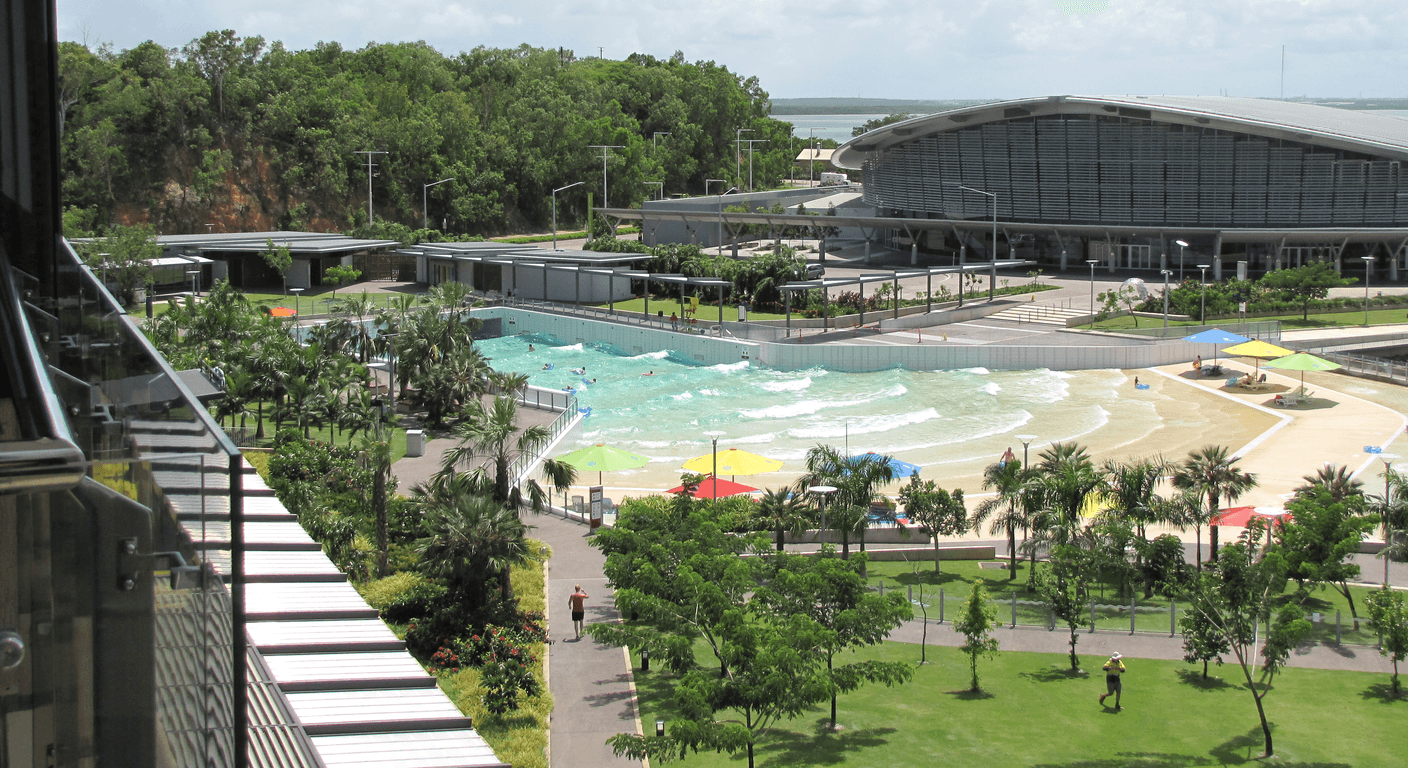
Darwin's Waterfront Precinct was built with exactly this problem in mind. The Wave Lagoon is a purpose-built, patrolled surf pool — artificial waves, clean filtered water, lifeguards on duty, and no wildlife of the dangerous kind. The adjacent Recreation Lagoon is a larger, calmer, free-entry swimming area enclosed by stinger nets, essentially a saltwater swimming hole right on the harbour's edge. Between the two, you have safe, supervised swimming available year-round regardless of the marine stinger season.
For a traveller in his seventies who may not want to spend energy researching which beaches are safe on any given day, this is a genuine relief. The precinct removes the guesswork entirely and puts the focus back on the pleasure of being in warm water under a blue sky.
What Is the Wave Lagoon and How Does It Work?
The Wave Lagoon is a rectangular surf pool that generates rolling waves on a regular cycle, with calmer periods in between. It is not a wild ocean experience — the waves are predictable and moderate, which suits swimmers who want the sensation of surf without the unpredictability of open water. Entry is ticketed, with adult prices running roughly $8–$10 per person at the time of writing; always confirm current prices at darwinwaterfront.com.au before you visit, as these are indicative figures only.
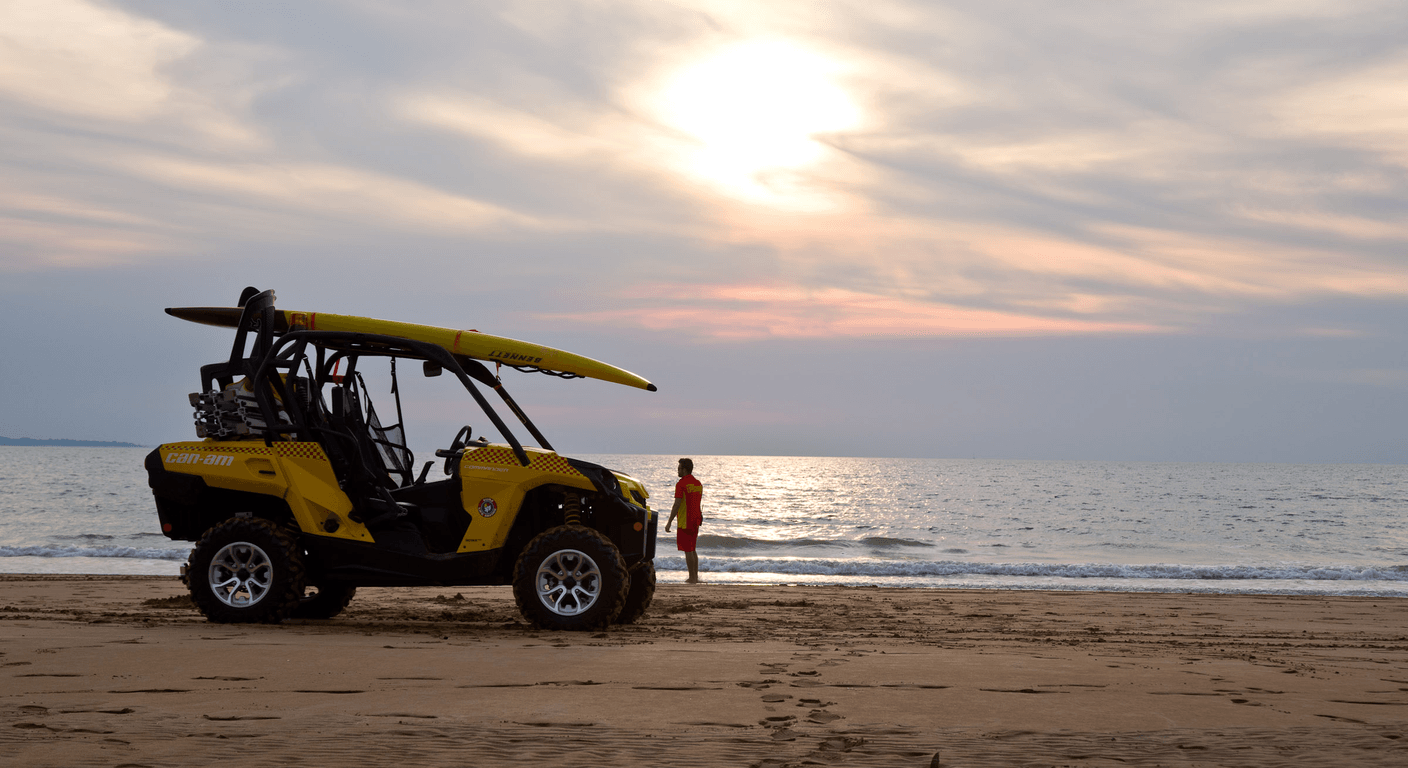
The lagoon is patrolled by lifeguards during operating hours, and there are clearly marked shallow and deeper zones. Change rooms, lockers and shower facilities are on site. The surrounding area has shaded seating and flat paved surfaces, which makes it manageable if you prefer to sit and watch rather than swim the whole time. A partner who enjoys the water while the other reads in the shade will find this arrangement works very well.
Operating hours vary by season and day of week, so it is worth checking the official Darwin Waterfront website before making it the centrepiece of your morning. The lagoon can be busy on weekends and school holidays, but weekday mornings tend to be quieter and more comfortable for those who prefer a relaxed pace.
The Recreation Lagoon: Free Swimming With a Harbour View
Immediately beside the Wave Lagoon, the Recreation Lagoon is a free, open-access swimming area enclosed by stinger nets that keep jellyfish out while allowing the feel of natural harbour water. It is calmer than the Wave Lagoon — no artificial waves — and better suited to a gentle swim or a wade in the shallows. There are grassy, shaded banks around the lagoon with benches and picnic areas, and the views across Darwin Harbour are genuine and unhurried.
The Recreation Lagoon is the kind of place where you can spend an hour doing very little and feel entirely justified. There are no ticket queues, no lockers to organise, and no particular schedule to follow. For older travellers who find the Wave Lagoon's ticketed, timed format a little structured, the Recreation Lagoon offers a looser alternative that is just as safe.
Both lagoons are patrolled and maintained by the Darwin Waterfront Corporation. Signage around the precinct is clear, and staff are generally visible and approachable. The combination of the two lagoons in one compact precinct means you can move between them easily — a swim in the wave pool, then a cool-down float in the recreation area, then lunch on the promenade.
Getting There: The Sky Bridge and Accessibility
The Darwin Waterfront Precinct sits below the city centre, connected to the CBD by a pedestrian sky bridge from Smith Street Mall. The bridge includes a lift, making it accessible for those who find stairs difficult or who are travelling with wheeled luggage, a cane, or a mobility aid. From the top of the bridge, the descent to the waterfront is gradual and the path is paved throughout.
From central Darwin accommodation, the walk via the sky bridge takes around ten to fifteen minutes at a comfortable pace. If you are staying further out, Darwin's bus network serves the CBD and the precinct is an easy short walk from the main stops on Mitchell Street and Smith Street. Indicative bus fares are roughly $2–$3; confirm current fares with the NT Government's public transport information. Taxis and rideshare services are also readily available from Darwin's CBD hotels.
The precinct itself is largely flat, with ramps rather than steps at most entry points, accessible toilets, and adequate seating throughout. It is not perfect — some of the restaurant terraces have steps, and the Wave Lagoon pool entry involves a few stairs into the water — but the overall accessibility is well above average for a waterfront precinct of this type. If mobility is a significant consideration, it is worth calling the Darwin Waterfront directly to ask about specific access needs before you visit.
Eating and Drinking Along the Promenade
One of the genuine pleasures of the Darwin Waterfront is the promenade of restaurants, cafes and bars that lines the harbour edge. After a swim, there is no need to go anywhere else — you simply dry off, find a table in the shade, and settle in for a long lunch. The dining options range from casual fish and chips to sit-down restaurants with a proper menu, and the quality is generally reliable for a tourist precinct.
Seafood is naturally the focus, and Darwin's proximity to the Arafura Sea means the fish on offer is often genuinely fresh. Barramundi is the obvious choice and appears on most menus in various forms. For a traveller with a Mediterranean palate and an appreciation for good, simply prepared fish, the grilled barramundi with a cold local beer or a glass of white is a combination that holds up well on a warm afternoon.
Prices at the waterfront restaurants are in line with what you would expect from a tourist-facing precinct — not cheap, but not unreasonable for a main meal with a drink. Budget roughly $25–$45 per person for a sit-down lunch, though this is indicative only and you should check current menus. The promenade is also pleasant for a coffee and a piece of cake if you prefer something lighter after the swim.
When to Go and What to Expect From the Weather
Darwin has two distinct seasons: the Dry (roughly May to October) and the Wet (November to April). For Victorian travellers, the Dry season is the more comfortable and popular time to visit. Temperatures sit in the low-to-mid 30s, humidity is manageable, and the skies are reliably clear. The Wet season brings spectacular thunderstorms, high humidity and occasional flooding, but also lush green landscapes and fewer tourists.
The good news for the Waterfront Precinct is that it works in both seasons. The stinger nets and the Wave Lagoon's filtration mean you are not dependent on ocean conditions or marine stinger forecasts. In the Wet, you may need to time your visit around the afternoon storms, which typically build from late morning and break in the early to mid afternoon — mornings are generally clear and swimmable. In the Dry, the whole day is comfortable.
For a traveller flying up from Melbourne or another Victorian city, the Dry season — particularly June through August — is the most straightforward time to plan a Darwin visit. Flights are at their busiest and accommodation books up, so planning a few months ahead is sensible. The Wet season in Darwin is genuinely interesting and not to be dismissed, but it does require more flexibility and a tolerance for heat and humidity that not everyone finds comfortable.
Practical Tips for Making the Most of Your Visit
Arriving at the Wave Lagoon in the morning, before the heat peaks and before the weekend crowds build, makes the experience noticeably more pleasant. Bring reef-safe sunscreen — the Darwin sun is considerably stronger than Melbourne's — and a wide-brimmed hat for the walk down from the city. The shaded areas around the lagoons are good, but the sky bridge and the approach walk are exposed.
If you are travelling as a couple, it is worth considering that one person may want to swim while the other prefers to sit and read or watch the harbour. The precinct accommodates this well: there is enough comfortable seating and shade that a non-swimmer can spend a couple of hours without feeling like they are waiting around. The Recreation Lagoon's grassy banks are particularly pleasant for this purpose.
Carry a small amount of cash as well as a card — some of the smaller food outlets on the promenade may be cash-preferred. Confirm Wave Lagoon opening hours and entry prices at darwinwaterfront.com.au before your visit, particularly if you are travelling outside the main Dry season, as hours can vary. And allow more time than you think you need: the Darwin Waterfront is the kind of place that rewards a slow, unhurried pace rather than a quick tick on a list.
Quick planning guide
| Ideal pace | Slow and unhurried |
|---|---|
| Best months | May to October (Dry season), particularly June–August |
| Suggested stay | Half a day |
| Mobility level | Easy — flat paths, ramps and a lift-equipped sky bridge, though a few steps lead into the Wave Lagoon pool |
| Cost level | Budget-friendly (a full day possible for under $30 using the free lagoon) |
| Comfort level | High, with shaded seating, patrolled lagoons and on-site facilities |
| Best for | Older travellers and couples with different activity levels wanting safe, low-effort swimming |
| Main planning consideration | Confirm current Wave Lagoon hours and prices online, and in the Wet season plan around afternoon storms |
Key takeaways
- The Darwin Waterfront's Wave Lagoon and Recreation Lagoon offer safe, patrolled swimming year-round with no crocodile or box jellyfish risk.
- Wave Lagoon entry is roughly $8–$10 per adult (indicative); the Recreation Lagoon is free — confirm current prices at darwinwaterfront.com.au.
- A sky bridge with a lift connects the Darwin CBD to the Waterfront Precinct, making access straightforward for those with limited mobility.
- The Dry season (May to October) is the most comfortable time for Victorian travellers to visit Darwin, though the precinct operates year-round.
- A promenade of restaurants lines the harbour for a relaxed post-swim lunch; budget roughly $25–$45 per person for a sit-down meal (indicative).
- The whole day — swim, lunch, and a slow walk back — can be done comfortably for under $30 per person if you use the free Recreation Lagoon and eat modestly.
Recommended partners and links
Indicative prices only — always confirm with the operator before booking.
Frequently asked questions
Is it safe to swim at Darwin Waterfront?
Yes. Both the Wave Lagoon and the Recreation Lagoon are enclosed, managed swimming areas that are free from crocodiles and box jellyfish. The Wave Lagoon is patrolled by lifeguards during operating hours, and the Recreation Lagoon is protected by stinger nets. These are among the safest places to swim in tropical Australia.
How do you get from Darwin CBD to the Waterfront Precinct?
A pedestrian sky bridge from Smith Street Mall connects the Darwin CBD to the Waterfront Precinct. The bridge has a lift, making it accessible for those with mobility considerations. The walk takes roughly ten to fifteen minutes at a comfortable pace from central Darwin hotels.
What does the Wave Lagoon cost for adults?
Wave Lagoon entry is roughly $8–$10 per adult at the time of writing, but this is an indicative figure only. Always confirm current entry prices at darwinwaterfront.com.au before your visit, as prices can change.
Can you swim at Darwin Waterfront in the Wet season?
Yes. Because both lagoons are enclosed and filtered, they operate regardless of the marine stinger season or ocean conditions. In the Wet season, mornings are generally clear and comfortable for swimming, with storms typically arriving in the afternoon. Check the Darwin Waterfront website for any weather-related closures.
Is Darwin Waterfront accessible for older travellers with mobility issues?
The precinct is largely flat, with ramps and lifts at key access points including the sky bridge from the CBD. Accessible toilets and ample seating are available throughout. Some restaurant terraces and pool entry points do involve steps, so travellers with specific mobility needs are advised to contact the Darwin Waterfront directly before visiting.