Moree, on the inland plains of northern New South Wales, is best visited in winter (June–August), when cool, dry air makes its naturally heated artesian pools — rising from around two kilometres underground and rich in dissolved minerals — feel most restorative. A three-to-four-night stay suits its slow pace of soaking, short walks and gallery visits. The Aquatic Centre offers ramp and rail access, making it easy for those with reduced mobility, and Moree is reachable via the NSW TrainLink Xplorer, an eight-hour train from Sydney Central, or by road via the Newell Highway.
What makes Moree's artesian water different from an ordinary heated pool?
The water beneath Moree has been heating slowly for millions of years, percolating through sandstone aquifers under the pressure of the Great Artesian Basin — one of the largest and deepest freshwater basins on Earth. By the time it reaches the surface at Moree, it has travelled roughly two kilometres down and carries dissolved minerals including sodium bicarbonate, silica and trace elements that give it a silky, slightly alkaline quality quite unlike a chlorinated municipal pool.
Moree's first artesian bore was sunk in 1895, originally to find water for steam trains. What came up instead was hot mineral water at temperatures that surprised everyone. Within a few years the town had built its first public baths, and a therapeutic tradition was established that has continued without interruption for over 130 years. That longevity is itself a kind of endorsement.
The practical upshot for travellers is this: the water feels different on the skin — softer, warmer in a way that seems to penetrate rather than sit on the surface. Many visitors with arthritis, fibromyalgia or simply the ordinary stiffness of a well-used body report genuine relief after two or three days of regular soaking. The science is modest but the anecdotal record is long.
The Moree Artesian Aquatic Centre: what to expect
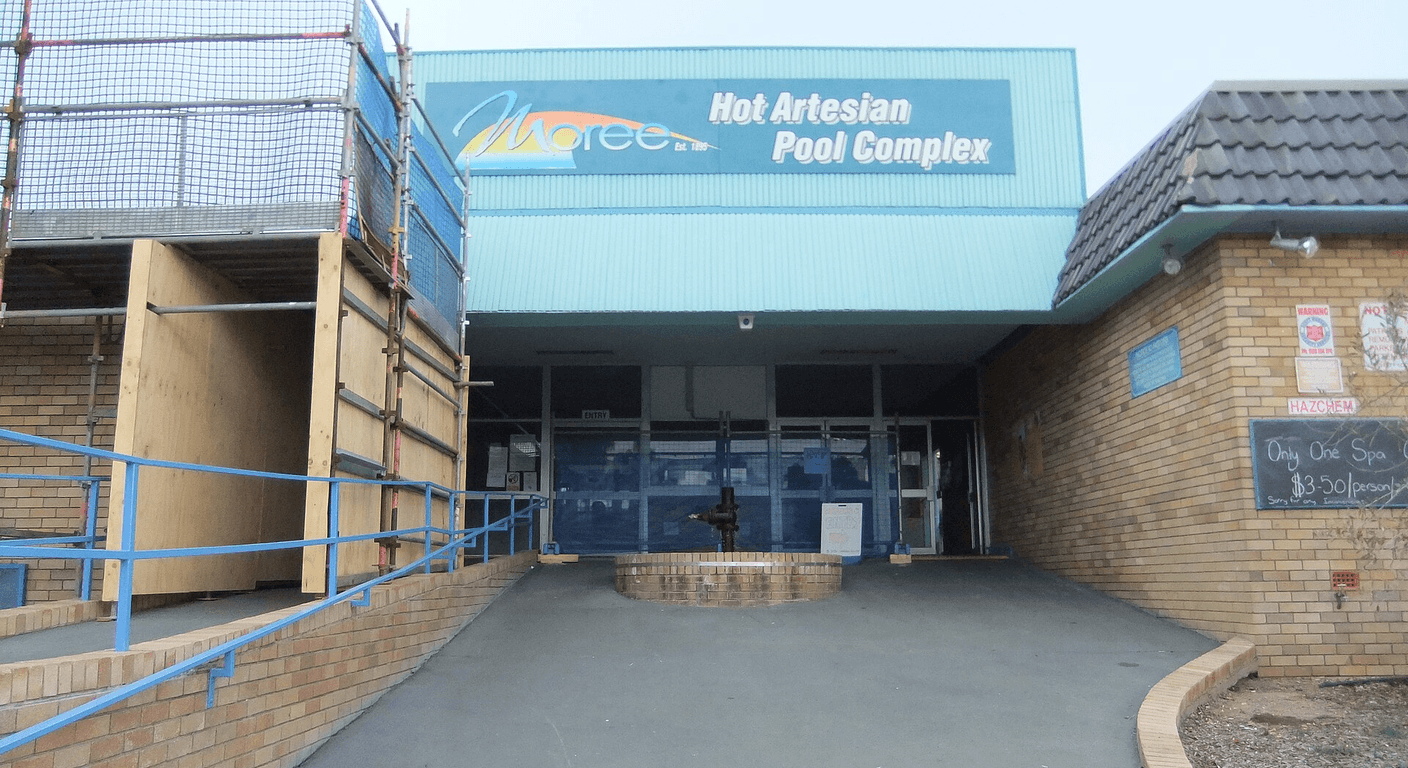
The main facility is the Moree Artesian Aquatic Centre, operated by Moree Plains Shire Council. It offers multiple pools at varying temperatures — typically ranging from around 34 degrees in the cooler leisure pool up to roughly 41 degrees in the hottest spa pool — along with a 50-metre lap pool for those who want to actually exercise rather than simply float. The complex is open year-round, though hours can vary seasonally, so it's worth confirming directly before you plan your day around an early-morning soak.
Accessibility is genuinely considered here. Ramp entry and pool rails are available, making it manageable for those with reduced mobility or balance concerns. The change facilities are functional rather than luxurious — bring your own good-quality towel and thongs. Entry fees are modest by any measure; indicatively in the range of $6–$10 per adult, though you should confirm current pricing with the centre directly. A weekly pass, if you're staying several nights, may offer better value.
One practical note for solo female travellers: the centre has separate change areas, the atmosphere is relaxed and local, and the clientele on a winter weekday tends to be a mix of older regulars and touring grey nomads. It's sociable without being intrusive — the kind of place where a conversation about where you've come from starts easily and ends comfortably.
Motel bore pools: soaking in private
Several motels in Moree pipe artesian water directly into their own pools, which means guests can soak at any hour without going anywhere. This is the detail that makes Moree particularly appealing for a solo traveller who values the ability to slip into 38-degree water at six in the morning, in the dark, with no one else around. It is, in the best possible way, a small luxury that costs very little.
The quality and size of motel bore pools varies considerably — some are generous and well-maintained, others are little more than a deep spa bath. When booking, ask specifically whether the bore pool is currently operational (bore maintenance occasionally takes pools offline) and what the temperature runs at. TripAdvisor and Google Reviews can be useful for recent reports, but a direct phone call to the motel remains the most reliable method.
Accommodation in Moree is solidly mid-range in price — expect to pay indicatively between $100 and $180 per night for a motel room with bore pool access, though rates shift with seasons and availability. Winter is peak season for the baths, so booking two to three months ahead for June–August travel is sensible.
Getting there: the Xplorer train from Sydney
NSW TrainLink operates the Xplorer diesel service from Sydney Central to Moree, departing most days and arriving roughly eight hours later. The journey passes through Tamworth and Armidale country, and while eight hours is a commitment, it's a comfortable one — reclining seats, a café car, and scenery that shifts gradually from suburban Sydney to the open plains of northern New South Wales. For travellers who find flying stressful or who simply prefer to arrive somewhere by train, it's a genuinely pleasant alternative.
The train deposits you directly at Moree station, a short drive or taxi ride from the main motel strip. There's no need to hire a car if you're planning a pure soaking stay — the aquatic centre, the main street gallery and the better cafés are all within reasonable walking distance or a brief taxi trip. For those who do want to explore further afield, such as the Gwydir Highway country or the pecan orchards on the town's edge, a car is useful.
From Melbourne, the most practical approach is to fly to Sydney and connect to the Xplorer, or to drive via the Newell Highway — a long day's drive that most travellers sensibly split into two days with a stop in Dubbo or Narrabri. Confirm current timetables and book train seats through the NSW TrainLink website; booking ahead is advisable, particularly in winter when demand from grey nomads is highest.
Moree's art deco streetscape and the Yaama Dhiyaan Cultural Centre
Between soaks, Moree's main street repays a slow walk. The town has a cluster of art deco commercial buildings from the 1930s and 1940s — the Roxy Theatre facade, the former Bank of New South Wales building, and several shopfronts that have been maintained with more care than they'd get in a larger city where developers would long since have replaced them. It's a streetscape that rewards looking up.
The Yaama Dhiyaan Cultural Centre is worth an hour of any visit. It presents the culture and history of the Gamilaraay and Yuwaalaraay peoples of the Moree region through art, artefact and narrative, and the associated art gallery holds a serious collection of works by local Aboriginal artists. The quality is often surprising to first-time visitors. Confirm opening hours before visiting, as regional cultural centres can have variable schedules.
For those with an interest in Italian Australian history — and Moree has one, given the waves of post-war Italian migration to the region's cotton and agricultural industries — there are stories here that don't appear in any guidebook. A conversation with a local at the RSL or over coffee at one of the main street cafés can surface them. Moree is the kind of town where people still have time to talk.
Why winter is the season to go
Moree sits on the inland plains of northern New South Wales, which means summers are genuinely hot — routinely above 40 degrees Celsius, with humidity that makes the artesian pools feel less like relief and more like being slowly cooked. Winter, by contrast, is cool and dry, with daytime temperatures typically in the mid-teens and nights dropping close to zero. Stepping from cold air into a 40-degree pool is one of the more visceral pleasures available to the travelling body.
June, July and August are the months when the baths make the most sense. The town is quiet but not empty — it has its own winter population of regulars who return year after year. There's a comfortable rhythm to a winter day in Moree: breakfast, a morning soak, a walk along the Mehi River, lunch, an afternoon rest, another soak at dusk, dinner at one of the town's pub restaurants. Repeat for four days. Return home noticeably less rigid.
Travelling in winter from Victoria means packing for two climates — the cool Melbourne departure and the cool-but-sunny Moree days — but the packing list is simple. Comfortable, loose clothing, a good pair of walking shoes, and several sets of swimwear so you always have a dry option. A light down jacket for the evenings. Nothing more complicated than that.
Practical notes for solo female travellers
Moree is a safe, straightforward regional town. Solo female travellers — including those travelling for the first time without a partner — consistently report feeling comfortable there. The motel culture is familiar and unpretentious; the aquatic centre has a friendly, local atmosphere; the main street is easy to navigate. That said, some of the town's social life centres on the clubs and pubs, which may or may not suit every traveller's preference for an evening.
For dining, Moree has a small but functional selection — a few cafés, pub meals, and the occasional Thai or Chinese restaurant that serves the town's agricultural worker population. It's not a culinary destination, and it doesn't pretend to be. Self-catering for some meals, particularly breakfast, is easy enough if your motel room has basic facilities. The local IGA or supermarket stocks everything needed.
Travel insurance is worth reviewing before any trip, particularly for travellers with pre-existing health conditions. A destination like Moree, while not remote in the outback sense, is some distance from major hospitals — Tamworth Base Hospital is the closest significant facility. This is worth factoring into any insurance decision, not as a reason to avoid travelling, but as a reason to travel well-prepared.
Quick planning guide
| Ideal pace | Slow-paced, built around two soaks a day |
|---|---|
| Best months | June to August (winter) |
| Suggested stay | 3 to 4 nights |
| Mobility level | Easy — ramp entry and pool rails at the main aquatic centre |
| Cost level | Budget-friendly (modest pool entry, mid-range motels) |
| Comfort level | Comfortable and unpretentious, functional rather than luxurious |
| Best for | Travellers with joint pain, stiffness or fatigue seeking slow, restorative travel; solo travellers |
| Main planning consideration | Confirm current pool hours, entry fees and whether a motel's bore pool is operational before booking, and book ahead for winter demand |
Key takeaways
- Moree's artesian water rises naturally from around two kilometres underground, carrying dissolved minerals that give it a distinctly soft, therapeutic quality.
- The Moree Artesian Aquatic Centre has ramp and rail access, with pools ranging from roughly 34 to 41 degrees Celsius — confirm current entry fees and hours directly.
- Winter (June–August) is the optimal season: cool ambient air makes the warm pools feel their best, and the dry inland climate keeps conditions comfortable.
- The NSW TrainLink Xplorer connects Sydney Central to Moree in around eight hours — a practical, relaxed alternative to flying for travellers from NSW or those connecting from Victoria.
- Several Moree motels pipe artesian water directly into private pools, allowing guests to soak at any hour without leaving the property.
- A three-to-four-night stay at a slow pace — two soaks per day, a gallery visit, and a walk along the Mehi River — is the ideal structure for getting genuine benefit from the trip.
Recommended partners and links
Indicative prices only — always confirm with the operator before booking.
Frequently asked questions
How hot are Moree's artesian pools?
The pools at the Moree Artesian Aquatic Centre are maintained at varying temperatures, typically ranging from around 34 degrees Celsius in the cooler leisure pools to approximately 41 degrees in the hottest spa pools. The water temperature is consistent year-round because it comes directly from the artesian bore. Confirm current pool temperatures with the centre before visiting.
Is the Moree Artesian Aquatic Centre accessible for people with limited mobility?
The main aquatic centre has ramp entry and pool rails to assist swimmers with limited mobility or balance concerns. It is rated Moderate for accessibility overall — manageable for most travellers over 50, though those with significant mobility challenges should contact the centre directly to confirm what assistance is available.
Can you get to Moree by train from Sydney?
Yes. NSW TrainLink operates the Xplorer diesel service from Sydney Central to Moree, with the journey taking approximately eight hours. The train stops at Tamworth along the route. Book through the NSW TrainLink website and confirm current timetables before travel, as schedules can vary.
What is the best time of year to visit Moree for the artesian baths?
June to August — the Australian winter — is consistently regarded as the best time to visit Moree for the artesian baths. Cool ambient air temperatures (typically mid-teens during the day, near zero at night) make stepping into a 40-degree pool a particularly satisfying experience. Summer temperatures in Moree regularly exceed 40 degrees Celsius, which makes outdoor soaking considerably less pleasant.
Do any Moree motels have their own artesian bore pools?
Several Moree motels pipe artesian water directly into private pools on the property, allowing guests to soak at any time of day or night. Quality and temperature vary between properties, so it's worth asking specifically whether the bore pool is currently operational when you book. These rooms tend to fill quickly in winter, so booking two to three months ahead is advisable for June–August travel.