Mount Ainslie Lookout, minutes from central Canberra, offers a free, sealed-road summit with parking beside the viewing platform, so no walking is required. Best visited March–May or September–November, ideally as a morning stop before exploring the city below. The defining highlight is seeing Anzac Parade, the War Memorial, and both Parliament Houses aligned in one view. Mobility is easy. From Victoria, it's reached via a six-and-a-half to seven-hour drive or a V/Line coach connecting through Albury.
Why Mount Ainslie Lookout deserves a place on any Canberra day trip
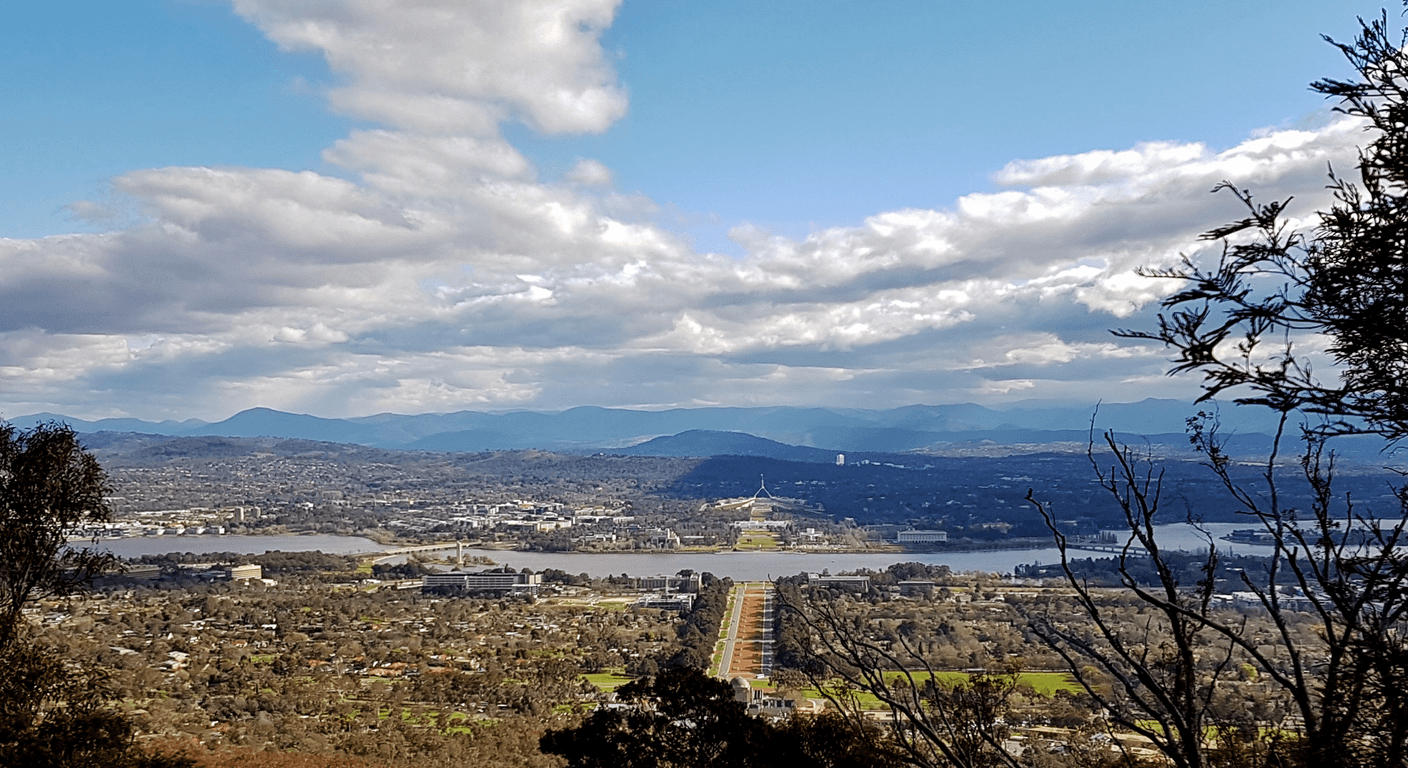
There are lookouts that reward effort, and then there are lookouts that reward clarity — and Mount Ainslie falls firmly into the second category. At roughly 843 metres above sea level, the summit sits only a few kilometres northeast of the city centre, yet the view it delivers is one of the most architecturally coherent in Australia. From the viewing platform, Griffin's axial design snaps into focus: Anzac Parade runs dead straight toward the Australian War Memorial at your feet, then continues the line south across Lake Burley Griffin to Old Parliament House and New Parliament House on Capital Hill. It is the kind of view that makes a city legible.
For a solo traveller in his late sixties who has seen a fair bit of Australia, this sort of place tends to stick. Not because it is dramatic in the way a coastal cliff is dramatic, but because it is genuinely illuminating. You understand Canberra differently after standing here — the geometry stops being an abstract fact from a school atlas and becomes something you can actually see. That is a rare thing.
The lookout is free, the road to the summit is sealed and in reasonable condition, and there is a car park immediately beside the viewing area. On a clear day, the Brindabella Ranges frame the far horizon beyond the parliamentary triangle. Early morning and late afternoon light are noticeably better for photographs and for the quality of the air itself — the golden hour before sunset, in particular, turns the pale Canberra stone buildings a warm ochre.
Getting there: driving, parking, and getting up the hill without a car
The most practical way to reach the summit is by car. From the city centre, head northeast along Limestone Avenue and follow signs into the Mount Ainslie Nature Reserve. The sealed summit road winds up through dry eucalypt woodland and takes around ten to fifteen minutes from the city. The car park at the top is modest in size — perhaps twenty to thirty spaces — so arriving early on weekends or public holidays is sensible. Weekday mornings tend to be quieter.
Parking at the summit is free at the time of writing. The viewing platform itself is paved and largely flat from the car park, making it accessible for most mobility levels. There are no steps between the car park and the main lookout area, though the paving can be uneven in spots — sturdy shoes are still worthwhile even if you are not walking the trails. Confirm current road and parking conditions with Parks ACT before you visit, as maintenance works can occasionally affect access.
If you are travelling without a car, Canberra's bus network (operated by Transport Canberra) serves the lower suburbs around the reserve, but there is no public transport to the summit itself. A taxi or rideshare from the city centre is a straightforward option and the fare would be modest given the short distance — roughly five to eight kilometres depending on your starting point. Confirm current rideshare availability in Canberra before relying on it as your only plan.
Getting to Canberra from Victoria: the realistic options
For Victorian travellers, Canberra is an easy overnight or weekend destination rather than a single long day. Driving from Melbourne takes around six and a half to seven hours via the Hume Highway and Federal Highway — a manageable drive split over two days if you prefer not to push it. The route through Albury-Wodonga and Gundagai offers decent stopping points with good rest areas and regional cafes.
V/Line operates coach services from Melbourne to Canberra, typically with a change at Albury. Indicative fares are roughly $50–$90 one-way, though these vary by time and booking window — always confirm current fares and schedules directly with V/Line at vline.com.au. The journey takes around eight hours including the connection, so it suits travellers who are comfortable with a longer coach trip and would rather not drive. Seats on regional coaches tend to be reasonably comfortable for the distance.
NSW TrainLink also runs services between Sydney and Canberra that may suit travellers who want to combine the trip with time in Sydney. From Melbourne, the typical route would involve taking a V/Line service to Sydney first, then connecting south. It adds time but suits those who enjoy train travel as part of the experience. Check transportnsw.info for current timetables and fares. Flying is of course the fastest option, with Rex and Qantas Group carriers serving the Canberra–Melbourne route — indicative return fares vary considerably by season and how far in advance you book.
What you will actually see from the top
The view is oriented roughly south-southwest from the summit platform. Directly below, the Australian War Memorial's distinctive Byzantine dome anchors the near end of Anzac Parade — you are essentially looking down on its roof and can appreciate how deliberately it was positioned at the base of the hill. The parade itself is wide, lined with commemorative memorials to specific conflicts, and on a clear day you can pick out individual monuments along its length.
Beyond the memorial, Anzac Parade crosses a bridge over Lake Burley Griffin and continues the axis south to Old Parliament House — the long, low white building that served as Australia's seat of government from 1927 to 1988. Behind it, and elevated on Capital Hill, the angular green-roofed roof of the current Parliament House completes the alignment. Griffin intended this axis as the Land Axis, one of two primary axes organising the city. Seeing it from above makes the intention unmistakable.
On clear days — which Canberra has in reasonable abundance — the Brindabella Ranges appear as a blue-grey wall to the west. The Molonglo and Murrumbidgee river valleys are visible in the middle distance. Closer in, the geometry of the parliamentary triangle, the National Triangle, and the broader planned suburbs gives the whole scene an unusual orderliness that is quite different from the organic sprawl of Melbourne or Sydney. For anyone with even a passing interest in urban planning or Australian history, it repays a long, unhurried look.
When to visit: light, seasons, and pacing yourself
Canberra's climate is distinct from coastal Victoria — cold winters with overnight frosts and warm, dry summers. The best months for a comfortable visit are generally March to May (autumn, when the deciduous trees in the parliamentary triangle turn colour) and September to November (spring, when the Floriade festival runs and the city is at its most animated). Summer visits are pleasant but midday heat can be significant; winter visits are perfectly viable but pack accordingly, as summit temperatures will be several degrees cooler than the city.
For the best photographic light and the most atmospheric experience of the lookout itself, aim for the hour after dawn or the hour before sunset. Morning light falls from the east, which means it illuminates the War Memorial and Anzac Parade from behind you — good for colour and contrast. Sunset light from the west backlights the parliamentary buildings and gives the lake a reflective quality. Midday light is flat and tends to wash out the detail in the pale stone buildings.
Pacing matters on any solo trip, and Mount Ainslie works well as a morning stop before exploring the parliamentary precinct on foot later in the day. The Australian War Memorial is directly below and well worth several hours — it has lifts throughout and is fully accessible. Old Parliament House (now the Museum of Australian Democracy) is a short drive or taxi ride south. Combining all three in a single day gives a coherent narrative arc through Australian political and military history without requiring excessive walking.
The Kokoda Track walk: for those who want to earn the view
For travellers who are fit and want a more physical engagement with the hill, the Kokoda Track Memorial Walk runs from the Australian War Memorial grounds up to the summit — a distance of roughly 3.7 kilometres one way with a vertical gain of around 260 metres. The track is named in honour of the Kokoda campaign and features interpretive signage about the New Guinea campaign along the route. It is a meaningful way to approach the summit, particularly for anyone with a personal connection to that period of Australian history.
The track is classified as moderate to hard by Parks ACT. It is a reasonably steep, uneven bush path in sections — not suitable for anyone with significant knee or hip issues, and poles would be helpful. The surface is compacted gravel and natural rock in places. Allow around one and a half to two hours up and a similar time down, depending on fitness and how much time you spend at the interpretive panels. Carrying water is essential; there are no facilities on the track itself.
For the majority of visitors — and particularly those for whom a steep 3.7-kilometre bush walk is not realistic — driving to the summit is the entirely sensible choice and takes nothing away from the experience at the top. The view is identical. There is no obligation to walk anywhere, and the sealed road exists precisely so the lookout is accessible to everyone. Do not let the existence of a walking track make you feel the drive-up option is somehow lesser — it is not.
Combining Mount Ainslie with a broader Canberra visit
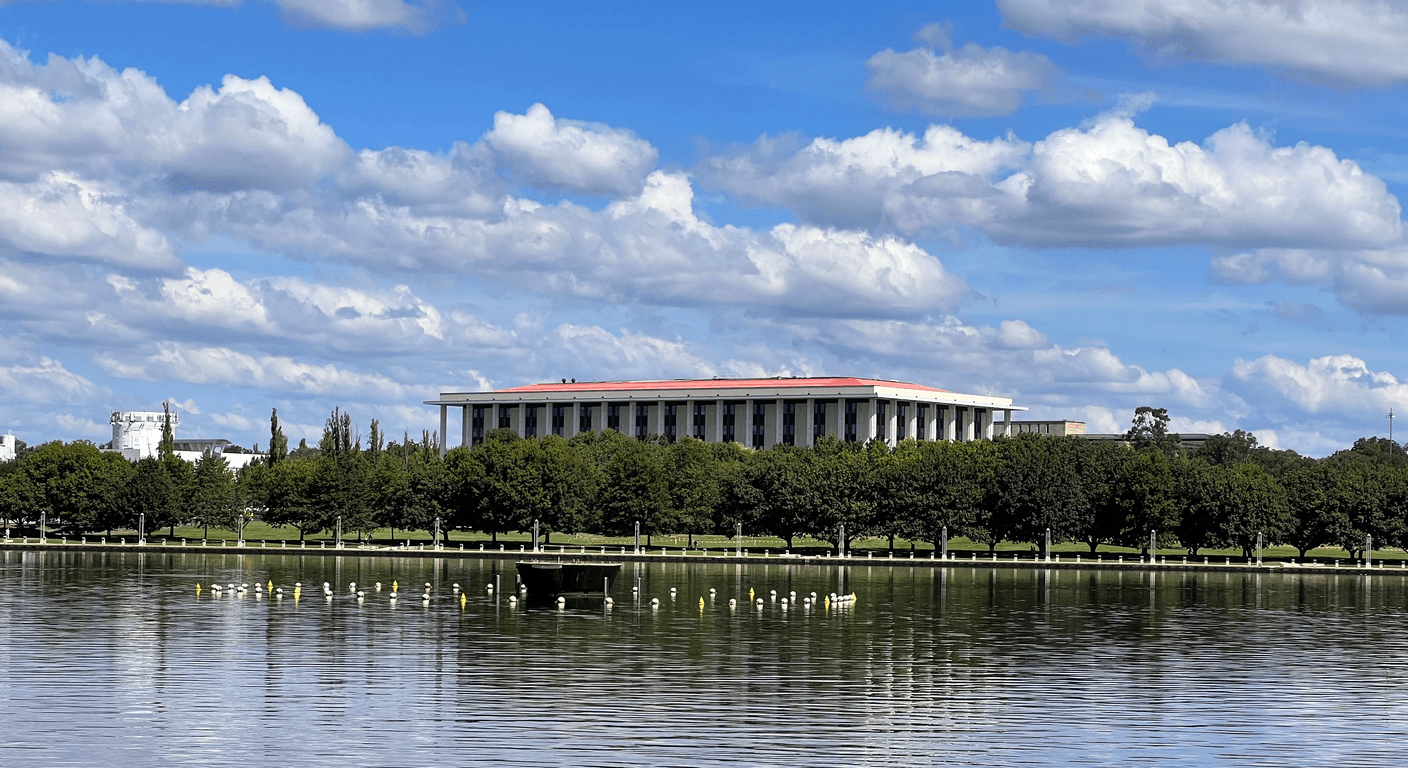
Canberra rewards at least two nights if you want to move at a comfortable pace. Beyond the lookout and the War Memorial, the National Gallery of Australia on Parkes Place holds the nation's primary art collection — entry to the permanent collection is free, and the building is fully accessible. The National Museum of Australia on the western shore of Lake Burley Griffin covers Australian social history in an engaging, non-exhausting format. Both are within easy driving distance of Mount Ainslie.
Accommodation in Canberra ranges from large hotel chains near the city centre to smaller guesthouses in suburbs like Manuka and Kingston, which have good cafe and restaurant strips within walking distance. The Kingston foreshore area, on the southern shore of Lake Burley Griffin, is a particularly pleasant base — flat, walkable for those who want it, and close to the ferry terminal for lake cruises. Indicative hotel costs in the city centre run from roughly $150 to $250 per night depending on season and property; always confirm current rates directly with accommodation providers.
For a solo traveller who enjoys a quiet, self-directed day, the Mount Ainslie lookout is an ideal opening move. You get your bearings — literally — before descending into the city. Everything else you visit that day sits in geographic and historical context because you have already seen where it fits. That is the particular value of a good lookout: not just the view itself, but the understanding it gives you of everything below.
Quick planning guide
| Ideal pace | Slow-paced, unhurried morning stop before a fuller day in the city |
|---|---|
| Best months | March–May (autumn colour) or September–November (spring, Floriade) |
| Suggested stay | A couple of hours at the lookout, within an overall two-night Canberra visit |
| Mobility level | Easy — sealed road, flat paved platform, no walking required |
| Cost level | Free entry and parking; Canberra accommodation runs budget to mid-range |
| Comfort level | High — drive-up access with sturdy shoes recommended for uneven paving |
| Best for | Solo travellers, and anyone interested in urban planning or Australian history |
| Main planning consideration | Arranging transport from Victoria (drive or V/Line coach via Albury) and confirming current fares and road conditions before travelling |
Key takeaways
- Mount Ainslie Lookout is free, reached by a sealed road, and has parking directly beside the viewing platform — no walking required.
- The summit view aligns Anzac Parade, the Australian War Memorial, Old Parliament House, and New Parliament House in a single frame, making Walter Burley Griffin's capital plan immediately legible.
- Sunrise and the hour before sunset deliver the best light for both photography and atmosphere at the summit.
- The Kokoda Track Memorial Walk (3.7 km, moderate to hard) offers a meaningful approach on foot for fit walkers, but driving to the top is the sensible and equally valid alternative.
- Canberra is around six and a half to seven hours by car from Melbourne, or accessible by V/Line coach with a connection at Albury — confirm current fares and schedules before travelling.
- Combining the lookout with the Australian War Memorial and National Gallery of Australia in a single day gives a coherent, unhurried itinerary without excessive walking.
Recommended partners and links
Indicative prices only — always confirm with the operator before booking.
Frequently asked questions
Is Mount Ainslie Lookout accessible for older travellers who cannot walk far?
Yes. A sealed road runs all the way to the summit and there is a car park immediately beside the viewing platform. The path from the car park to the lookout area is paved and largely flat, making it accessible for most mobility levels. No walking trail is required to reach the view.
Is there a cost to visit Mount Ainslie Lookout?
Entry to the lookout and parking at the summit are free at the time of writing. There are no admission charges for the Mount Ainslie Nature Reserve. Confirm current conditions with Parks ACT before visiting, as arrangements can change.
What is the best time of day to visit Mount Ainslie for the view?
The hour after sunrise and the hour before sunset give the best light. Morning light illuminates Anzac Parade and the War Memorial from behind the viewer; late afternoon light catches the parliamentary buildings and reflects off Lake Burley Griffin. Midday light is flat and less rewarding.
Can you get to Mount Ainslie summit without a car?
There is no public transport to the summit itself. The most practical car-free option is a taxi or rideshare from the Canberra city centre, which is a short trip of around five to eight kilometres. Confirm rideshare availability in Canberra before relying on it as your sole option.
How far is Canberra from Melbourne and what is the easiest way to get there from Victoria?
Canberra is roughly 650 kilometres from Melbourne by road — around six and a half to seven hours driving via the Hume and Federal highways. V/Line operates coach services with a connection at Albury; indicative fares are roughly $50–$90 one-way but should be confirmed directly at vline.com.au. Flying is the fastest option, with services from Melbourne Airport taking under an hour.
- Visit Canberra – official ACT tourism
- Parks ACT – ACT Environment, Planning and Sustainable Development Directorate
- Australian War Memorial – official site
- Museum of Australian Democracy at Old Parliament House
- National Gallery of Australia
- V/Line – Victorian regional coach and train services
- Transport Canberra – ACT public transport