Spring (September to November) is the finest time to cruise the Murray River by paddle steamer, when river red gums flush with new growth and waterbirds nest along the banks. Day and overnight cruises depart from Echuca year-round; multi-night voyages suit those wanting more. Mobility rating: Easy to Moderate depending on vessel and gangway access. Echuca is roughly 3 hours by road or coach from Melbourne, making it highly accessible for Victorian-based travellers.
Why spring on the Murray is the right call
September and October bring a specific kind of quiet beauty to the Murray. The river red gums — those enormous, silver-barked trees that lean out over the water as if they're checking their reflection — are at their greenest after winter rain. Azure kingfishers work the shallows. White ibis and royal spoonbills wade in the shallows of billabongs that only fill properly in a good season. You don't need to be a birdwatcher to appreciate it; you just need to be sitting on a deck chair with something warm in your hand.
Summer on the Murray is a different proposition entirely — 38-degree days, haze, and flies that could test the patience of a saint. Winter has its own appeal for the hardier traveller, but the mornings are genuinely cold and the light flat. Spring splits the difference. Comfortable days, cool evenings, and the river doing what it does best: moving slowly and looking magnificent.
For a traveller based in Victoria — particularly one who's done the European river cruise circuit and wants something closer to home without sacrificing the essential pleasure of watching a riverbank drift past — the Murray in spring is the obvious answer. It is not a compromise. It is its own thing entirely.
Getting to Echuca: the practical reality from Melbourne
Echuca is 207 kilometres north of Melbourne — roughly a 2.5 to 3-hour drive depending on traffic through Kalkallo. The Hume Freeway to the Calder Highway interchange is straightforward; the last stretch through Rochester is flat and easy. If you'd rather not drive, V/Line runs services from Southern Cross Station with a connection at Bendigo; the full journey takes around 3.5 hours and costs roughly $20–$30 depending on your Seniors Card discount status. Confirm current V/Line fares and timetables at ptv.vic.gov.au before you travel.
Victorian Seniors Card holders are entitled to discounted V/Line fares — this is one of the most consistently underused benefits for regional travel, and it applies here. If you're driving and planning to park near the historic port precinct, be aware that Hopwood Street parking fills quickly on weekends. The side streets off Anstruther work better, and it's a short, flat walk back to the wharf.
There's no need to rush. Echuca is exactly the kind of town that rewards arriving the night before, having a slow dinner along High Street, and walking down to the port in the morning when the mist is still on the water. Plan an extra day. You won't regret it.
Cruise lengths: from 90 minutes to two nights — what suits you
The shortest cruises — typically 90 minutes to two hours — depart from the historic Echuca wharf and head upstream or downstream before turning back. These are genuinely lovely. You see working red gum forest, hear the engine below your feet, and get a feel for the river without any real commitment. Prices are roughly $55–$75 per person for a standard run; some operators offer a lunch or high-tea cruise in the $90–$130 range. Confirm what's actually included: a number of operators sell the cruise separately from food and drink, which is fine as long as you know going in.
Half-day and full-day cruises extend the experience considerably. A full day on the water — departing around 10:00 and returning by 4:00 or 5:00 — gives you time to properly settle in, watch the birdlife without rushing, and have lunch at the right pace. These typically run $120–$200 per person depending on inclusions. Again: ask exactly what the catering covers. A cheese platter and a glass of wine is not the same as a two-course lunch, and both get described as 'lunch included' by operators who should know better.
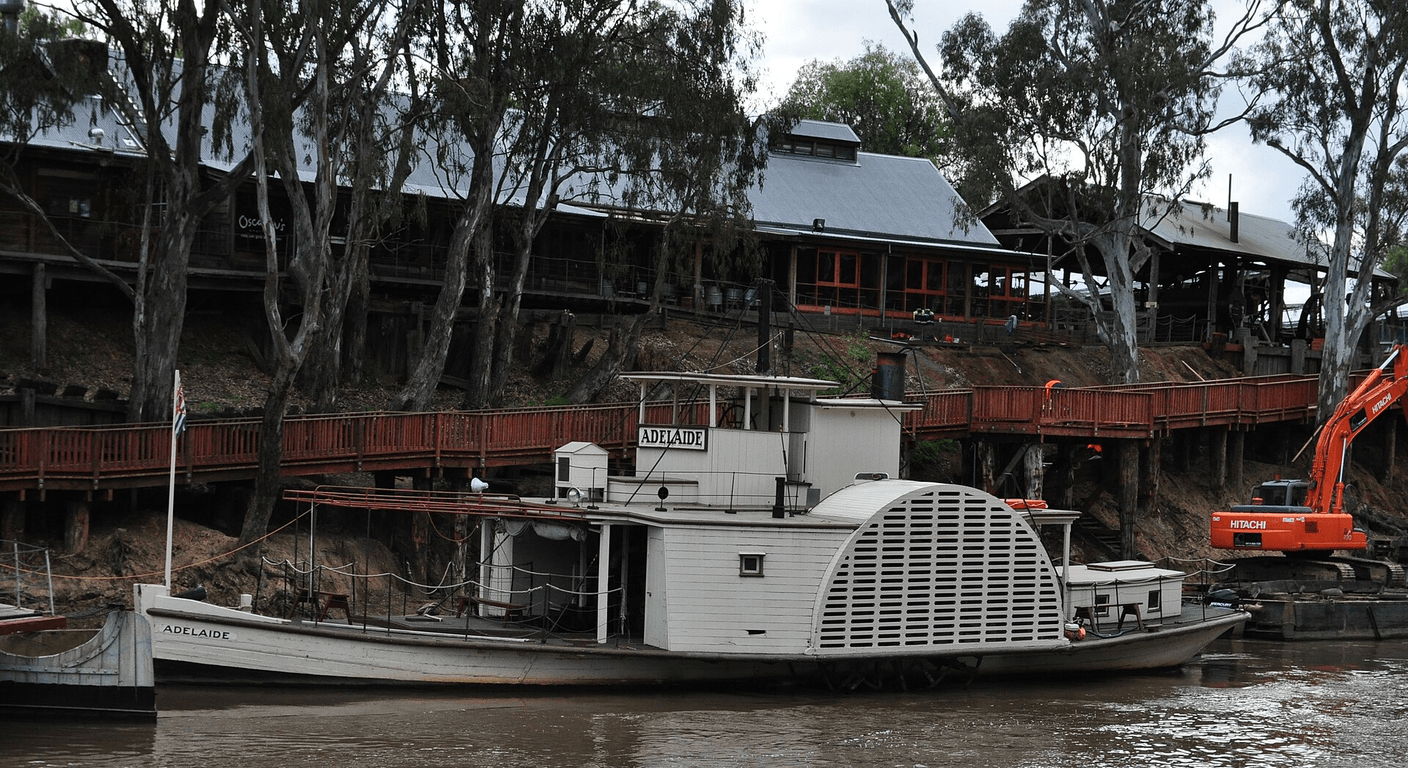
Overnight and two-night cruises are where the experience genuinely shifts gear. The PS Emmylou, one of the Murray's most respected vessels, offers overnight and two-night packages out of Echuca with cabins, meals and guided commentary included. These packages run roughly $350–$600 per person twin-share — indicative figures only, confirm current rates directly with the operator. You're not on a large European river ship; the Emmylou is a working paddle steamer with character and limited cabins, which is precisely the point. Book early for spring departures.
What a spring day cruise actually looks like (hour by hour)
For a standard 90-minute morning departure — say, 10:30 from the Echuca wharf — boarding typically opens around 10:00. The gangway is a short walk from the carpark; most vessels use a level or near-level gangway at high tide, though the step onto the deck can vary by river height. Ask the operator specifically about current gangway access if you or your partner have any knee or balance concerns — river height in spring is less predictable than summer, and a 20-centimetre step is a different thing at 73 than it was at 53.
Once aboard, seating is generally open — grab a position on the upper deck if the morning is warm, or the enclosed lower saloon if there's a chill. The engine noise below is part of the appeal, not a nuisance. Toilets are typically accessible below deck; narrow corridors are the main consideration, not steep stairs. The cruise moves at around 10–12 kilometres per hour. You'll cover perhaps 8–10 kilometres of river before the turn. Commentary is usually delivered by the captain or a crew member, and it tends to be good — these are people who genuinely know the river.
By noon you're back at the wharf. There's no rush off the boat. If you've booked a morning cruise and want lunch, the Echuca port precinct has several cafes and restaurants within a five-minute walk. If you've booked the lunch cruise, you'll eat on the water between roughly 12:30 and 1:30, then be back by 3:00. That leaves a comfortable afternoon to walk the historic port, look at the red gum timber wharf (which is genuinely impressive and largely flat underfoot), or simply sit at a cafe and watch the river from the bank. The third option is not a lesser choice.
Boarding, accessibility and the honest account of the gangway
Accessibility on Murray paddle steamers is better than you might expect from heritage vessels, but it is not uniform. The PS Emmylou has been specifically cited by operators as suitable for passengers with moderate mobility; the gangway is manageable for most travellers who can handle a short step and a slight incline. The on-deck seating is fixed in some areas and moveable in others. Wheelchair access is limited on most vessels — call the operator directly and be specific about what you need.
The Echuca historic port wharf itself is largely flat and made of red gum timber planks. There are some gaps and uneven sections — sensible footwear, not thongs, is the right call. If it's been raining, the timber can be slippery; the operators know this and usually manage it, but it's worth arriving with grip-soled shoes as standard practice. The walk from the main carpark to the boarding point is short — under 200 metres — and flat.
For couples where one partner is less mobile than the other, the enclosed lower saloon on most vessels means there's always a comfortable, seated option that doesn't require moving around the deck. Nobody needs to stand at the railing the whole time. The river comes to you.
Spring weather on the Murray: the honest version
October on the Murray is not a guarantee of warmth. September can still produce cold mornings — 8 or 9 degrees at departure time is not unusual. By late November things have usually settled into reliable warmth, but that's also when the flies start making their presence felt. The sweet spot is mid-October to mid-November, when daytime temperatures are typically 18–24 degrees and the risk of rain is lower than early spring.
Pack a proper layer for the morning cruise. A light down jacket or a wool mid-layer, not just a cardigan. The river creates its own breeze even when the wind is calm, and the upper deck in the shade is always cooler than you expect. By midday you'll likely shed the jacket. By 3:00 you'll want it back. This is just how spring works on inland Victoria.
If it does rain — and October absolutely can deliver a cold, grey, drizzly day — enclosed saloons mean you're not going to have a miserable time. The river looks genuinely atmospheric in rain. But if the weather is foul and you're not committed to the water, Echuca itself has the Echuca Historical Society Museum, the National Holden Motor Museum (genuinely interesting for anyone who grew up with Australian manufacturing), and several excellent cafes to wait it out.
Solo travellers: the single supplement reality
On 90-minute and half-day cruises, solo pricing is straightforward — you pay per person, and there's no penalty for travelling alone. These are public departures with mixed passenger groups, and a solo traveller fits in without any awkward pricing conversation.
On overnight and multi-night cruises, the single supplement question becomes real. Most operators price cabins on a twin-share basis, and a single occupancy surcharge of 30–60 per cent is common. The Emmylou, for example, has a limited number of cabins; a solo traveller taking a double cabin alone will pay more than half the twin rate — sometimes significantly more. Ask the operator directly what the single rate is, whether there's a share-match option, and whether any departures are structured specifically for solo travellers. Some operators will reduce or waive the supplement on shoulder-season departures if they need to fill a cabin. It never hurts to ask.
For a solo traveller who wants the overnight experience without the supplement premium, a practical alternative is to book a two-night stay in Echuca and combine day cruises with evenings at one of the town's better accommodation options along the river. You get the water experience, you avoid the penalty, and you have a proper bed and bathroom to yourself. That's not a consolation prize.
Quick planning guide
| Ideal pace | Unhurried — one or two nights on the water, with a day either side in Echuca |
|---|---|
| Best months | September to November (spring); avoid July–August for cold mornings and higher rain risk |
| Suggested stay | 3–5 nights total including Echuca base |
| Mobility level | Easy (gangways and deck seating on most vessels); confirm step heights before booking |
| Cost level | Around $55–$95 per person for a 90-minute cruise; overnight packages from roughly $350–$600 per person twin-share |
| Comfort level | High — slow pace, flat water, no tides |
| Best for | Couples and solo travellers who want scenic immersion without the physical demands of a walking holiday |
| Main planning consideration | Spring weather on the Murray is variable — pack layers and confirm what meals and drinks are included in the fare before you board |
Key takeaways
- Spring — September to November — is the best season for Murray River paddle steamer cruises, with red gums at their greenest and birdlife most active.
- Echuca is roughly 3 hours from Melbourne by road or V/Line train; Victorian Seniors Card holders qualify for discounted V/Line fares.
- Short cruises run around $55–$95 per person; overnight packages start from roughly $350–$600 per person twin-share — always confirm current rates with operators.
- Gangway access is manageable for most passengers with moderate mobility, but wheelchair access is limited — call the operator before booking.
- On day cruises, solo travellers pay standard per-person rates; on overnight cruises, a single supplement of 30–60 per cent is typical, so ask operators directly about alternatives.
- October weather is variable — pack a proper warm layer for morning departures regardless of the forecast.
Recommended partners and links
Indicative prices only — always confirm with the operator before booking.
Frequently asked questions
What is the best time of year for a Murray River paddle steamer cruise?
Mid-October to mid-November is the most reliable window for spring cruising on the Murray. Daytime temperatures are typically 18–24 degrees, the river red gums are at their greenest, and waterbirds are nesting along the banks. Early September can still be cold, and late November brings flies and rising heat.
How accessible are Murray River paddle steamers for older travellers or those with limited mobility?
Most vessels use a gangway from the wharf to the deck, with a short step that varies depending on river height. Enclosed lower-deck saloons provide comfortable seating without the need to move around the upper deck. Full wheelchair access is limited on heritage vessels — contact the operator directly before booking to confirm current gangway configuration and onboard facilities.
Do Murray River paddle steamer cruises charge a single supplement?
On public day and 90-minute cruises, solo travellers pay the standard per-person fare with no supplement. On overnight and multi-night cruises with private cabins, a single occupancy surcharge of 30–60 per cent is common. Ask operators whether share-match options or reduced single rates are available, particularly on shoulder-season departures.
What is typically included in a Murray River paddle steamer cruise fare?
Inclusions vary significantly between operators and cruise types. Short 90-minute cruises generally cover the ride and onboard commentary; food and drinks are usually extra or available to purchase. Lunch and high-tea cruises include catering in the fare, but confirm exactly what is served. Overnight packages on vessels like the PS Emmylou typically include meals and accommodation. Always ask what is and is not included before booking.
How do I get from Melbourne to Echuca for a paddle steamer cruise?
Echuca is approximately 207 kilometres north of Melbourne — around 2.5 to 3 hours by car via the Calder Highway. V/Line runs train and coach services from Melbourne's Southern Cross Station, with a connection at Bendigo, for a total journey of roughly 3.5 hours. Victorian Seniors Card holders receive discounted V/Line fares. Confirm current timetables and fares at ptv.vic.gov.au before travelling.