Spring — particularly October — is the sweet spot for Murray River cruising. Wildflowers line the red-gum banks, waterbirds are breeding in the billabongs, and daytime temperatures sit between 18°C and 26°C before summer's heat sets in. A four-to-seven-night cruise from Mannum (SA) or Echuca (VIC/NSW) suits most itineraries. Mobility rating: Easy to Moderate depending on operator and vessel. Fly or drive from Melbourne, Sydney or Adelaide — transfers are typically self-managed or bookable at extra cost.
Why October on the Murray is genuinely different
There's a version of the Murray that most Australians have never seen: the October version. The river is usually running well after winter rains, the red gum forests are at their most generously green, and the floodplain billabongs — those shallow, reed-fringed backwaters that look unremarkable in a dry year — are suddenly loud with waterbirds in full breeding display. Royal spoonbills, straw-necked ibis, great egrets, nankeen night herons. You don't need binoculars, though they help. You need to be there.
Along the banks, the understorey carries paperbarks, wattles in late yellow bloom, and in the drier sandy stretches above the floodline, everlastings and native daisies in the kind of casual profusion that doesn't photograph well but stops you mid-deck anyway. Daytime temperatures sit between 18°C and 26°C through most of October — warm enough for a sundeck chair, cool enough for a walk ashore without wilting. By December, that window closes hard. The heat arrives fast on the Murray.
For travellers who've done the alpine wildflower trails or the Goldfields in autumn, the Murray in spring is a quieter, flatter version of the same seasonal reward — and the fact that you can watch it slide past from a comfortable chair with a glass of something cold is, frankly, the point.
Mannum or Echuca: which embarkation port suits you?
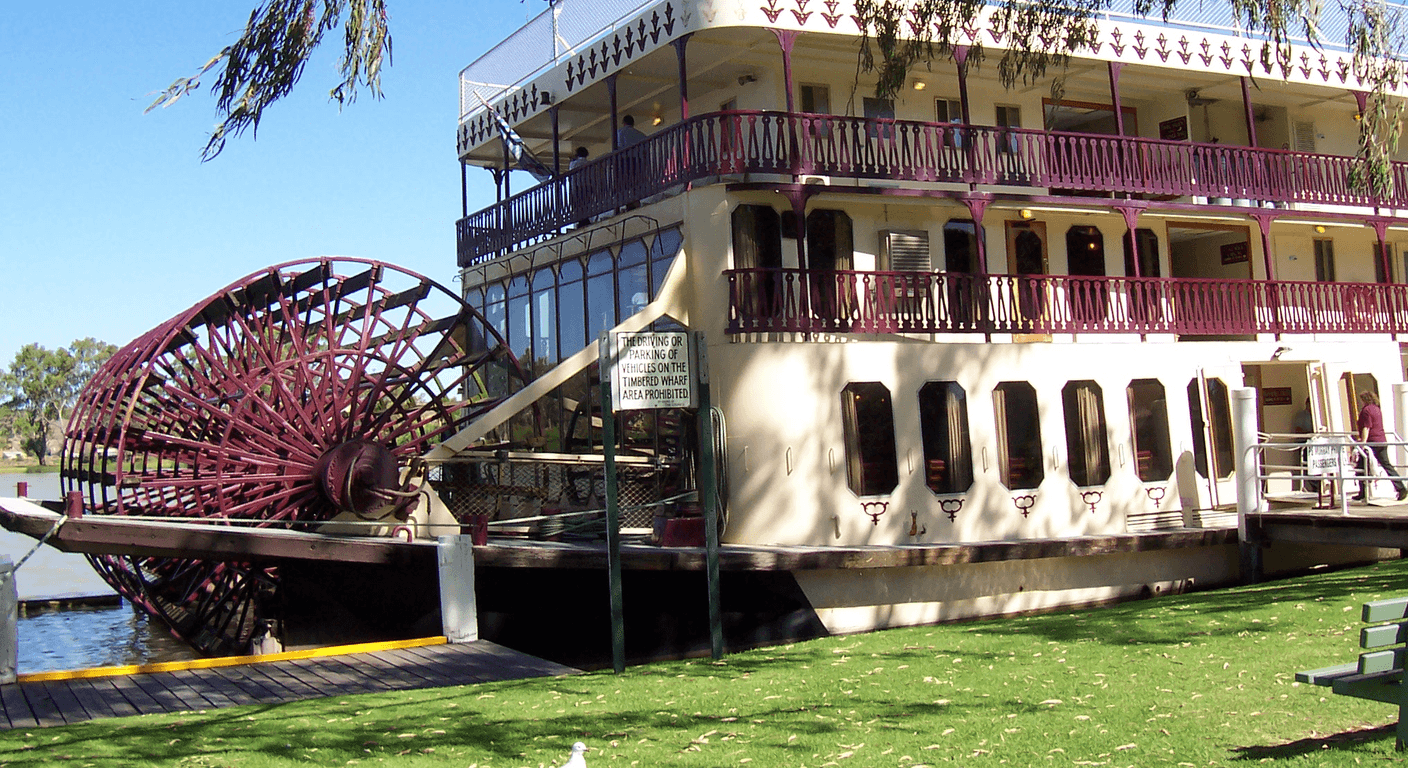
Mannum (SA) and Echuca (VIC/NSW) are the two main embarkation points for multi-night Murray cruises, and they suit different travellers for different reasons. Mannum sits about 80 kilometres east of Adelaide — a straightforward drive or a coach transfer from the city. It's the home port of the PS Murray Princess, Australia's largest inland river cruise vessel, and the town itself is worth arriving a day early for: the Mannum Dock Museum is genuinely good, and the foreshore café scene has improved considerably in recent years.
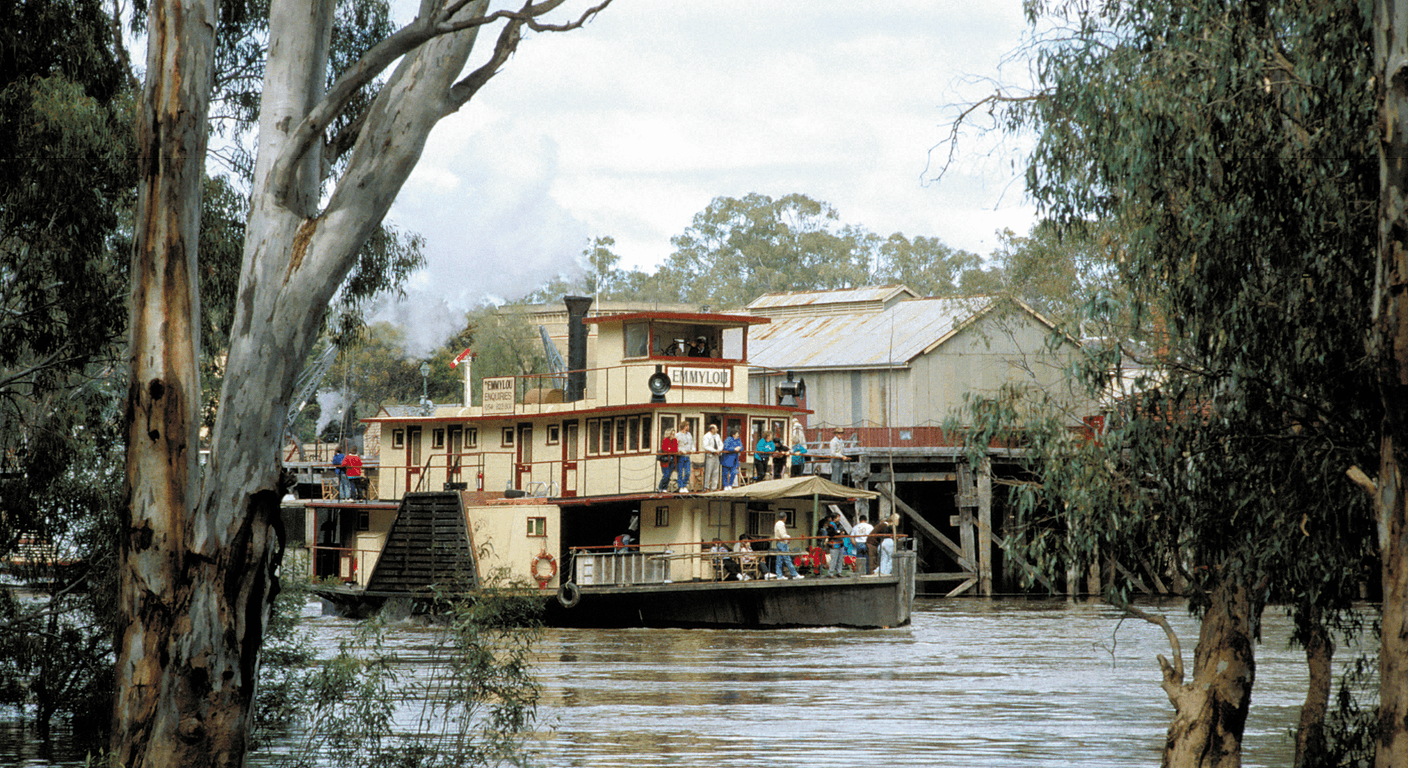
Echuca is the heritage option. The historic wharf precinct is classified by the National Trust, the port buildings date from the 1860s, and the PS Emmylou — a wood-fired paddlesteamer that runs overnight and multi-night cruises — is the real thing, not a replica. Echuca is roughly two and a half hours from Melbourne by car or VLine coach to Echuca station, which makes it the natural choice for Victorian-based travellers. If you're flying in from interstate, Adelaide works better as a gateway for Mannum; Melbourne for Echuca.
A practical note on the drive: if you're grey nomading with a caravan or motorhome, both towns have well-serviced caravan parks close to the embarkation points. Leaving your rig at a van park and joining a cruise for five nights is a model that works well — you return to your own vehicle and continue the trip rather than doubling back.
Cabin types, accessibility and what to ask before you book
Cabin configurations on Murray cruise vessels vary more than you'd expect, and it pays to ask specific questions rather than rely on brochure descriptions. On the PS Murray Princess, cabins range from standard twin and double rooms to upper-deck staterooms with picture windows — ask for a port-side cabin if you want the riverbank as you pull out of Mannum, and confirm whether your cabin has step-over access to the bathroom or a roll-in shower. The vessel is designed for river cruising, not ocean swells, so there are no stability issues, but corridors are narrower than a hotel hallway.
The PS Emmylou in Echuca operates on a smaller, more intimate scale — typically eight to twelve passengers on overnight and extended cruises. Cabins are compact but well-fitted; the vessel's heritage character means some internal access is via narrow stairs. If mobility is a genuine consideration, call the operator directly and describe your specific situation. They're accustomed to the question and will tell you honestly whether the vessel suits you. Don't rely on the website alone.
Gangway angle is the one accessibility variable neither you nor the operator fully controls: it shifts with river level. A high river in October means a gentler boarding angle; a low river means a steeper slope with a handrail. Confirm river conditions the week before departure. Most operators will have a crew member stationed at the gangway during embarkation — but if you use a walking stick or have balance concerns, say so when you book so the crew can be ready, not surprised.
Solo travellers: the supplement reality and what's actually available
The single supplement on Murray River cruises is, depending on the operator, either a modest inconvenience or a genuine deterrent. On the PS Murray Princess, solo travellers typically pay a supplement of around 50–75% above the per-person twin-share rate to occupy a cabin alone — which can push the total to roughly $350–$600 per night for a solo traveller in a standard cabin. That's not outrageous by international river cruise standards, but it's real money over five nights. Confirm the current solo rate directly with the operator before committing.
The PS Emmylou sometimes offers share-cabin arrangements or solo-specific departures — worth asking about, particularly for spring departures where the smaller passenger count makes a share arrangement more feasible. Some smaller Murray operators advertise solo-friendly pricing on select dates; Tourism Murray River's website (murrayriver.com.au) lists operators and is a useful starting point for comparing options.
For solo female travellers specifically — and this is worth saying plainly — the Murray cruise demographic skews mature, unhurried and sociable. Shared dining tables are the norm on most vessels, which means the social dynamic forms naturally rather than feeling forced. A solo traveller who wants company will find it at dinner; one who prefers to read on the sundeck all afternoon will not be bothered. Both are fine.
What's included, what costs extra, and the shoulder-season value angle
Most multi-night Murray cruises include all meals, onboard entertainment and the cruise itself. What they don't automatically include — and where the real variation lies — is shore excursions, drinks packages, and specialist add-ons like guided birdwatching walks or Indigenous cultural talks. On the PS Murray Princess, shore excursions are typically optional extras priced at around $40–$90 per person per excursion; confirm the current program when you book because the October schedule changes year to year. A drinks package, if available, runs roughly $60–$90 per person per day — or you can buy drinks individually, which suits moderate drinkers better.
October sits in shoulder season for most Murray operators: school holidays are over, the summer peak hasn't arrived, and pricing reflects that. The difference between a September or October departure and a December–January one can be $50–$100 per person per night on some vessels. That's not trivial over a five-night cruise. Spring departures also tend to have smaller passenger numbers, which changes the atmosphere on deck — fewer queues for the sundeck chairs, more conversational dinners.
One thing to watch: card surcharges on board. Several Murray cruise operators still apply a 1–2% surcharge on credit card payments made at the bar or for onboard extras. It's not large in dollar terms but it's the kind of thing that irritates when you don't know to expect it. Ask when you board, and carry some cash if it matters to you.
What does the day actually look like? A real October itinerary
Most multi-night Murray cruises run at a genuinely slow pace — the vessel moves for four to six hours a day, anchoring or mooring at a town or bush landing for the rest. A typical October day might look like this: the vessel gets underway around 7:30 in the morning, which means breakfast from about 7:00 in the dining room. The first two hours of river travel — from roughly 7:30 to 9:30 — are the best birdwatching window. Bring your binoculars to the sundeck and stay there. The light is soft, the birds are active, and the vessel's pace is slow enough that you can follow a heron along the bank for several minutes.
By mid-morning (around 10:00 to 10:30) the vessel typically moors at a bush landing or a small river town — Waikerie, Blanchetown, Swan Reach, depending on the cruise route. The optional shore excursion, if there is one, departs at roughly 10:15 and returns by 12:30. If you skip the excursion — and you're entirely allowed to skip it — you have the vessel almost to yourself, which is its own reward. The onboard lounge and library are quiet, the crew are relaxed, and the morning tea situation is usually still running. Toilets are available on board at all times; the shore excursion toilet stops depend on the landing site, so confirm with the cruise director before going ashore if that's a consideration.
Lunch is served aboard at 12:30 to 1:30, then the vessel resumes cruising through the afternoon. The 2:00 to 4:00 stretch is the warmest part of the day in October — 24°C to 26°C on the sundeck, pleasant with a hat and a drink. The vessel moors for the night between 4:30 and 6:00 depending on the itinerary; pre-dinner drinks in the lounge from about 6:00, dinner at 7:00. By 9:30 most passengers are done. It's that kind of trip. These times are indicative based on typical Murray cruise operations — confirm the specific daily schedule with your operator, as it varies by vessel and route.
Getting there, travel insurance and a few things worth confirming
For Melbourne-based travellers, Echuca is the obvious choice: roughly 2.5 hours by car via the Northern Highway, or a VLine train and coach service from Southern Cross Station (check ptv.vic.gov.au for current timetables and fares). Adelaide to Mannum is about 80 minutes by car; there's no direct public transport link, so a hire car, taxi or pre-arranged transfer is necessary. For travellers flying in from Brisbane, Sydney or Perth, Adelaide Airport is the most convenient gateway for Mannum-based cruises; Melbourne Airport for Echuca.
Travel insurance is non-negotiable on a river cruise, particularly for travellers over 60 with any pre-existing conditions. Several Australian insurers offer policies that cover river cruising specifically, but read the fine print on what constitutes a 'cruise' and whether the policy covers medical evacuation from a remote river location — not all do. The Murray is not remote by global standards, but the nearest major hospital to some cruise stretches is 45 minutes away by road. Your insurer needs to know you're on a river cruise, not just 'travelling in regional Victoria or South Australia'.
Victorian Seniors Card holders should check with individual operators for any concession pricing — it's not universal on private cruise operators, but some offer a modest discount on shoulder-season departures and it costs nothing to ask. Register your trip on Smartraveller (smartraveller.gov.au) as a habit even for domestic travel if you have complex medical needs, and ensure your emergency contact details are current. If you're joining the cruise as a solo traveller, let the cruise director know on embarkation — not for any safety reason, but because it helps the crew with seating arrangements and means someone's keeping an eye out for you in the way that's actually pleasant rather than intrusive.
Quick planning guide
| Ideal pace | 4 to 7 nights aboard; allow a buffer night at your embarkation town |
|---|---|
| Best months | September to November, with October the clear standout for wildflowers and birdlife |
| Suggested stay | 5 nights on the river plus 1 pre-cruise night ashore |
| Mobility level | Easy — flat decks, handrails standard; gangway angle varies by river level |
| Cost level | Around $250–$450 per person per night all-in on premium vessels; budget operators from roughly $180pp/night |
| Comfort level | High — climate-controlled cabins, onboard dining, unhurried pace |
| Best for | Couples, solo travellers, culturally curious over-50s, grey nomads joining a cruise leg |
| Main planning consideration | River level affects gangway steepness and some landing access — confirm with operator in the week before departure |
Key takeaways
- October is the Murray's best month: wildflowers on the banks, waterbirds breeding in the billabongs, and temperatures that don't punish you for being outside.
- Mannum suits Adelaide-based and interstate flyers; Echuca is the natural choice for Victorian travellers and heritage paddlesteamer enthusiasts.
- Solo travellers typically pay a 50–75% single supplement — confirm the exact figure with your operator and ask about share-cabin or solo-departure alternatives.
- Shore excursions and drinks packages are almost always extras, not inclusions — factor roughly $40–$90 per excursion and $60–$90 per day for a drinks package into your budget.
- Gangway steepness changes with river level; if mobility is a consideration, call the operator the week before departure and ask about current conditions.
- Spring shoulder-season pricing can be $50–$100 per person per night lower than summer peak — the same river, the better weather, the quieter vessel.
Recommended partners and links
Indicative prices only — always confirm with the operator before booking.
Frequently asked questions
What is the best time of year for a Murray River cruise?
October is widely considered the best month. Wildflowers line the banks, waterbirds are in full breeding season in the billabongs, and daytime temperatures sit between 18°C and 26°C — warm and comfortable without the punishing heat of December and January. September and November are also good; avoid January to February unless you're comfortable with temperatures regularly above 38°C.
How much does a Murray River cruise cost per night in 2025–26?
Indicative pricing ranges from around $180 per person per night on smaller heritage vessels in twin share to $250–$430 per person per night on larger, premium vessels such as the PS Murray Princess. Solo travellers typically pay a single supplement of 50–75% above the twin-share rate. All prices are indicative — confirm current rates directly with the operator before booking.
Are Murray River cruises accessible for travellers with limited mobility?
Most Murray cruise vessels are rated Easy to Moderate for mobility. Decks are flat and handrails are standard. The main variable is gangway steepness, which changes with river level — a high river means a gentler angle, a low river means a steeper one. Call the operator directly before departure and describe your specific mobility needs; reputable operators will give you an honest answer about whether the vessel suits you.
Do Murray River cruises charge a single supplement for solo travellers?
Yes, most multi-night Murray cruise operators charge a single supplement, typically 50–75% above the per-person twin-share rate. Some operators offer share-cabin arrangements or solo-friendly departures on select dates — ask specifically when you enquire. The PS Emmylou in Echuca, which carries fewer passengers, is worth contacting directly about solo options.
What wildlife can you see on the Murray River in spring?
October on the Murray is prime waterbird season. Royal spoonbills, great egrets, nankeen night herons, straw-necked ibis and numerous cormorant species are active in the floodplain billabongs during breeding season. Corellas and sulphur-crested cockatoos are conspicuous in the red gums. Wattles and native daisies along the drier bank sections add to the seasonal colour. Early morning — roughly 7:30 to 9:30 aboard the moving vessel — is the best wildlife-watching window.