The National Arboretum Canberra offers free entry to 94 forest pods across 250 hectares, with autumn (late March to May) bringing the strongest foliage colour. A day trip suits most visitors, centred on the Village Centre cafe terrace and the free National Bonsai and Penjing Collection. Mobility is easy, as internal roads let travellers experience the forests by car. Most visitors drive from Canberra or fly in from Melbourne and hire a car locally.
How did 94 forests grow from a bushfire scar?
On a January day in 2003, firestorms swept through the hills west of Canberra's city centre and destroyed pine plantations that had stood for decades. It was a devastating loss, but it also cleared the way for something ambitious: a living collection of trees representing forests from across Australia and the world, planted on land that would otherwise have taken generations to reclaim.
Today, the National Arboretum Canberra holds more than 44,000 trees across 94 forest 'pods', each dedicated to a different species or geographic origin. You will find a cork oak forest from the Mediterranean, a Japanese cherry collection, a grove of rare Wollemi pines — one of the oldest tree species on earth — and a significant planting of Australian natives including some of the most threatened eucalypt species on the continent.
Walking between the pods, or simply driving the looped internal roads and pausing at pull-offs, gives a quiet sense of scale that is hard to find in a city environment. The trees are still maturing, which means the landscape changes noticeably year on year, and returning visitors often remark how different it feels from even a season ago. That sense of a living work-in-progress is part of what makes the Arboretum genuinely interesting rather than simply scenic.
Getting there from Victoria: what are the realistic options?
For Victorian travellers, the most straightforward approach is to drive the Hume or Barton highways and treat the Arboretum as part of a broader Canberra stay of two or three nights. The drive from Melbourne is roughly 650 kilometres — a solid day's travel — so most people overnight in Gundagai, Yass or Canberra itself the night before. The Arboretum sits about eight kilometres west of Canberra's city centre, making it easy to combine with other sights.
Flying into Canberra Airport from Melbourne takes under an hour on most services, and hiring a car at the airport gives you the flexibility to drive the Arboretum's internal loops, which is particularly useful if walking long distances is not comfortable. A car also lets you time your arrival to avoid the midday rush at the Village Centre cafe and depart at your own pace rather than working around bus schedules.
If you prefer not to drive, Transport Canberra operates bus services that connect the city centre to the Arboretum precinct — check the journey planner at transport.act.gov.au for current routes and timetables, as services and numbers do change. Taxis and rideshare are also practical for a direct transfer, particularly for travellers managing luggage or mobility aids. Whatever mode you choose, confirm current timetables and fares before travel, as these details shift.
What is the Village Centre and why does it matter for over-50s?
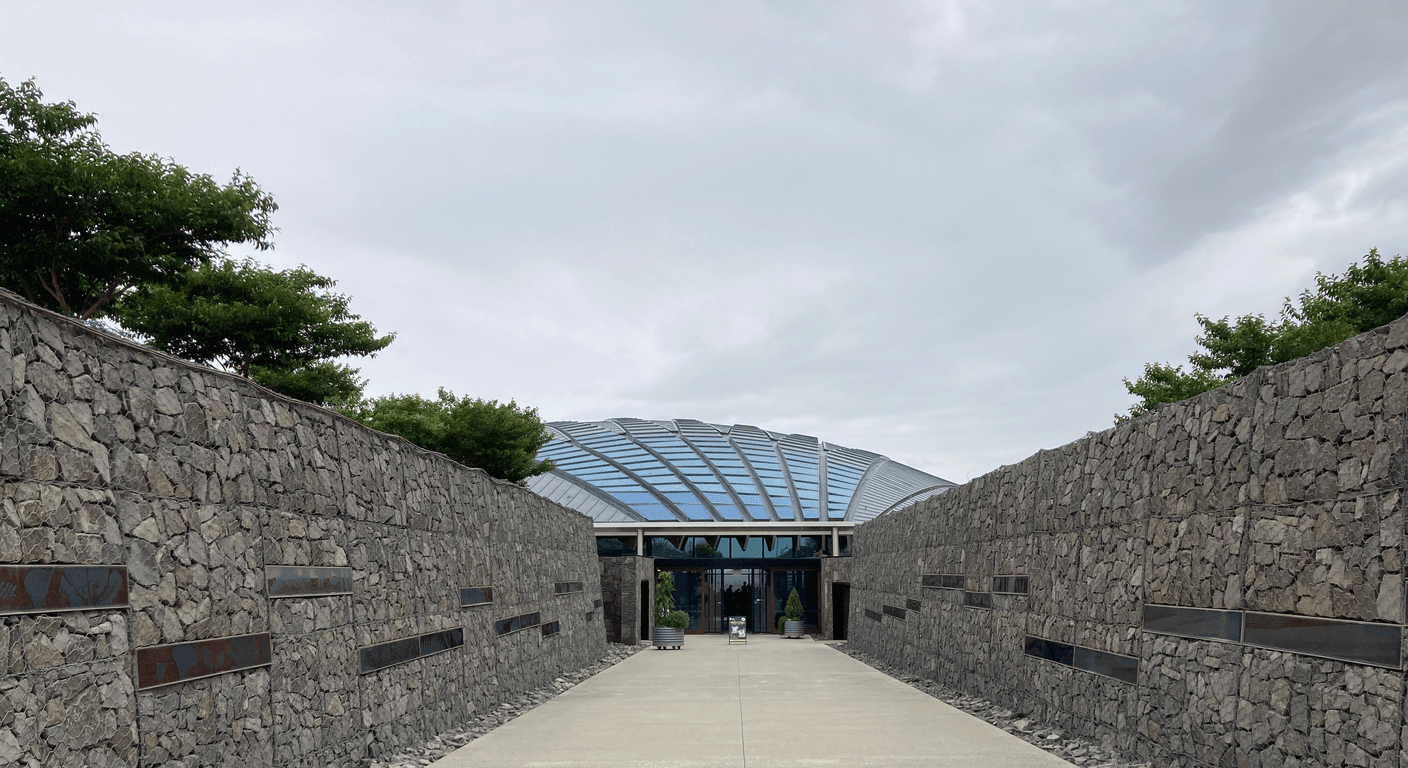
The architectural heart of the Arboretum is its Village Centre — a cluster of low, award-winning buildings designed to sit within the landscape rather than dominate it. The centre houses the Visitors Gallery, the Margaret Whitlam Pavilion, public toilets, and the Pod Playground cafe, which opens onto a terrace with long views across the forests and towards the Brindabella ranges. For anyone who wants a comfortable base from which to take in the site without committing to a full walk, the Village Centre is the practical starting point.
The cafe serves a straightforward menu of hot meals, light lunches and good coffee. Meals are indicatively priced around AUD 15 to 28, though you should confirm current pricing when you arrive or check online beforehand. The terrace seating is partly shaded and the views are genuinely worth lingering over — this is a place where an hour passes easily over a pot of tea and a view of the hills. For a traveller who enjoys hosting friends or family visiting from interstate, it is the kind of place that impresses without requiring any effort to explain.
The Village Centre also has a small gift shop and interpretive displays about the Arboretum's history and tree collections. Accessible parking bays are located close to the centre entrance, the paths immediately around the buildings are sealed and gentle, and the public toilets are accessible. For anyone with mobility considerations, this central hub means a worthwhile visit is entirely possible even without venturing onto the longer forest trails.
The bonsai collection: what makes it worth the detour?
Housed in a purpose-built pavilion near the Village Centre, the National Bonsai and Penjing Collection of Australia is free to enter and contains some of the most significant bonsai specimens in the Southern Hemisphere. The collection includes trees donated by Japanese and Chinese masters, as well as Australian-grown specimens trained over decades. Several of the oldest trees have the kind of quiet, considered presence that stops you mid-step.
For anyone with an interest in Japanese or Chinese garden culture — or simply in the patience and craft involved in training a living thing over generations — this collection is genuinely absorbing. Interpretive panels explain each specimen's history and origin, and the space is calm and unhurried. It is also well suited to travellers who find large outdoor areas tiring, since the pavilion itself is compact and the viewing is done at a slow, standing pace.
The bonsai pavilion is typically open during the Arboretum's standard operating hours, but hours can vary seasonally and for special events. Always check current opening times at nationalarboretum.act.gov.au before your visit, particularly if bonsai is the main reason you are making the trip. Entry remains free at the time of writing, but confirm this has not changed.
Can you do the Arboretum by car if walking is limited?
Yes — and this is one of the Arboretum's practical strengths for travellers managing joint pain, fatigue or any condition that limits walking distance. The internal road network loops through the forest pods, and there are designated pull-off points and small car parks at various forests. You can drive slowly, stop beside a cork oak grove or a Japanese cherry planting, lower the window and simply sit with the trees. It is unhurried and entirely legitimate — the site is designed to be experienced at many levels of physical engagement.
Some of the forest paths between pods are sealed or compacted gravel and are manageable with a walking stick or rollator, though the terrain is hilly in places and not all paths are flat. The Arboretum's website includes an accessibility map that is worth downloading before you visit, and the staff at the Visitors Gallery can advise on which routes suit your needs on the day. Do not assume the whole site is flat — the hills are real, and the views they create are part of the point.
For couples where one partner walks comfortably and the other prefers shorter distances, the Arboretum works well as a shared experience: one person can walk a forest loop while the other waits at a pull-off or returns to the Village Centre cafe. The internal roads are generally quiet and slow-moving, which makes this kind of flexible arrangement practical and safe.
When is the best time to visit for colour and comfort?
Autumn — roughly late March through May — is the season most travellers associate with the Arboretum, and with good reason. The deciduous forests shift through yellows, deep oranges and reds in a sequence that varies by species and by year. The Japanese cherry grove, the pin oaks and the maples each have their own peak, and because the pods are spread across the hillside, you often have good colour visible from the cafe terrace without walking far at all.
Spring brings a different kind of interest: the cherry blossoms are a genuine draw in September and October, and the Canberra air at that time of year tends to be clear and cool rather than cold. Summer is warm to hot in the capital and is generally not the most comfortable time for extended outdoor visits, though early morning arrivals before 9am can be pleasant. Winter visits have their own reward — low-angle light, bare branch structures, and far fewer visitors — but some cafe hours reduce in winter, so confirm in advance.
Canberra's climate is colder than most Victorian cities expect, particularly in autumn and winter evenings. Even on a mild April day, the temperature can drop quickly once you leave the sun. Layers are practical, and comfortable walking shoes with grip matter more than style on the gravel paths. The Arboretum does not feel crowded on weekdays outside of school holidays, which makes a midweek visit particularly relaxed.
Practical notes on parking, costs and planning your day
Entry to the Arboretum is free, but paid parking applies in the main Village Centre car park. Fees are indicatively around AUD 5 to 12 for a full day, though these figures are indicative only and you should confirm current rates at nationalarboretum.act.gov.au or on the parking signs when you arrive. The car park is well-signed from Tuggeranong Parkway and Bindubi Street. Accessible parking bays are available close to the Village Centre entrance.
A comfortable day at the Arboretum — including parking, a cafe lunch and a coffee — would indicatively cost two people somewhere around AUD 50 to 70 all up, though this depends entirely on what you order and current pricing. It is genuinely one of the better-value full-day experiences available in the ACT, particularly given the quality of the setting and the bonsai collection.
The Arboretum is generally open daily, with hours roughly 7am to 8pm in warmer months and shorter hours in winter — but always verify current hours on the official site before travelling, as they can change for events or maintenance. The Visitors Gallery and cafe have their own operating hours that may differ from the broader site. A phone call or a quick check of the website the day before your visit will save any disappointment, particularly if you are travelling a long distance specifically for this stop.
Quick planning guide
| Ideal pace | Self-paced — walk between pods or drive the loop and stop at pull-offs |
|---|---|
| Best months | Late March to May for autumn colour; September–October for cherry blossom; winter for quiet, low-light visits |
| Suggested stay | A full day, often as part of a two- or three-night Canberra stay |
| Mobility level | Easy — internal roads and sealed paths near the Village Centre suit walking sticks or rollators; some hillier forest trails require more effort |
| Cost level | Budget-friendly — free entry, with parking around AUD 5–12 and a cafe lunch for two roughly AUD 50–70 |
| Comfort level | Comfortable — accessible parking, sealed paths near the centre, accessible toilets, and a sheltered cafe terrace |
| Best for | Over-50s travellers, couples with differing mobility levels, and anyone interested in bonsai, trees or garden design |
| Main planning consideration | Confirm current opening hours, parking fees and cafe times at nationalarboretum.act.gov.au before travelling, especially from interstate |
Key takeaways
- Entry to the National Arboretum Canberra is free; paid parking is the main cost, indicatively around AUD 5–12 per day.
- The site's internal road network means the Arboretum is accessible to travellers who cannot manage long walks — you can experience the forests from a car.
- The National Bonsai and Penjing Collection is free to enter and holds some of the most significant bonsai specimens in the Southern Hemisphere.
- Autumn (late March to May) delivers the strongest foliage colour, but spring cherry blossom and quiet winter visits each have their own appeal.
- The Village Centre cafe terrace offers long views across 94 forest pods and the Brindabella ranges — a worthwhile stop in its own right.
- Always confirm current hours, parking fees and cafe times at nationalarboretum.act.gov.au before travelling, particularly from interstate.
Recommended partners and links
Indicative prices only — always confirm with the operator before booking.
Frequently asked questions
Is the National Arboretum Canberra free to enter?
Yes, entry to the National Arboretum Canberra is free. There is a paid car park at the Village Centre, with fees indicatively around AUD 5 to 12 per day — confirm current rates at nationalarboretum.act.gov.au before you visit.
Is the National Arboretum accessible for people with limited mobility?
The Village Centre area has sealed paths, accessible toilets and accessible parking bays close to the entrance. The internal road network allows much of the site to be experienced by car, with pull-off points at various forests. Some trails between pods are hilly and on compacted gravel. Download the accessibility map from the Arboretum's website or ask staff at the Visitors Gallery for current advice on suitable routes.
What is the best time of year to visit the National Arboretum for autumn colour?
Autumn foliage typically peaks between late March and May, with deciduous species including maples, pin oaks and Japanese cherries turning through yellows, oranges and reds. The exact timing varies by species and by year, so checking recent visitor reports or the Arboretum's social media in the weeks before your visit helps you time the trip well.
How do you get to the National Arboretum Canberra without a car?
Transport Canberra operates bus services connecting the city centre to the Arboretum precinct — use the journey planner at transport.act.gov.au for current routes and timetables. Taxis and rideshare services are also available for a direct transfer. If you are flying from Melbourne, hiring a car at Canberra Airport gives you the most flexibility for exploring the site's internal loops.
Is the bonsai collection at the National Arboretum worth visiting?
The National Bonsai and Penjing Collection of Australia is housed in a dedicated pavilion near the Village Centre and is free to enter. It holds significant specimens donated by Japanese and Chinese masters as well as Australian-grown trees trained over decades. The space is calm and compact, making it a good option for travellers who prefer a shorter, more contained visit. Confirm current opening hours at nationalarboretum.act.gov.au before travelling.