Grafton's jacaranda season peaks from late October to early November, when the Clarence River town's century-old trees form violet canopies over its flat, walkable streets. Best enjoyed as an overnight stay rather than a rushed day trip, the highlight is strolling Prince, Fitzroy and Victoria streets during the long-running Grafton Jacaranda Festival. Mobility is easy, with level, sealed footpaths throughout. Travellers from Victoria typically fly into Coffs Harbour and drive, or connect via NSW TrainLink rail and coach services from Sydney.
Why Grafton in October and November is Worth Crossing the Border
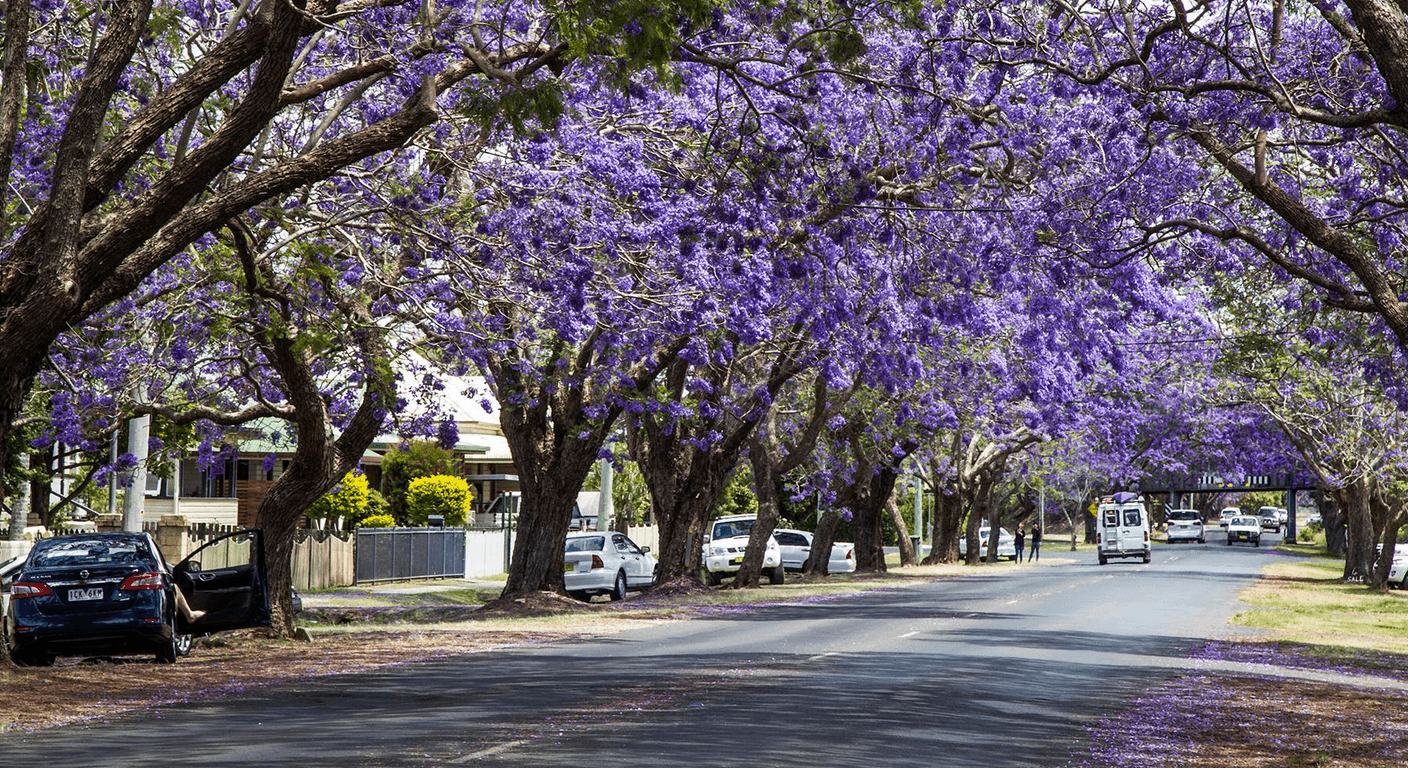
Grafton is a modest regional city on the Clarence River, about 650 kilometres north of Sydney and roughly 1,100 kilometres from Melbourne. For most of the year it goes quietly about its business. Then, from around the third week of October, the jacaranda trees — planted along the town's grid of streets well over a century ago — open into a haze of violet-blue that lasts for two to three weeks. The effect is cumulative and unhurried: walk one block and it is pleasant; walk five and it becomes something genuinely moving.
The Grafton Jacaranda Festival, which began in 1935, is considered Australia's longest-running floral festival. It is not a manufactured tourist event but a genuine community celebration, with a street parade, art shows, garden competitions, markets, and a programme that unfolds across the final days of October and the first days of November. For travellers who have seen plenty of organised tourism, there is something refreshing about a festival that still feels as though it belongs to the people who live there.
For Victorian travellers in their sixties and seventies, the timing is ideal. Late October sits in that sweet window before the real heat of a northern NSW summer, and the town's flat grid layout means you can spend three or four hours on foot without any significant inclines. If you are travelling as a couple or with a small group, Grafton rewards a slower pace — a picnic, a riverside sit, a long lunch — rather than a checklist approach.
Getting There from Victoria: Trains, Coaches, and Driving Options
Driving from Melbourne is possible but long — allow a full day each way, with an overnight stop sensible somewhere like Coffs Harbour or Port Macquarie. Most travellers from Victoria will find it more comfortable to fly into Coffs Harbour (the nearest regional airport, around 80 kilometres south of Grafton) and hire a car from there, or to travel by train to Sydney and connect onward by NSW TrainLink services.
NSW TrainLink operates coach and rail services along the North Coast corridor. From Sydney's Central Station, the Grafton service runs north via the North Coast line, with journey times of roughly eight to ten hours by train depending on the service. A connecting coach leg is sometimes required for the final stretch to Grafton itself — check current timetables and connections at nswtrainlink.info, as schedules do change. Indicative fares from Sydney to Grafton are roughly $40–$70 one way for standard seating, but confirm current pricing at booking. The Seniors Opal card and NSW senior rail concessions may apply for NSW residents; Victorian visitors should check eligibility.
For those who prefer to drive from northern Victoria or southern New South Wales, the route via the New England Highway through Tamworth and Armidale is a scenic alternative that avoids heavy coastal traffic. Grafton itself is well signposted from the Pacific Highway. Parking in the town centre is straightforward and largely free, though during festival week the main streets fill early on parade day.
Walking the Jacaranda Streets: A Flat, Unhurried Route
Grafton's great advantage for older travellers is its grid. The town was laid out with wide, tree-lined streets in the nineteenth century, and that foresight means today's visitor can walk a gentle circuit of the main jacaranda streets without any hills, stairs, or complicated navigation. Prince Street, Fitzroy Street, and Victoria Street are among the most photographed, with mature trees forming near-complete canopies overhead. Fallen blossoms carpet the footpaths in purple, which is as much a part of the experience as looking up.
A comfortable walking loop of the central streets takes around ninety minutes at a relaxed pace, with plenty of benches and café stops along the way. For anyone with mobility considerations, much of this route is on sealed, level footpaths. A walking stick or comfortable supportive shoes are wise; fallen blossoms can be slippery on wet days. The town's visitor information centre on the corner of Spring and Pound streets is a good starting point for a map and a friendly local recommendation.
If you prefer to take it even more slowly, the open-top sightseeing tour (run by local operators during festival week — check the festival website for current operators) allows you to see the canopy streets from a seat. This is worth considering if one person in your party has limited walking stamina, so neither of you needs to rush or skip anything.
See Park and the Clarence Riverbank: Where to Sit and Breathe
See Park, on the edge of the town centre near the Clarence River, is Grafton's best picnic base during jacaranda season. It is flat, shaded, and spacious enough that even on a busy festival weekend you can find a quiet patch of grass. There are public toilets nearby, which matters more than any guidebook usually admits. Bring a rug, something to eat from the town's bakeries or the festival market stalls, and plan to spend an hour here rather than five minutes.
The Clarence River itself is broad and calm at Grafton, with a long grassy bank that invites an easy riverside walk. The old Grafton Bridge — a double-deck rail and road bridge opened in 1932 — frames the view upstream and gives the town a photogenic anchor. Walking along the riverbank at a slow pace, with the jacaranda trees behind you and the wide river ahead, is one of those simple pleasures that travel can still deliver without effort or expense.
Birdlife along the Clarence is active in the early morning and late afternoon — rainbow lorikeets in the jacaranda canopy are almost guaranteed. If you travel with binoculars, pack them. The riverbank walk from See Park north toward the bridge and back is around two kilometres return on flat ground, making it a manageable and rewarding late-afternoon option before dinner.
The Festival Itself: What to Expect and How to Pace It
The Grafton Jacaranda Festival typically runs across the last four or five days of October and into early November, with the Street Parade as its centrepiece event, usually held on the Saturday. The parade draws floats, marching bands, community groups, and the crowning of the Jacaranda Queen — a tradition that has continued since the festival's early decades. It is genuinely charming, and the crowd watching from the footpath is multigenerational and relaxed.
Beyond the parade, the festival programme includes art exhibitions, garden competitions, markets, and twilight events. Many of these are free or low cost. The Grafton Regional Gallery, on Fitzroy Street, often hosts festival exhibitions and is worth an hour of anyone's time regardless of the season. Check the official festival website at jacarandafestival.com.au for the full 2026 programme, as specific events and ticketing are confirmed closer to the date.
Festival week does bring crowds to a small town. Accommodation fills early — particularly for the parade weekend — so if you are planning to stay overnight, book well ahead. Weekday visits in the final week of October, when the trees are in full bloom but the peak weekend crowds have not yet arrived, offer a more peaceful experience. For a traveller who values being able to sit quietly under a jacaranda with a cup of tea, Tuesday to Thursday can be the best days.
Staying Overnight: Why a Night in Grafton Changes the Experience
A rushed day trip from Melbourne to Grafton is not realistic — the distances do not allow it unless you are flying in. But even for those travelling from Sydney or northern New South Wales, staying one or two nights in Grafton rather than driving in and out on the same day transforms the visit. The evening light on jacaranda streets, with the blossoms backlit and the town quieter, is a different thing entirely from the midday version.
Grafton has a range of accommodation from motel-style rooms to heritage bed-and-breakfast properties in the town's older residential streets. Indicative motel rates during festival week run roughly $130–$200 per night for a standard room — confirm current rates directly with properties, as festival-week pricing varies. The town's main streets have enough restaurants and cafés for a relaxed dinner without any fuss, with a focus on familiar, honest food rather than fine dining.
For a couple, the rhythm of an overnight stay might look like this: arrive mid-afternoon, walk the main streets before the evening light fades, find a riverside spot for a quiet drink, have dinner in town, and wake early the next morning to walk the streets again before the day-trippers arrive. That second morning walk — when the footpaths are still damp with dew and the blossoms have just opened for the day — is the one people tend to remember.
Practical Notes for Travellers Over 60
Grafton's flat layout is genuinely accessible for most mobility levels, though the footpaths in older residential streets can be uneven in places. Comfortable, supportive walking shoes are more useful than fashion here. If you use a walking frame or lightweight wheelchair, the main commercial streets and See Park are navigable; some of the quieter residential streets with fallen blossoms may need more care underfoot.
The jacaranda bloom is weather-dependent and varies year to year. A wet October can delay or shorten the season; a dry, warm October tends to produce the most vivid display. The festival dates are fixed, but peak bloom does not always coincide perfectly with peak festival weekend. Checking local social media or the Clarence Valley Council tourism page in the week before you travel gives a realistic picture of current bloom.
Travel insurance is worth carrying for any interstate trip at this age, particularly given the distances involved from Victoria. If you are combining Grafton with a broader North Coast itinerary — Coffs Harbour, Byron Bay, the Tweed — allow yourself genuine rest days rather than filling every hour. The best travel at this stage of life tends to be the kind where you arrive somewhere, sit down, and decide to stay a little longer than planned.
Quick planning guide
| Ideal pace | Slow-paced, unhurried walking with regular stops |
|---|---|
| Best months | Late October to early November (jacaranda bloom and festival) |
| Suggested stay | One to two nights, though a long day trip is possible for those already on the North Coast |
| Mobility level | Easy — flat grid streets, level sealed footpaths, some uneven patches in older residential areas |
| Cost level | Budget-friendly — free streets and parade, low-cost festival events |
| Comfort level | Casual and relaxed, with benches, cafés and public facilities along the main routes |
| Best for | Couples or small groups over 60 who prefer a gentle pace over a packed itinerary |
| Main planning consideration | Book accommodation well ahead for parade weekend, and check bloom timing before travelling since it is weather-dependent |
Key takeaways
- Grafton's jacaranda season runs from roughly the third week of October through early November, with peak bloom lasting two to three weeks.
- The Grafton Jacaranda Festival, first held in 1935, is Australia's longest-running floral festival and centres on a community street parade.
- Grafton's flat grid of tree-lined streets is well suited to slow walking for travellers with limited mobility or those who simply prefer a gentle pace.
- See Park offers a flat, shaded picnic base near the Clarence riverbank, with public facilities and easy access from the town centre.
- NSW TrainLink operates coach and rail services to Grafton from Sydney on the North Coast line; confirm current timetables and fares at nswtrainlink.info.
- Staying one night in Grafton rather than attempting a rushed return visit allows you to experience the streets in morning and evening light, which is when they are at their quietest and most beautiful.
Recommended partners and links
Indicative prices only — always confirm with the operator before booking.
Frequently asked questions
When exactly do the jacaranda trees bloom in Grafton?
Grafton's jacaranda trees typically begin blooming in the third week of October and reach their peak in the final days of October and the first week of November. Peak bloom lasts roughly two to three weeks but varies with seasonal conditions. Check the Clarence Valley Council tourism page or local social media in the week before you travel for a current bloom report.
How do you get to Grafton from Melbourne by public transport?
There is no direct train from Melbourne to Grafton. The most practical public transport route is to fly or take a train to Sydney, then connect with NSW TrainLink services north along the North Coast corridor to Grafton. A coach leg may be part of the journey depending on the service. Check current timetables at nswtrainlink.info and confirm connection details at booking, as schedules change.
Is the Grafton Jacaranda Festival free to attend?
Many of the festival's core events — including watching the street parade from the footpath, walking the jacaranda streets, and visiting See Park — are free. Some ticketed events such as dinners, garden tours, or evening entertainment carry a cost. Check the official festival programme at jacarandafestival.com.au for the full 2026 event list and any ticketed pricing.
Is Grafton suitable for travellers with limited mobility?
Grafton's town centre and main jacaranda streets are largely flat and on sealed footpaths, making it more accessible than many regional towns. See Park and the Clarence riverbank are also flat and easy to navigate. Some older residential footpaths can be uneven, and fallen jacaranda blossoms can be slippery when wet. A walking stick and supportive shoes are advisable; contact Clarence Valley Council tourism for specific accessibility information.
How far ahead should accommodation be booked for festival week?
For the peak parade weekend — usually the last Saturday of October — accommodation in Grafton fills several months in advance. Weekday stays in the final week of October are easier to secure but should still be booked at least six to eight weeks ahead. Contact properties directly or search through standard booking platforms; the Clarence Valley Council visitor page also lists local accommodation options.