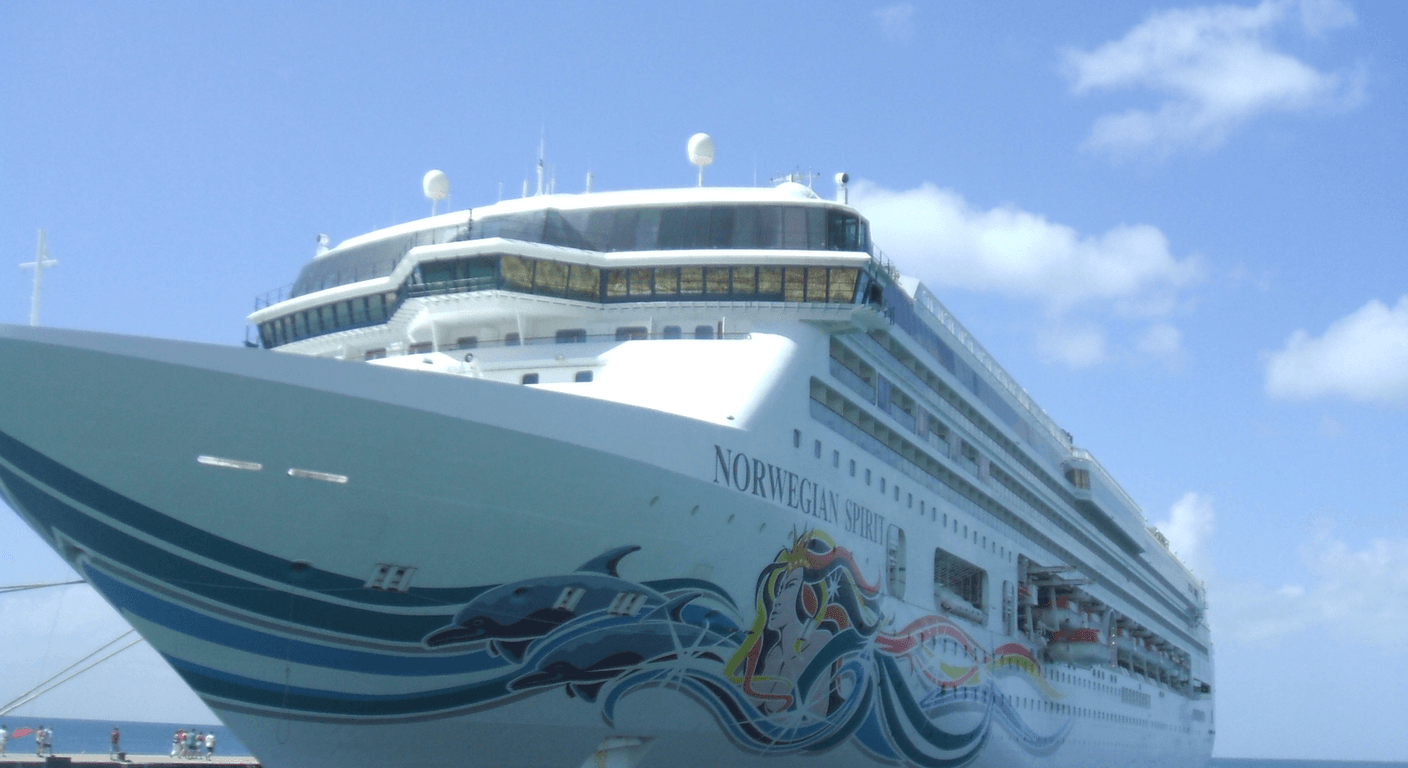
Norwegian Spirit is a mid-sized NCL ship (2,018 guests at double occupancy) suited to independent-minded over-50s who want freestyle dining and a manageable scale. She sails itineraries across Asia, Europe and the Pacific depending on the season — confirm current deployment on ncl.com. Mobility rating: Moderate (some tender ports and uneven decks). Australians typically fly via Singapore or Dubai to join embarkation ports; allow a recovery night before sailing. Best months depend on itinerary region.
What kind of ship is Norwegian Spirit, really?
Built in 1998 and refurbished in 2020, Norwegian Spirit carries around 2,018 passengers at double occupancy across 12 passenger decks. She's not a floating resort with a go-kart track. She's a proper mid-sized cruise ship — big enough to have multiple restaurants, a full spa, a theatre and several bars, but small enough that you won't spend ten minutes walking to dinner. For a 68-year-old travelling solo, that distinction matters more than the brochure ever admits.
The 2020 refurbishment added new dining venues, refreshed cabin interiors and improved some public spaces. She's not brand new, and she doesn't pretend to be. What she offers is a well-worn confidence — a ship that knows what it is. The passenger mix on Spirit tends toward an older demographic than NCL's flashier mega-ships, which suits most over-50s just fine.
Her gross tonnage sits at around 75,338 GT, which puts her firmly in the mid-size category. Deck plans are available on ncl.com and worth studying before you book — the layout is logical, the lift placements are reasonable, and the main pool deck doesn't feel like a theme park. That's a low bar, but it's a bar Spirit clears comfortably.
Cabin categories: what to book and what to avoid
Spirit's cabin categories run from Inside (the most compact) through Oceanview, Balcony, Mini-Suite and Suite. For solo travellers, the critical question is not which category looks nicest in the photos — it's whether you're being charged a single supplement to occupy a double cabin alone. On most categories, NCL does charge a supplement. It can be steep: sometimes 50–100% above the per-person double rate, occasionally more depending on itinerary and availability. That's real money. Ask before you book.
NCL introduced Studio cabins on some ships specifically to solve this — compact single-occupancy cabins priced without a supplement, with access to the Studio Lounge, a private social space for solo travellers. Check ncl.com carefully to confirm whether Spirit currently has Studio cabins; fleet refurbishments change configurations, and this guide cannot guarantee their presence on Spirit at the time you're reading this. If they're available on your sailing, they're worth serious consideration. The lounge alone — a quiet, convivial space where solo travellers actually meet each other — changes the social dynamic of travelling alone.
Balcony cabins are the most popular choice for over-50s on Spirit, and for good reason: a private outdoor space to drink your morning coffee, watch a port approach, or simply sit quietly after a long shore day. Ask specifically about cabin location relative to lifts and the main dining venues — a cabin at the far end of a long corridor from the lifts adds up over a 14-night sailing. Accessible staterooms with roll-in showers and wider doorways are available; request one at booking, confirm it in writing, and follow up closer to departure. NCL's accessibility team can be reached via the official site — do not leave this to chance.
Freestyle dining: what it actually means day to day
NCL's freestyle dining model means no assigned dining times, no fixed table, no dressing for dinner by 6:30 or missing your sitting. You eat when you're hungry. For solo travellers especially, this removes one of the more socially awkward rituals of traditional cruising — being seated with strangers at a set time whether you want company or not. On Spirit, you can dine at the main restaurant at 7:30 one night and grab something lighter at 9:00 the next. That flexibility is genuine, not just marketing.
Spirit has several dining venues — a main dining room, a buffet (The Garden Café, open extended hours), and a handful of specialty restaurants where you'll pay a cover charge or à la carte supplement. The specialty venues vary by current configuration; confirm what's aboard on your specific sailing via ncl.com. Indicatively, specialty dining surcharges can run from around USD $20–$50 per person per meal — worth it for a change of scene on a longer sailing, less essential if you're on a short itinerary. Some NCL fare packages include dining credits; read the fine print on what's actually included.
The buffet gets a bad reputation it doesn't always deserve. On Spirit it's a practical, well-stocked option for early risers who want breakfast before a full shore day, or for a light lunch when you're back aboard and not ready for a sit-down meal. The hours matter: check the daily programme (delivered to your cabin each evening) to know when venues open and close. Missing the buffet closure by ten minutes when you've just walked five kilometres around a port town is a specific kind of misery that a little planning prevents.
What does a typical shore day actually look like?
This is the information most cruise guides skip entirely, so let's be specific. On a port day with a booked NCL shore excursion, you'll typically receive a meeting time and location the evening before — often 8:00 or 8:30 in the atrium or a designated lounge. Disembarkation for excursions happens in waves; you'll wait in a lounge or public area, sometimes 20–30 minutes, before your group is called. Build that into your mental schedule. It's not wasted time if you know it's coming — it's when you sit, have a coffee, check your bag.
Once ashore, a half-day excursion typically runs three to four hours including travel. A full-day runs six to eight. The bus ride each way can be 30–60 minutes depending on the port — Civitavecchia to Rome is a solid 60–90 minutes each way, which eats significantly into your day in the city. Know this before you book. Comfort stops on NCL excursions are usually called every 90 minutes or so on coach routes, but this varies by guide and itinerary — ask at the excursion desk when you board. If bladder timing is a consideration (and for many over-50s it is, without any shame attached), that's a practical question worth asking directly.
All-aboard time is non-negotiable. The ship does not wait. NCL excursions guarantee return in time; independent touring does not. For first-time solo cruisers, or anyone unfamiliar with a port, the NCL excursion premium — and it is a premium over independent options — buys you that guarantee and a guide who knows the ground. For experienced independent travellers, the calculus is different: a private car, a local guide booked through a reputable agency, or even a good walking map can deliver a far richer day. Just build in a time buffer that would embarrass you if you used it — and then add another 20 minutes.
Accessibility and pacing honestly assessed
Spirit has lifts on all passenger decks and accessible staterooms with roll-in showers, grab rails and wider doorways. The ship's corridors are manageable — not the kilometre-long passages of the newest mega-ships. Public venues are generally step-free within the ship itself. Where accessibility gets complicated is at ports. Some of Spirit's itinerary ports require tender transfer — you board a small boat to reach shore — which involves stepping across a gap and climbing a short ladder or ramp. This is genuinely difficult if you have significant mobility limitations, and on a rough-weather day it can be cancelled entirely. Check the specific ports on your itinerary and ask NCL directly which are tender ports before booking.
Gangway access at dock ports varies by location and tidal conditions — sometimes it's a gentle walk-off, sometimes it's a steep ramp with a handrail. Portable ramps and crew assistance are available; request assistance in advance through NCL's access desk rather than hoping someone notices on the day. The spa and fitness centre are accessible, the theatre has designated seating areas, and the pools have lift access on most NCL ships — confirm Spirit's current configuration at ncl.com.
Pacing on a cruise is genuinely self-directed in a way that land-based group touring is not. Sea days are yours entirely — no schedule, no coach, no group. That's the secret advantage of cruising for over-50s who need recovery time between big days. Build sea days deliberately into your itinerary preference when choosing between sailings. A 10-night sailing with five sea days and five ports is a very different physical experience from one with eight ports and two sea days.
Solo female traveller on Norwegian Spirit: a frank assessment
Cruising solo as a woman over 60 has specific rhythms that couples-focused cruise guides don't address. Safety aboard a mainstream cruise ship like Spirit is generally not a concern — it's a controlled, staffed environment with CCTV and a crew-to-passenger ratio that keeps things orderly. What does require thought is the social dimension. Dining alone at a table for one in the main restaurant is perfectly acceptable and the staff will not make it awkward — but if you'd rather company, ask to be seated at a shared table. Most solo diners find this the easiest conversation-starter on the ship.
The Studio Lounge (if available on your sailing — confirm this) is worth repeating here. It's not a singles bar. It's a quiet room where solo travellers gravitate because it's theirs, and conversations happen naturally over morning coffee or an evening drink. Some of the more useful travel intelligence — which shore guide is worth the extra cost, which specialty restaurant is genuinely better than the main dining room — circulates through that lounge faster than any official channel.
Shore days solo require a bit more planning than they do for couples. Travelling independently in port as a solo woman means being deliberate about your route, your timing, and your communication with the ship. Take a ship card with the vessel's contact details and the port agent's number. Download offline maps before you leave the ship — roaming data charges at overseas ports can be startling. And tell someone — the excursion desk, a new acquaintance from the lounge — where you're headed, approximately. This isn't fearfulness. It's the same practical common sense that's served independent women travellers well for decades.
Getting there from Australia: the flight reality
Norwegian Spirit is not based in Australia. Her itineraries are typically in Asia, Europe or occasionally other regions — confirm current deployment on ncl.com before planning anything. That means Australian travellers are flying internationally to join the ship, and that flight is a significant part of the trip in cost, time and physical toll.
From Melbourne, Sydney or Brisbane to common embarkation ports like Singapore, Hong Kong, Barcelona or Rome, expect flights of 8–22 hours depending on routing and stopovers. A direct Melbourne–Singapore flight is around 8 hours; Melbourne to Rome involves at least one stopover and typically 22–26 hours of travel time. Arrive the day before embarkation at minimum — ideally two nights before if you're flying from the east coast to Europe. Jet lag is not a minor inconvenience on a cruise; arriving exhausted and disoriented on embarkation day means you spend your first two sea days recovering instead of enjoying them.
Travel insurance for Australians over 50 with any pre-existing conditions requires careful reading. Policies vary significantly in what they cover at sea and in foreign ports. The Australian Government's Smartraveller website (smartraveller.gov.au) has current advisories for all destination countries — check it before you finalise, and register your trip. Medicare does not cover medical treatment aboard a cruise ship or in foreign ports. NCL ships have onboard medical facilities, but treatment costs are charged to your onboard account and can be substantial. Ensure your policy covers medical evacuation and cruise-specific cancellation scenarios.
Quick planning guide
| Ideal pace | Freestyle dining and no fixed seatings suit self-directed travellers; build in afternoon rest time on sea days |
|---|---|
| Best months | Depends entirely on itinerary region — Asia Nov–Mar, Europe May–Sep; confirm current Spirit deployment on ncl.com |
| Suggested stay | 7–14 nights typical; add 1–2 nights at embarkation city for jet lag recovery |
| Mobility level | Moderate — lifts throughout, accessible staterooms available, but some ports are tender-only |
| Cost level | Fares vary widely by itinerary and cabin grade; confirm current pricing with NCL or a licensed Australian cruise travel agent |
| Comfort level | Mid-premium; comfortable rather than ultra-luxury, well-suited to value-conscious mature travellers |
| Best for | Solo travellers, couples, culturally curious over-50s who prefer a mid-sized ship over a mega-vessel |
| Main planning consideration | Single supplement can be significant on NCL; ask specifically about Studio cabins (solo-designed, no supplement) or current solo promotions before committing |
Key takeaways
- Norwegian Spirit carries around 2,018 guests at double occupancy — a mid-sized ship that's easier to navigate than today's mega-vessels.
- NCL's freestyle dining means no fixed seatings, no assigned tables, and the freedom to eat when you're actually hungry.
- Solo travellers should ask specifically about Studio cabins (no single supplement) before accepting a surcharge on a double cabin.
- Some itinerary ports require tender transfer — confirm which ports apply to your sailing before booking if mobility is a factor.
- Fly in at least one night early — two nights for European embarkations — to avoid spending your first sea days recovering from the flight.
- Check smartraveller.gov.au for destination advisories and ensure your travel insurance covers onboard medical treatment and evacuation.
Recommended partners and links
Indicative prices only — always confirm with the operator before booking.
Frequently asked questions
Does Norwegian Spirit have accessible cabins for passengers with mobility limitations?
Yes. Norwegian Spirit has accessible staterooms with features including roll-in showers, grab rails and wider doorways. Request an accessible cabin at the time of booking, confirm it in writing, and contact NCL's accessibility desk before departure to arrange any additional assistance. Accessibility at ports varies — some require tender transfer, which may not be suitable for passengers with significant mobility limitations. Confirm specific port conditions for your itinerary via ncl.com.
Does NCL charge a single supplement on Norwegian Spirit, and is there a way to avoid it?
NCL typically charges a single supplement for solo travellers occupying double-occupancy cabins, which can add 50–100% or more to the per-person fare. The best way to avoid this is to ask specifically about Studio cabins — single-occupancy cabins designed for solo travellers with no supplement — if available on your sailing. Availability varies by ship configuration and deployment; confirm with NCL or a licensed Australian cruise agent before booking.
What itineraries does Norwegian Spirit currently sail?
Norwegian Spirit has sailed itineraries in Asia, Europe and other regions. Deployment changes seasonally and year to year. The only reliable source for current Spirit itineraries is ncl.com — check there directly or ask a licensed Australian cruise travel agent who can access current inventory.
Is Norwegian Spirit a good choice for a solo female traveller over 60?
Norwegian Spirit suits independent-minded solo female travellers well. The freestyle dining model removes the social pressure of fixed seatings, the ship's mid-size scale is manageable, and the onboard environment is staffed and generally safe. Solo travellers benefit from the Studio Lounge (if available on the sailing) as a natural social space. Shore days require standard independent-traveller planning: offline maps, ship contact details, and sensible time buffers before all-aboard.
How far in advance should Australians book a Norwegian Spirit cruise?
There's no single rule, but popular itineraries in peak seasons (European summer, Asian winter) can fill early, particularly accessible cabins and any solo-specific cabin categories. Booking 9–12 months out gives the best choice of cabin and itinerary. That said, last-minute fares do appear — a licensed Australian cruise agent with NCL access can advise on current availability and any solo promotions running at the time.