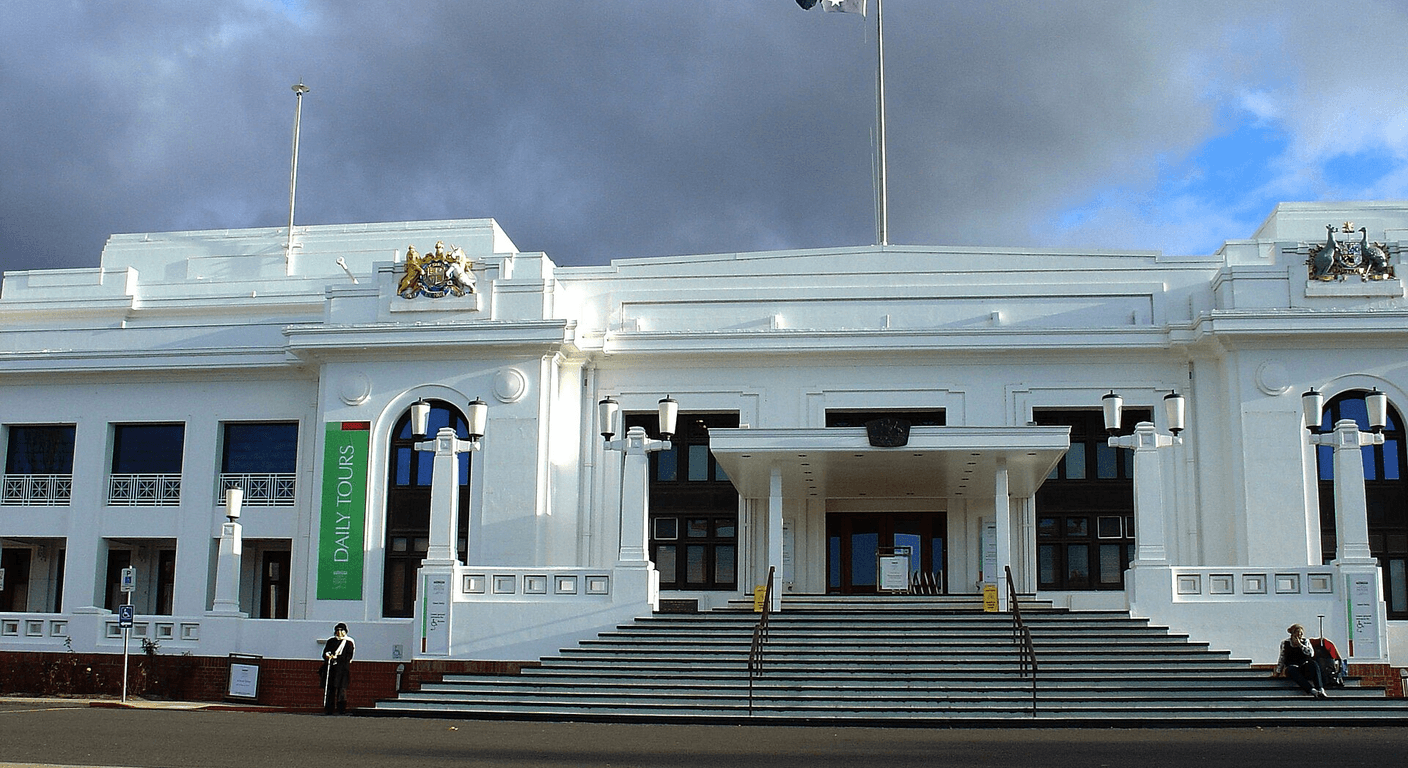
The Museum of Australian Democracy at Old Parliament House in Canberra is best visited in autumn or spring, when the parliamentary precinct is at its most pleasant. Allow half a day, or a full two-night Canberra stay to pair it with nearby galleries. The defining highlight is sitting in the original, intact House of Representatives and Senate chambers. Mobility is moderate — lifts and step-free ground-floor access exist, but heritage corridors are narrow and uneven. Access is straightforward via Transport Canberra buses, taxi or rideshare into the parliamentary triangle.
Why Old Parliament House still matters for travellers who remember it
There is a particular pleasure in visiting a building that you have seen on the evening news for decades and can now simply walk through at your own pace. Old Parliament House — formally home to the Museum of Australian Democracy, known as MoAD — served as Australia's seat of government from 1927 until 1988, and the corridors carry that history in a way that is almost physical. The timber panelling, the modest ministerial offices, the cramped press gallery: none of it has been glossed over into a theme-park version of itself.
For travellers in their sixties and seventies, especially those with memories of watching Gough Whitlam on a black-and-white television set or listening to Robert Menzies on the wireless, the experience is genuinely evocative rather than merely educational. The building does not ask you to feel anything; it simply places you in the rooms where those events unfolded, and the feeling arrives on its own. That quality is rare in a museum, and worth a day of your itinerary.
What does entry to the Museum of Australian Democracy actually cost?
Entry to MoAD is deliberately modest — widely described as one of Canberra's most affordable cultural experiences. Indicative adult admission has historically been in the range of a few dollars, with concession pricing available. Always confirm the current fee directly with the museum at moadoph.gov.au before you travel, as pricing can be updated. Some special exhibitions may carry a separate charge, so it is worth checking what is on during your visit.
The low cost is not reflected in the quality of access. A token entry fee gets you into the full run of the 1927 building, including the House of Representatives chamber, the Senate chamber, the prime ministerial suite, and the press gallery corridors — areas that took decades of political life to shape. For a couple travelling together, this is an exceptional return on a very small outlay, and the kind of place where two hours can quietly become four.
How accessible is the building for older or mobility-conscious visitors?
Old Parliament House was not built with modern accessibility in mind — it dates from 1927, after all — but MoAD has made genuine efforts to improve access over the years. Lifts serve the upper floors, meaning the press gallery level and the main exhibition spaces can be reached without stairs. The ground floor chambers and the main foyer are step-free from the main entrance. It is worth noting that some of the older corridors are narrow and the building has the slightly uneven character of a heritage structure, so anyone using a walking frame or a wider mobility aid should check current access arrangements directly with the museum before visiting.
The parliamentary triangle precinct is flat and easy to navigate on foot between the main attractions, which is useful if you are combining MoAD with a walk to the new Parliament House or the National Portrait Gallery nearby. The terrace café at the rear of the building looks out over the parliamentary axis toward the lake, and the seating is comfortable — a good place to rest mid-visit rather than pushing through the whole building in one go. Pacing yourself is simply sensible here; the building rewards a slow approach.
What will you actually see inside — the chambers, the offices, the press gallery?
The House of Representatives chamber is the centrepiece, and it is smaller than you might expect from television footage — which is itself part of what makes it affecting. The green leather benches, the Speaker's chair, the despatch boxes: all of it is intact and open for you to sit in and absorb. The Senate chamber, in its burgundy tones, sits at the other end of the building and is equally well preserved. These are not reconstructions; they are the actual rooms where Australia's postwar political life was conducted.
The prime ministerial suite, which served leaders from Scullin through to Hawke in his first term, has been restored to reflect different periods of occupation. Walking through a modest office that once belonged to a prime minister, with its period telephone and wooden desk, is a grounding experience — a reminder that the machinery of government operated in surprisingly ordinary surroundings. The press gallery corridors on the upper floor are narrow and atmospheric, and the interpretive material there is well written without being condescending.
MoAD also runs a rolling programme of temporary exhibitions and some live or recorded performance elements — political speeches, archival footage, interactive displays on how democracy works. The calibre of these varies, but the permanent building itself is consistently worthwhile regardless of what is showing. Check the museum's website for current exhibition listings and any ticketed events that might suit your interests during your stay.
How do you get there, and where do you stay nearby?
Old Parliament House sits on King George Terrace in the parliamentary triangle, a short walk from the National Portrait Gallery and the new Parliament House. If you are staying in the Civic or Kingston precincts — both popular with independent travellers — Transport Canberra buses run into the parliamentary triangle; confirm current routes and fares at transport.act.gov.au. The precinct is also very manageable by taxi or rideshare if walking distances are a consideration.
Canberra's accommodation options have improved considerably in recent years. The Burbury Hotel in Barton and the Realm precinct hotels are close to the parliamentary triangle and are comfortable without being oversized. For couples who prefer a quieter base, the Kingston and Manuka neighbourhoods offer good cafés and restaurants within easy reach. Canberra rewards a two-night stay — one day for the parliamentary precinct and one for the National Gallery of Australia or the Australian War Memorial, both of which are free entry.
The terrace café and taking the afternoon slowly
The café at Old Parliament House occupies the rear terrace and looks directly down the parliamentary axis toward Lake Burley Griffin and the Captain Cook Memorial Jet. On a clear Canberra day — and Canberra has many of them, particularly in autumn and spring — this is one of the more quietly pleasurable places to sit in the national capital. The menu is straightforward café fare; do not expect fine dining, but it is perfectly adequate for a light lunch or a pot of tea between galleries.
For a couple travelling together, the terrace is a natural mid-point in the visit: take the morning for the chambers and the prime ministerial suite, have lunch on the terrace, and return for the press gallery and any temporary exhibitions in the afternoon. The building closes in the late afternoon, so an early arrival gives you the most comfortable pace. Confirm opening hours at moadoph.gov.au, as they can vary on public holidays and during special events.
Combining MoAD with the wider Canberra cultural circuit
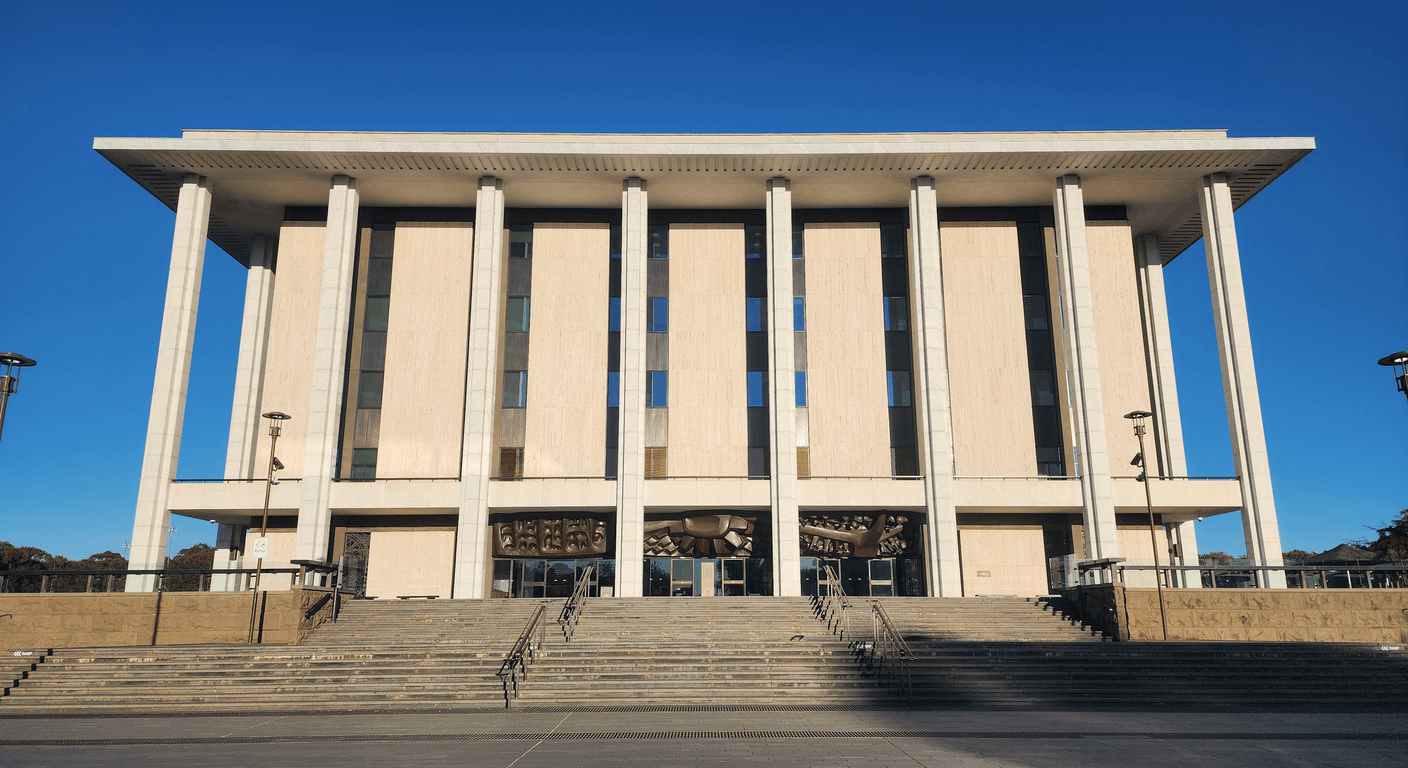
The Museum of Australian Democracy sits at the heart of what is genuinely one of Australia's strongest concentrations of cultural institutions. Within easy reach — many of them free — are the National Gallery of Australia (ngv.gov.au is the Victorian gallery; the national one is nga.gov.au), the National Portrait Gallery, the National Library of Australia, and the new Parliament House, which also offers free public access and guided tours. The Australian War Memorial in Campbell is a short drive or bus ride away and remains one of the country's most affecting museum experiences.
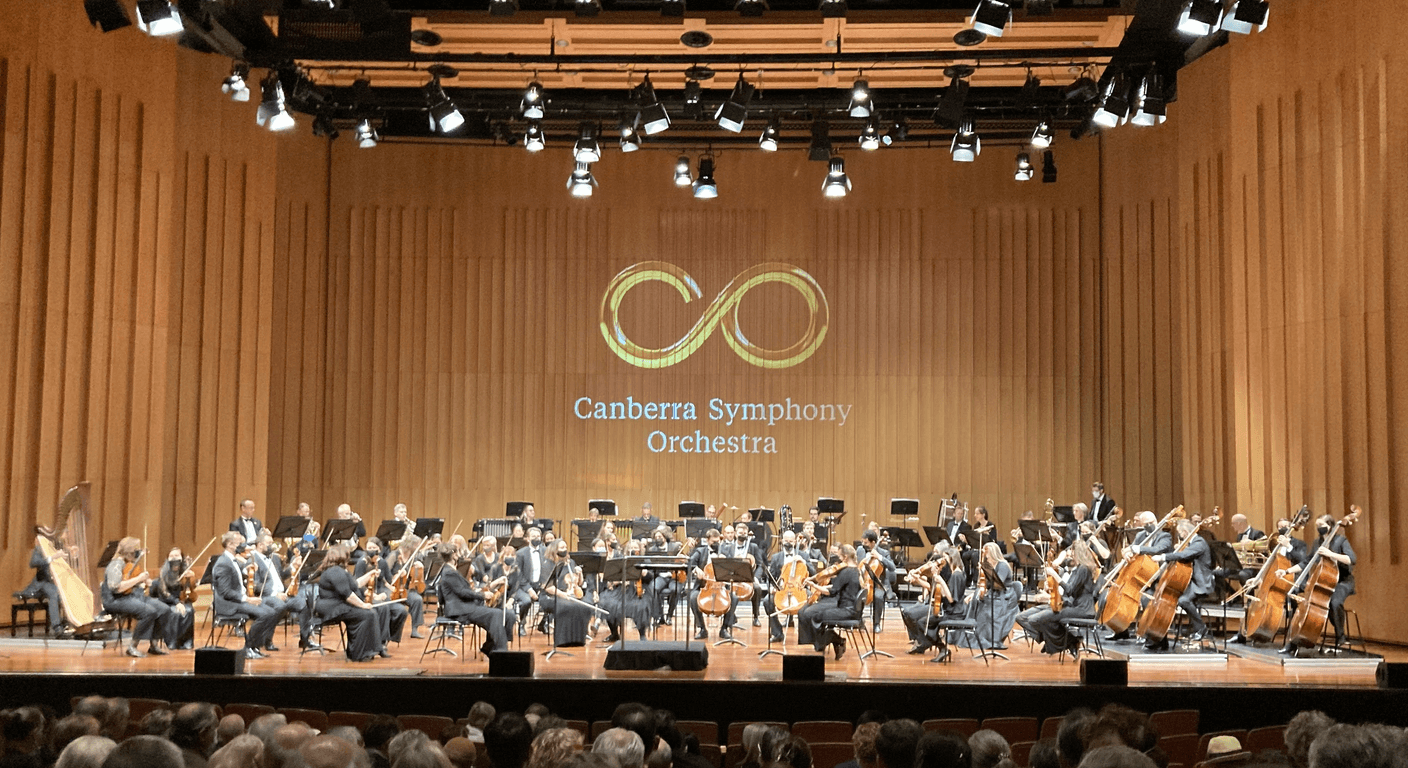
For travellers who enjoy live performance alongside visual culture, Canberra's Llewellyn Hall at the Australian National University hosts classical concerts, and the Canberra Theatre Centre programmes drama, dance and comedy throughout the year. Neither is directly connected to MoAD, but they are worth folding into a longer Canberra stay. The city has a reputation for being quiet after dark, which suits many travellers in this age group rather well — early dinners in Kingston or Manuka, and a proper night's sleep before another day of unhurried cultural exploration.
Quick planning guide
| Ideal pace | Slow and unhurried |
|---|---|
| Best months | Autumn and spring |
| Suggested stay | Half a day at the museum; two nights in Canberra overall |
| Mobility level | Moderate — lifts serve upper floors and the ground floor is step-free, but some heritage corridors are narrow and uneven |
| Cost level | Budget-friendly — token entry fee, under $30 |
| Comfort level | Comfortable, with a terrace café suited to rest breaks |
| Best for | Couples who enjoy history at their own pace, particularly those with personal memories of the era |
| Main planning consideration | Confirm current entry fee, opening hours and access arrangements at moadoph.gov.au before visiting |
Key takeaways
- The Museum of Australian Democracy charges only a token entry fee — confirm the current price at moadoph.gov.au before you visit.
- Lifts serve the upper floors, making the press gallery and main exhibition spaces accessible without stairs.
- The House of Representatives and Senate chambers are original and intact — not reconstructions — and open for visitors to sit in.
- The terrace café overlooks the parliamentary axis toward Lake Burley Griffin and is a comfortable place to pace a long visit.
- Old Parliament House is within walking distance of the National Portrait Gallery and the new Parliament House, making it the natural anchor for a full day in the parliamentary triangle.
- Autumn and spring are the most comfortable seasons for the Canberra parliamentary precinct, with mild temperatures and clear skies.
Recommended partners and links
Indicative prices only — always confirm with the operator before booking.
Frequently asked questions
How much does it cost to enter the Museum of Australian Democracy at Old Parliament House?
Entry has historically been a modest, token fee — indicatively just a few dollars for adults, with concession pricing available. Always confirm the current admission price directly at moadoph.gov.au before your visit, as pricing is subject to change. Some special or temporary exhibitions may carry a separate charge.
Is Old Parliament House accessible for visitors with mobility concerns?
Lifts serve the upper floors and the main ground-floor chambers are accessible from the main entrance. The building is a 1927 heritage structure, so some corridors are narrow and surfaces are uneven in places. Visitors using walking frames or wider mobility aids should contact the museum directly at moadoph.gov.au to confirm current access arrangements before their visit.
How long should you allow for a visit to MoAD?
A comfortable, unhurried visit typically takes between two and four hours, depending on your interest in the temporary exhibitions and interpretive displays. Arriving in the morning and using the terrace café for a mid-visit break is a practical approach that avoids fatigue. Confirm current opening hours at moadoph.gov.au, as they vary on public holidays.
Can you visit Old Parliament House and the new Parliament House on the same day?
Yes — the two buildings are a short walk apart along the parliamentary axis, and the new Parliament House offers free public access and guided tours. Combining both in one day is very manageable if you pace yourself; many visitors do MoAD in the morning and the new Parliament House in the afternoon, or vice versa.
What is the best time of year to visit Canberra's parliamentary precinct?
Autumn (March to May) and spring (September to November) offer the most comfortable conditions — mild temperatures, low humidity, and clear skies that make walking between the institutions pleasant. Canberra winters are cold and summers can be very hot, so both extremes are worth planning around if you have flexibility in your travel dates.