Free outdoor fitness stations — installed by local councils in parks, foreshore paths and river walks across Australia — include parallel bars, pendulum cross trainers, seated leg presses and balance beams, all usable without membership, booking or fee. Suited to adults over 50 wanting low-impact strength and balance work, users should search their council's website for 'outdoor gym' or check OpenStreetMap, and confirm equipment condition directly with the council's parks department before relying on a specific station.
What Are Free Outdoor Fitness Stations and Who Are They For?
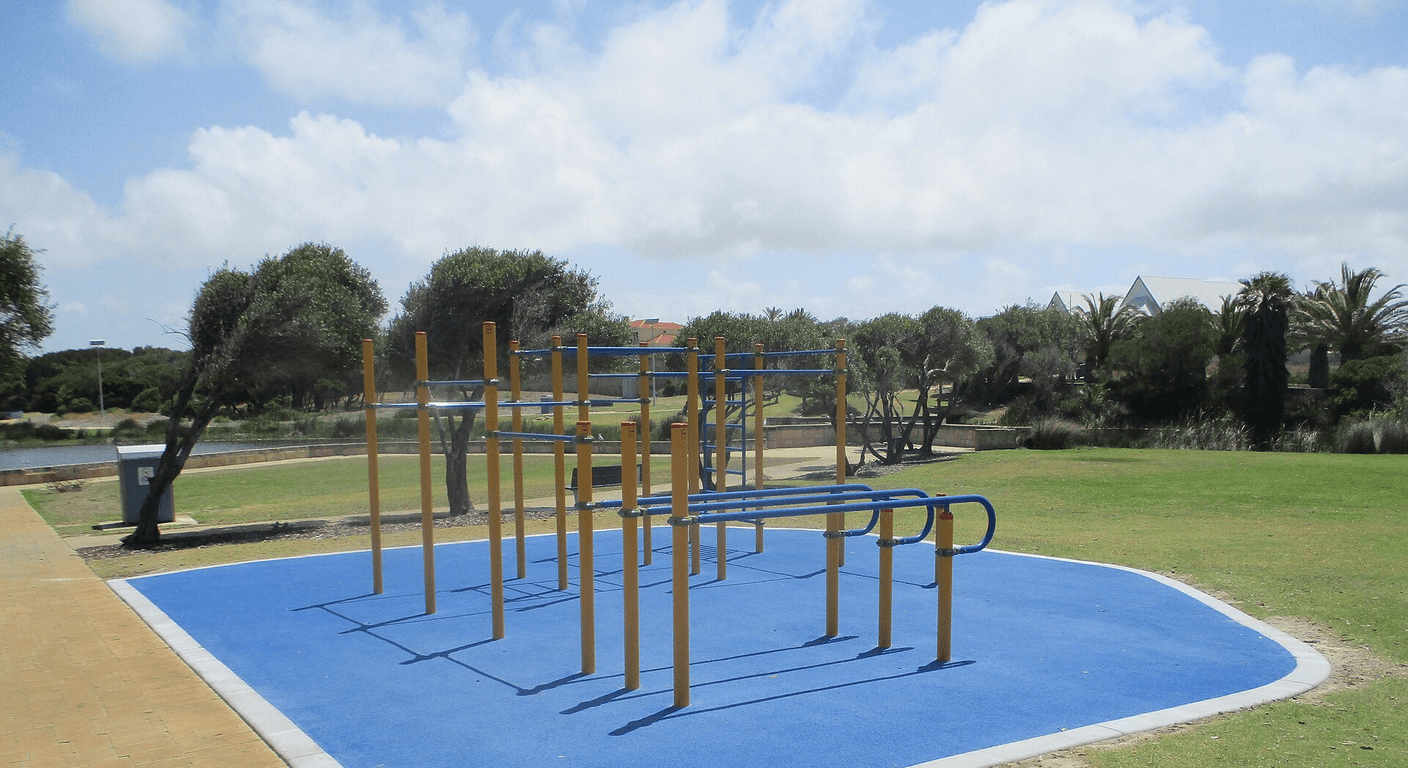
Scattered through suburban parks, along coastal foreshore paths and beside river walks, free outdoor fitness stations are fixed exercise structures installed by local councils at no cost to users. You'll find parallel bars for upper-body work, pendulum cross trainers that mimic elliptical motion, seated leg presses, balance beams, stretch frames and resistance handles — all in open air, all accessible without a swipe card or a monthly direct debit.
They were designed with a broad age range in mind, but the equipment is particularly well-suited to adults over 50 who want to maintain strength, flexibility and balance without the hard impact of running or the expense of a gym. The machines are generally fixed-resistance or body-weight based, which means there's no heavy plate loading and no need to adjust complicated settings. That said, 'low impact' doesn't mean 'no technique required'. Read the instruction plate on each piece of equipment before you start — most stations include diagrams showing correct form and the muscle groups targeted.
Think of these stations less as a replacement for a gym and more as a complement to a daily walk. A couple might take their usual morning park circuit and pause at the fitness station for ten minutes of stretching and gentle resistance work. A solo grey nomad overnighting near a regional town might use the local station to shake off two days of driving. The point is flexibility — in both senses.
How Do You Find Outdoor Gym Equipment Near You?
The most reliable starting point is your local council's website. Search the terms 'outdoor gym', 'fitness stations' or 'outdoor exercise equipment' in the site's search bar or parks directory. Most councils that have installed equipment list it under their parks, recreation or active living sections, often with a map. Some councils — particularly in Victoria, New South Wales and Queensland — have dedicated active ageing pages that highlight which parks have accessible fitness stations.
If the council website isn't forthcoming, try OpenStreetMap (openstreetmap.org), where community contributors have mapped a significant number of outdoor gym stations across Australia. The data isn't always complete, but it's often more current than council PDFs. Google Maps also picks up some stations if you search 'outdoor gym near me', though coverage is inconsistent.
For travellers on the road, it's worth searching the council website of whatever town or region you're passing through. Regional councils in South Australia, Western Australia and Queensland have invested in foreshore and riverside fitness stations that are genuinely well-maintained and in attractive settings. A quick search before you arrive is all it takes. One honest caveat: equipment condition varies. A station that looked pristine in a council photo from 2022 may have a broken handle now. If you're planning a specific session around a specific piece of equipment, ring the council's parks department and confirm it's in working order.
Which Equipment Suits Joints That Have Earned Their Keep?
Not every piece of outdoor fitness equipment is appropriate for every body, and that's worth stating plainly. The pendulum cross trainer — which looks like a standing elliptical — is generally the most joint-friendly full-body option. It's low-impact, smooth in motion and easy to control by simply slowing your stride. The seated leg press is similarly gentle if used with moderate resistance; the key is not locking the knees at full extension.
Parallel bars are excellent for supported stretching, gentle dips (if upper-body strength allows) and balance work. Many older users find them most useful simply as a stable frame for calf raises and lateral leg stretches. The balance beams and wobble platforms found at some stations are genuinely useful for proprioception — the body's awareness of where it is in space — which tends to decline with age and is closely linked to fall prevention.
Avoid any equipment that asks for a sudden, jerky movement or that requires you to support your full body weight in an unfamiliar position. If something feels wrong after two repetitions, stop. There's no instructor watching, which is both the freedom and the responsibility of outdoor fitness. A conversation with a physiotherapist before starting a new outdoor exercise routine is a sensible investment, particularly if you're managing osteoporosis, arthritis or a recent joint replacement.
Making the Most of a Session: Practical Tips for Over-50 Users
Timing matters more outdoors than in a climate-controlled gym. In summer across most of Australia, the window before 9am and after 5pm is when outdoor exercise is genuinely comfortable. In Victoria and the southern states, autumn and spring mornings are ideal — cool enough to move freely, warm enough to stay comfortable once you stop. Bring water regardless of the season. Hydration needs don't announce themselves the way they do on a hot day.
Wear supportive, closed-toe shoes with a non-slip sole. Thongs and sandals are not appropriate for any piece of fitness station equipment, and some councils note this on their signage. A light pair of exercise gloves can make grip more comfortable on metal bars, particularly in cooler weather when metal is cold to the touch. If you're exercising with a partner, take turns demonstrating technique to each other — it's a good way to spot form issues and, frankly, better company than a mirror.
Start shorter than you think you need to. Fifteen minutes across three or four pieces of equipment is a solid first session. The goal is to leave feeling pleasantly worked, not depleted. Consistency over weeks matters far more than intensity on day one. Many regular users build a simple circuit: cross trainer for five minutes, parallel bar stretches, seated leg press, balance work, and a cooldown walk. Simple, repeatable, free.
What's the Social Side of Outdoor Fitness?
For couples who travel together or spend a lot of time at home together, an outdoor fitness station offers something a treadmill at the gym doesn't: a reason to be outside, moving, in a shared space that doesn't require coordination or compromise on pace. One partner can use the cross trainer while the other works on the parallel bars. There's no one pace, no one machine, no negotiated playlist.
Solo travellers — particularly women travelling alone or grey nomads spending weeks in unfamiliar towns — often find that a regular morning visit to a local park station provides a quiet anchor to the day. It's a routine in an otherwise routineless week. And parks, by their nature, attract other people doing similar things. A nod of recognition from a regular is not nothing.
Some councils and community health organisations run informal group sessions at outdoor fitness stations as part of active ageing programs. These are worth looking for — they're typically free or low-cost, led by a trained facilitator, and a genuine way to meet local people if you've just arrived in a new area. Check your local council's community health or active ageing page, or ask at the council's customer service centre.
Grey Nomads: Using Fitness Stations on the Road
For Australians travelling by caravan or motorhome, outdoor fitness stations offer something that costs nothing and requires no detour to a commercial gym: a way to counteract the physical reality of long driving days. Sitting for four or five hours compresses the spine, tightens the hip flexors and does nothing useful for circulation. A twenty-minute session at a park station in the town where you've stopped for the night addresses all three.
Most large regional towns have at least one park with fitness equipment, often near the foreshore or the town's main recreational reserve — the same parks where you'd stop for a picnic or a walk anyway. Before you leave a town, a quick search for the next stop's council website takes two minutes and saves the frustration of arriving and finding nothing. Apps like WikiCamps Australia sometimes note fitness stations near free or low-cost campsites, which is a useful bonus.
Equipment quality does vary more in remote or smaller regional areas, where maintenance budgets are tighter. Some rural stations are in excellent condition; others have seen better days. If a piece of equipment looks damaged, corroded or unstable, don't use it. Report it to the council — most have an online fault-reporting form — so it gets fixed for the next person.
The Advocacy Angle: Why Free Outdoor Fitness Matters for Over-50 Australians
Commercial gym memberships in Australia currently run from roughly $30 to $100 per month — and that's before any joining fees or class surcharges. For older Australians on fixed incomes, the superannuation drawdown, or part-pension, that cost is not trivial. Free outdoor fitness equipment is one of the more meaningful ways local councils contribute to equitable access to physical activity. It costs nothing to use, requires no registration and imposes no judgment about fitness level or appearance.
There's a broader policy argument here that the active ageing community has been making for years: investing in free outdoor fitness infrastructure reduces downstream healthcare costs. Falls prevention, cardiovascular health, mental wellbeing — all are meaningfully supported by regular, moderate physical activity. Councils that install and maintain quality outdoor fitness stations are making a practical investment in their older residents, not just a cosmetic one.
If the fitness station in your local park is in poor condition, broken or simply absent where it should exist, that's worth raising with your council. Most councils have community feedback mechanisms — online portals, community meetings, councillor contact pages. A polite, specific request ('the leg press at [park name] has a broken handle — can it be repaired, and is there a timeline?') is more likely to get a result than a general complaint. Older Australians are both the primary users of these facilities and, in many councils, a significant voting constituency. That's not cynicism — it's how local democracy works.
Quick planning guide
| Who it's for | Adults over 50 — including locals maintaining strength and balance, and grey nomads breaking up long driving days — who want low-impact exercise without gym costs. |
|---|---|
| How to start | Search your local council's website for 'outdoor gym', 'fitness stations' or 'outdoor exercise equipment', or check OpenStreetMap for community-mapped locations. |
| Typical cost | Free — no membership, booking or registration required. |
| Time required | Around 15 minutes for a first session across three or four pieces of equipment, building consistency over weeks. |
| Where to get help | Council parks, recreation or active ageing web pages; council customer service centre for equipment condition queries; a physiotherapist for advice before starting if managing osteoporosis, arthritis or a joint replacement. |
| Key documents needed | Not applicable — no paperwork, ID or sign-up needed to use the equipment. |
| Main planning consideration | Equipment condition varies, especially in regional and remote areas, so confirm a specific station is in working order with the council before planning a session around it. |
| Renewal or review | Not applicable — instead, report damaged or unstable equipment via the council's online fault-reporting form. |
Key takeaways
- Free outdoor fitness stations — cross trainers, parallel bars, leg presses and more — are installed by councils in parks across Australia at no cost to users.
- Find stations by searching 'outdoor gym' or 'fitness stations' on your local council's website, or use OpenStreetMap for community-mapped locations.
- Low-impact machines suit joint-conscious users best; always read the instruction plate on each piece of equipment before starting.
- Wear supportive closed-toe shoes, bring water, and start with 15-minute sessions — consistency over weeks matters more than intensity on day one.
- Grey nomads can find fitness stations in most large regional towns by checking the relevant council website before arriving; equipment condition varies, so confirm if in doubt.
- Reporting broken or damaged equipment to your council via their online fault form is practical advocacy — it gets it fixed for you and everyone who comes after.
Recommended partners and links
Indicative prices only — always confirm with the operator before booking.
Frequently asked questions
How do I find free outdoor gym equipment near me in Australia?
Search your local council's website using the terms 'outdoor gym', 'fitness stations' or 'outdoor exercise equipment'. Most councils list locations under their parks, recreation or active living sections. OpenStreetMap (openstreetmap.org) also has community-mapped stations across Australia. Confirm equipment condition before relying on a specific station, as maintenance varies.
Is outdoor gym equipment suitable for people over 50 with joint issues?
Much of it is, yes. Pendulum cross trainers, seated leg presses and parallel bar stretching stations are generally low-impact and suitable for joint-conscious users. Read the instruction plate on each machine before use, start with short sessions, and speak with a physiotherapist if you're managing osteoporosis, arthritis or a recent joint replacement before beginning a new routine.
Is outdoor gym equipment really free to use?
Yes. Council-installed outdoor fitness stations are free to use, require no booking and have no membership. They are funded through local council budgets and open to the public. There are no hidden fees or registration requirements.
What should I bring to use an outdoor fitness station?
Bring water, wear supportive closed-toe shoes with a non-slip sole, and consider light exercise gloves for grip comfort on metal bars in cool weather. There are no facilities at most stations, so plan accordingly — arrive hydrated, and use a nearby public toilet before starting if needed.
What do I do if the outdoor fitness equipment in my local park is broken or damaged?
Do not use damaged equipment. Report it to your local council using their online fault or maintenance reporting form, which is usually found on the council website under 'parks' or 'report a problem'. Include the park name, the specific piece of equipment and a brief description of the issue. Most councils have a process for prioritising repairs once a fault is logged.