A genuinely relaxing retirement holiday depends less on destination and more on trip structure. Key factors: flight length and recovery days needed, number of accommodation changes, whether meals and logistics are handled for you, terrain and walking demands, time-zone shift, and daily decision load. For over-50 Australians, the four trip shapes that consistently deliver rest are a single-base coastal stay, a river cruise, a slow rail journey, and a small escorted group tour. Mobility rating: Easy to Moderate depending on shape chosen. Domestic options are accessible by train, coach or short flight; international options require advance planning around pre-existing condition travel insurance and Smartraveller registration.
Why the destination is almost never the problem
Ask anyone who came home from a two-week European holiday needing a week to recover and they'll usually blame the itinerary, not the country. Too many cities. Too many early starts. A different bed every second night. That low-grade exhaustion — the kind that sits behind your eyes for a fortnight after you land — is almost always structural. It's what happens when a trip is designed for maximum coverage rather than actual enjoyment.
At 66, after a working life of managing schedules and other people's needs, the last thing retirement travel should feel like is a project. The question worth asking before any booking is this: how much will this trip ask of me each day? Not just physically — though terrain and walking distance matter enormously — but cognitively. Am I navigating transport connections in an unfamiliar language? Am I deciding where to eat three times a day in a city I don't know? Am I repacking a bag every 48 hours? Each of those things costs energy that could go towards actually enjoying yourself.
The framework in this guide is built around six variables: flight length and the recovery days it realistically costs, the number of accommodation changes across the trip, whether meals and logistics are handled or self-managed, walking and terrain demands, time-zone shift, and daily decision load. Run any prospective holiday through those six filters and the picture of how restful it will actually be becomes much clearer than any glossy brochure.
The six variables that determine whether a holiday is restful or draining
Flight length is the variable most people underestimate. A direct flight from Melbourne to Bali is roughly six hours — manageable, one rest day on arrival is usually enough. Sydney to London is 21 to 23 hours with at least one stop, and for most people over 60 that means two full days of recovery before the holiday genuinely begins, and at least one day of adjustment on return. That's not a reason to avoid long-haul travel — it's a reason to build those days into the plan and budget for them, rather than arriving in Rome at 7am and trying to walk the Colosseum by noon. International travellers should also confirm with Smartraveller (smartraveller.gov.au) what healthcare infrastructure looks like at the destination and register their trip before departure.
Accommodation changes are the second big one. Every move — pack the bag, check out, transit, check in, reorient yourself — takes a half-day of energy at minimum. A trip with ten nights and seven different hotels is not relaxing regardless of how beautiful each property is. The research is consistent in over-60 travel communities: people who stay in one place for four or more nights consistently report feeling more rested and more connected to a destination than those moving constantly. Two or three bases for a two-week trip is a reasonable ceiling. One base is better.
Handled versus self-managed logistics is where the real comfort gap opens up. If someone else has booked the restaurant, confirmed the transfer, sorted the dietary requirement and knows which bus leaves when — that's not laziness, it's intelligence. The cognitive load of self-managing a multi-city international trip is genuinely fatiguing, and it compounds. Terrain and walking matter too: cobblestones in European old towns, steep staircases in Greek island villages, and the sheer scale of major museums (the Louvre is 73,000 square metres — it's not a morning, it's an endurance event) all need honest assessment before booking, not after arrival. Time-zone shift and daily decision load round out the six. A six-hour time difference takes most bodies three to five days to adjust. A trip that starts with full-day activities on day two is not giving you that time.
Trip shape one: the single-base coastal stay
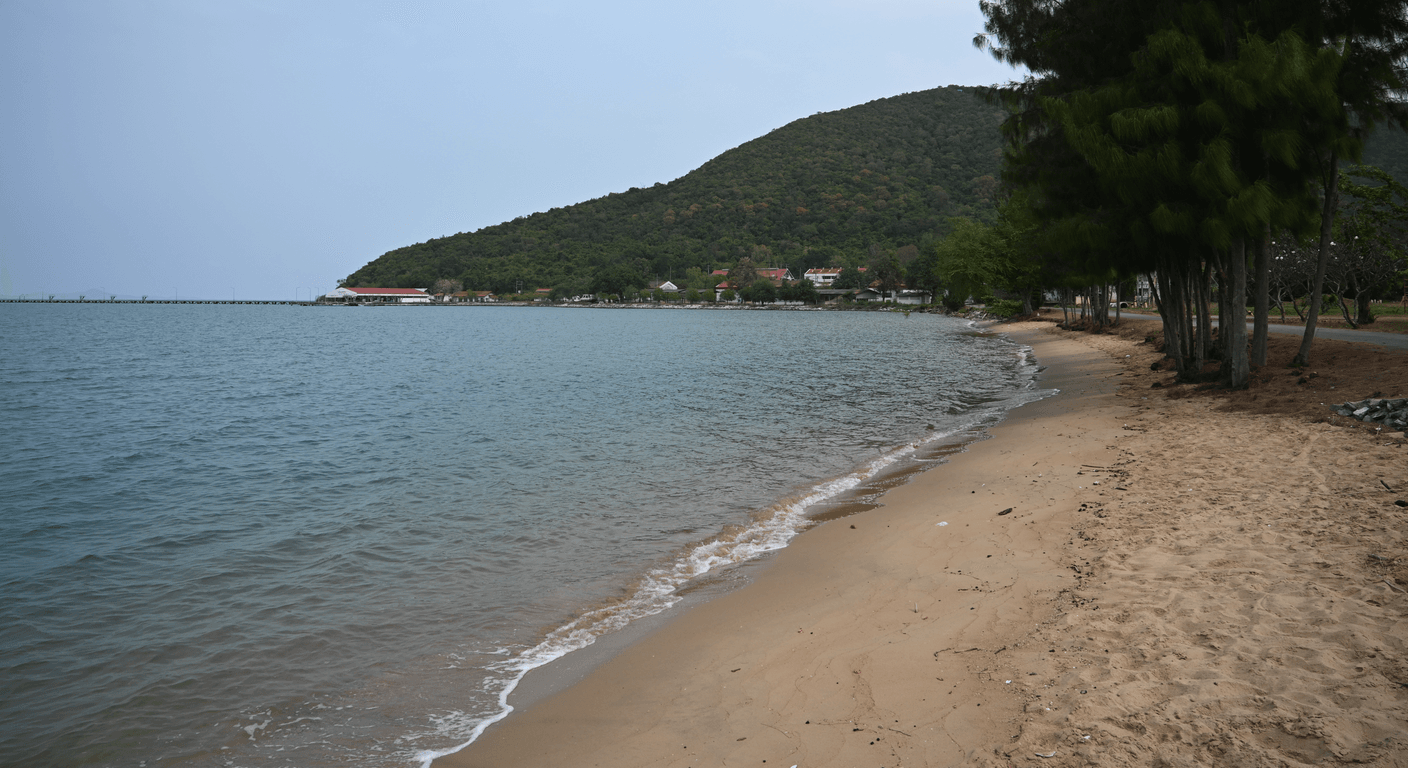
One place. One bed. No repacking. This is the structural antithesis of the exhausting holiday, and for many retirees it's the most underrated option available. A week or two based at a quality apartment or small resort on the New South Wales south coast, the Mornington Peninsula, the Sunshine Coast hinterland, or Queensland's Whitsundays gives you the freedom to do as much or as little as you choose each day — without the penalty of a 6am checkout looming over every evening.
The domestic single-base coastal stay is also the most financially accessible shape on this list. A comfortable self-contained apartment on the NSW south coast — think Merimbula, Bermagui or Tathra, all within reasonable driving distance of regional Victoria — runs roughly $180 to $280 a night depending on season, less in shoulder periods. Holders of a Victorian Seniors Card should check whether accommodation providers in their destination state offer concession rates; many regional tourism operators participate in reciprocal schemes, though you'll need to confirm availability directly with the property. Groceries, a few restaurant meals and the occasional paid activity make this genuinely budget-friendly compared with any packaged tour.
Who it suits: someone who genuinely wants to decompress rather than accumulate experiences. Someone who's comfortable self-managing (or happy not to manage much at all). Someone with a travel companion who shares the same low-key preference, or a solo traveller who values solitude and self-direction. Who finds it wearing: anyone who gets restless without structure, or who travels specifically to feel culturally immersed. Three days in, the beach is still beautiful but the novelty has settled — and if you're not someone who finds that restorative, you'll be booking day trips out of mild desperation by day four. That's fine; just plan for it.
Trip shape two: the river cruise
The appeal of a river cruise for anyone prioritising rest is structural: you unpack once, the scenery changes around you, meals are largely included, and the daily decision of 'where are we going' has already been made by someone else. For over-60 travellers this is not a trivial combination of factors. European river cruises — the Rhine, the Danube, the Douro — are the most popular option for Australians, though the Murray River and the Kimberley coastal cruises offer genuinely compelling domestic alternatives without the long-haul flight.
The logistics reality for a European river cruise from Australia: flights from Melbourne or Sydney to Amsterdam or Budapest run roughly 22 to 24 hours with connections, and jet lag across a seven-to-nine hour time difference is real. Build in two nights in the embarkation city before boarding — this is not optional if you want to actually enjoy the first three days of the cruise rather than sleep through them. The cruise itself is where the structure pays off: shore excursions are typically one to four hours of gentle walking, optional, and you can genuinely stay aboard if you'd prefer a quiet morning on the sun deck. That optionality is worth confirming with the specific operator before booking, as some itineraries have compulsory group activities.
The single-supplement position on river cruises is often punishing. Many operators charge 50 to 100 per cent above the per-person twin-share price for solo occupancy — on a $6,000 cruise, that's an additional $3,000 to $6,000 for the privilege of your own cabin. Operators including Scenic and Evergreen do periodically offer solo-friendly departures or share-match programmes; these are worth asking about directly and confirming in writing before committing. Indicative pricing for a 10-to-14-day European river cruise from Australian operators runs roughly $5,500 to $12,000 per person twin-share, all-inclusive of most meals and excursions. Confirm current pricing with operators, as fuel surcharges and currency movements affect these figures.
Trip shape three: the slow rail journey
There is something about a train journey that European and North American travellers have understood for generations and Australians are only recently rediscovering: the journey is the point. The Indian Pacific from Sydney to Perth, the Ghan from Adelaide to Darwin, the Overland between Melbourne and Adelaide — these are not efficient ways to cover distance. They are deliberately, gloriously inefficient, and that's the entire appeal. You sit. You eat. You watch the country change through a wide window. You talk to strangers, or you don't.
The practical comfort case for slow rail is strong. Sleeper cabins on services like the Indian Pacific or the Ghan (operated by Journey Beyond Rail Expeditions, journeybeyondrail.com.au) include a fold-down bed, an ensuite in the Gold and Platinum tiers, and all meals in the dining car — meaning the logistics-handled score is high. Walking demands are minimal; the terrain is literally flat and air-conditioned. The step up into a sleeper cabin can be steep on some rolling stock — worth asking the operator about specifically if mobility is a consideration. Indicative pricing for Gold Service on the Indian Pacific Sydney to Perth runs roughly $2,200 to $3,000 per person twin-share; Platinum Service is higher. Solo travellers should confirm single-supplement rates directly, as they vary by departure and season.
The shape of a rail journey day is worth understanding before you commit. On the Indian Pacific, for example, you might have a 7:30 breakfast sitting, an off-train excursion mid-morning (around two hours, usually on flat ground), lunch back aboard around noon, a long afternoon of landscape and reading, dinner from around 6:30, and the train moving through the night while you sleep. It is not for everyone — some people find the enforced slowness restful, others find it slightly maddening by day three. The honest version: if you've ever found yourself annoyed by a delayed flight for reasons beyond mild inconvenience, a four-day train journey across the Nullarbor may test your patience. If you found the question of that delay slightly absurd, you'll probably love it.
Trip shape four: the small escorted group tour
An escorted small-group tour — typically eight to twenty people, a dedicated tour director, a pre-set itinerary with all transfers and most meals included — is the trip shape that scores highest on logistics-handled and lowest on daily decision load. For someone stepping into international travel for the first time in years, or returning to it after a health event, or simply not wanting to think too hard about where dinner is, this structure is genuinely liberating. The tour director handles the thinking; you handle the experiencing.
The honest caveats are worth naming. Group pace is a compromise pace. If you're a slow walker who needs an extra ten minutes at every stop, or someone who wants to spend forty-five minutes in front of a single painting, the group dynamic can feel constraining. Conversely, if you're more energetic than the group average, you may find yourself waiting. The quality of the experience is also significantly shaped by the tour director and the group composition — both of which you cannot fully predict in advance. Operators who run tours specifically designed for over-50 travellers (rather than general-market tours that happen to attract older participants) tend to manage pace and itinerary density better. Ask specifically about average group age and daily walking distances before booking.
The single-supplement position on escorted tours is the most varied of the four shapes. Some operators charge aggressively — 40 to 60 per cent above twin-share is common. Others, including some smaller Australian operators, run dedicated solo departures or maintain a share-match list. This is an area where the industry has historically penalised solo mature travellers, and it's worth pushing back: ask whether the supplement is negotiable on low-occupancy departures, and ask whether a share-match is available. Indicative pricing for a 10-to-14-day European small-group escorted tour from an Australian operator runs roughly $6,000 to $11,000 per person twin-share, including most meals and all transfers. International departures from Australia still require two to three days' recovery time on arrival — build it in, budget for it, and do not let any operator talk you out of it.
What a genuinely restful day actually looks like — and how to protect it
Across all four trip shapes, the days that people in over-60 travel communities consistently describe as the best are structurally similar: a relaxed start (nothing compulsory before 9am), one meaningful activity in the morning (a guided walk, a shore excursion, a museum, a market), a proper sit-down lunch with time to actually taste it, and an unscheduled afternoon. That's it. That is a good day. The instinct to fill every hour — especially on an expensive international trip — is understandable but counterproductive. The days you remember are rarely the fifth cathedral; they're the accidental conversation at a café, the afternoon light on a river, the meal that went on two hours longer than planned.
For a river cruise shore excursion, a realistic day looks roughly like this: disembark around 9:00, guided walking tour of the old town until around 11:30 (typically two to three kilometres on mixed terrain — ask the tour director about surface quality the evening before), comfort break built into the route at around 10:30, optional free time from 11:30 to 1:00 while the group has a scheduled lunch (this is your chance to find a quiet café and skip the group meal if you prefer — it's allowed, and the tour director should confirm this at the morning briefing), reboard by 1:30, sailing through the afternoon. The gap between 'scheduled end time' and 'you're actually back and comfortable' is typically 20 to 30 minutes. Budget for it. The toilet situation on European river cruise shore excursions varies enormously by port — the tour director will know which stops have facilities and which don't. Ask the night before.
Unclaimed concessions worth knowing: Australian seniors holding a Commonwealth Seniors Health Card or a Pensioner Concession Card may be eligible for travel insurance discounts through certain providers — confirm with your insurer before purchasing. The Victorian Seniors Card (seniorcard.vic.gov.au) offers discounts on some domestic transport, though interstate and international benefits are limited; check the current partner list. For domestic rail travel, V/Line (vline.com.au) offers concession fares on eligible routes for Seniors Card holders — relevant if you're combining a regional Victorian departure with a coastal or interstate trip. Always carry both your Seniors Card and your Medicare card when travelling domestically; some regional health services require them for expedited care.
Quick planning guide
| Ideal pace | Slow — no more than one accommodation move per four to five days, ideally fewer |
|---|---|
| Best months | Varies by trip shape and destination; see section guidance |
| Suggested stay | 10–21 days depending on shape; build in at least one full rest day per week |
| Mobility level | Easy to Moderate — confirm terrain details with operator before booking |
| Cost level | From around $3,000 for a domestic coastal week to $12,000+ for an international river cruise |
| Comfort level | High — comfort is the point, not a compromise |
| Best for | Retirees, empty nesters, solo female travellers, friends groups, culturally curious couples wanting rest without boredom |
| Main planning consideration | Travel insurance covering pre-existing conditions, and how many times you change beds |
Key takeaways
- The number of times you change accommodation is the single strongest predictor of how tired you'll feel at the end of a trip.
- A long-haul international flight from Australia to Europe realistically costs two full recovery days — build them in before the itinerary starts, not as a theoretical buffer.
- Handled logistics (meals, transfers, decisions) are not a luxury for over-60 travellers — they're the difference between a holiday and a project.
- Single supplements on river cruises and escorted tours can add 40 to 100 per cent to the per-person cost; ask specifically about share-match programmes and solo departures before accepting the standard rate.
- A single-base coastal stay in regional Australia remains the lowest-stress, highest-flexibility option — and is significantly underrated by travellers conditioned to think a good holiday requires a plane.
- The days over-60 travellers remember most are almost never the days with the most activities — protect the unscheduled afternoon.
Recommended partners and links
Indicative prices only — always confirm with the operator before booking.
Frequently asked questions
What makes a holiday genuinely restful for someone over 60?
The key factors are: sleeping in as few different beds as possible, having meals and transfers handled rather than self-managed, limiting daily walking to terrain you're comfortable with, allowing recovery days after long flights, and keeping daily decision load low. A trip with one or two bases, included meals, and optional (not compulsory) daily activities consistently scores highest for post-trip wellbeing in over-60 travel communities.
Is a river cruise a good option for a relaxing retirement holiday?
For many over-60 Australians, yes — you unpack once, meals are largely included, shore excursions are optional and typically short, and the scenery changes around you. The main caveats are the long-haul flight to European embarkation ports (allow two recovery days on arrival), the often-significant single supplement for solo travellers (50 to 100 per cent above twin-share is common), and the need to confirm that excursions are genuinely optional before booking.
What is a single supplement and how much does it typically cost on Australian senior tours?
A single supplement is an additional charge levied on solo travellers who occupy a twin or double room alone. On Australian-operated escorted tours and river cruises, it typically adds 40 to 100 per cent above the advertised per-person twin-share price. Some operators offer share-match programmes (pairing solo travellers in twin rooms) or dedicated solo departures — ask specifically before booking, and confirm in writing.
How many days should I allow to recover from a long-haul flight before starting a tour?
For flights from Australian cities to Europe — typically 22 to 24 hours including connections — allow a minimum of two full days before any structured itinerary begins. A seven-to-nine hour time-zone difference takes most bodies aged 60-plus three to five days to fully adjust. Booking two nights in the embarkation city before joining a tour or cruise is a practical way to protect this recovery time.
Are there concessions available for older Australians on domestic travel?
Yes. Victorian Seniors Card holders can access concession fares on V/Line rail and coach services (confirm current eligibility at vline.com.au). Some regional accommodation providers offer Seniors Card discounts — confirm directly with the property. Holders of a Pensioner Concession Card or Commonwealth Seniors Health Card may also be eligible for travel insurance discounts; check with your insurer before purchasing a policy. Always carry both your Seniors Card and Medicare card when travelling domestically.
- Smartraveller — Australian Government official travel advice and trip registration
- Victorian Seniors Card — benefits and partner discounts
- V/Line — concession fares and regional Victorian rail services
- Journey Beyond Rail Expeditions — Indian Pacific, The Ghan, Overland
- Evergreen Cruises & Tours — river cruises and escorted tours for Australians
- Scenic Tours — river cruises and escorted journeys