Penguin and Ulverstone are two flat, walkable coastal towns about 20 minutes apart on Tasmania's north-west coast, best combined as a relaxed full-day trip from Devonport. Starting in Penguin in the morning — ideally on a Sunday for its large undercover market — then moving to Ulverstone for lunch and riverside parkland suits the pace well. Mobility demands are easy, with flat, sealed footpaths throughout. A car is essential, as public transport along this stretch is limited.
Why this pair works so well for a day out
There is a particular kind of day trip that asks nothing of you — no steep tracks, no timed entries, no crowds jostling at the one good viewpoint. Penguin and Ulverstone are that kind of day. Both towns face Bass Strait from a flat, sheltered strip of the north-west coast, both have cafes where you can sit at a window and watch the water, and both are the sort of places where locals nod at strangers and the pace is genuinely slow.
The two towns sit roughly 20 minutes apart by car, making it easy to spend a morning in one and an afternoon in the other without any sense of rushing. From Devonport — the natural base if you have arrived on the Spirit of Tasmania — Penguin is about 25 minutes west and Ulverstone is roughly halfway between the two. You can loop back along the same coastal road and feel you have had a full, satisfying day.
For a group of friends travelling together, this kind of itinerary suits everyone. There is enough to talk about and point at, enough coffee stops, and enough room to wander at different speeds without anyone feeling left behind. The whole thing costs almost nothing if you skip the markets with restraint — which, given the quality of some of the stalls, is harder than it sounds.
The drive itself: what makes the coastal road worth taking slowly
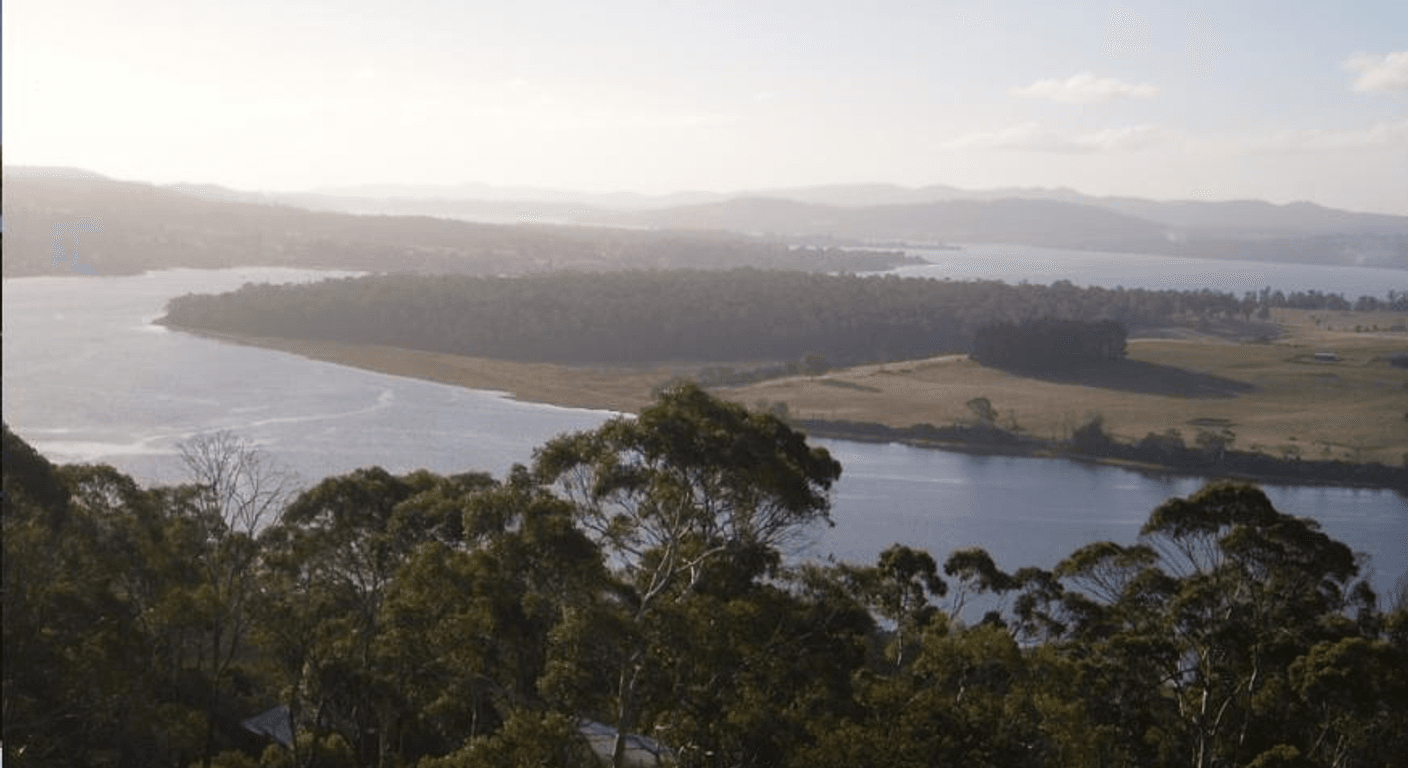
The Bass Highway between Devonport and Penguin runs close to the shoreline for much of its length, and the old Emu Bay Railway corridor sits beside it, visible from the road. The railway line — largely heritage freight now — adds a quiet industrial texture to what is otherwise a very pretty stretch of coast: low cliffs, scrubby headlands, and the grey-blue of Bass Strait opening up between the trees.
There are a handful of small pull-offs and lookout points along the way where it is worth stopping the car for a few minutes. None of them require walking far from where you park. The light on this coast is particularly clear in the morning, before the sea breeze picks up, which is another reason to start in Penguin and work your way back east to Ulverstone as the day warms.
If you are travelling in a group, consider letting one person navigate and the others simply look out the window. The road is not complicated, but it rewards attention. You will pass small farms, a few fishing shacks, and the occasional hand-painted sign for produce or eggs — the kind of roadside detail that disappears if you are focused on the GPS.
Penguin: the beachfront town that leans into its name
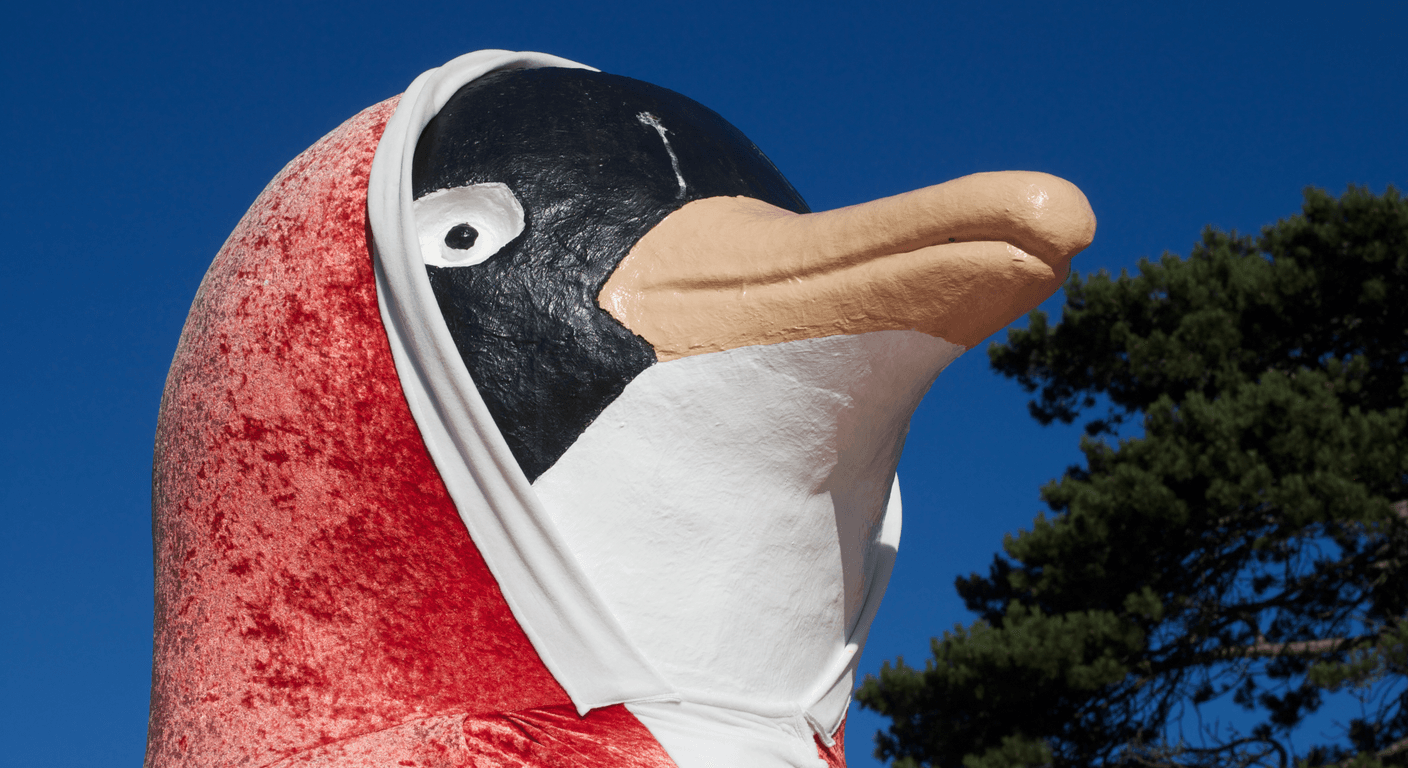
Penguin is one of those towns that has decided, sensibly, to embrace its most charming feature and run with it. The Big Penguin statue at the eastern end of the main street is not subtle — it stands several metres tall and is painted in the black-and-white of a little penguin — and it is exactly the kind of cheerful landmark that makes a good photo without requiring anyone to climb anything. The penguin-shaped rubbish bins along the main street continue the theme with a lightness of touch that stops just short of kitsch.
Main Street itself runs parallel to the beach, with the water visible at the end of almost every cross-street. The footpaths are flat and wide, the shops are mostly independent, and there are several cafes with outdoor seating that faces either the street or, in some cases, the water directly. It is the kind of main street that rewards slow walking — a bakery here, a small gallery there, a window full of local honey and jam.
Real penguins do come ashore at dusk at a small colony near the town, though this is an evening activity rather than a daytime one. During the day, the town's appeal is simply its proportions: small enough to cover on foot in an hour, characterful enough to hold your interest for two or three.
The Penguin Sunday Market: one of Tasmania's largest undercover markets
If your visit falls on a Sunday, the Penguin market is the anchor of the day. Held under a large covered structure near the foreshore, it is consistently described as one of Tasmania's biggest undercover markets, and the range reflects that scale: local produce, preserves, plants, handmade clothing, secondhand books, jewellery, and the kind of bric-a-brac that is genuinely interesting rather than purely decorative.
Entry is free, and the covered setting means the market runs in most weather. For a group of friends, it is the sort of place where you naturally split up and reconvene — someone finds a jar of leatherwood honey, someone else discovers a stall selling hand-dyed scarves, and you meet back at the coffee van to compare. Allow at least an hour, more if anyone in the group is a committed browser.
Stall numbers and trading hours can vary by season, so it is worth checking current details via the Penguin Town Council website before you go. The market typically runs in the morning, which fits well with a plan to continue to Ulverstone in the afternoon. Confirm current hours and dates at penguin.tas.gov.au.
Ulverstone: riverside parks and a town that faces the water honestly
Ulverstone sits where the Leven River meets Bass Strait, and the town has made the most of that geography. The riverside parkland along the Leven is flat, grassy, and genuinely pleasant — the kind of public space that gets used by locals because it is well maintained and not over-designed. There are walking paths, benches at sensible intervals, and views back toward the river mouth and the sea beyond.
The town centre is compact and easy to navigate on foot. Several cafes face the water or the main street, and the pace is relaxed enough that lingering over a late lunch feels entirely appropriate rather than self-indulgent. The architecture along the main street is a mix of Federation and mid-century shopfronts — not spectacular, but honest and well-kept, which is its own kind of charm.
Ulverstone also has a small but well-regarded foreshore area with a children's playground and picnic facilities — useful context if anyone in your group is travelling with grandchildren, but equally pleasant as a spot to sit and watch the strait in the afternoon light. Accessibility along the foreshore path is generally good, with sealed surfaces for most of the main route.
Practical matters: getting there, getting around, and what to bring
Both towns are most comfortably reached by car from Devonport. The Bass Highway is straightforward to drive and well-signed. If you are arriving in Tasmania on the Spirit of Tasmania from Geelong, you will have your own vehicle and can head west the same day or the morning after you dock. Devonport itself is worth an overnight stay — it has good accommodation options across a range of budgets, and the ferry terminal is central.
Public transport options on this stretch of the north-west coast are limited. Redline Coaches operates services between some north-west towns, but schedules are not designed around day-trip browsing. Confirm current routes and timetables at redlinecoaches.com.au before relying on this option. For a group of three or four sharing a hire car or travelling in their own vehicle, the drive is by far the more practical and enjoyable choice.
What to bring: comfortable flat shoes, a light layer for the sea breeze even in summer, a reusable bag for market purchases, and cash for market stalls (not all accept cards). Both towns have ATMs. Parking in both centres is free and generally easy to find, even on Sundays when the Penguin market draws a crowd. Allow a full day — there is no need to rush, and that is rather the point.
Accessibility and pacing: how this day suits older travellers
Both Penguin and Ulverstone are notably flat by Tasmanian standards, which is a genuine advantage for travellers who find uneven terrain tiring or who use a walking aid. The main streets and foreshore areas in both towns have sealed footpaths in reasonable condition. The Penguin market is undercover and on a flat surface. None of the key attractions on this day trip require steps, steep paths, or long distances between points of interest.
For travellers managing fatigue, the natural structure of the day — morning in Penguin, lunch, afternoon in Ulverstone — builds in rest time without requiring any formal planning. Both towns have accessible public toilets near their foreshores. If anyone in your group has mobility considerations beyond flat walking, it is worth confirming specific access details with local visitor information before the visit.
The overall pace of this day is one of its best features. There is nothing here that demands punctuality or performance. You go at your own speed, stop when something catches your eye, and return to the car when you are ready. That kind of freedom is not always easy to find in a day trip, and it is worth protecting — resist the urge to add a third stop and let the two towns breathe.
Quick planning guide
| Ideal pace | Slow and unhurried, with no fixed schedule |
|---|---|
| Best months | Comfortable year-round; mornings are clearest before the sea breeze picks up |
| Suggested stay | A full day trip from Devonport |
| Mobility level | Easy — flat, sealed footpaths with no steps at main sights |
| Cost level | Budget-friendly, largely free aside from market purchases and food |
| Comfort level | Relaxed, with plenty of cafes and rest points |
| Best for | Older travellers, groups of friends, and those visiting with grandchildren |
| Main planning consideration | Go on a Sunday for the Penguin market, and travel by car since public transport is limited |
Key takeaways
- Penguin and Ulverstone are about 20 minutes apart on Tasmania's north-west coast and make a natural, unhurried pair for a day trip from Devonport.
- Both town centres are flat, walkable, and largely free to explore, with cafes facing the water in each.
- The Penguin Sunday market is one of Tasmania's largest undercover markets — free entry, broad range of local produce and handmade goods.
- The coastal drive along the Bass Highway between Devonport and Penguin runs beside an old railway corridor and is worth taking slowly.
- Car travel is the most practical way to combine both towns in a day; public transport on this stretch is limited and not suited to leisurely browsing.
- Accessibility is good across both town centres — flat surfaces, sealed paths, and no significant steps at the main points of interest.
Recommended partners and links
Indicative prices only — always confirm with the operator before booking.
Frequently asked questions
How far is Penguin from Devonport, Tasmania?
Penguin is roughly 25 kilometres west of Devonport along the Bass Highway, which typically takes around 25 minutes to drive. The coastal road runs close to Bass Strait for much of the journey.
When is the Penguin Sunday market held, and is it free to enter?
The Penguin market runs on Sunday mornings and is free to enter. It is held under a large covered structure near the foreshore and is considered one of Tasmania's largest undercover markets. Confirm current dates and hours at penguin.tas.gov.au before visiting, as trading hours can vary by season.
Is Ulverstone suitable for travellers with limited mobility?
Ulverstone's town centre and riverside foreshore are largely flat with sealed paths, making them manageable for most travellers with limited mobility. Public toilets near the foreshore are accessible. It is worth confirming specific access details with local visitor information if you have particular requirements.
Can you do Penguin and Ulverstone as a day trip without a car?
It is possible in principle — Redline Coaches operates services on the north-west coast — but schedules are not designed for day-trip browsing and connections between the two towns can be infrequent. Confirm current routes at redlinecoaches.com.au. For most travellers, especially those arriving on the Spirit of Tasmania with their own vehicle, driving is the more practical and enjoyable option.
Are there real penguins in Penguin, Tasmania?
Yes — a small colony of little penguins comes ashore at dusk near the town. This is an evening activity rather than a daytime one, so it would need to be planned as a separate outing from a Devonport base rather than tagged onto a day trip focused on the town centre and market.