Qantas has retired the A380 from Melbourne (MEL) long-haul routes, replacing it primarily with the Boeing 787-9 Dreamliner on many services. For over-50 travellers, this means narrower Business cabins, a revised Premium Economy product and different legroom configurations in Economy. The change affects comfort planning significantly. Mobility rating: Easy to Moderate depending on class. Always confirm current aircraft type and seat maps on qantas.com.au before booking, as schedules shift frequently.
So the A380 is gone from Melbourne. What actually replaced it?
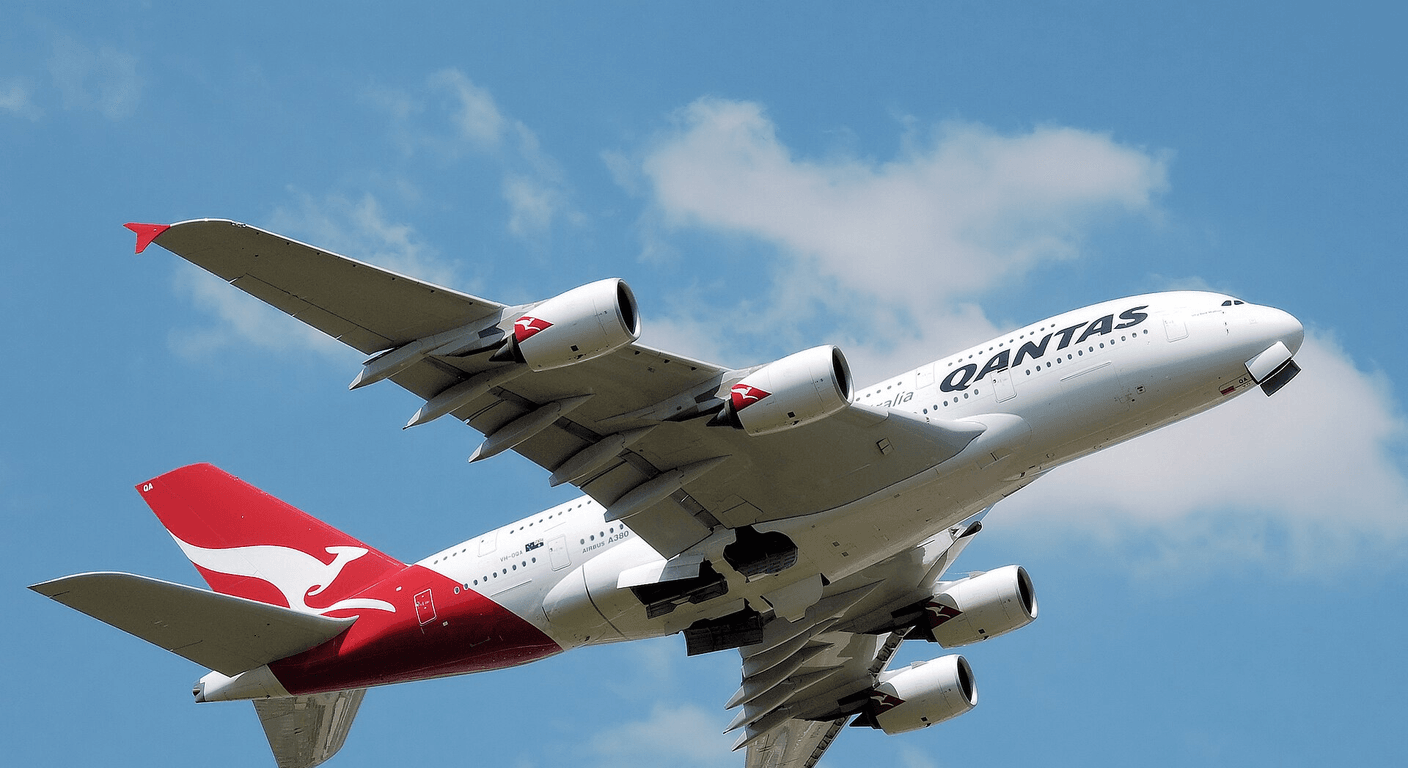
The Qantas A380 — that vast, almost absurdly spacious double-decker — no longer operates scheduled long-haul services from Melbourne Airport. The aircraft that now handles Melbourne's international flying is primarily the Boeing 787-9 Dreamliner, a twin-engine widebody that is genuinely impressive in its own right but is a meaningfully smaller plane. Where the A380 seated around 485 passengers across four classes, the 787-9 carries roughly 236 in Qantas's configuration. That difference ripples through every cabin.
Qantas routes from Melbourne may also connect through Sydney (SYD) before long-haul sectors, which means some Melbourne passengers are effectively on a domestic feeder flight before joining a separate international service — sometimes on the same aircraft type, sometimes not. The aircraft type on the Sydney-to-destination leg is what determines your long-haul cabin experience, and it is worth checking both legs separately on qantas.com.au when you search. Always use the 'view aircraft and seat map' function before confirming any booking, and do it again closer to departure — Qantas does change equipment on routes with little fanfare.
As of mid-2026, Qantas operates the 787-9 on routes including Melbourne to Los Angeles (via Sydney), and various Asian gateways. The airline has also been expanding its A350 fleet for Project Sunrise ultra-long-haul routes, but those do not originate from Melbourne in the current schedule. Confirm current routing and aircraft on qantas.com.au — this is not an area to rely on third-party booking sites for accuracy.
What does this mean for lie-flat beds and Business Class comfort?
The Qantas A380 Business cabin — 'Business Suite' — offered direct aisle access from every seat, a fully flat bed of around 193cm, and a cabin that felt genuinely spacious at altitude. The 787-9 Business cabin, branded the same way, also offers lie-flat beds and direct aisle access in a 1-2-1 configuration, so the fundamentals are solid. The bed length is comparable. What changes is the overall cabin volume — fewer seats, lower ceiling, narrower fuselage — and the sense of space around you. For travellers who found the A380 Business cabin generous, the 787-9 is comfortable but more intimate.
For over-50 travellers who prioritise sleep on long-haul, the 787-9 has one genuine advantage: cabin pressure is equivalent to roughly 1,800 metres altitude rather than the 2,400 metres typical of older aircraft, and humidity is higher. Both factors reduce the dehydration and fatigue that make long-haul arrivals brutal. Many frequent flyers who've done both routes report arriving in better shape on the 787-9 despite the smaller cabin. That said, if you have shoulder or back considerations, confirm the exact bed dimensions and whether your preferred seat has any obstruction before booking — seat maps on SeatGuru (seatguru.com) are a useful cross-reference.
A practical note on seat selection in 787-9 Business: window seats in a 1-2-1 layout alternate between seats that are closer to the window (more private, slightly harder to get out of) and seats that are closer to the aisle (easier egress, slightly less private). If you're travelling solo and value ease of movement through the night — to use the bathroom, to stretch — the aisle-adjacent window seat is the better choice. Seats 6A, 6K and equivalent rows at the front of the Business cabin tend to have faster access to the forward galley and lavatories. Check the specific seat map for your flight on qantas.com.au.
Premium Economy: the cabin that changed most
The A380's upper deck Premium Economy was, by general consensus, the sweet spot of that aircraft. A dedicated cabin on its own deck, away from Economy noise, with seats that reclined to around 60cm pitch and a genuinely different atmosphere. The 787-9 Premium Economy is a single-cabin product in a 2-3-2 configuration, sitting in the same fuselage as Economy, separated by a curtain and a few rows of seat pitch difference. The pitch is around 97cm — better than Economy's roughly 81cm — but the sense of separation that the A380's upper deck provided simply does not exist on the 787-9.
For a traveller who is 68 and has done the Melbourne-to-London or Melbourne-to-Dallas run in A380 Premium Economy, the 787-9 version is a step down in atmosphere, though not necessarily in legroom figures. The seat reclines more than Economy, there's a dedicated footrest, and the service is differentiated. But if you're booking Premium Economy specifically because you need meaningful separation from Economy cabin noise and activity for sleep, be clear-eyed: the 787-9 doesn't deliver that in the same way. It may be worth pricing Business on the 787-9 against Premium Economy — the gap narrows on some sale fares, and the cabin difference is substantial.
On the cost question: Qantas Premium Economy from Melbourne on long-haul routes runs roughly $3,500–$6,500 return (indicative, confirm on qantas.com.au), while Business can range from around $6,000 to $12,000 or more depending on route, season and fare class. If a sale Business fare lands within $1,500–$2,000 of Premium Economy, the lie-flat bed on a 14-plus-hour sector is almost certainly worth the difference for over-50 travellers, particularly those with back, hip or circulation considerations. This is not a luxury argument — it's a recovery argument.
Economy on the 787-9: what's honest and what to do about it
Economy on the 787-9 Qantas configuration is a 3-3-3 layout with around 81cm pitch — not dramatically different from what was on offer in A380 Economy, and the wider windows, lower pressure and better humidity of the Dreamliner do make a material difference to how you feel on arrival. The seats are not generous. For a traveller who is tall, has knee replacements, or finds 14 hours in a standard economy seat genuinely painful, the aircraft swap doesn't fix the underlying issue.
Seat 31A or equivalent — a window seat in the first row of the rear Economy section, which sometimes has extra legroom due to the galley configuration — is worth investigating on the specific seat map for your flight. Bulkhead rows, exit rows (which require you to confirm you can operate emergency exits — be honest with the check-in process) and the first few rows of Economy all offer more legroom than mid-cabin. Book your seat the moment you confirm your ticket, not at check-in. Good seats in Economy on popular routes disappear within hours of a booking opening.
One thing the 787-9 does well in Economy: the windows are larger and electronically dimmable, the overhead bins are genuinely cavernous (a small but real quality-of-life improvement for anyone who needs their carry-on overhead and accessible), and the noise levels are lower. These are not trivial on a 14-hour sector. They don't fix a narrow seat, but they make the experience meaningfully less exhausting than the equivalent on older aircraft.
What does the day actually look like? A Melbourne departure in real time
Understanding the shape of a Melbourne long-haul departure on the 787-9 helps with pacing. A typical evening departure from Melbourne Airport Terminal 2 (the international terminal) runs roughly like this: check-in opens around three hours before departure, so for an 11pm flight that means 8pm. Qantas Business and Premium Economy passengers use dedicated check-in counters — the queue is generally short, but don't cut it fine. Security at Melbourne international can move slowly between 8:30pm and 9:30pm; allow 30–40 minutes if you have any additional screening requirements. The Qantas Melbourne Lounge (airside) is worth arriving for: it's a good lounge, with proper food, showers and comfortable seating. For a solo traveller, it's genuinely relaxing rather than overwhelming. Give yourself at least 45 minutes in the lounge before the boarding call.
Boarding typically begins 40–45 minutes before departure. Business and Premium Economy board first, which on the 787-9 means you're settled with your bag stowed before the Economy boarding wave. The walk from the lounge gate to the aircraft bridge at Melbourne can be a solid 8–10 minutes — comfortable but not brief. Once airborne, the 787-9 reaches cruising altitude in around 20 minutes; the seatbelt sign goes off and the cabin crew begin service. On a night departure, Business meal service typically completes within 90 minutes of takeoff, which is sensible — eat, then sleep. The flight to Singapore is roughly 8.5 hours from Melbourne; to Los Angeles (direct, via Sydney connection) the international sector runs 13–14 hours.
The key rest window on a Melbourne-Singapore or Melbourne-Los Angeles sector is the four-to-six hours after the meal service ends. In Business on the 787-9, the cabin lights go down and it is genuinely quiet. In Premium Economy, it is quieter than Economy but you will hear the galley activity. In Economy, noise-cancelling headphones are not optional — they are the single best investment you make before a long-haul departure. Plan your sleep window before you board. Know what time it will be at your destination when you land, and try to shift your sleep rhythm one night before departure.
Practical rebooking tips if your A380 booking has changed
If you booked a Qantas flight from Melbourne specifically expecting an A380 and the aircraft has been changed, you have options. Qantas's general policy is that a significant schedule change — including an aircraft type change that materially affects the product you purchased — may entitle you to a refund or rebooking without fee. This is not always proactively offered; you may need to call Qantas directly and ask. The number for Qantas in Australia is 13 13 13. Be specific: 'I booked based on the A380 cabin configuration and I understand the aircraft has changed — what are my options?' Document the original booking confirmation showing aircraft type.
If you're rebooking rather than cancelling, use the aircraft type filter on qantas.com.au to identify which routes from Melbourne (or via Sydney) are operated by which aircraft. For travellers whose primary concern is the Business lie-flat bed, the 787-9 delivers the essential product. For those whose primary concern was the A380 Premium Economy upper-deck experience, consider whether the 787-9 Premium Economy still meets your needs or whether it's worth repricing into Business or switching to a competitor who operates a different aircraft type on your route.
A word on travel insurance and pre-existing conditions: if you are rebooking a long-haul trip that was disrupted by this aircraft change, check whether your existing policy covers you for any additional costs incurred in the change — and if you are taking out new insurance, do it at the time of the new booking, not later, to ensure cancellation cover applies from day one. Cover-More (covermore.com.au) and other Australian insurers that specifically cover pre-existing conditions are worth comparing. Do not assume your policy covers everything — read the product disclosure statement for your specific conditions.
Solo traveller's perspective and couple's perspective
A solo traveller's perspective: The loss of the A380's Premium Economy upper deck is most acutely felt by solo travellers who used that cabin as a semi-private retreat. On the 787-9, a solo traveller in Premium Economy is in a 2-3-2 configuration — if you're in a window seat in a pair, you're next to a stranger unless you purchase the adjacent seat (Qantas does offer this on some fare classes; confirm availability). In Business, the 1-2-1 configuration means every seat has direct aisle access and a solo traveller is genuinely solo — no one to climb over, no negotiation. For a solo female traveller doing a long overnight sector, the Business cabin on the 787-9 is actually more comfortable in this respect than the A380 Premium Economy upper deck was. The single supplement question: Qantas sells individual seats, not cabin berths, so there is no single supplement in the traditional sense. You buy your seat, you have your seat. That's one of the genuine advantages of flying over touring.
A couple's perspective: For two travelling together, Premium Economy on the 787-9 offers the centre three seats in the 2-3-2 layout — meaning a couple can take two of the three centre seats and have a shared armrest arrangement. Some couples prefer the window pair for privacy. In Business, couples are separated by the centre column in the 1-2-1 layout, which means you're not side-by-side — you're across the aisle from each other. This surprises some couples who expected to sit together as they would in a traditional Business cabin. If travelling as a pair who want to be adjacent, discuss seat selection carefully before booking: on the 787-9 Qantas Business, the middle pair seats (2D and 2G, for example) are adjacent across a shared console and are the closest to 'together' you'll get. Check the specific seat map on qantas.com.au.
Quick planning guide
| Ideal pace | Allow a full recovery day on arrival at any destination previously served by A380 from Melbourne — the 787-9 is quieter but cabin pressure and humidity differ |
|---|---|
| Best months | Year-round, depending on destination; check seasonal reversal for European and Northern Hemisphere routes |
| Suggested stay | Minimum two weeks for long-haul to justify the flight time and recovery |
| Mobility level | Easy to Moderate — aisle seats and bulkhead rows are critical to book early |
| Cost level | Business from around $6,000–$12,000 return MEL depending on route and season; Premium Economy roughly $3,500–$6,500; Economy from around $1,200–$2,500. Confirm all fares on qantas.com.au |
| Comfort level | High in Business; moderate in Premium Economy; Economy requires careful seat selection |
| Best for | Solo travellers, couples and culturally curious travellers doing Europe, Asia or North America via Sydney hub |
| Main planning consideration | The A380's double-deck cabin is gone from Melbourne — understand exactly what aircraft now serves your route before you commit to a fare class |
Key takeaways
- The Qantas A380 no longer operates scheduled long-haul services from Melbourne Airport as of 2025–26 — the Boeing 787-9 Dreamliner is the primary replacement.
- The 787-9 Business cabin offers lie-flat beds and direct aisle access in a 1-2-1 layout — the essential long-haul comfort product is preserved, though the cabin is smaller.
- Premium Economy on the 787-9 does not replicate the A380's separate upper-deck cabin — it shares the fuselage with Economy, separated by a curtain and seat pitch.
- The 787-9's lower cabin pressure and higher humidity are genuine physiological advantages that reduce jet lag and dehydration compared with older widebody aircraft.
- If your Qantas booking changed from A380 to another aircraft, call 13 13 13 and ask specifically about your rebooking or refund options — this is not always offered proactively.
- Always confirm current aircraft type and seat maps on qantas.com.au before and after booking — Qantas changes equipment on routes without prominent notification.
Recommended partners and links
Indicative prices only — always confirm with the operator before booking.
Frequently asked questions
Does Qantas still fly the A380 from Melbourne in 2026?
No. Qantas no longer operates the A380 on scheduled long-haul services from Melbourne Airport as of 2025–26. The Boeing 787-9 Dreamliner handles the bulk of Melbourne's long-haul international flying. Confirm current aircraft and routes on qantas.com.au before booking, as schedules can change.
Does the Qantas 787-9 have lie-flat beds in Business Class?
Yes. The Qantas 787-9 Business cabin operates a 1-2-1 configuration with fully lie-flat beds and direct aisle access from every seat. Bed length is comparable to the A380 Business Suite. The cabin is smaller and less voluminous than the A380, but the core sleep product is intact.
Is Premium Economy on the Qantas 787-9 the same as on the A380?
No, and the difference matters. The A380 Premium Economy was on a separate upper deck, giving it a distinct cabin atmosphere away from Economy. On the 787-9, Premium Economy is in the same fuselage as Economy, separated by a curtain. Seat pitch is around 97cm, which is meaningfully more than Economy, but the sense of separation is not the same.
Can I get a refund if Qantas changed my Melbourne flight from an A380 to another aircraft?
Possibly. A significant schedule or aircraft change may entitle you to a refund or fee-free rebooking under Qantas's policy. Call Qantas on 13 13 13, reference your booking, and ask specifically what options are available given the aircraft type change. Have your original booking confirmation ready and note what aircraft was listed when you booked.
What is the best seat on the Qantas 787-9 for an over-50 traveller flying solo?
In Business, an aisle-adjacent window seat near the front of the cabin gives easy egress without disturbing others — useful for overnight sectors. In Economy, a bulkhead or exit-row seat provides more legroom; book these at the time of ticketing, not at check-in. Always check the specific seat map for your flight on qantas.com.au or seatguru.com, as seat configurations can vary.