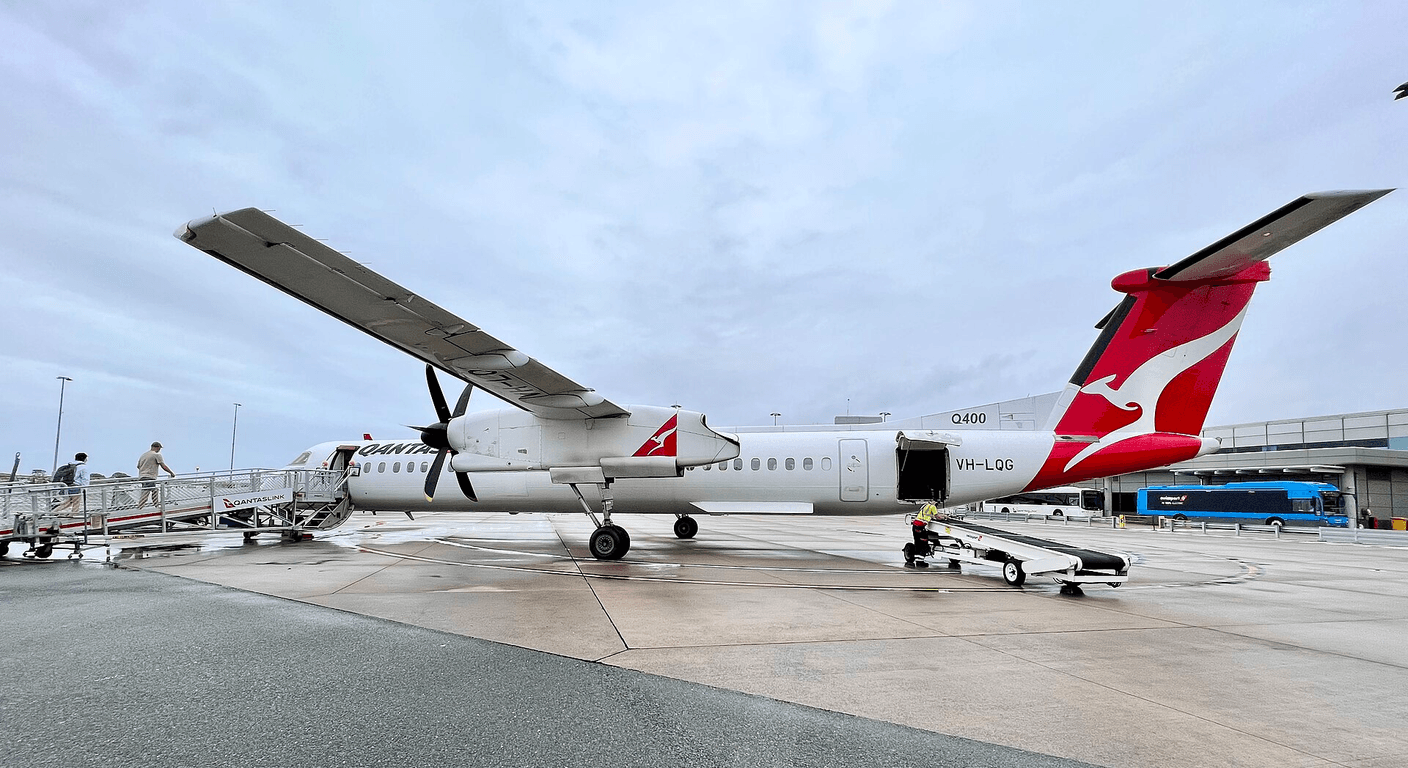
Qantas has cut or suspended a number of domestic and international routes since 2024, with further adjustments flagged into 2026. For over-50 travellers, the practical impact is rebooking delays, fare credit complexities and the need to find alternative carriers or surface transport. Mobility rating: Easy to Moderate depending on the substitute route chosen. Most affected domestic routes have coach, rail or Virgin Australia alternatives. Confirm current route status directly with Qantas or via smartraveller.gov.au before booking.
Which Routes Has Qantas Actually Cut — and How Do You Find Out?
Qantas doesn't publish a single clean list of dropped routes. Changes emerge through booking system updates, direct customer emails and, occasionally, media reporting — which means a traveller who booked six months out might not know their flight is gone until they check their booking. The first thing to do is log into qantas.com, go to 'Manage Booking', and check the status of every flight in your itinerary. If a route has been suspended or cancelled, you'll typically see a change notification or a prompt to contact the airline.
Routes that have faced cuts or reduced frequency tend to cluster around thinner regional connections — think secondary cities and smaller state capitals linked to Qantas's regional subsidiary QantasLink — and some international routes where demand hasn't recovered to pre-pandemic levels. For a traveller based in regional Victoria, this can mean a previously direct service to a hub like Canberra, Hobart or Cairns is now routed via Melbourne or Sydney, adding two to four hours to what should have been a short hop. That's not a trivial inconvenience when you factor in airport waits, connection risk and fatigue.
Before you book anything — hotel, tour, cruise transfer — confirm the route is operating. Ring Qantas directly on 13 13 13 (Australia) or check qantas.com. Do not rely on a third-party booking engine showing availability; those systems can lag behind airline schedule changes by days or weeks. And always check Smartraveller (smartraveller.gov.au) if your itinerary involves an international leg — they list airline disruptions affecting Australian travellers outbound.
What Are Your Rights When Qantas Cancels or Cuts Your Route?
This is where it gets genuinely complicated, and where a lot of older travellers have been caught out. If Qantas cancels your specific flight or significantly changes your routing, you're generally entitled to a full refund to your original payment method — not just a travel credit. The key word is 'significantly'. Qantas's own conditions of carriage define what qualifies, and the Australian Competition and Consumer Commission (ACCC) has been watching the airline's refund practices closely since 2020. If you're offered only a credit and you believe you're entitled to a cash refund, escalate in writing to Qantas Customer Care and, if necessary, to the ACCC via accc.gov.au.
Fare credits, when they are issued, come with expiry dates and booking conditions that catch people out. A credit issued in 2025 might require travel to be completed by a specific date — sometimes as little as twelve months from issue. For a traveller who isn't sure when they'll next fly, or who has health considerations that make forward planning uncertain, a locked-in credit is a poor substitute for cash in hand. Ask Qantas explicitly: 'Is this credit or a refund?' and 'What is the expiry date and can it be extended?' Get the answer in writing (email is fine).
Travel insurance is your second safety net — but only if you bought it before the route cancellation was announced. Most travel insurance policies exclude claims for events that were publicly known before purchase. This is a critical lesson for over-50 travellers who book early: buy your travel insurance the same day you book your flights, not as an afterthought weeks later. Policies for travellers with pre-existing medical conditions are widely available in Australia — look for providers that offer cover for conditions disclosed at time of purchase. Seniors Travel Insurance comparison is available through comparison sites, but read the Product Disclosure Statement yourself before committing.
The Real-World Cost Impact: What Will It Actually Cost You to Reroute?
A dropped direct route almost always means more money, more time, or both. The cost hit comes from several directions at once: replacement airfares on an alternative carrier (which may be higher if you're booking last-minute after a route cut), additional airport meals and transfers if an overnight stop is now required, and potentially a hotel night you hadn't budgeted for. On a Melbourne-to-Hobart run that loses its direct Qantas service, for instance, a reroute via Sydney could add roughly $80–$180 in extra costs depending on timing and carrier — indicative only, confirm current fares directly.
For solo travellers, the cost hit is sharpest. You don't split a transfer taxi or an unexpected hotel night with anyone. If a route cut forces a stopover in Sydney, a decent airport hotel will run around $180–$260 a night (indicative, confirm with the property). Budget for it. Some travellers in this situation find that switching entirely to a surface option — the overnight train from Melbourne to Sydney on the NSW TrainLink XPT, for example, or a coach connection — is both cheaper and, frankly, more enjoyable than a rushed airport connection. The XPT is not fast, but a sleeper cabin at around $150–$200 (confirm with nswtrainlink.info) is a genuine alternative for a traveller who values comfort over speed.
Don't forget the hidden costs of changed routing on your other bookings. A hotel with a 48-hour cancellation policy won't care that Qantas dropped your route — you'll still pay the late cancellation fee unless you have travel insurance or a very understanding property manager. Review every downstream booking the moment you learn of a route change, and contact each provider before any cancellation window closes.
Alternative Carriers and Surface Options: What Actually Works?
Virgin Australia is the obvious first call for most dropped domestic routes. It operates on the major trunk routes — Melbourne, Sydney, Brisbane, Perth, Adelaide — and on a growing number of secondary routes. Fares are competitive, and the experience is broadly comparable to Qantas Economy. For a traveller who had Qantas Frequent Flyer status, note that Virgin's Velocity program is a separate earn-and-burn ecosystem — your QFF points won't transfer, but Velocity has its own value and it's worth joining if you're going to fly Virgin regularly.
Rex Airlines covers a number of regional routes that Qantas has pulled back from, particularly in regional New South Wales, Victoria, Queensland and South Australia. Rex has had its own financial turbulence — check current route availability at rex.com.au before assuming a service is running. Regional Express is not the most glamorous flying experience, but it gets you to places like Albury, Dubbo, Mildura and Broken Hill when the majors have retreated. Fares can be surprisingly reasonable, often around $89–$180 one-way on shorter routes (indicative; confirm directly).
Surface transport deserves more credit than it typically gets in this conversation. V/Line from Melbourne reaches Albury, Shepparton, Warrnambool, Geelong and beyond — with genuine Seniors Card concessions available to Victorian cardholders (confirm current concession rates at vline.com.au or ptv.vic.gov.au). The Queensland Rail Tilt Train between Brisbane and Cairns is a legitimate alternative to a domestic flight for a traveller with time and a preference for scenery over speed. The Indian Pacific (Sydney to Perth) and The Ghan (Adelaide to Darwin) are in a different category entirely — they're destinations in their own right, and if a dropped Qantas route has disrupted your Perth or Darwin plans, reframing the journey as part of the trip rather than the means to it is worth considering.
What Does the Rebooking Process Actually Look Like? A Realistic Walk-Through
Here's how the day of finding out typically unfolds, and where the time goes. You get an email from Qantas — or you check your booking and see a red flag. First call: Qantas at 13 13 13. Average hold times can run 30–60 minutes during busy periods; call early morning (before 9am AEST) for shorter waits, or use the Qantas app callback feature if available. Have your booking reference, passport (for international), and a clear idea of your preferred alternative dates before you dial. The agent will offer you the next available Qantas service on the same or a rerouted itinerary, or a fare credit. Ask specifically about a cash refund if the change is significant.
If the Qantas alternative doesn't suit — wrong dates, inconvenient routing, too many connections — ask to be released from the booking with a full refund rather than a credit. This is a reasonable request when the change was initiated by the airline, not you. If you're refused, note the agent's name, the time and date of the call, and escalate in writing. The ACCC's guidance on airline refund obligations is clear, and Qantas knows it.
Once you have your refund or credit confirmed, move quickly to alternative bookings. Fares on Virgin or Rex will rise if you wait, especially on popular routes. Check whether your travel insurance covers any difference in fare cost under a 'change of plans' or 'travel delay' benefit — some policies do, with limits. And update your Smartraveller registration (smartraveller.gov.au) if your international destination or travel dates have changed — it takes five minutes and it matters if something goes wrong overseas.
Solo Traveller's Perspective vs. Travelling as a Couple
A solo traveller's perspective: the dropped-route scenario is more stressful when you're managing it alone. There's no one to hold the luggage while you queue at the rebooking desk, no one to share the unexpected hotel night cost, and no one to reality-check a bad decision made under pressure. The practical advice here is to slow down before committing to a rerouted itinerary. Take the refund if you can get it, give yourself 24 hours, and then book the alternative with a clear head. A solo traveller also needs to be honest about the single-supplement question on any tour that's been disrupted: if you rebook with a different operator, check immediately whether a single supplement applies and how steep it is. Some operators charge up to 100% of the twin-share rate as a supplement — that can turn a $3,500 tour into a $5,000 one overnight.
A couple's perspective: the financial hit is shared, which softens the blow, but itinerary disruption is still disruptive. The main risk for couples is one partner being more risk-tolerant than the other about the alternative routing — one might be happy to drive, the other firmly not. Make the decision together before calling the airline, so you're not negotiating with each other and the agent simultaneously. Couples on a rerouted itinerary should also check whether their combined luggage allowance changes on an alternative carrier — what Qantas allowed may differ from Virgin or Rex.
Seniors Card Concessions, Smartraveller and Other Things Most People Forget
Victorian Seniors Card holders get concessions on V/Line rail and coach services — not on commercial airlines, but worth maximising when surface transport is your Plan B. If you're switching from a dropped Qantas flight to a V/Line service, present your Seniors Card at the station or enter the concession fare category when booking online. Confirm current concession rates at vline.com.au or ptv.vic.gov.au, as eligibility rules and fare categories change.
Smartraveller registration (smartraveller.gov.au) is not just for international travel, but it becomes critical the moment you're heading overseas on a disrupted itinerary. If your routing has changed, update your registration with the new details. The Department of Foreign Affairs and Trade uses this data to locate Australians in an emergency. While you're there, check the travel advisory for your destination — a dropped Qantas route to a particular international city occasionally correlates with a changed risk assessment for that destination.
Travel insurance with pre-existing condition cover deserves a direct mention. A 69-year-old traveller who has — entirely reasonably — a managed heart condition, type 2 diabetes or a replaced hip needs to declare these at the time of purchase and check that disruption cover (not just medical cover) is included. Some policies exclude disruption claims if the airline cancellation was announced publicly before the policy was purchased. Buy the insurance the day you book. Don't wait.
Quick planning guide
| Ideal pace | Allow extra buffer days when routing via new connections; avoid tight same-day connections |
|---|---|
| Best months | Varies by destination — check route reinstatement schedules seasonally |
| Suggested stay | Add at least one recovery night if a dropped route forces a longer connection |
| Mobility level | Moderate — rebooking and alternate routing requires patience and phone time |
| Cost level | Variable — alternative carriers or rail can be cheaper or significantly more expensive depending on route |
| Comfort level | Reduced on some alternatives; business-class equivalents may not exist on replacement carriers |
| Best for | Regional and interstate travellers, grey nomads with flexible dates, solo travellers reassessing itineraries |
| Main planning consideration | Confirm route status directly with Qantas before any deposit or non-refundable hotel booking |
Key takeaways
- If Qantas significantly changes your routing or cancels your flight, you are generally entitled to a full cash refund — not just a travel credit.
- Confirm every flight in your itinerary directly at qantas.com or on 13 13 13 before making any non-refundable downstream bookings.
- Virgin Australia and Rex Airlines cover most major domestic routes affected by Qantas cuts; surface alternatives like V/Line and NSW TrainLink are viable and sometimes cheaper.
- Solo travellers face a double cost hit from route disruptions — no shared expenses and potential single supplements if rerouting through a tour operator.
- Buy travel insurance on the same day you book flights; policies generally exclude claims for disruptions that were publicly known before the policy was purchased.
- Victorian Seniors Card holders receive concessions on V/Line rail and coach — maximise this if a dropped Qantas route sends you to surface transport as Plan B.
Recommended partners and links
Indicative prices only — always confirm with the operator before booking.
Frequently asked questions
How do I find out if Qantas has dropped my specific flight route?
Log into qantas.com and check 'Manage Booking' for any change notifications on your itinerary. You can also call Qantas directly on 13 13 13. Do not rely on third-party booking engines, which can lag behind schedule changes by days or weeks.
Am I entitled to a refund or just a travel credit if Qantas cancels my route?
If Qantas makes a significant change to your flight — including cancelling the route entirely or substantially altering the routing — you are generally entitled to a full refund to your original payment method under Australian Consumer Law. If you are offered only a travel credit, ask specifically for a cash refund and escalate in writing if refused. The ACCC at accc.gov.au provides guidance on airline refund obligations.
What are the best alternatives to Qantas for domestic routes in Australia?
Virgin Australia is the main alternative on trunk routes between capital cities. Rex Airlines covers many regional routes in New South Wales, Victoria, Queensland and South Australia. For surface options, V/Line serves regional Victoria, NSW TrainLink connects Sydney to Melbourne and Brisbane, and Queensland Rail links Brisbane to Cairns. Confirm current availability and fares directly with each operator before booking.
Do fare credits from Qantas expire, and can they be extended?
Yes. Qantas fare credits typically carry an expiry date, often requiring travel to be completed within twelve months of issue, though conditions vary. Ask Qantas explicitly for the expiry date and whether an extension is possible, and get the answer in writing. If the credit doesn't suit your travel plans, push for a cash refund if you are entitled to one.
Does my travel insurance cover a Qantas route cancellation?
It depends on when you bought the policy. Most travel insurance policies exclude claims for disruptions that were publicly known before the policy was purchased. To be protected, buy travel insurance on the same day you book your flights. Travellers with pre-existing medical conditions should declare these at purchase and confirm that disruption cover — not just medical cover — is included in the policy.
- Qantas — Manage Booking
- Smartraveller — Australian Government travel advisory and registration
- ACCC — Airline consumer rights and refund guidance
- V/Line — Victorian regional rail and coach
- Public Transport Victoria — Seniors Card concessions
- Rex Airlines — Regional Express route information
- Virgin Australia