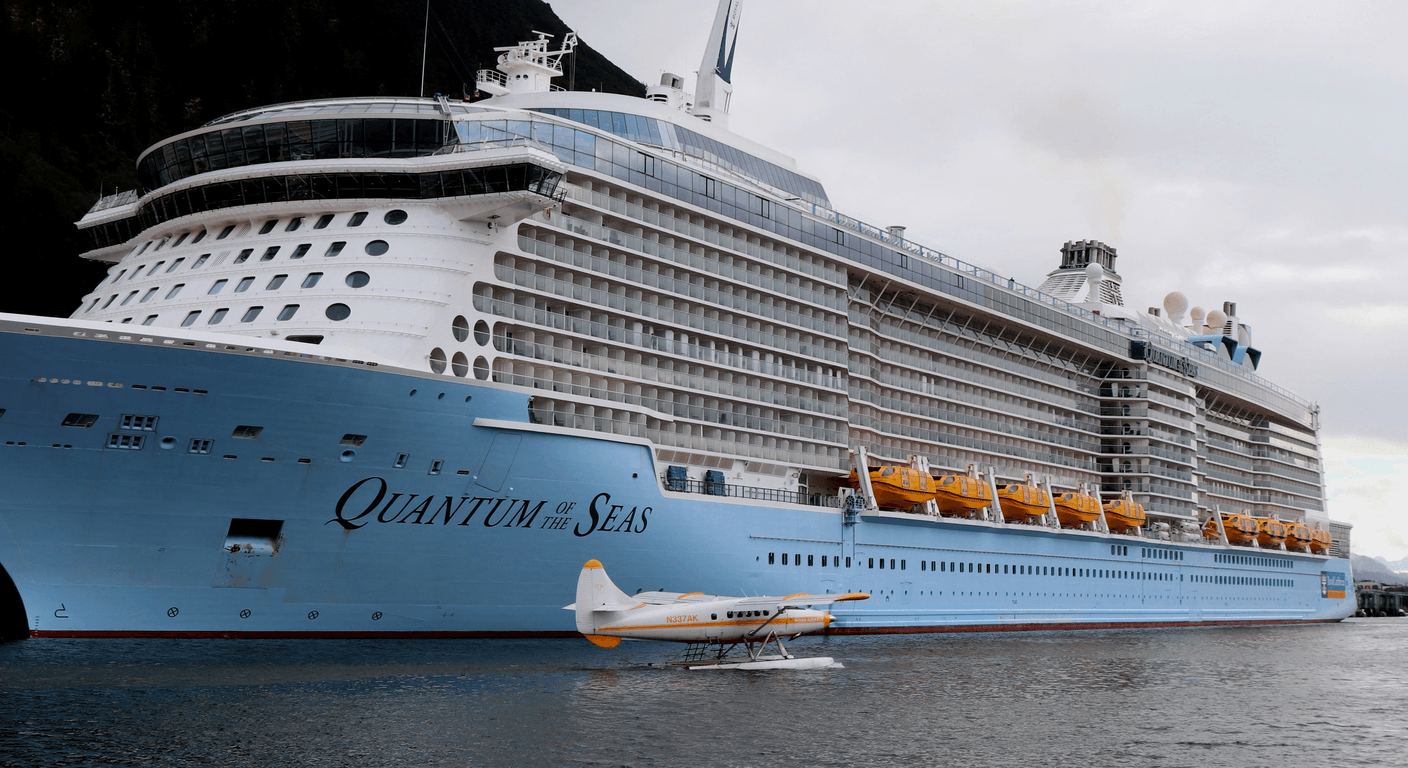
Quantum of the Seas is a Royal Caribbean mega-ship suited to Australian over-50 cruisers seeking a wide range of dining, entertainment and cabin options without the sheer scale of the line's largest vessels. Best months for Australian-departure itineraries vary by deployment — confirm current scheduling at royalcaribbean.com/au. A typical voyage runs 7–14 nights. Mobility rating: Moderate. The ship is large but well-designed for accessibility; tender ports add complexity.
What kind of ship is Quantum of the Seas, really?
Quantum of the Seas launched in 2014 and carries roughly 4,180 guests at double occupancy. That's a lot of people. But context matters: she's considerably smaller than Royal Caribbean's Icon-class and Wonder-class ships, which push past 5,000 and 6,000 guests respectively. For an Australian over-50 traveller who finds the idea of a floating theme park slightly exhausting, Quantum sits at a more manageable point on the scale.
The ship was designed with a few genuine innovations — the North Star observation capsule, the SeaPlex indoor activity space, the Two70 venue with its panoramic stern views. Some of these will appeal to you. Others are engineered for a younger demographic and you can simply walk past them without apology. The key is knowing which spaces to claim as your own, and Quantum does offer quieter alternatives if you know where to look.
Quantum is not a boutique ship. Don't expect the intimacy of a Scenic or Ponant vessel. What she does offer is variety — multiple dining venues, a reasonable library and card room area, a well-equipped spa, and enough deck space that you're not fighting for a sun lounger at 7am. The crowd profile on any given sailing shifts considerably depending on itinerary and season, which is worth factoring into your choice of voyage.
Cabins: what works for over-50 Australians, and what to watch
Quantum offers the usual Royal Caribbean cabin hierarchy: interior, ocean view, balcony (called 'Spacious Balcony' or standard), Junior Suite, Grand Suite and above. For a 69-year-old travelling solo or as a couple on a 10-night voyage, the calculus is straightforward — a balcony cabin is worth paying for. The ability to sit outside with a coffee at 6am without disturbing anyone, to have genuine daylight and fresh air, makes a material difference on longer sailings. Indicative balcony pricing starts somewhere around $2,500–$4,000 AUD per person for a week-long sailing, but fares move constantly — confirm with Royal Caribbean before making any decisions.
Interior cabins on Quantum are more generously proportioned than on older Royal Caribbean ships, and the Virtual Balcony feature (a floor-to-ceiling screen showing a live exterior camera feed) is a genuine improvement over a blank wall. For a solo traveller watching the budget, it's a legitimate option. Just be honest with yourself about how you handle enclosed sleeping spaces over multiple nights.
Accessibility cabins are available across cabin categories and include wider doorways, roll-in showers and lowered fixtures. Book these early — they're limited and taken quickly. If you use a walking frame, scooter or wheelchair, contact Royal Caribbean's Access Department directly (details on royalcaribbean.com/au) before booking to confirm the specific cabin configuration suits your needs. The ship itself is well-lifed and accessible between decks; the complication is ashore, particularly at tender ports where a small transfer boat is required and boarding can be physically demanding in any sea state.
The single supplement reality — and what Royal Caribbean actually offers
Solo travellers, read this section twice. Royal Caribbean typically prices solo occupancy of a double cabin at 200% of the per-person double rate — in plain language, you pay for two people even though you're one. On a $3,000-per-person balcony cabin, that's $6,000 for one traveller. It's a genuine financial penalty and this guide won't soften it.
Royal Caribbean does periodically run solo-supplement promotions, sometimes reducing the single supplement to 125% or even lower on select sailings. These are worth watching for. The line also operates a 'Cruise with Confidence' style flexibility on some fares — confirm current terms at royalcaribbean.com/au. There is no formal share-match programme on Royal Caribbean sailings in the way some expedition lines offer, so if sharing with a stranger isn't your preference, you're pricing for single occupancy.
The social environment on Quantum suits solo travellers reasonably well once you're on board. The dining venues — particularly the main dining room and the Windjammer buffet — have communal seating options, and the ship's size means you can find company or solitude depending on the day. The solo cabin penalty remains the central budgeting reality, and any Australian over-50 solo traveller should do that arithmetic before falling in love with an itinerary.
Dining: where to eat, what to skip, and what it'll cost you
Quantum has a main dining room (three-deck, traditional sit-down service), the Windjammer Marketplace buffet, and a collection of specialty restaurants that carry a surcharge. The specialty venues include Chops Grille (the steakhouse), Izumi (Japanese), Jamie's Italian, and a few others — confirm what's currently operating on your specific sailing, as venue offerings can change. A specialty dinner runs roughly $40–$80 AUD per person, indicative only — check current pricing with Royal Caribbean.
For an over-50 traveller who prefers a civilised dinner without queuing, the main dining room at its traditional seating times is the comfortable default. My Time Dining (flexible seating, no fixed time) suits those who want to eat earlier or later depending on how the day's gone. The Windjammer is fine for breakfast and a quick lunch; less appealing for dinner if you'd rather sit down properly. The Café Two70 and Café Promenade offer lighter options and coffee during the day — useful for those who graze rather than commit to three full meals.
Drinks packages are worth scrutinising. The 'Deluxe Beverage Package' covers most alcoholic and non-alcoholic drinks and runs roughly $80–$120 AUD per person per day at current rates — confirm pricing with Royal Caribbean, as it varies by sailing and is often discounted during pre-sale periods. If you drink wine at dinner and a coffee or two during the day, the maths may or may not work in your favour. Note that gratuities are added on top of the package price, and Royal Caribbean's automatic daily gratuity charge (roughly $18–$22 USD per person per day at time of writing) is a separate line item that catches some Australian travellers off guard. Confirm current rates before sailing.
Quieter spaces and crowd levels: finding your corner of the ship
Quantum's crowd levels are genuinely variable. A summer school-holiday sailing out of a major Australian port will feel very different from an off-peak Asian itinerary with a higher proportion of adult travellers. The ship's design does include some genuinely quieter zones — the Schooner Bar on Deck 4 tends to be calmer in the afternoons, the Vintages wine bar suits those after a glass and a conversation rather than a cocktail show, and the library/card room area (confirm its current location on board, as ships evolve) offers respite from the main thoroughfares.
The pool deck — specifically around the main pool and the FlowRider surf simulator — is where the noise concentrates. Avoid it between 10am and 4pm if that's not your scene. The Solarium (adults-only thermal area forward on Deck 14) is a significantly calmer alternative, with indoor pools and whirlpools. It's one of the better features on the ship for over-50 travellers who want a quiet hour in warm water without a sound system.
Two70 at the stern is a genuinely impressive space — a two-storey venue with floor-to-ceiling windows across the back of the ship, used for performances in the evenings and as a relaxed lounge during the day. At sea, on a clear afternoon, it's one of the better places to sit on the ship. The evening shows there are technically accomplished and worth seeing once; after that, the space is yours.
Accessibility, port days and the logistics that matter
On board, Quantum is accessible. Lifts are numerous and well-positioned, pathways are wide, and the ship's layout — while large — is logical enough to learn within a day or two. The main challenge for travellers with mobility considerations is the transition between ship and shore. At tender ports (where a small boat ferries passengers from the anchored ship to the dock), boarding the tender requires stepping down into a moving boat, which demands reasonable balance and confidence. In any sea state above a gentle swell, this becomes harder. Royal Caribbean's crew are experienced at assisting, but be realistic about your comfort level before committing to an itinerary heavy with tender ports.
At berthed ports, gangway angles vary depending on the tide and local infrastructure. Some ports in Asia have long, steep gangways; others are flat and straightforward. Cobblestones, steps and uneven surfaces are the norm in historic port towns — this is not the ship's fault, but it's worth researching each port individually before assuming ashore is as accessible as on board. Many Australian over-50 travellers find that booking a ship's shore excursion (rather than going independently) provides a more managed experience, with transport arranged and accessibility partially pre-screened. The trade-off is cost — ship's excursions run roughly $80–$250 AUD per person depending on duration and type, confirm with Royal Caribbean.
Travel insurance is non-negotiable for Australian over-50 travellers, particularly those with pre-existing conditions. Cruise-specific policies that cover medical evacuation at sea are essential — standard domestic travel policies often exclude this. The Australian Government's Smartraveller site (smartraveller.gov.au) has guidance on insurance for cruises and is worth reading before you book. Healthcare on board is available 24 hours but at significant cost; bills are charged to your onboard account and can be substantial.
Getting there: flights, jet lag and the pre-cruise night
If Quantum is sailing from an Australian home port — Sydney, Brisbane or elsewhere — the logistics are relatively straightforward. A pre-cruise night in the departure city is sensible if you're travelling from regional Victoria or interstate, avoiding any risk of a delayed connection eating your embarkation. Sydney and Brisbane cruise terminals are accessible by taxi and rideshare; confirm whether shuttle services operate from your preferred accommodation.
If the itinerary you've chosen requires flying to an Asian hub — Singapore, Hong Kong, Tokyo — factor in flight time seriously. Melbourne to Singapore is roughly 8 hours; Melbourne to Tokyo closer to 10–11 hours. These are manageable, but a same-day embarkation after an overnight flight is a recipe for a rough first 48 hours on board. Build in at least one night in the embarkation city. It's an additional cost — budget roughly $150–$300 AUD per night for a decent hotel near the port, depending on city — but it's the difference between arriving exhausted and arriving ready to enjoy a sea day.
Jet lag on eastbound return journeys (Tokyo or further back to Melbourne) can be disruptive for a week. Discuss this honestly with your GP before departure, particularly if you manage medications on a fixed schedule. Australian travellers heading into Asian itineraries should also register their trip on Smartraveller (smartraveller.gov.au) and check the current advisory status for each port country before booking — advisories change and some destinations carry specific health or safety considerations.
Quick planning guide
| Ideal pace | Allow a sea day or two early in the voyage to settle in and find your preferred spots before port days begin |
|---|---|
| Best months | Depends entirely on current deployment — confirm at royalcaribbean.com/au before planning travel |
| Suggested stay | 7–14 nights typical; longer voyages suit those who want genuine at-sea downtime |
| Mobility level | Moderate — ship is accessible and well-lifed, but some ports involve tenders or uneven terrain ashore |
| Cost level | Cruise fare from roughly $2,000–$6,000+ AUD per person depending on cabin category and itinerary length; specialty dining, drinks packages and gratuities add significantly — confirm all with Royal Caribbean |
| Comfort level | High on board; variable ashore depending on port infrastructure |
| Best for | Australian over-50 travellers who want structured dining and entertainment options, solo cruisers willing to navigate the single-supplement reality, and couples seeking a step up from smaller ships without going full Icon-class |
| Main planning consideration | Single supplement on Royal Caribbean sailings is typically 100% of the double-occupancy fare — a real cost that solo travellers must budget for. Confirm whether a share-match programme is available for your specific sailing. |
Key takeaways
- Quantum of the Seas carries around 4,180 guests — large, but notably smaller than Royal Caribbean's newest Icon and Wonder-class ships, which makes it more manageable for over-50 travellers.
- Solo travellers on Royal Caribbean typically pay a 100% single supplement — effectively double the per-person fare — and there is no formal share-match programme; budget accordingly.
- The adults-only Solarium on Deck 14 is the single best quiet space on the ship for over-50 travellers wanting to avoid the main pool deck.
- Tender ports require stepping into a moving boat and may not suit travellers with significant mobility limitations — check each itinerary's port list before booking.
- Automatic daily gratuities (roughly $18–$22 USD per person at time of writing) and card surcharges are added on top of quoted fares — confirm all current charges with Royal Caribbean before sailing.
- A pre-cruise overnight stay in the embarkation city is strongly recommended for any sailing that requires a connecting flight, particularly for travellers arriving from regional Victoria or other Australian states.
Recommended partners and links
Indicative prices only — always confirm with the operator before booking.
Frequently asked questions
Is Quantum of the Seas good for older Australian travellers?
Quantum of the Seas suits Australian travellers over 50 reasonably well. The ship is accessible, has multiple dining options, and includes quieter spaces such as the adults-only Solarium and the Two70 lounge. It's a large ship — around 4,180 guests — so those seeking a boutique or expedition-style experience will find it too big. For travellers comfortable with a mid-to-large cruise ship, it offers genuine variety without the overwhelming scale of Royal Caribbean's newest vessels.
What is the single supplement on Royal Caribbean's Quantum of the Seas?
Royal Caribbean typically charges solo travellers 200% of the per-person double-occupancy fare — meaning a solo traveller pays for two people in the cabin. On some sailings, promotional single supplements of 125% or lower are offered. There is no formal share-match programme. Solo travellers should confirm the current single supplement for their specific sailing directly at royalcaribbean.com/au before booking.
How accessible is Quantum of the Seas for travellers with mobility issues?
On board, Quantum of the Seas is well-designed for accessibility — wide corridors, numerous lifts and dedicated accessible cabins with roll-in showers. The main challenge is at tender ports, where boarding a small transfer boat requires reasonable balance and is difficult in any sea swell. Travellers using a wheelchair, scooter or walking frame should contact Royal Caribbean's Access Department before booking to discuss specific cabin and port requirements.
What are the quieter areas on Quantum of the Seas for over-50 travellers?
The adults-only Solarium (indoor thermal pools, Deck 14 forward) is the most reliably quiet space on the ship. The Schooner Bar and Vintages wine bar tend to be calmer during afternoon hours. The Two70 venue at the stern is a good daytime retreat at sea. The main pool deck and SeaPlex activity centre are the noisiest areas and are easily avoided.
Do I need travel insurance for a Quantum of the Seas cruise as an Australian traveller?
Yes. Cruise-specific travel insurance that includes medical evacuation at sea is essential for Australian travellers, particularly those with pre-existing conditions. Standard domestic travel policies often do not cover medical evacuation from a ship or from overseas ports. The Australian Government's Smartraveller website (smartraveller.gov.au) has guidance on cruise-specific insurance requirements. Discuss pre-existing condition coverage with your insurer before purchasing any policy.