Alice Springs' Royal Flying Doctor Service centre and School of the Air are best visited together on a relaxed half-day, ideally in the afternoon between late October and April when the air-conditioned interiors offer welcome relief from the heat. Highlights include the RFDS aircraft cabin reproduction and holographic displays, plus live School of the Air broadcasts during term. Both sites are flat, seated and indoors — easy for any mobility level. Alice Springs is a direct two-to-three hour flight from Melbourne, Sydney or Brisbane, with short taxi rides between attractions.
Why These Two Institutions Matter
Most people arrive in Alice Springs with Uluru on their mind, and fairly so. But there's a particular kind of satisfaction in spending a few afternoon hours inside two buildings that explain how this part of Australia actually works — not as a tourist attraction, but as a functioning society. The Royal Flying Doctor Service and the School of the Air are both real, still-operating institutions that happen to welcome visitors. Your entry fee goes directly toward running them.
For travellers who've spent decades watching Australia change — and for those with their own connections to regional life — there's something quietly moving about seeing the logistics of remote existence laid out clearly. A doctor reaching a patient 800 kilometres away. A child in a one-room schoolroom on a cattle station, raising her hand for a teacher in Alice. These aren't historical curiosities. They're happening right now.
Both centres are indoors, seated and air-conditioned. On a 38-degree Central Australian afternoon, that's not a minor detail. It's what makes this a sensible half-day plan rather than a compromise.
The Royal Flying Doctor Service Visitor Centre: More Than a Museum
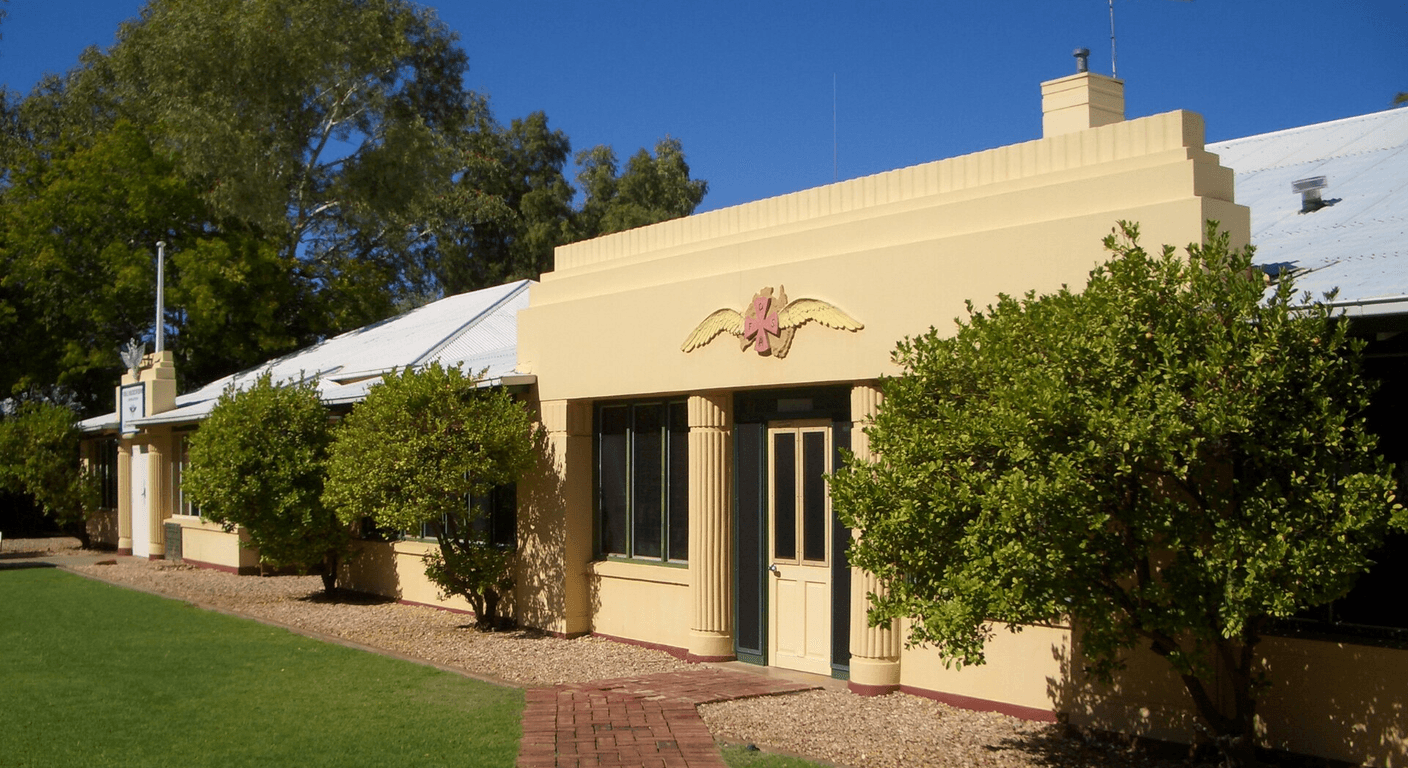
The RFDS visitor centre on Stuart Terrace sits on the edge of town, close to the Alice Springs airport flight path — which feels appropriate. Inside, the experience moves through the service's history with enough pace to hold attention and enough detail to reward curiosity. The holographic displays are genuinely good: they use the technology purposefully rather than as a gimmick, bringing to life the scale of the RFDS network across Australia's interior.
The aircraft cabin reproduction is the centrepiece for many visitors. Stepping inside a mock-up of a flying operating theatre — cramped, purposeful, every surface accounted for — makes real something that's otherwise abstract. Guides explain what happens when a patient boards, what a flight nurse manages in turbulence over the Tanami, what 'remote' actually means when you're the one who needs care.
Concession pricing is available; confirm the current rate directly with the centre, as it does vary. The gift shop sells genuinely useful items — the RFDS sunscreen and first-aid kits are practical souvenirs — and purchases here also support the service. Allow around 60 to 90 minutes, more if you want to linger with the interactive displays or catch a short film screening.
School of the Air: Watching Real Learning Happen
A few minutes' drive north, the Alice Springs School of the Air visitor centre on Head Street offers something rare in travel: a chance to observe something genuinely functional, not recreated for tourists. During school term, visitors can watch live broadcast lessons — a teacher in Alice Springs conducting class with students scattered across an area larger than Western Europe. The moment a child's voice crackles through from a remote station, the geography of this country becomes very real.
The centre's exhibits trace the school's history from the original pedal-radio days, when the School of the Air was born in 1951 as the first of its kind in the world. The technology has shifted dramatically — satellite, digital platforms, video — but the fundamental challenge remains unchanged: how do you give a child in an isolated homestead the same quality of education as a child in a Darwin suburb? The answer, worked out over decades, is quietly impressive.
Live sessions run during school terms at specific times, and this is the experience worth planning around. Check the current schedule on the school's website and confirm session availability before your visit — the times can change with the school calendar. Out of term, the centre is still worth visiting for its exhibits and the knowledgeable staff who can speak to how distance education works today. Concessions apply; verify current pricing when booking.
Planning the Half-Day: Practical Logistics
Both centres are best visited in the afternoon, particularly from late October through to April when morning temperatures can already be fierce. The RFDS centre and the School of the Air are each roughly a five-to-ten minute drive from the Alice Springs town centre. A taxi or rideshare is the simplest option; the town is small enough that fares are modest. Some accommodation providers offer shuttle suggestions — worth asking at check-in.
Doing both in one afternoon is comfortable at a relaxed pace. Start with the RFDS centre around 1pm, allow 90 minutes, then head to the School of the Air for a 3pm session if one is scheduled. There's no physical strain involved — both sites are flat, seated and cool. For a solo traveller, the guided components at both centres mean there's natural conversation and context without needing to navigate alone.
Neither site requires advance booking for general entry, though pre-booking for a live School of the Air session is strongly recommended, especially during school holidays when visitor numbers increase. Check the respective websites for current opening hours, as both can have reduced hours outside peak season or during public holidays.
Getting to Alice Springs: The Realities for Victorian Travellers
From Melbourne, Alice Springs is roughly a two-to-three hour direct flight, with Qantas and Jetstar operating regular services. There are no long-haul complications here — no stopovers, no jet lag, no 14-hour slogs. The main practical consideration is the altitude and aridity on arrival: Central Australia's dry air can catch travellers off-guard, so hydration matters from the moment you land.
Accommodation in Alice Springs ranges from comfortable mid-range hotels to well-appointed apartments. The town is entirely navigable without a car for those who prefer not to drive — taxis are reliable and the distances between central attractions are short. For travellers who do hire a vehicle, the roads within town and to most visitor sites are sealed and straightforward.
Travel insurance is worth reviewing carefully before any domestic trip if pre-existing conditions are involved — the RFDS itself is a reminder of what 'remote medical access' means, and comprehensive cover is simply good sense. The Alice Springs Base Hospital handles emergencies, but evacuation for serious incidents does happen. Good insurance is not alarmism; it's the same practical logic the RFDS was founded on.
What Makes This Particularly Resonant for Solo Travellers
There's a specific quality to travelling solo through a place like Alice Springs: the attention sharpens. Without a companion to turn to, you absorb more directly. Both the RFDS centre and the School of the Air reward that kind of attention. The stories they tell — of isolation managed with ingenuity, of communities built across impossible distances — speak to something universal about human resourcefulness.
For travellers with an Italian-Australian background, or anyone who came to Australia as part of a postwar migration story, there's a particular resonance in seeing how non-Anglo Australians built lives in remote places. The RFDS archives include stories from pastoral families of every background; the School of the Air has educated children whose parents came from everywhere. The outback is more multicultural than its mythology suggests.
Both centres have staff who are genuinely engaged with their subject. Ask questions. The volunteers and guides at both sites tend to have personal connections to the services — a nurse who flew with the RFDS, a parent whose child attended the School of the Air. That kind of conversation is the best part of the visit, and it's the sort of thing a solo traveller is well-placed to pursue.
Beyond the Two Centres: A Day Well Rounded
Alice Springs repays a little wandering after the afternoon at these two institutions. The town centre's Todd Mall has improved considerably in recent years, with Aboriginal-owned galleries worth a proper look — Papunya Tula Artists and Desart-affiliated galleries sell work directly from artists, at prices that reflect actual provenance. This is a far more satisfying way to buy art than airport gift shops.
The Alice Springs Desert Park, on the western edge of town, is a worthwhile morning activity before the afternoon visits — it opens early, the light is extraordinary, and the nocturnal house gives an introduction to Central Australian fauna that's hard to replicate elsewhere. The park is largely accessible, though some paths are gravel and uneven in sections; check the park's accessibility information before visiting.
Dinner in Alice Springs is better than its reputation. The Hanuman restaurant on Barrett Drive has been a consistent choice for decades, with a Thai and Indian menu that suits the climate. Confirm current opening hours — like many regional restaurants, hours can vary seasonally. It's a good place to sit with a glass of something cold and think about what a flying doctor's shift looks like, somewhere out there in the dark.
Quick planning guide
| Ideal pace | Relaxed, half-day itinerary |
|---|---|
| Best months | Afternoons from late October to April, when indoor cool is a real advantage |
| Suggested stay | A few hours — around 90 minutes at RFDS plus a School of the Air session |
| Mobility level | Easy — both centres are indoors, seated and air-conditioned with no physical strain |
| Cost level | Budget-friendly, roughly $15–20 entry with concessions available |
| Comfort level | High — climate-controlled, seated, guided experiences |
| Best for | Solo travellers, those with regional or migrant family connections, anyone wanting substance alongside outback scenery |
| Main planning consideration | Check the School of the Air term schedule and pre-book a live session, as timings depend on the school calendar |
Key takeaways
- The Royal Flying Doctor Service and School of the Air visitor centres are both fully indoors, air-conditioned and seated — genuinely easy for any mobility level.
- Entry to each centre costs around $15–20 with concessions available; your fee directly supports the operational services — confirm current prices before visiting.
- The School of the Air's live broadcast sessions run during school term at specific times — check the schedule and book ahead to catch one.
- Alice Springs is a two-to-three hour direct flight from Melbourne, Sydney or Brisbane — no stopovers, no international complications.
- Both centres are best visited in the afternoon, particularly in the hotter months, when the cool interiors are a genuine advantage.
- Solo travellers will find both sites naturally sociable — the guided components and engaged staff invite real conversation.
Recommended partners and links
Indicative prices only — always confirm with the operator before booking.
Frequently asked questions
Do I need to book in advance for the Royal Flying Doctor Service visitor centre in Alice Springs?
General entry to the RFDS visitor centre does not typically require advance booking, but it's worth confirming current opening hours and any tour session times directly via the RFDS website at rfds.org.au before your visit, as hours can vary seasonally.
When do the live School of the Air sessions run, and can visitors attend?
Live broadcast lessons at the Alice Springs School of the Air visitor centre run during the Northern Territory school term at scheduled times. Visitors can watch these sessions, but availability varies — check the current timetable at assoa.nt.edu.au and confirm a session is running on the day you plan to visit. Booking ahead is recommended.
Are these attractions suitable for travellers with limited mobility?
Yes. Both the RFDS visitor centre and the School of the Air centre are fully indoors, flat, air-conditioned and include seated viewing areas. Neither requires walking long distances or navigating uneven terrain, making them among Alice Springs' most accessible visitor experiences.
What is the best time of year to visit Alice Springs for these attractions?
May to September is the most comfortable season, with daytime temperatures typically between 18°C and 25°C and clear skies. Summer months (November to March) bring extreme heat — regularly above 40°C — though the indoor nature of both centres means they remain viable; the challenge is simply getting there and back comfortably.
How do I get between the two centres without a hire car?
Alice Springs is a small town and taxis or rideshare services (check current availability locally) cover the short distance between the RFDS centre on Stuart Terrace and the School of the Air on Head Street easily. Your accommodation can also advise on current local transport options. Neither site is within easy walking distance of the other, particularly in hot weather.