The Royal Flying Doctor Service Visitor Centre and School of the Air sit a few kilometres apart in Alice Springs, best combined into one air-conditioned half-day of around three hours, ideally April to September when temperatures are cooler. The defining highlight is stepping inside a genuine decommissioned RFDS aircraft and, during school terms, watching live outback lessons broadcast across 1.3 million square kilometres. Both venues are wheelchair accessible with no strenuous walking, reached by hire car or direct domestic flights from Melbourne, Sydney or Adelaide.
Why these two places belong together
Alice Springs sits at the geographic heart of a continent that measures its distances in hours of driving, not minutes. For the communities scattered across that vastness — cattle stations, remote communities, tiny townships — two services made ordinary life possible: a doctor who could reach you by aeroplane, and a school that came to your child by radio. The Royal Flying Doctor Service and the School of the Air were born from the same stubborn Australian logic: if the land won't accommodate you, you accommodate the land.
Visiting both on a single half-day isn't just convenient — it's thematically coherent. The RFDS Visitor Centre and the School of the Air sit within a few kilometres of each other in Alice Springs, both are fully indoor and air-conditioned, and both offer guided tours that run roughly an hour each. For a group of friends who want substance rather than spectacle, this combination delivers. There's no rushing, no long walks between exhibits, and no need to brave the midday heat for more than the short drive between them.
The Royal Flying Doctor Service Visitor Centre: what to expect
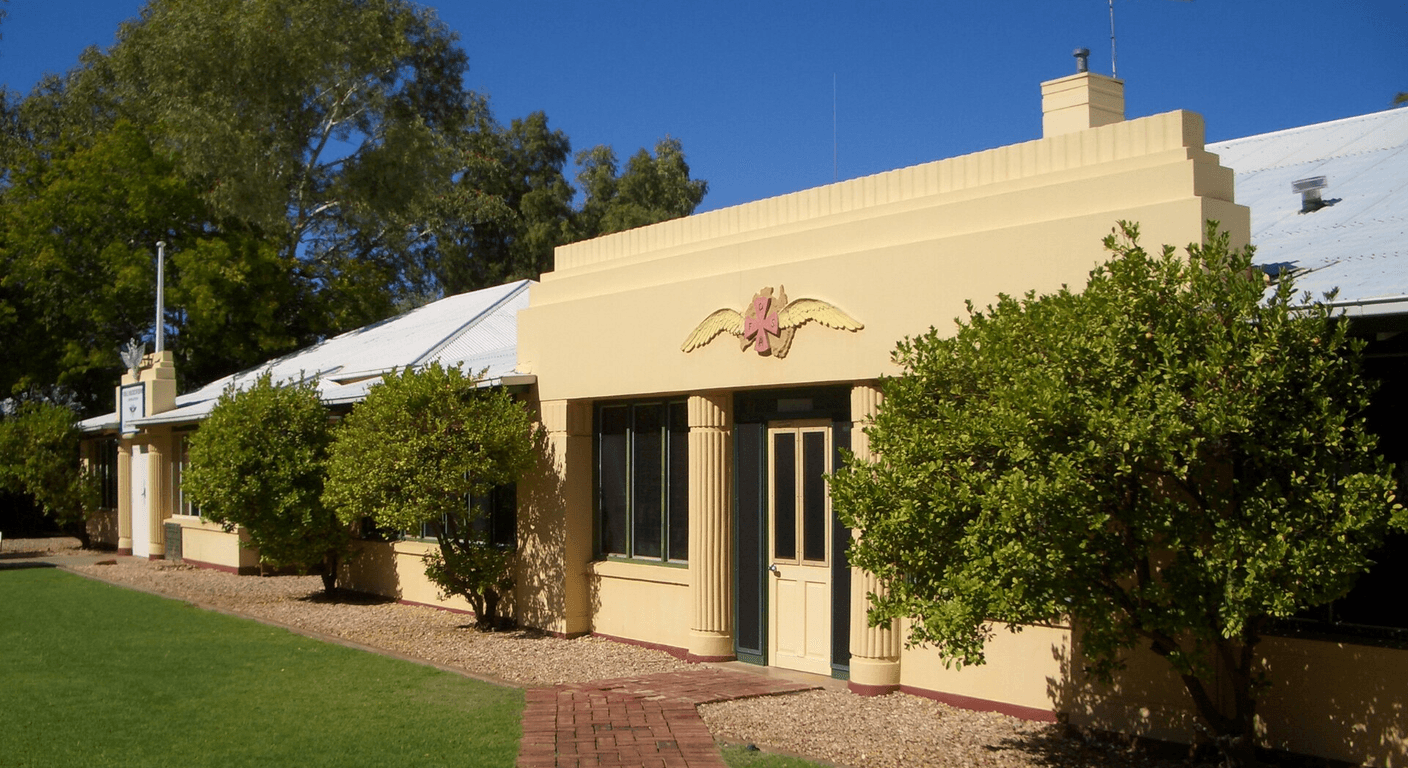
The RFDS Visitor Centre on Stuart Terrace tells its story through a mix of original aircraft, archival film, interactive displays and — most compellingly — real patient stories. The guided tour doesn't shy from the weight of what it's covering: the terror of a medical emergency two hours from the nearest road, the calm voice of a doctor on the radio, the sound of a small plane landing on a dirt strip at dusk. It's affecting without being maudlin.
The centrepiece is a genuine RFDS aircraft, decommissioned and beautifully preserved, which you can step inside. The medical kit displays show exactly what a flying doctor carried into the field — a kind of portable clinic that would not look out of place in a hospital ward. Guides here tend to be knowledgeable and unhurried; this is not a venue that rushes you through. Allow at least 90 minutes if you're the type to linger over exhibits.
The centre is wheelchair accessible throughout, with level surfaces and seating available in the main display area. Admission runs around $20–25 per adult — confirm the current price directly with the centre before your visit, as pricing has been updated periodically. There's a small café on site, which matters more than it sounds when you're managing a warm Alice Springs morning.
School of the Air: a classroom across a million square kilometres
A short drive north brings you to the Alice Springs School of the Air, which once broadcast lessons to children across 1.3 million square kilometres of outback — the largest classroom on earth, as the school itself notes. Today it still operates as a distance education provider, using technology that has evolved from pedal-powered radios to satellite internet, but the principle remains the same: no child too remote to learn.
The visitor experience here is a little different from the RFDS centre. The guided tour includes a viewing gallery where, during school terms, you can observe live lessons in progress — teachers at their desks, students' voices coming in from stations hundreds of kilometres away. It's unexpectedly moving. Outside of term time the tour focuses on the history and archive material, which is rich enough to stand on its own, but if you can time your visit during term, do.
This is the critical planning detail: the School of the Air visitor tours operate during school terms only, and hours can change. Check the school's website or call ahead before building your itinerary around it. Admission is around $20 per adult — indicative, so confirm. The facility is accessible, with a flat entry and indoor viewing gallery. A small gift shop supports the school's programs.
How to plan the half-day without rushing it
The sensible sequence is RFDS first — it opens earlier and the café makes it a natural starting point for a mid-morning arrival. From there, the drive to the School of the Air takes under ten minutes. If you're visiting in the warmer shoulder months (October or March), starting by 9am means both sites are done before the heat peaks. April through September, you have more flexibility.
Neither venue requires advance booking for individuals, though group bookings are worth confirming ahead. For a group of friends, it's worth calling both centres in advance regardless — some guided tour sessions have limited capacity, and knowing your timing is locked in makes the day easier. Both sites have toilet facilities, which is a practical consideration worth noting for any longer half-day out.
Driving is the easiest way to connect the two sites, and most visitors hire a car for their Alice Springs stay. There is no direct public transport link between the two venues. If your group prefers not to drive, several Alice Springs tour operators include both sites on half-day cultural itineraries — check with Tourism NT or your accommodation for current operators.
Getting to Alice Springs from regional Victoria and other Australian cities
From regional Victoria, the practical route is to Melbourne Airport (Tullamarine) and then a direct flight to Alice Springs. Qantas and Virgin Australia both operate this route; flight time is roughly three hours. From Sydney it's a similar duration; from Adelaide, closer to two. There are no international connections to factor in — this is a purely domestic trip, which simplifies everything from insurance to luggage.
Alice Springs Airport is compact and easy to navigate, with hire cars available on-site from the major companies. The town centre is about 15 minutes from the airport. For travellers based in regional Victoria, the drive to Melbourne Airport adds time to the day — an overnight in Melbourne before an early morning flight can make the start of the trip considerably more relaxed.
Travel insurance is worth sorting before any outback trip, particularly for travellers with pre-existing conditions. Medical facilities in Alice Springs are good by remote standards, but the RFDS Visitor Centre will leave you with a healthy respect for what 'remote' actually means in this country. Confirm your policy covers the Northern Territory and any activities you're planning outside Alice Springs itself.
What makes this experience resonate for travellers over 50
There's a particular kind of travel experience that deepens rather than dazzles — where what you carry home isn't a photograph but a shift in perspective. The RFDS and School of the Air are that kind of experience. For anyone who grew up in rural or regional Australia, there's likely a personal connection: a neighbour who was evacuated by flying doctor, a cousin who did correspondence school. For those who didn't, the stories fill in a part of Australian history that rarely makes the mainstream cultural conversation.
For a group of friends travelling together, these two sites offer something conversation-worthy — the sort of thing you're still talking about at dinner. The pacing suits a relaxed half-day without feeling lightweight. And the fact that both are air-conditioned, accessible and genuinely absorbing means no one in the group is watching the clock or wishing they'd worn different shoes.
Latin Australian women who've built their lives in regional Victoria will find particular resonance here. Distance, community, the creative solutions people devise when institutions don't reach them — these are not abstract concepts. The outback versions are dramatic, but the underlying story of making do across geography is one that regional Australians of all backgrounds understand instinctively.
Practical details worth confirming before you go
Both the RFDS Visitor Centre and the School of the Air have websites with current opening hours and admission prices — use those as your reference, not any figure you've read elsewhere (including here). Prices and hours do change, and the School of the Air's term calendar shifts year to year. A quick email or phone call before booking flights takes thirty seconds and saves disappointment.
Alice Springs itself warrants at least three to five days to do it properly. Alongside the RFDS and School of the Air, the Araluen Arts Centre, the Olive Pink Botanic Garden and the Desert Park make for a culturally and naturally varied stay. The town's gallery scene, particularly around Todd Mall, is worth an afternoon. And the drive to Uluru — roughly five hours — is a natural extension for those with time and energy for it.
Quick planning guide
| Ideal pace | Slow, unhurried half-day — around three hours for both sites |
|---|---|
| Best months | April to September for cooler conditions; October or March workable with an early start |
| Suggested stay | Half-day for these two sites; three to five days for Alice Springs overall |
| Mobility level | Easy — wheelchair accessible, level surfaces, no strenuous walking |
| Cost level | Budget-friendly — around $20–25 per adult per site, under $30 total noted |
| Comfort level | High — fully indoor and air-conditioned, no midday heat exposure |
| Best for | Groups of friends and regional travellers seeking substance over spectacle |
| Main planning consideration | School of the Air tours run during school terms only, so confirm the term calendar, hours and current prices directly with each venue before booking |
Key takeaways
- The RFDS Visitor Centre and School of the Air are both fully indoor, air-conditioned and wheelchair accessible — ideal for a midday Alice Springs half-day.
- Guided tours at each site run around $20–25 per adult; confirm current prices directly with each venue before visiting.
- School of the Air tours operate during school terms only — check the term calendar before finalising your travel dates.
- The two sites are a short drive apart; allow around three hours total to visit both without rushing.
- Direct flights to Alice Springs operate from Melbourne, Sydney and Adelaide, making this a straightforward domestic trip.
- April to September is the most comfortable time to visit Alice Springs, with cooler temperatures and clear skies.
Recommended partners and links
Indicative prices only — always confirm with the operator before booking.
Frequently asked questions
Do you need to book ahead for the RFDS Visitor Centre and School of the Air in Alice Springs?
Individual visitors generally don't need to book ahead, but it's worth calling both venues to confirm tour times and availability, particularly if you're travelling as a group. The School of the Air has limited visitor capacity for its live-lesson viewing sessions during term time.
When does the School of the Air run visitor tours?
Visitor tours at the Alice Springs School of the Air operate during school terms only. Outside of term, the facility is generally closed to visitors. Check the school's website at assoa.nt.edu.au or call ahead to confirm current term dates and tour times before planning your visit.
Are both sites suitable for travellers with limited mobility?
Yes. Both the RFDS Visitor Centre and the School of the Air are fully indoor, air-conditioned and have flat, accessible entries. Neither requires significant walking. Both are among the most mobility-friendly cultural attractions in Alice Springs.
How much does it cost to visit the RFDS Visitor Centre and School of the Air?
Adult admission to each site is indicatively around $20–25. These figures are a guide only and should be confirmed directly with each venue before your visit, as pricing is updated periodically.
What is the best time of year to visit Alice Springs for this kind of cultural half-day?
April to September offers the most comfortable conditions — temperatures are cooler and the weather is reliably dry. October and March are shoulder months where heat is more of a factor; both sites being air-conditioned makes this less of an issue than it would be for outdoor activities, but mornings are still preferable to midday arrivals.