The Rocky Mountaineer is one of the world's most photographed train journeys, and Australians book it in serious numbers. What the brochure rarely shows is the full cost picture once you add flights from Melbourne, Sydney or Brisbane, the nights in Vancouver and Banff that bookend the rail experience, and the travel insurance realities that come with travelling after 60. This guide sets out the honest numbers — hedged where they must be — and helps you decide whether SilverLeaf or GoldLeaf is worth the difference, and whether a package deal or independent booking is the smarter path.
Why the Rail Fare Is Only the Beginning
The Rocky Mountaineer's own website is upfront about what the train costs. What it can't show you is what the journey actually costs an Australian. By the time you've bought return flights from Melbourne, Sydney or Brisbane to Vancouver — typically two legs, often through Los Angeles, Tokyo or Auckland — added pre- and post-train accommodation in Vancouver and Banff, paid for airport transfers, and sorted travel insurance that covers your heart condition or bad knee, the number looks very different to the rail fare alone.
A rough working figure for a couple travelling from Victoria: somewhere between AU$12,000 and AU$20,000 all-in, depending on the flight class you choose, how many hotel nights you add, and which rail service class you book. That range is wide because the variables are wide. Treat it as a planning anchor, not a quote — every component needs to be confirmed at the time you're actually booking, because exchange rates, airline seat availability and hotel pricing all move.
The point isn't to discourage. It's to help you go in clear-eyed, so you're not surprised three weeks out when the insurance premium for two travellers over 70 with pre-existing conditions comes in higher than expected. Knowing the full picture early means you can make the tradeoffs that matter to you — fly business class and stay in simpler hotels, or fly economy and splurge on GoldLeaf on the train.
Getting There: The Long-Haul Reality After 60
Vancouver is roughly 17–20 hours of flying time from Melbourne or Sydney, almost always with at least one connection. Common routings go through Los Angeles, San Francisco, Tokyo or Auckland. Direct flights to Vancouver from Australia don't currently exist, so plan for a connection of at least a couple of hours. Confirm current routings and flight times with your airline or travel agent, as these change seasonally.
For travellers in their 70s, the combination of a long-haul flight, time zone shift — Vancouver is 17 or 18 hours behind Eastern Australia, depending on daylight saving — and the physical effort of airports is real. A recovery night in Vancouver on arrival isn't an indulgence; it's just sensible pacing. Build it in from the start. Most Rocky Mountaineer itineraries already assume one or two nights in Vancouver before boarding, which helps.
Jet lag westbound across the Pacific tends to land differently to eastbound — many travellers find the first few days manageable but hit a wall around day three or four. Staying well-hydrated, moving around the cabin regularly, and not trying to power through the first day in Vancouver will set the tone for the rest of the journey. If you're travelling as a couple, talking through how you each handle long-haul beforehand is worth doing — it avoids friction on the ground.
SilverLeaf vs GoldLeaf: What the Difference Actually Means
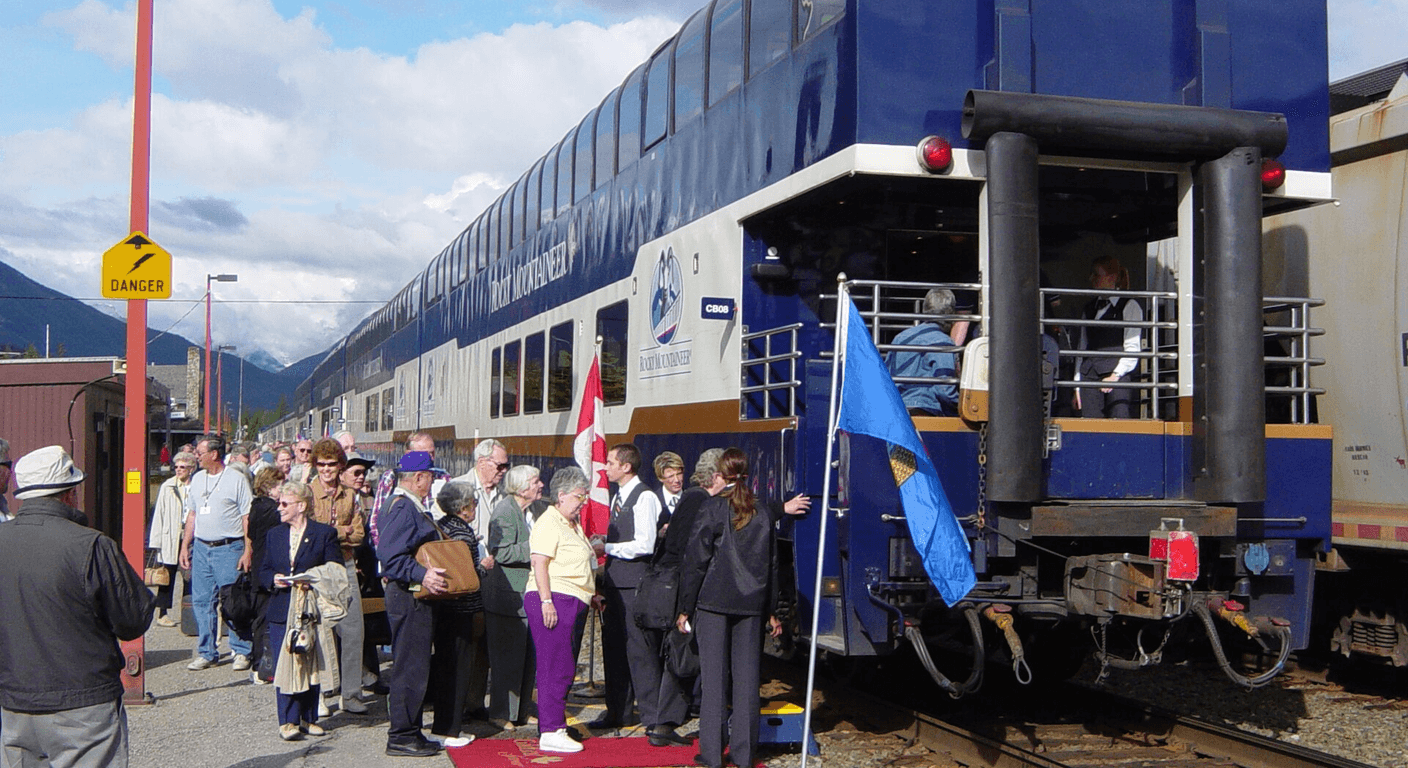
Rocky Mountaineer operates two main service classes on most routes: SilverLeaf and GoldLeaf. The honest version: both travel in purpose-built dome coaches with panoramic windows, both receive meals and drinks as part of the service, and both see exactly the same scenery. The difference is in the physical space and the level of service layered on top.
SilverLeaf seats are on the lower level of the coach, with large windows but not the full dome overhead view. Meals are served at your seat. GoldLeaf places you on the upper glass-dome level, with a wider seat, more legroom, and a dedicated dining room below for meals — you move between levels during the journey. For travellers with mobility considerations, the stairs between GoldLeaf levels are worth factoring in. SilverLeaf's single level is actually more straightforward for anyone with a dodgy knee or balance concerns.
The price gap between SilverLeaf and GoldLeaf is significant — at the time of writing, GoldLeaf can run roughly AU$800–$1,500 more per person on a two-day route, but check the official Rocky Mountaineer site for current pricing as it shifts with the season and exchange rate. If the budget is tight, SilverLeaf is not a compromise; it's a very good product. GoldLeaf makes sense if the dining room experience and upper-dome positioning are genuinely important to you — not just because the brochure makes it look impressive.
The Routes: Which One Is Right for You?
Rocky Mountaineer operates several routes, but the two most popular for Australian visitors are First Passage to the West (Vancouver to Banff via Kamloops) and Journey Through the Clouds (Vancouver to Jasper via Kamloops). Both are two-day, one-night journeys — the train runs only during daylight hours, so passengers overnight in Kamloops and continue the next morning. This pacing is actually a gift for older travellers: it breaks the journey naturally, gives you a comfortable hotel night mid-route, and means you're never sitting for an unreasonable stretch.
Banff is the more developed destination with a wider range of accessible hotels and restaurants, and easier connections onward to Calgary for the flight home. Jasper is quieter, more rugged, and arguably more dramatically scenic — but with fewer dining and accommodation options. Both towns sit at altitude, which is worth mentioning to anyone with cardiovascular concerns; confirm with your GP before travelling.
A third route, Rainforest to Gold Rush, runs through British Columbia to Whistler and Quesnel — less commonly booked by Australians but worth knowing exists. Check the full current route map on rockymountaineer.com, as routes and availability are confirmed season by season.
Package Deal or Independent Booking: The Honest Comparison
Travel agents and tour operators offer Rocky Mountaineer packages that bundle flights, rail, hotels and sometimes excursions. Independent booking means buying each component separately. Neither is universally better — it depends on how confident you are managing the logistics, how much flexibility you want, and whether the package pricing is actually competitive on the day you're comparing.
Packages can simplify things considerably, particularly the coordination between rail departure times and hotel check-out. Rocky Mountaineer itself has partnerships with hotels in Vancouver, Kamloops, Banff and Jasper, and its own website allows you to add accommodation. The advantage of booking through the operator directly is that any schedule changes are easier to manage in one place. The disadvantage is that you're locked into their preferred hotels, which may not be your preferred hotels.
Independent booking gives you the freedom to choose accommodation that suits your mobility needs exactly — ground-floor rooms, lifts, accessible bathrooms — and to spend more or fewer nights in each place. It also lets you shop flights separately, which matters when business class upgrades or frequent-flyer points are in play. Many experienced Australian travellers find that doing a package quote and an independent quote side by side, then comparing like for like, is the only reliable way to know which comes out ahead. seniortravel.au is independent and commission-free; the recommendation here is simply to do both sums.
Travel Insurance: The Part Most People Underestimate
For Australian travellers over 70, travel insurance is not a box-ticking exercise. It's one of the most consequential financial decisions in the whole trip. Canada has excellent medical facilities and correspondingly high medical costs for uninsured visitors. A hospitalisation in Vancouver or Banff without adequate cover could cost more than the entire journey.
Pre-existing conditions — heart conditions, diabetes, joint replacements, blood pressure medication — all need to be declared. Some insurers will cover them with a premium loading; others will exclude them entirely. The difference between policies can be tens of thousands of dollars in the event of a claim. Compare at least three providers, read the product disclosure statement (not just the summary), and don't assume the policy you used for Bali or New Zealand will be structured the same way for Canada. Providers like Cover-More, Allianz, and 1Cover are commonly used by Australian seniors, but the right policy depends on your specific health profile — get advice.
One practical note: Rocky Mountaineer itself recommends comprehensive travel insurance at the point of booking. If you need to cancel for a medical reason after paying a non-refundable deposit, 'cancel for any reason' cover — where it's available — can make a significant difference. Check cancellation terms on the Rocky Mountaineer site before paying any deposit.
Making the Most of Vancouver and Banff Either Side of the Train
The rail journey is two days. The trip is not. Vancouver and Banff — or Jasper — deserve proper time, and for travellers who've come this far, rushing through either would be a waste. Vancouver is one of the more walkable, accessible cities in North America: the waterfront at Canada Place, the Granville Island market, and the Museum of Anthropology at UBC (moa.ubc.ca) are all genuinely worth a day each. Stanley Park has accessible pathways along the seawall, and the city's public transport is straightforward.
Banff sits inside Banff National Park (pc.gc.ca/banff), and the town itself is compact and very walkable. Lake Louise is a short drive or shuttle ride away. For travellers who aren't up for serious hiking, the gondola to Sulphur Mountain gives panoramic views with minimal physical effort — the gondola is accessible, though confirm current operational details with the Banff Gondola operator directly. The town has a good range of restaurants, including some that would hold their own in Melbourne.
Two nights either side of the train — two in Vancouver before, two or three in Banff after — is a reasonable minimum. Three nights in each is more comfortable if the budget allows. Don't try to compress Vancouver into a single day after a long-haul flight; you'll spend half of it horizontal.
Key takeaways
- The Rocky Mountaineer rail fare is only one component — Australian couples should budget AU$12,000–$20,000+ all-in, indicative only, with all figures confirmed at time of booking.
- SilverLeaf and GoldLeaf see identical scenery; the difference is seating level, legroom, and dining arrangement — SilverLeaf is the better choice for anyone with mobility concerns about stairs.
- Flying from Australia to Vancouver involves at least one connection and roughly 17–20 hours in the air; a recovery night on arrival is practical planning, not optional.
- Travel insurance for Australians over 70 with pre-existing conditions requires careful comparison — medical costs in Canada are high and policies vary significantly in what they cover.
- Late May to mid-September is the operating season; July and August offer the warmest, most reliably clear conditions, though they're also the busiest.
- Comparing a bundled package quote against independent booking component by component is the only reliable way to know which delivers better value for your specific itinerary.
Recommended partners and links
Indicative prices only — always confirm with the operator before booking.
Frequently asked questions
How much does the Rocky Mountaineer cost for Australians in total?
The total cost for an Australian couple — including return flights from Melbourne or Sydney, pre- and post-train accommodation, the rail fare itself, transfers, and travel insurance — is roughly AU$12,000 to AU$20,000+, indicative only. The range is wide because flights, hotel choices, service class, and insurance premiums vary significantly. Every figure should be confirmed at the time of booking, as exchange rates and pricing shift. The rail fare alone, at the time of writing, starts at around AU$1,800 per person for SilverLeaf on a two-day route — check rockymountaineer.com for current pricing.
Is SilverLeaf or GoldLeaf better for older travellers?
For most travellers over 60, SilverLeaf is a strong choice. Both classes see the same scenery through large windows, and both include meals and drinks. GoldLeaf's upper-dome level involves stairs between the dining room and the seating deck, which can be challenging for anyone with knee or balance issues. GoldLeaf offers more space and a dedicated dining room, and costs roughly AU$800–$1,500 more per person — confirm current pricing on the Rocky Mountaineer site. If mobility isn't a concern and the budget is comfortable, GoldLeaf is a genuinely elevated experience; if you're weighing costs carefully, SilverLeaf is not a lesser choice.
What is the best time of year for Australians to do the Rocky Mountaineer?
Rocky Mountaineer operates from late April to mid-October. Late May through September offers the best combination of mountain scenery, accessible roads and trails, and warmer temperatures. July and August are peak season — busiest and most expensive, but the most reliably good weather. June and September are quieter and often cheaper, with similarly good conditions. Note that seasons are reversed from Australia: June is early summer in Canada, not midwinter.
Do I need a visa to visit Canada as an Australian?
Australian passport holders travelling to Canada by air are required to obtain an Electronic Travel Authorisation (eTA) before departure. This is different from a visa and is applied for online. Requirements and processes can change, so confirm the current rules on the official Government of Canada immigration website (canada.ca) well before your travel date.
Is the Rocky Mountaineer suitable for travellers with limited mobility?
The train itself is manageable for most travellers with moderate mobility — boarding involves steps, and SilverLeaf's single-level coach is easier to navigate than GoldLeaf's two-level arrangement. Kamloops, Vancouver and Banff all have accessible accommodation options. Some excursions and outdoor activities in the Rockies require reasonable fitness. Contact Rocky Mountaineer directly at rockymountaineer.com to discuss specific accessibility requirements before booking, as the train's coaches have particular configurations that vary by route.