Royal Caribbean is the most searched cruise brand in Australia, and for good reason — its large ships offer a remarkable range of experiences under one roof. For travellers over 50, that breadth is both the appeal and the consideration: more to enjoy, but also more to navigate. This guide looks honestly at what those ships deliver, what they ask of you, and whether they're the right fit.
Why Royal Caribbean dominates the Australian cruise conversation
Search for cruises in Australia and Royal Caribbean appears at the top of almost every results page. That's partly marketing muscle and partly genuine product — the line has invested heavily in building an Australian-season presence, typically homeporting ships in Sydney and Brisbane between roughly November and April. For a traveller in Melbourne, that means embarkation is often a short flight or even an overnight train away, rather than a long-haul international commitment.
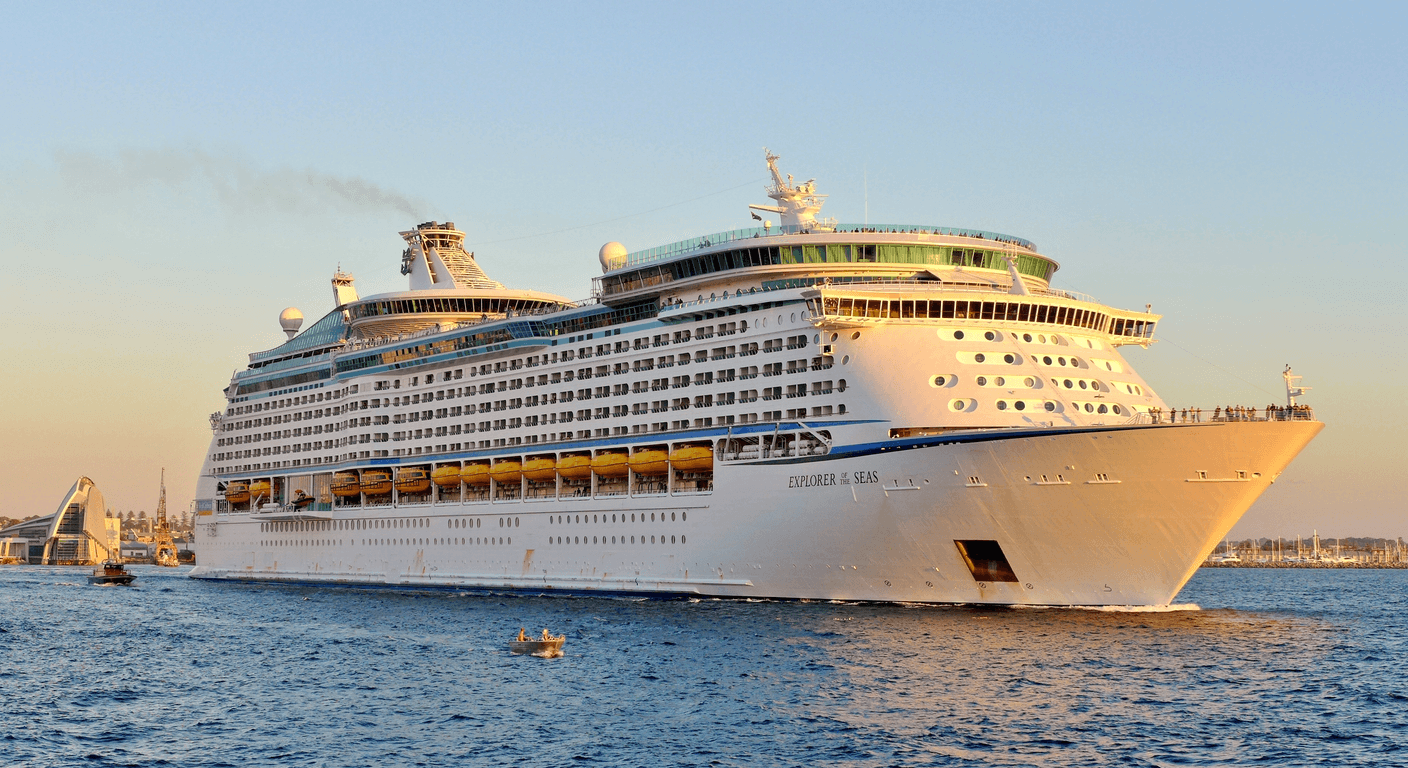
The line positions itself on scale and variety. Its ships — particularly the newer classes — carry thousands of passengers and offer everything from rock-climbing walls and surf simulators to live theatre, specialty restaurants and dedicated adults-only pool areas. For a solo traveller in his late sixties, that breadth can be genuinely liberating: you're not locked into one dining room, one show, one pace. The ship becomes its own destination.
That said, Royal Caribbean's marketing skews younger and louder than some of its competitors. Understanding what you're buying — and what you're not — before boarding is the most useful thing this guide can offer. The ships are good. They're just not quiet by default.
What does a Royal Caribbean ship actually feel like at sea?
On a sea day, a large Royal Caribbean vessel can feel like a very well-run resort town. The pool decks fill early; the specialty coffee spots are busy by seven. But the ships are also genuinely large enough that finding a quiet corner — a shaded deck chair on an upper aft deck, a nook in one of the library or card areas, a bar that doesn't open until noon — is entirely possible. It takes a lap or two to learn the geography, but the geography rewards the effort.
The internal walking distances are real and worth factoring in honestly. From a mid-ship cabin to the main dining room at one end, or the theatre at the other, you may cover 200–300 metres each way. On a 7-night sailing, that adds up. Travellers with hip or knee issues should note this without embarrassment — lifts are plentiful and well-positioned, but the distances between them are not trivial. A cabin location closer to the amenities you'll use most is worth requesting at booking.
Sea days also reveal the social architecture of the ship. Royal Caribbean's entertainment programming tends to be structured and frequent. For a solo traveller, that structure is actually useful — it creates natural points of contact with other passengers without any awkward engineering. Trivia in the afternoon, a show after dinner, a quiet drink at the jazz bar. The rhythm suits many over-50 travellers better than they expect.
The honest trade-offs of sailing on a very large ship
Tender ports are the most commonly cited frustration for experienced cruisers on large ships, and the frustration is legitimate. When a vessel is too large to dock, passengers are ferried ashore in smaller tenders — a process that involves queuing, a short boat transfer, and occasionally rough-water conditions that make it unsuitable for travellers with limited mobility or balance concerns. Royal Caribbean's Australian itineraries typically include some tender ports, particularly in the South Pacific. Confirm which ports on any given itinerary require tendering before you book.
Crowd concentration is the other honest trade-off. On a ship carrying several thousand passengers, the main pool deck at noon on a sea day is not a tranquil experience. Nor is the main dining room at peak sitting time, or the gangway queue at a popular port. These are not dealbreakers — they're the texture of large-ship cruising — but travellers who've previously sailed on smaller vessels should calibrate expectations accordingly. The adults-only areas and specialty dining venues tend to be noticeably quieter, and are worth the planning.
Embarkation and disembarkation on large ships can also take longer than expected. Arriving at the terminal, processing through check-in, and actually reaching your cabin can take two to three hours on busy sailings. The reverse applies at journey's end. Building that buffer into your travel day — particularly if you're connecting onward to Melbourne by flight or train — is practical, not overcautious.
Cabin choice: what matters most for over-50 travellers
Royal Caribbean offers a wide cabin hierarchy, from interior rooms with no natural light through to multi-room suites with private decks. For a solo traveller, the single-supplement question arises immediately: like most lines, Royal Caribbean typically charges solo travellers a premium for occupying a double cabin alone. The size of that supplement varies by sailing and season — confirm directly with the line or a specialist cruise agent, as it can significantly affect the value calculation.
For travellers with mobility considerations, accessible cabins are available across multiple cabin categories and should be requested at the time of booking, not as an afterthought. These typically offer wider doorways, roll-in showers and lower bed heights. The ship's accessibility information is published on the Royal Caribbean Australia site — read it carefully, because not every accessible feature is available on every ship in the fleet.
A balcony cabin is worth serious consideration for over-50 travellers, not as a luxury but as a practical asset. Having private outdoor space — a place to have morning coffee, watch a port approach, or simply sit quietly away from the common areas — changes the texture of a long sailing. On a 10 or 14-night itinerary, that private square metre of fresh air can be the difference between feeling restored and feeling hemmed in.
Solo travel on Royal Caribbean: the real picture
Solo cruising on a large ship has genuine advantages that don't always get acknowledged. The ship's social infrastructure — planned activities, shared dining, organised shore excursions — removes the awkwardness of eating alone in a foreign city or navigating public transport solo in an unfamiliar port. On a Royal Caribbean sailing, you're surrounded by people but under no obligation to be with them. That's a meaningful distinction for many solo travellers over 50.
The line has, in recent years, paid more attention to solo travellers. Some ships now include solo-specific cabin configurations (which help reduce the single supplement) and structured social gatherings for solo passengers early in the voyage. These aren't on every ship or every sailing — confirm availability when you enquire. But the direction of travel is positive.
The practical advice for a solo male traveller embarking from Melbourne or Sydney: book a mid-voyage shore excursion or two through the ship's official programme for the first sailing, even if you'd normally prefer to explore independently. It's a low-pressure way to meet fellow travellers and calibrate the social atmosphere onboard before deciding how much or how little you want of it.
Who might be better served by a smaller premium line?
Royal Caribbean is a strong product. It's also a specific product. Travellers who prioritise intimacy, silence, a high staff-to-passenger ratio, or destination-focused itineraries that linger in ports rather than rush through them may find a better fit elsewhere. Lines like Ponant, Scenic, Viking Ocean or Silversea position themselves at a different register — fewer passengers, more included, quieter by design. They're generally more expensive, and they don't all operate Australian-season deployments, but they're worth knowing about.
The question to ask yourself honestly before booking any large-ship cruise: do you want the ship to be the destination, or do you want it to be the vehicle? Royal Caribbean ships, particularly the larger classes, reward travellers who engage with what's onboard. If you'd rather spend every possible hour ashore and use the ship purely for sleeping and eating, you may be paying for amenities you won't use.
None of this is a criticism of Royal Caribbean — it's a genuinely capable operator with a strong Australian presence and a product that suits a wide range of over-50 travellers. It's simply honest framing. The traveller who boards knowing what to expect, and having chosen the right itinerary and cabin for their pace, will have a significantly better time than one who boards on general reputation alone.
Practical planning: insurance, health and getting aboard from Victoria
Travel insurance for cruising deserves more attention than most travellers give it. Standard travel insurance often excludes cruise-specific scenarios — missed port departures, on-ship medical treatment, medical evacuation at sea — so a cruise-specific policy or a thorough policy with explicit cruise cover is worth sourcing. For travellers over 50 with pre-existing conditions, declaring those conditions honestly at the time of purchase is not optional. An undisclosed condition that leads to a claim being rejected at sea is a serious situation. Smartraveller (smartraveller.gov.au) has clear guidance on what to look for.
Medical facilities on large Royal Caribbean ships are more substantial than on smaller vessels — there are typically onboard doctors and basic clinical services — but they are not hospitals. Any significant medical event at a remote South Pacific port is a complex logistical situation. Travelling with a summary of your medical history, current medications and your GP's contact details is straightforward preparation, not excessive caution.
From Melbourne, embarkation is typically in Sydney or Brisbane — a short domestic flight or, for the unhurried, an overnight journey by other means. Arriving the night before embarkation and staying near the terminal removes the anxiety of a same-day connection. Port of Brisbane and Sydney's White Bay and Circular Quay terminals are well-serviced by taxis and rideshare; confirm accessibility requirements with the terminal operator ahead of time if you have specific needs. Royal Caribbean's Australian site lists terminal information — check it, because it changes by sailing.
Key takeaways
- Royal Caribbean typically deploys ships in Australian waters from November to April, with homeporting in Sydney and Brisbane — no international flight required for most Australians.
- Large-ship internal walking distances are significant; choosing a cabin close to your most-used amenities is a practical decision, not a minor one.
- Tender ports — where passengers are ferried ashore by smaller boat — can be unsuitable for travellers with limited mobility; confirm which ports require tendering before booking.
- Solo travellers typically face a single supplement on double-occupancy cabins; some Royal Caribbean ships now offer solo-specific cabin configurations — confirm availability directly.
- A balcony cabin on a longer sailing is worth the additional cost for the private outdoor space it provides on sea days.
- Travel insurance for cruising must explicitly cover cruise scenarios including medical evacuation at sea and missed port departures — standard policies often do not.
Recommended partners and links
Indicative prices only — always confirm with the operator before booking.
Frequently asked questions
Does Royal Caribbean sail from Australian ports, or do you need to fly overseas to board?
Royal Caribbean typically homeports ships in Sydney and Brisbane during the Australian summer season, roughly November to April. This means most Australians can board without an international flight. Confirm current deployment and embarkation ports for any specific sailing on the Royal Caribbean Australia website before booking, as the schedule changes each season.
Are Royal Caribbean ships accessible for travellers with mobility limitations?
Royal Caribbean ships have lifts, accessible cabins with wider doorways and roll-in showers, and wheelchair-friendly common areas. However, internal walking distances on large ships are considerable — sometimes several hundred metres between facilities — and tender port transfers can be physically challenging and are not always suitable for passengers with mobility limitations. Request an accessible cabin at the time of booking and review the ship's specific accessibility guide on the Royal Caribbean Australia site.
What is the single supplement situation for solo travellers on Royal Caribbean?
Like most major cruise lines, Royal Caribbean typically charges solo travellers a supplement for occupying a double-occupancy cabin alone. The size of that supplement varies by sailing, season and cabin type. Some newer ships include solo-specific cabin configurations that can reduce this cost. Confirm current solo pricing directly with Royal Caribbean Australia or a specialist cruise agent before booking.
What travel insurance do I need for a Royal Caribbean cruise as an Australian over 50?
Standard travel insurance policies often do not cover cruise-specific scenarios such as medical evacuation at sea, onboard medical treatment or missed port departures. Travellers should look for a thorough policy with explicit cruise cover, or a dedicated cruise travel insurance product. Pre-existing medical conditions must be declared honestly at the time of purchase. Smartraveller (smartraveller.gov.au) provides guidance on what cruise insurance should include.
Is Royal Caribbean the right choice, or should an over-50 traveller consider a smaller line?
Royal Caribbean suits travellers who want variety, onboard activity and a lively social atmosphere — the ship itself is a significant part of the experience. Travellers who prioritise intimacy, quieter environments, a high staff-to-passenger ratio, or slow, destination-focused itineraries may be better served by smaller premium lines such as Viking Ocean, Silversea or Scenic. The honest question to ask is whether you want the ship to be the destination or simply the vehicle.