Small-group touring options for solo travellers over 50 offer a genuine alternative to big coach brands, with group sizes of 6–16 people, more flexible pacing, and — in some categories — fairer single-supplement policies. Boutique coach, supported self-drive, small-group rail, and active walking tours each price differently for solos. Mobility ratings range from Easy to Active depending on operator. All are accessible from Melbourne, Sydney, Brisbane or Perth by domestic flight or road. Best booked three to six months ahead.
Why the Big Coach Model Doesn't Always Work for Solo Travellers
Here's the maths nobody puts in the brochure. A big-brand coach tour priced at $5,800 per person twin-share might carry a single supplement of 60 per cent. That's $3,480 extra — just for travelling alone. You're now paying $9,280 for a seat on a 48-person bus, a pre-set dinner each night, and a roommate-free room you already paid for in your own home for the past 69 years. The supplement doesn't buy you anything. It simply redistributes the cost of an empty bed onto the person who didn't bring someone to fill it.
There are legitimate reasons operators charge solo premiums. Hotels price by room, not by head. A twin room used by one person does genuinely cost the operator more per passenger than the same room split two ways. That's real. What isn't real is charging a solo traveller 80–100 per cent of the twin-share rate — effectively full price for the room — while framing it as a modest surcharge. Some large operators have moved toward fairer solo pricing under competitive pressure. Many haven't. The first thing any solo traveller over 50 should do before booking any group tour is ask for the total solo price in writing, not just the headline twin-share rate.
Big coach tours also tend to optimise for the couple or the small friendship group. Seating is paired. Dinner tables are set for four or six. The social architecture of a 46-seat coach assumes you arrived with someone. None of that is necessarily hostile to a solo traveller — but it's not designed for one either. Smaller groups, almost by definition, create a different dynamic. Eight or twelve people on a tour tend to mix more naturally than forty-six.
What Does 'Small-Group' Actually Mean — and What Does It Cost?
The term 'small-group' gets used loosely. Some operators call 24 passengers small-group. That's not small — it's a coach that fits fewer people. Genuine small-group touring, for the purposes of this guide, means 6–16 participants. At that size, the guide knows your name by day two, lunch stops are flexible, and the person who needs a slower pace doesn't hold up forty-three others. The vehicle is typically a minibus or people-mover, which also means easier boarding and alighting — relevant if your knees have opinions.
Pricing for genuine small-group tours in Australia and overseas typically runs from around $250 to $450 per person per day, all-inclusive of accommodation, most meals, activities and a guide. That puts a 10-night tour in the $2,500–$4,500 range at twin-share. Compare that to a big-brand 10-night coach tour, which might be priced similarly at twin-share but then adds a $2,000–$3,000 single supplement on top. The small-group operator with a fair solo policy can end up cheaper in absolute terms, not just proportionally. Always confirm current pricing directly with the operator — these figures are indicative only.
One thing smaller operators do better, structurally, is share-matching. Because group sizes are small, it's actually viable for an operator to pair two solo travellers who are happy to share accommodation — reducing or eliminating the supplement entirely. Ask specifically: 'Do you offer share-matching for solo travellers, and how does it work in practice?' A good operator will have a clear answer. A vague one is a warning sign.
Four Categories Worth Knowing: A Practical Comparison
Boutique small-group coach (6–16 passengers): These operators run the same basic model as the big brands — accommodation, meals, a guide, a vehicle — but at a fraction of the passenger count. The experience is more conversational, pacing tends to be more flexible, and the guide has time to actually answer questions. Solo supplements exist but are often lower, typically 20–40 per cent above twin-share, and share-matching is more common. Indicative pricing: around $280–$420 per person per day all-inclusive. Examples worth researching include Australian-owned boutique operators advertising groups of 12 or fewer — check operators listed through the Australian Tourism Export Council (atec.net.au) or state tourism bodies.
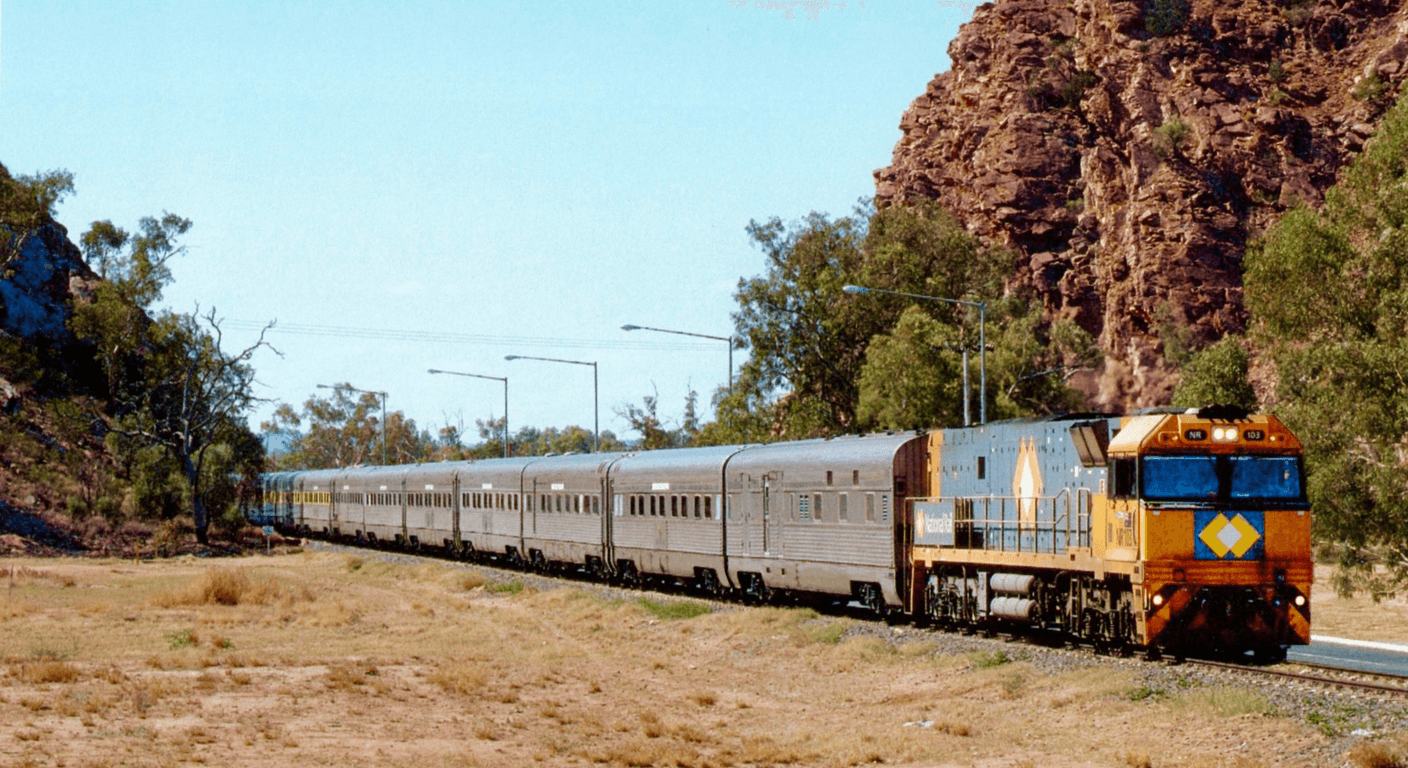
Rail-based small-group touring: Rail journeys solve the supplement problem differently. On a train, you're buying a cabin or a seat — not a hotel room — and the pricing architecture is different. Some rail tour operators charge no single supplement at all on certain departures; others charge a cabin supplement that's lower in percentage terms than a hotel-based tour. The Great Southern and The Ghan (journeysbeyondrail.com.au) are the obvious domestic examples: solo travellers pay for a solo cabin, which is priced as a cabin, not as a twin with a penalty. For international rail touring, operators like Great Rail Journeys (greatrail.com/au) include some no-supplement solo departures — worth asking about specifically.
Active small-group (walking, cycling, wildlife): For travellers who want to earn their dinners, small-group active tours — guided walks, cycling tours, wildlife expeditions — often have the most equitable solo pricing of any category. The logic is simple: you're buying access to a guide and a route, not a hotel room. Accommodation is typically organised separately or in smaller guesthouses where single rooms exist as a natural product. Solo supplements, where they exist, tend to be lower (10–25 per cent is common). Mobility is the real variable here: confirm the daily distance and elevation gain before booking, and ask whether there's a support vehicle for anyone who needs to skip a section.
Supported self-drive: This is the grey nomad evolution. You drive your own vehicle — hire car or your own — and an operator pre-books accommodation, plans the route, provides a roadbook or app, and is available by phone if something goes wrong. No supplement. No shared coach. No compromise on pace. The cost is primarily accommodation and car hire, roughly $150–$280 per night for quality regional accommodation (indicative; confirm with operator), plus fuel and meals. You're essentially paying for the curation and the booking logistics, which has real value if you've ever spent an evening in a small town trying to find somewhere decent to eat. The tradeoff is that you're on your own socially — but for a solo traveller who values independence, that may be the point.
The Single Supplement: Where You Still Pay More, and Why
Fairness requires saying this plainly: no category of group travel eliminates the single supplement entirely. Even the most solo-friendly small-group operators may charge something extra on some departures. The question is not whether a supplement exists but whether it's proportionate and honestly disclosed. A 15–20 per cent premium on a tour where the operator is genuinely absorbing a real cost difference is defensible. A 75 per cent supplement on a tour where the operator is simply recouping revenue lost from a twin-share booking that never happened is not.
The categories where solo travellers still routinely pay the most, proportionally: luxury lodge touring (single occupancy of a premium suite carries a real cost); small-ship expedition cruising (cabins are priced by cabin, and a solo cabin is a full cabin); and any tour where accommodation is in boutique properties with genuinely limited single-room stock. These are structural, not predatory. The categories where supplements are hardest to justify: large-coach tours where rooms are bulk-booked at group rates and the marginal cost of one solo traveller is minimal; and any tour where the operator charges a supplement but offers no share-match option and no solo-specific departure.
One practical move: ask operators directly whether they run dedicated solo departures. Several boutique operators now offer one or two departures per year priced specifically for solo travellers, where the group is entirely solos and the pricing reflects that. No supplement, genuine peer group, and none of the awkwardness of being the only single on a tour built for couples. These departures fill quickly, so the lead time matters — three to six months minimum is sensible.
What to Ask Before You Book: A Practical Checklist
The difference between a good small-group tour and an overpriced one often comes down to five questions most travellers don't ask. First: what is the total price for a solo traveller, including all supplements, in Australian dollars, before any early-bird discount? Get this in writing. Second: what is the maximum group size, and has the operator ever run a departure above that number? (Some operators quietly overbook 'small-group' departures.) Third: is there a share-match program, and if so, what happens if no match is found — do you pay the supplement or does the operator absorb it?
Fourth: what is the cancellation and amendment policy, and how does it interact with travel insurance? This is especially important for solo travellers over 50 who may be managing a pre-existing health condition. Some operators offer a 'cancel for any reason' upgrade at additional cost; others have rigid policies that can leave a solo traveller significantly out of pocket if circumstances change. Check that your travel insurer — ideally one that specialises in over-50 or seniors travel — covers the specific tour type and destination. The Insurance Council of Australia (insurancecouncil.com.au) has guidance on comparing policies.
Fifth: what does the daily pace actually look like? Ask for a sample day: when does the group start moving, how many hours are spent in transit, where are the sit-down breaks, and what happens if someone needs to skip an activity? A good operator answers this without hesitation. One that responds with marketing language about 'immersive experiences' and 'carefully curated itineraries' is telling you something — just not what you asked.
What a Day Actually Looks Like: The Shape of a Small-Group Tour
Using a typical boutique small-group regional Australian tour as a reference point (indicative times — confirm with your specific operator): the group departs accommodation around 8:30am. Not 7:00am. This is one of the consistent differences between small-group and big-coach operations — the guide isn't managing a schedule designed for 46 people, so there's room to breathe. You're typically at the first site by 9:30–10:00am, after a scenic drive that doubles as an orientation.
Morning activity runs until roughly 11:30–noon. This might be a guided walk (1.5–3km on most boutique tours, not a hike), a heritage site visit, or a producer experience. There's usually a comfort stop built into the drive, not as an afterthought but as a scheduled pause — small-group operators learn quickly that this matters. Lunch runs 12:00–1:30pm, typically at a local restaurant or winery, unhurried. The afternoon activity is shorter, usually 90 minutes to two hours, and often optional. Back at accommodation by 4:00–4:30pm. Dinner is either included and communal (the social anchor of the day) or at leisure with a recommendation.
The genuinely skippable parts: on most small-group tours, the third or fourth 'attraction' of any day is the one to skip if your energy is flagging. Tell the guide the night before, not the morning of. A good guide will tell you what's nearby the drop-off point — a cafe, a waterfront walk, a gallery — so you're not simply waiting in the vehicle. Ask this question on day one: 'If I want to sit out an activity, what's the protocol?' The answer tells you a lot about how the operator actually runs their tours.
Concessions, Cards and Costs Australians Over 50 Often Miss
Victorian Seniors Card holders (and equivalent cards in other states — check your state's seniors card program via your state government website) are entitled to discounts on some domestic tour operators, rail journeys and accommodation providers. The discount isn't always advertised — ask at booking. V/Line rail travel in Victoria (vline.com.au) carries a concession fare for eligible Seniors Card holders, which can meaningfully reduce the cost of a self-designed rail itinerary. Journey Beyond Rail (journeysbeyondrail.com.au) — operators of The Ghan, Indian Pacific and Great Southern — periodically offers senior-specific fares; check their site directly for current pricing.
For international small-group tours, the Smartraveller website (smartraveller.gov.au) is the starting point for destination-specific advisories, not just safety warnings. It also has practical guidance on travel insurance, Medicare reciprocal agreements, and what Australian consular services can and can't do if something goes wrong. Solo travellers over 50 with pre-existing conditions should confirm — before paying any deposit — that their travel insurance covers the specific conditions, the destination, and the activity type. 'Adventure activities' are often excluded from standard policies; some walking tours trigger that clause. Read the product disclosure statement, not the summary.
One concession routinely missed: some overseas small-group operators offer a senior discount (typically for travellers 60 or 65 and over) that's separate from any early-bird pricing. It's rarely advertised on Australian booking pages. Ask the operator directly, and ask whether booking through an Australian travel agent versus direct affects the price — sometimes agents have negotiated rates that aren't available online, and sometimes the reverse is true.
Quick planning guide
| Ideal pace | Relaxed to moderate — small groups typically build in longer stops and fewer compulsory earlybird starts |
|---|---|
| Best months | Varies by destination; avoid peak school-holiday weeks for better solo availability and pricing |
| Suggested stay | 7–14 nights per tour; many operators offer extensions |
| Mobility level | Moderate (Easy options exist; Active options available for walking-tour category) |
| Cost level | Around $250–$450 per person per day all-inclusive for boutique small-group; confirm with operator |
| Comfort level | High — smaller groups mean more operator attention and easier access to seating, pacing breaks |
| Best for | Solo travellers over 50 who want company without a 50-seat bus, and fair pricing without a punishing single supplement |
| Main planning consideration | Single supplement policy varies enormously — ask before you commit a deposit |
Key takeaways
- A single supplement of 60–100 per cent on a big-coach tour can add $3,000–$4,000 to the price of a 10-night trip — always ask for the total solo price in writing before committing.
- Genuine small-group touring means 6–16 participants, not 24 — confirm maximum group size with the operator before booking.
- Rail-based touring (The Ghan, Indian Pacific, Great Southern) prices by cabin rather than by room supplement, making it structurally fairer for solo travellers.
- Supported self-drive itineraries carry no single supplement at all — you pay for accommodation and logistics, not a penalty for travelling alone.
- Ask every group tour operator three things: total solo price, share-match availability, and what the cancellation policy means in practice for a solo traveller with a pre-existing condition.
- Victorian Seniors Card holders and equivalents in other states may be entitled to discounts on rail and some tour operators — these are rarely advertised, so ask directly.
Recommended partners and links
Indicative prices only — always confirm with the operator before booking.
Frequently asked questions
What is a fair single supplement for a small-group tour in Australia?
A fair single supplement is generally 15–30 per cent above the twin-share per-person rate, reflecting the real cost of sole occupancy of a room. Supplements above 50 per cent are difficult to justify on most domestic small-group tours, particularly where the operator has bulk-booked accommodation at group rates. Always ask for the total solo price before booking, not just the supplement percentage.
Which type of tour has the lowest single supplement for solo travellers over 50?
Supported self-drive itineraries carry no single supplement — you pay for accommodation and logistics only. Rail journeys (such as The Ghan or Indian Pacific via journeysbeyondrail.com.au) price by cabin, which is structurally fairer than hotel-based supplements. Active small-group walking tours also tend to have lower supplements, typically 10–25 per cent, because accommodation is often in smaller guesthouses with genuine single-room stock.
What should a solo traveller over 50 ask a small-group tour operator before booking?
Ask for the total price for a solo traveller in Australian dollars, including all supplements. Ask the maximum group size and whether it has ever been exceeded. Ask whether share-matching is available and what happens if no match is found. Ask what the cancellation policy means in practice, and whether the operator's travel insurance recommendation covers pre-existing conditions. Ask for a sample day itinerary with approximate times.
Do any Australian small-group tour operators offer solo-only departures?
Yes, a number of boutique small-group operators now run one or two dedicated solo departures per year, priced without a single supplement because the entire group consists of solo travellers. These departures fill quickly — three to six months lead time is sensible. Ask any operator you're considering whether they offer solo-specific departures, as these are rarely the first thing advertised.
Can I use my Seniors Card to get a discount on small-group tours?
Some domestic tour operators and rail services offer Seniors Card discounts, but these are rarely advertised prominently — you need to ask at booking. Victorian Seniors Card holders can access concession fares on V/Line rail (vline.com.au). Journey Beyond Rail periodically offers senior-specific fares on The Ghan, Indian Pacific and Great Southern — check journeysbeyondrail.com.au directly for current pricing. Confirm your card's eligibility with the operator before booking.
- V/Line — Victorian regional rail and coach
- Smartraveller — Australian Government travel advisory service
- Insurance Council of Australia — travel insurance guidance
- Australian Tourism Export Council — operator directory
- Tourism Australia — official national tourism information
- Journey Beyond — The Ghan, Indian Pacific, Great Southern