South West Rocks, on the NSW Mid North Coast four hours north of Sydney, is best visited April to October, when crowds thin and whale-watching odds rise. A two-to-three-day stay suits its pace, centred on Trial Bay Gaol's granite ruins above the sea, shared with grazing kangaroos. Mobility is moderate — the gaol and beach are flat, though the lighthouse path has uneven ground. With no train or coach service, a hire car is essential.
Why South West Rocks works so well for travellers over 50
There's a particular kind of coastal town that hasn't yet been discovered by the sort of people who open wine bars named after compass directions. South West Rocks is still that town. The main street is short. The coffee is good. The pace is set by the tides, not by TripAdvisor trends. For a couple travelling the NSW coast — or a solo traveller who's done the Byron-to-Sydney circuit enough times — this is the stretch that rewards the slightly longer drive.
The town sits at the mouth of the Macleay River, about 35 kilometres east of Kempsey and tucked just off the Pacific Highway. It's not remote, but it feels considered. Accommodation ranges from comfortable holiday apartments on the beachfront to modest motels that have been well looked after. The visitor numbers are enough to keep a handful of good cafes open, but not so many that you're queuing for a table at nine in the morning.
For travellers from Victoria, the most practical approach is to fly to Port Macquarie (roughly an hour and fifteen minutes from Melbourne) and hire a car from the airport — South West Rocks is then about an hour's drive north. From Sydney, it's a four-hour drive on the Pacific Highway with a comfortable break at Taree or Kempsey. Confirm current hire car availability at Port Macquarie Airport before finalising your itinerary.
Trial Bay Gaol: what makes this ruin different
Most historic ruins in Australia involve a long walk to a modest pile of sandstock bricks, with a sign explaining what used to be there. Trial Bay Gaol is the exception. The granite walls of this nineteenth-century prison still stand two storeys in places, the ocean is directly below the headland, and on a weekday morning in May you'll likely share the grounds only with a handful of eastern grey kangaroos grazing between the cell blocks as if they own the place — which, in a practical sense, they do.
The gaol was built between 1877 and 1903 to house prisoners who were put to work constructing a breakwater across Trial Bay. The breakwater failed; the gaol was abandoned; and during the First World War it was repurposed as an internment camp for German nationals living in Australia, a chapter of history that the small on-site museum covers with more nuance than you might expect from a regional NSW attraction. The museum alone is worth the entry fee.
The precinct is managed by NSW National Parks and Wildlife Service within Arakoon National Park. Entry is ticketed, with concession pricing available — confirm current rates directly with NPWS before visiting, as pricing can change. The grounds are largely level and well-maintained, making them accessible for travellers with moderate mobility. The paths between ruins are compacted gravel and short grass rather than rough track, and there are shaded picnic areas near the car park. Sensible flat shoes are sufficient; a hiking pole wouldn't go astray on the grassy slopes near the headland edge.
Horseshoe Bay: the town's calm, patrolled beach
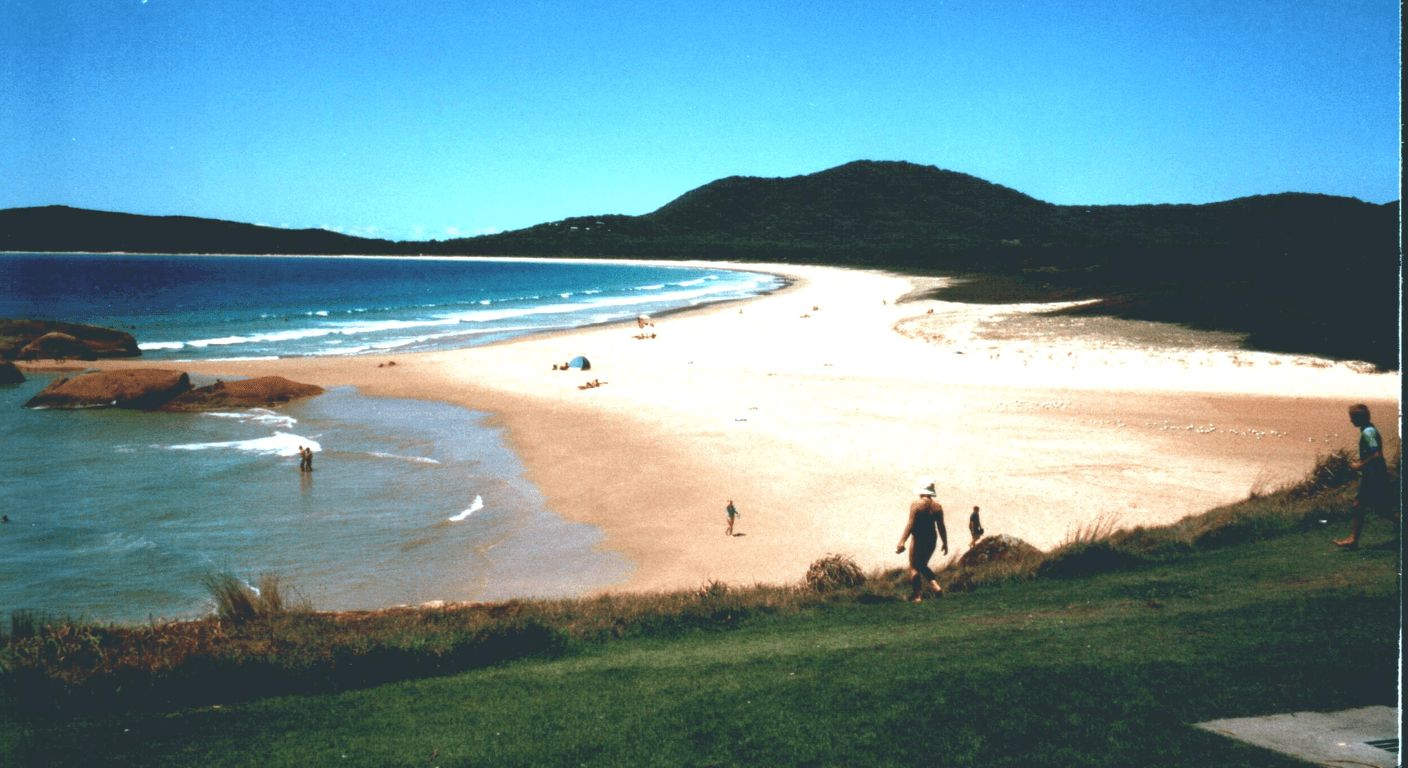
South West Rocks has several beaches, but Horseshoe Bay is the one that earns its keep for most visitors. It curves gently in front of the town centre, it's patrolled by surf lifesavers during the season (confirm current patrol times with Surf Life Saving NSW), and the water inside the bay is sheltered enough to feel genuinely calm on most days. For travellers who want a proper swim rather than a wade-and-retreat, this is a beach that delivers.
The foreshore here is flat and grassed, with easy access to the sand and public amenities that are clean and well-positioned. There's a shallow entry point that suits anyone who prefers not to navigate dumping surf. On a mid-week morning in autumn, the beach has a quality that's harder to find on the more publicised stretches of the NSW coast: it's simply pleasant, without performance.
The town's cafes and the main street are a short, flat walk from the beach. That proximity matters more than it sounds when you've been in the water and you'd like a decent coffee without a hike back to the car. A couple of the cafes have outdoor seating facing the water. The food is honest regional Australian — good fish, good eggs, nothing that needs a glossary.
Smoky Cape Lighthouse: the short walk with a long view
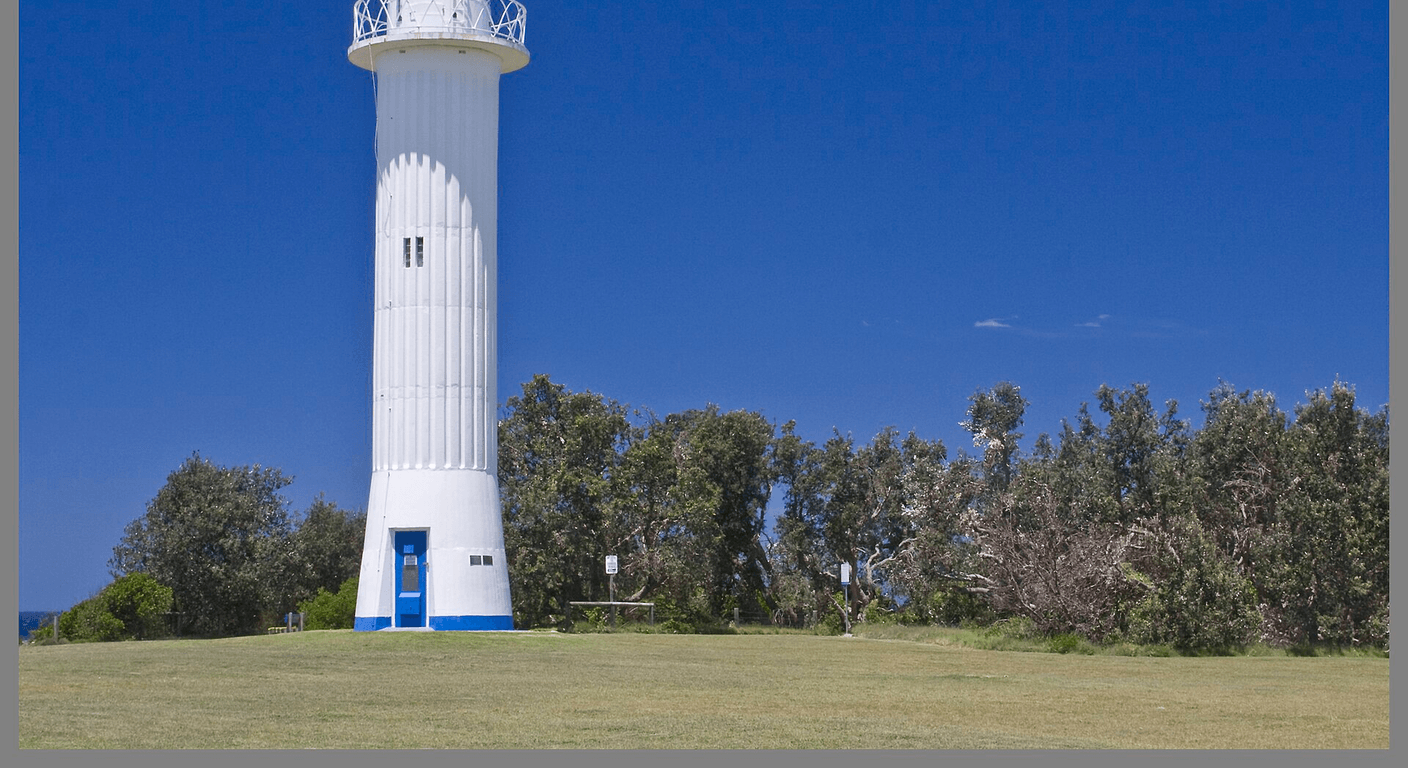
Smoky Cape is one of the oldest lighthouses in NSW, built in 1891 and still operating. It sits on a headland about eight kilometres south of South West Rocks proper, accessed via a sealed road through Arakoon National Park. The lighthouse itself is striking — a white tower against a eucalypt canopy — and NSW National Parks runs guided tours that take you inside the light room. Confirm tour times and ticketing with NPWS before you go, as availability varies by season.
The paths around the headland are short but they're not flat. There's a modest climb from the car park to the lighthouse, and the lookout tracks involve some uneven ground and steps. None of it is long, but it's worth knowing before you arrive in sandals after a morning at the beach. The view from the top — a wide arc of coast in both directions, with the Cape Byron to the north and the Macleay Valley coast south — is the reward that justifies the mild effort.
Whale migration season runs roughly June to November along this stretch of coast, and Smoky Cape is one of the better vantage points on the Mid North Coast for spotting humpbacks on their annual passage. It's not guaranteed, naturally, but the combination of good elevation and an unobstructed ocean horizon makes it a reasonable bet on a clear winter morning.
Getting there and getting around: the practical reality
South West Rocks has no train station and no regular coach service that makes it a practical destination without a vehicle. This is a driving town, full stop. For grey nomads already on the road in a caravan or campervan, there are powered sites at nearby campgrounds within Arakoon National Park — confirm availability and booking requirements through NSW National Parks, as peak school-holiday periods book out well in advance.
From Melbourne, the most comfortable approach is to fly into Port Macquarie (Virgin Australia and Qantas both service this route, though confirm current schedules) and hire a car. The drive from Port Macquarie Airport to South West Rocks takes around an hour on the Pacific Highway via Kempsey, then east on Armidale Road. It's a straightforward regional drive on sealed roads with no navigation anxiety. From Brisbane, the drive is approximately six hours south on the Pacific Highway.
Fuel, groceries, and a pharmacy are all available in South West Rocks town centre, which matters on a longer road trip. The town is not remote, but it's far enough from a major centre that knowing what's available locally saves unnecessary backtracking. For travellers managing medications or requiring specific dietary items, Kempsey (about 35 kilometres west) has a larger supermarket and additional services.
When to go: the case for shoulder season
April through October is the period worth planning around. The humidity that makes January on the NSW Mid North Coast feel like a warm wet blanket has eased by April, and the days are still long enough and warm enough for comfortable outdoor exploring. The gaol precinct, the lighthouse, and the beach foreshore are all better experienced without the peak-January crowd that descends on every coastal town within five hours of Sydney.
June and July bring the best whale-watching odds from Smoky Cape. August and September are excellent for walking — clear skies, mild temperatures, and a beach you can have largely to yourself on a weekday. The water temperature drops to around 18–19 degrees Celsius in winter, which is brisk but swimmable if you're inclined. Most travellers over 50 who've done a shoulder-season coastal trip report that the trade-off is entirely in their favour: better access, lower prices, and the particular pleasure of a town that's operating at its own pace rather than someone else's schedule.
The one honest caveat: some smaller cafes and local operators reduce their hours outside summer. It's worth a quick check of opening times before planning your day around a specific lunch spot. A phone call to the accommodation host the evening before is the kind of local intelligence that makes regional travel smoother — and it's the sort of thing a good host will volunteer without being asked.
A note on travel insurance and planning for interstate travel
For Australian travellers over 50 — particularly those managing pre-existing health conditions — travel insurance for domestic trips is worth considering, not skipping. Medical evacuation from a regional NSW location to a major hospital can be costly without cover, and some health conditions benefit from a policy that includes cancellation cover if plans change at short notice. Compare policies that explicitly cover your specific conditions; read the product disclosure statement rather than the summary page.
South West Rocks is not a physically demanding destination, but anyone with mobility considerations should note that the lighthouse paths and some of the gaol headland areas involve uneven ground. The Horseshoe Bay foreshore and the gaol's main precinct are the most accessible parts of the visit. If travelling with a partner who has different mobility levels, it's easy to split the itinerary — one person takes the lighthouse path while the other waits at the car park lookout, then you reconvene for coffee. That kind of flexibility is one of the things that makes driving travel work well for couples.
Quick planning guide
| Ideal pace | Slow-paced, tide-driven rather than itinerary-driven |
|---|---|
| Best months | April to October (shoulder season, best for whale-watching June–July) |
| Suggested stay | 2-3 days |
| Mobility level | Moderate — flat and accessible at the gaol and beach, uneven ground and steps at the lighthouse |
| Cost level | Budget-friendly, with concession pricing at the gaol |
| Comfort level | Comfortable holiday apartments and well-kept motels, clean public amenities |
| Best for | Couples and solo self-drive travellers wanting history, a calm beach, and no fixed agenda |
| Main planning consideration | A hire car is essential — there's no train or coach service to South West Rocks |
Key takeaways
- Trial Bay Gaol's granite ruins sit directly above a beach inside Arakoon National Park, with concession entry pricing available — confirm current rates with NSW National Parks before visiting.
- The gaol precinct is largely level and accessible on compacted paths, making it one of the more manageable historic sites on the NSW coast for travellers with moderate mobility.
- South West Rocks requires a car — there's no practical public transport link, making it ideal for grey nomads and self-drive travellers.
- Shoulder season (April to October) offers mild weather, fewer crowds, and the best whale-watching odds from Smoky Cape Lighthouse.
- Horseshoe Bay is a calm, patrolled beach within flat walking distance of the town's cafes — a practical combination for a relaxed coastal morning.
- Flying into Port Macquarie and hiring a car is the most comfortable approach for Victorian travellers, with South West Rocks around one hour's drive north of the airport.
Recommended partners and links
Indicative prices only — always confirm with the operator before booking.
Frequently asked questions
Is Trial Bay Gaol accessible for travellers with limited mobility?
The main gaol precinct at Trial Bay is largely level, with compacted gravel and short grass paths between the ruins. It's manageable for travellers with moderate mobility using a walking stick or pole. The headland edges and some outer areas of the grounds are less even. Confirm current access conditions with NSW National Parks before visiting, as maintenance and conditions can vary.
Do seniors get a discount at Trial Bay Gaol?
Concession pricing is available at Trial Bay Gaol, managed by NSW National Parks. Confirm the current concession rate directly with NPWS before your visit, as entry fees can change. Bring your concession card.
What is the best time of year to visit South West Rocks?
April to October is the most comfortable period, offering mild temperatures, lower humidity, and fewer holiday crowds. June to November is also the whale migration season, making Smoky Cape Lighthouse a worthwhile stop for those hoping to spot humpbacks from the headland.
How do you get to South West Rocks from Melbourne or Sydney?
From Melbourne, fly to Port Macquarie and hire a car — South West Rocks is roughly one hour north by road. From Sydney, it's approximately a four-hour drive north on the Pacific Highway, turning east near Kempsey. There is no train or regular coach service to South West Rocks itself; a car is essential.
Are the paths at Smoky Cape Lighthouse suitable for older travellers?
The paths at Smoky Cape Lighthouse are short but include a moderate climb from the car park and some uneven ground and steps near the lookout. They're manageable for reasonably active travellers but are not flat. Wear supportive shoes rather than sandals, and consider a walking pole if uneven surfaces are a concern. NSW National Parks runs guided tours inside the lighthouse — confirm current times and booking requirements before visiting.