Yamba and Iluka, on the NSW Far North Coast near the Clarence River mouth, suit a full seven-night stay best visited April to June or September. The defining highlight is a ten-minute passenger ferry from Yamba's wharf to Iluka, opening a flat, shaded World Heritage rainforest walk. Mobility is moderate — Yamba's headland and beaches involve real hills, so a car is practical. Fly into Ballina or Coffs Harbour and hire a car for the roughly one-hour drive to Yamba.
Getting There from Victoria — and Why a Car Makes the Week
From Melbourne, the most practical approach is flying into Ballina Byron Gateway Airport, which receives direct flights from Melbourne's Tullamarine on Jetstar and Virgin Australia — roughly a 90-minute flight. From Ballina it's about an hour north by hire car along the Pacific Highway to Yamba, via Woodburn. Alternatively, fly into Coffs Harbour and drive an hour south. Neither airport is enormous, which is its own kind of relief after a capital-city terminal.
A car matters here. Yamba's streets roll up and down between the Clarence River foreshore and the ocean-side headland, and while the town centre is walkable once you're in it, the beaches and lighthouse are spread across those hills. If mobility is a consideration, driving between spots rather than walking the full gradient is entirely sensible — and saves energy for the parts worth lingering over. Parking in town is generally easy outside peak school holidays.
Driving from Victoria is a genuine option for grey nomads — the Pacific Highway from Sydney to Yamba is around nine hours from Melbourne total, broken sensibly over two days. Towns like Coffs Harbour make a comfortable overnight stop. That said, flying in and hiring a car locally keeps things simpler for a week-long stay focused on the destination rather than the drive.
What Makes Yamba Worth a Full Week
Yamba is one of those places that rewards staying longer than you planned. The town has a settled, unhurried quality — a working fishing fleet, a lighthouse on the headland, a main street with a good bakery and a bottle shop that stocks regional NSW wines — and it doesn't perform for visitors. That's either its defining appeal or its limitation, depending on what you're after. For most travellers over 50, it's the appeal.
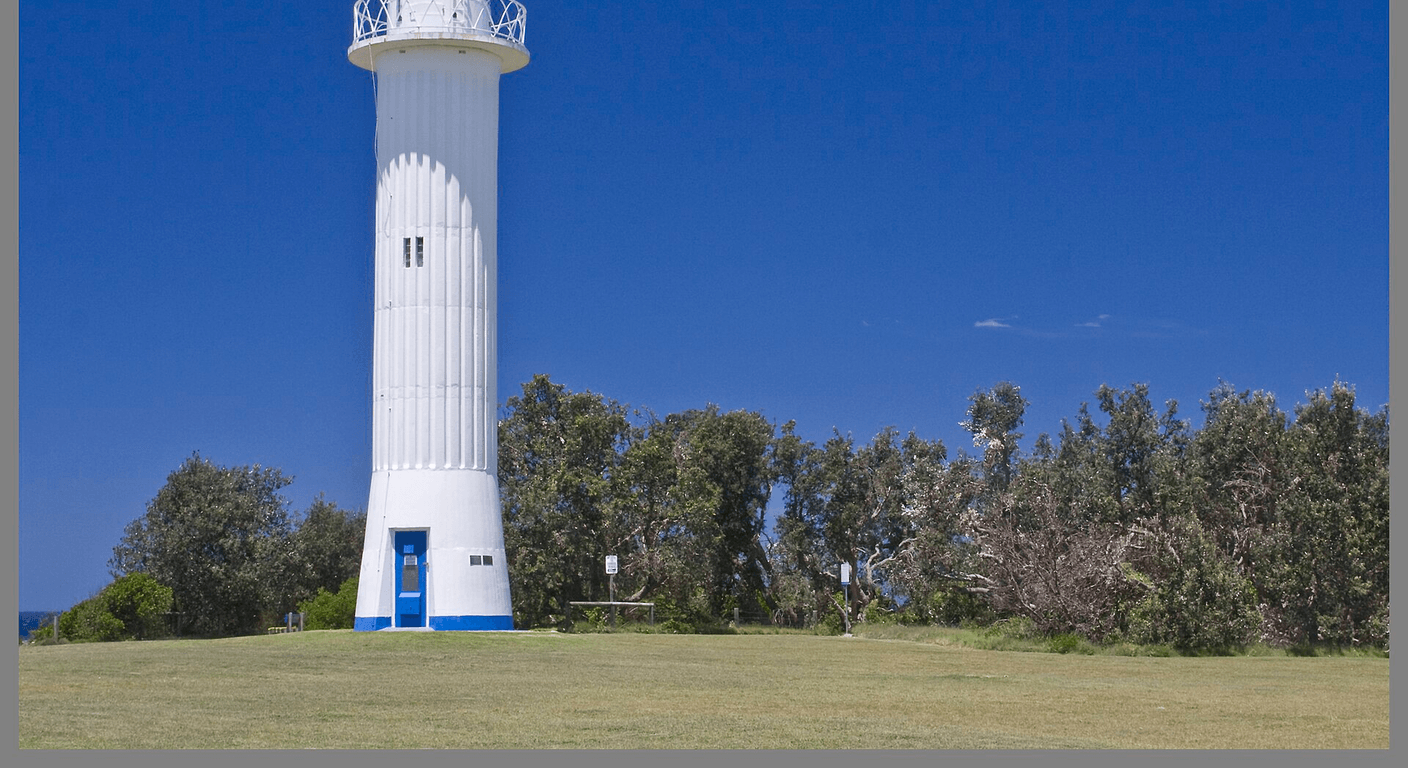
The clifftop lighthouse precinct, managed by the National Trust, sits above the ocean at the southern end of the headland. The views along the coast from there are genuinely expansive — the kind that make you stay longer than you intended. Getting there requires a walk up from the main beach car park, which is moderate rather than strenuous, but involves some uneven ground. Wear proper shoes. The lighthouse itself has a long history with the Clarence River bar crossing, one of the more notorious river mouths on the NSW coast.
Yamba also has a quiet pub culture that suits a relaxed week. The Pacific Hotel on the foreshore has water views from its upper deck and has been there long enough to feel like part of the town's furniture. A cold beer watching the Clarence mouth traffic — fishing boats, the occasional recreational vessel — is one of those simple pleasures that travel guides tend to undersell. It's worth an evening or two.
The Ocean Pool and the Beaches — Reading the Terrain Honestly
Yamba's tidal ocean pool sits at the base of the headland, cut into the rock platform on the ocean side. It's a proper ocean pool — filled by the tides, calm enough for lap swimming, and free. Access involves a short descent down concrete steps from the car park above, which is manageable for most but worth assessing on arrival if steps are a consideration. Early morning swims, when the light comes across the water from the east, are particularly good.
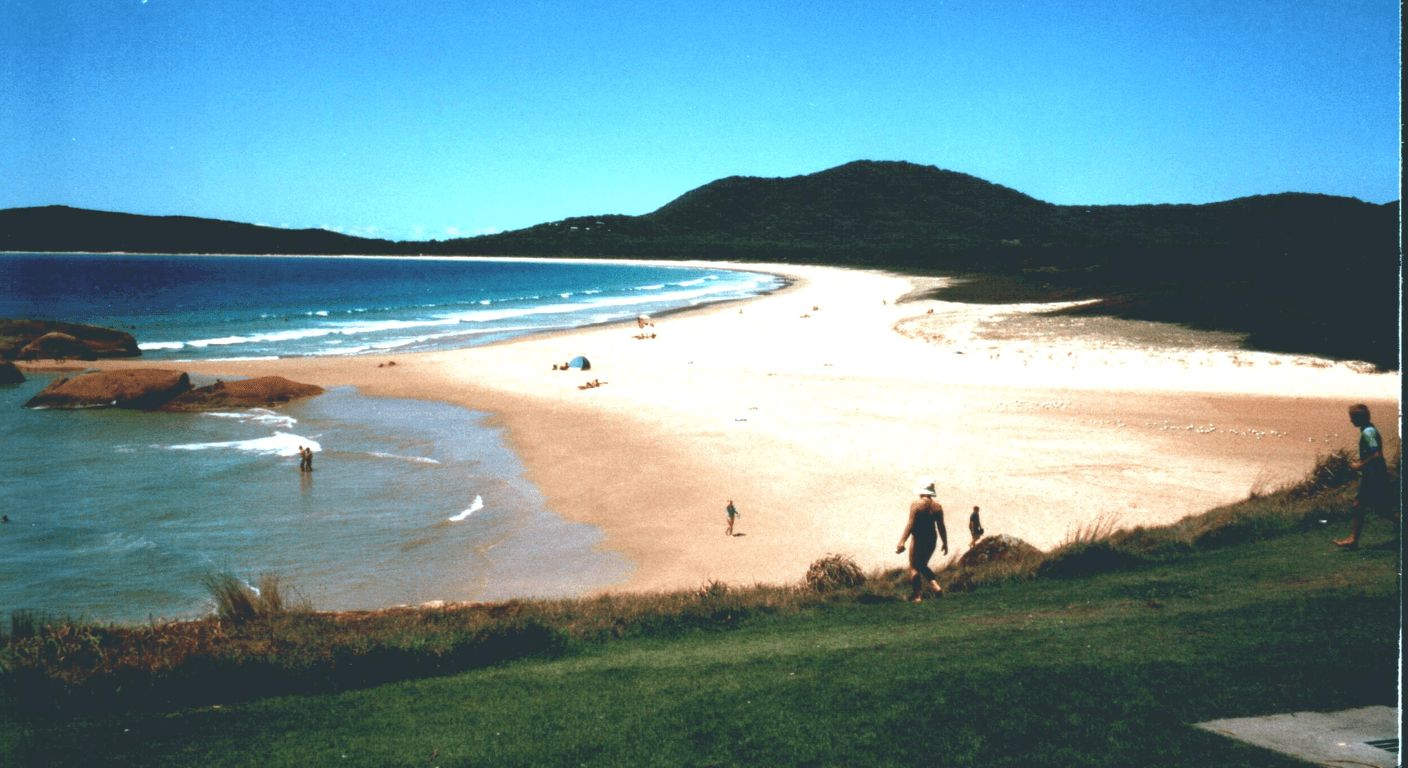
Yamba Beach itself runs north from the headland — wide, generally uncrowded outside summer and school holidays, and backed by low dunes. Turners Beach, on the river side of the headland, is calmer and popular with families. Neither requires a long walk from the nearest parking. Angourie, a few kilometres south, is a surf break with an international reputation and its own natural rock pools — the drive there takes ten minutes and the pools are worth the stop even for non-swimmers.
The hills between the town centre and the beaches are the one honest challenge for anyone with knee or hip concerns. Yamba's topography means that almost every route from accommodation to beach involves some gradient. A car or the occasional taxi solves this practically. It's not a reason to avoid the town — just a reason to plan each day with the terrain in mind rather than discovering it by surprise.
The Ferry to Iluka — a Half-Day That Earns Its Own Paragraph
The passenger ferry across the Clarence River mouth to Iluka departs from the Yamba wharf and takes around ten minutes. It's a small vessel, the fare is modest — indicatively a few dollars each way, though confirm current timetables and prices with Clarence Valley Council before you go, as services can be seasonal or subject to change — and the crossing gives you a river-mouth perspective on both towns that you simply can't get from the road. The Clarence is wide at this point, and there's usually a fishing boat or two moving through.
Iluka is quieter than Yamba. Noticeably so. The village has a handful of streets, a small caravan park, a pub and not much else — which is precisely why people who know it keep returning. The real draw is the Iluka Rainforest Walk within Bundjalung National Park, a short loop through coastal littoral rainforest that is part of the Gondwana Rainforests of Australia World Heritage listing. The track is flat, well-maintained and shaded — genuinely suitable for most fitness levels, including those who find hills difficult. It's around 1.5 kilometres and takes 30 to 45 minutes at a comfortable pace.
The contrast between the walk and the crossing is part of what makes the outing work. You step off the ferry into a village that appears to have opted out of the twenty-first century, walk through ancient rainforest on a track that asks almost nothing of you physically, and then sit at the Iluka pub for a late lunch before the return crossing. It's a half-day that feels complete without being exhausting — the kind of outing that makes a week in Yamba feel well-structured rather than aimless.
Eating Well — Seafood Co-Op, the Club and the Pub
The Yamba Fishermen's Co-operative sells fresh catch directly — prawns, fish and bait — and for self-catering travellers or those staying somewhere with a kitchen, it's the obvious starting point. Clarence River prawns have a genuine reputation along the NSW coast, and buying them here, a few metres from where the boats come in, is one of those travel experiences that actually matches the expectation. Confirm current opening hours on arrival, as they vary with the catch.
The Yamba Bowling Club offers that reliable Australian institution: a bistro meal at a reasonable price with a water view and no fuss. For a traveller who's been exploring all day and wants a straightforward barramundi or a chicken schnitzel without ceremony, it does the job reliably and affordably. The Pacific Hotel, for its part, has a more polished bistro menu and remains the social centre of the town's evening — it's where locals and visitors mix without much distinction between them.
The town has enough cafés for a decent breakfast without having to choose between them more than once or twice. The main street runs a short distance and rewards a slow morning walk. If you're of Greek heritage and accustomed to good coffee — the kind that has actually been made with care — Yamba has caught up sufficiently that you won't feel you've crossed into a coffee desert. That wasn't always true of regional NSW, and it's worth noting.
Practical Matters — Pacing, Accommodation and the Week's Shape
A week is the right duration. Three or four nights feels rushed once you've factored in a travel day at each end and realised that the rhythm of the place rewards slow mornings. Seven nights lets you do the Iluka ferry day, the Angourie pools day, a lighthouse evening, a lazy beach morning and a seafood lunch at the co-op without any of it feeling like an itinerary. That's the distinction between a week in Yamba and a long weekend — the former actually delivers the rest that coastal NSW promises.
Accommodation ranges from holiday apartments on the main street to a handful of motels and a caravan park. For couples, a self-contained apartment with a balcony gives you the option of eating in on the nights when a restaurant feels like too much effort — which, by day four of a good week, will probably be at least one of them. Book ahead for April through June and September, when the town fills with older travellers who've worked out what Yamba is good for. Indicative apartment costs run from around $200 to $350 per night depending on season and position — confirm current pricing with operators directly.
Travel insurance is straightforward for a domestic trip of this kind, but travellers with pre-existing conditions should ensure their policy covers any relevant health needs before departing. The nearest major hospital is in Grafton, about 45 minutes inland along the Clarence River — worth knowing, not worrying about. The town has a medical centre and a pharmacy. For a couple travelling at a considered pace, Yamba presents very few logistical complications. That, in the end, is part of what it's selling.
The Broader Clarence Coast — If You Want to Extend
Grafton, 45 minutes inland, is worth a half-day for its jacaranda-lined streets — the annual Jacaranda Festival runs in late October and early November, when the city turns a particular shade of purple that people return for year after year. The Grafton Regional Gallery is a serious regional gallery with a good permanent collection. The drive along the Clarence River from Yamba to Grafton is pleasant in itself, following the river through cane country and small river towns.
Maclean, about 20 minutes north of Yamba along the river, bills itself as the Scottish town of Australia — the phone boxes are tartan-painted, which either charms or baffles depending on your disposition. The town sits on a bend in the Clarence with good views and a cluster of heritage buildings. For a short afternoon drive from Yamba, it offers a change of scene without requiring much effort.
Further north, Ballina and Lennox Head are within range for a day trip. Ballina has a Naval and Maritime Museum and a river precinct that works well for a leisurely afternoon. The coastal road between Yamba and Ballina, via Iluka and then south, is a longer drive but passes through coastal national park and small communities that feel genuinely off the main tourist circuit. For a couple with a car and a flexible week, it's a good option for one of the middle days.
Quick planning guide
| Ideal pace | Slow and unhurried, built around long mornings and short outings |
|---|---|
| Best months | April to June and September, ahead of the busier school-holiday periods |
| Suggested stay | Seven nights, to fit the ferry day, beaches, lighthouse and a co-op lunch without rushing |
| Mobility level | Moderate — Yamba has genuine hills between town and beaches, though the Iluka rainforest walk is flat and suits most fitness levels |
| Cost level | Mid-range, with apartments running roughly $200-$350 a night depending on season |
| Comfort level | Relaxed and low-key rather than polished or resort-style |
| Best for | Couples over 50 wanting a slow coastal week with a car |
| Main planning consideration | A hire car is genuinely needed for Yamba's hilly terrain between accommodation, beaches and the lighthouse |
Key takeaways
- Seven nights is the minimum that lets Yamba and Iluka deliver what they actually promise — a week of unhurried coastal rhythm rather than a checklist of stops.
- The passenger ferry to Iluka takes around ten minutes and opens up a World Heritage rainforest walk on flat, shaded tracks that suits almost any fitness level.
- Yamba has genuine hills between the town centre and its beaches — a car is practical, not a concession.
- The Iluka Rainforest Walk in Bundjalung National Park is flat, well-maintained and part of the Gondwana Rainforests of Australia World Heritage listing.
- Fly into Ballina Byron Gateway or Coffs Harbour and hire a car — the drive to Yamba is under an hour from either airport.
- Clarence River prawns bought directly from the Yamba Fishermen's Co-operative are one of the most honest pleasures on the NSW Far North Coast.
Recommended partners and links
Indicative prices only — always confirm with the operator before booking.
Frequently asked questions
How do you get from Yamba to Iluka?
A small passenger ferry runs between the Yamba wharf and Iluka across the Clarence River mouth. The crossing takes around ten minutes. Fares are modest — indicatively a few dollars each way — but timetables and prices should be confirmed with Clarence Valley Council before travelling, as services can be seasonal.
Is the Iluka Rainforest Walk suitable for older travellers or those with limited mobility?
Yes. The Iluka Rainforest Walk is a flat, well-maintained loop of around 1.5 kilometres through coastal littoral rainforest in Bundjalung National Park. It is shaded, takes 30 to 45 minutes at a comfortable pace, and is one of the more accessible nature walks on the NSW Far North Coast. Check the NSW National Parks website for current track conditions before visiting.
When is the best time to visit Yamba and Iluka?
April to October is generally the best period — warm and dry, with fewer crowds than the summer school holiday peak. July can be cool in the evenings, so a layer is useful. October, when the jacarandas are flowering in nearby Grafton, adds a bonus reason to visit in spring.
How hilly is Yamba, and does it affect getting around?
Yamba is noticeably hilly between the town centre and its ocean-facing beaches and headland. Most routes from accommodation to the beach or lighthouse involve some gradient. For travellers with knee or hip concerns, driving between the town and beach precincts rather than walking is a sensible approach. Iluka, by contrast, is flat.
What is the closest airport to Yamba?
Ballina Byron Gateway Airport is the closest major airport, around one hour south of Yamba by car. Coffs Harbour Airport is roughly one hour to the south-east. Both receive direct flights from Melbourne and Sydney. A hire car from either airport is the most practical way to reach and get around Yamba.