Standley Chasm, known by its Western Arrernte name Angkerle Atwatye, sits about 50 minutes west of Alice Springs via the sealed Namatjira Drive. Visit around midday (11:30am–1pm) when sunlight turns the quartzite walls deep red, ideally during the April–May or August–September shoulder seasons. Plan a half-day of four to five hours, including a 1.2km creek-bed walk that's mostly flat but rocky near the gorge — moderate mobility required. Self-drive or a guided tour is needed, as there's no public bus.
What is Angkerle Atwatye, and why does the name matter?
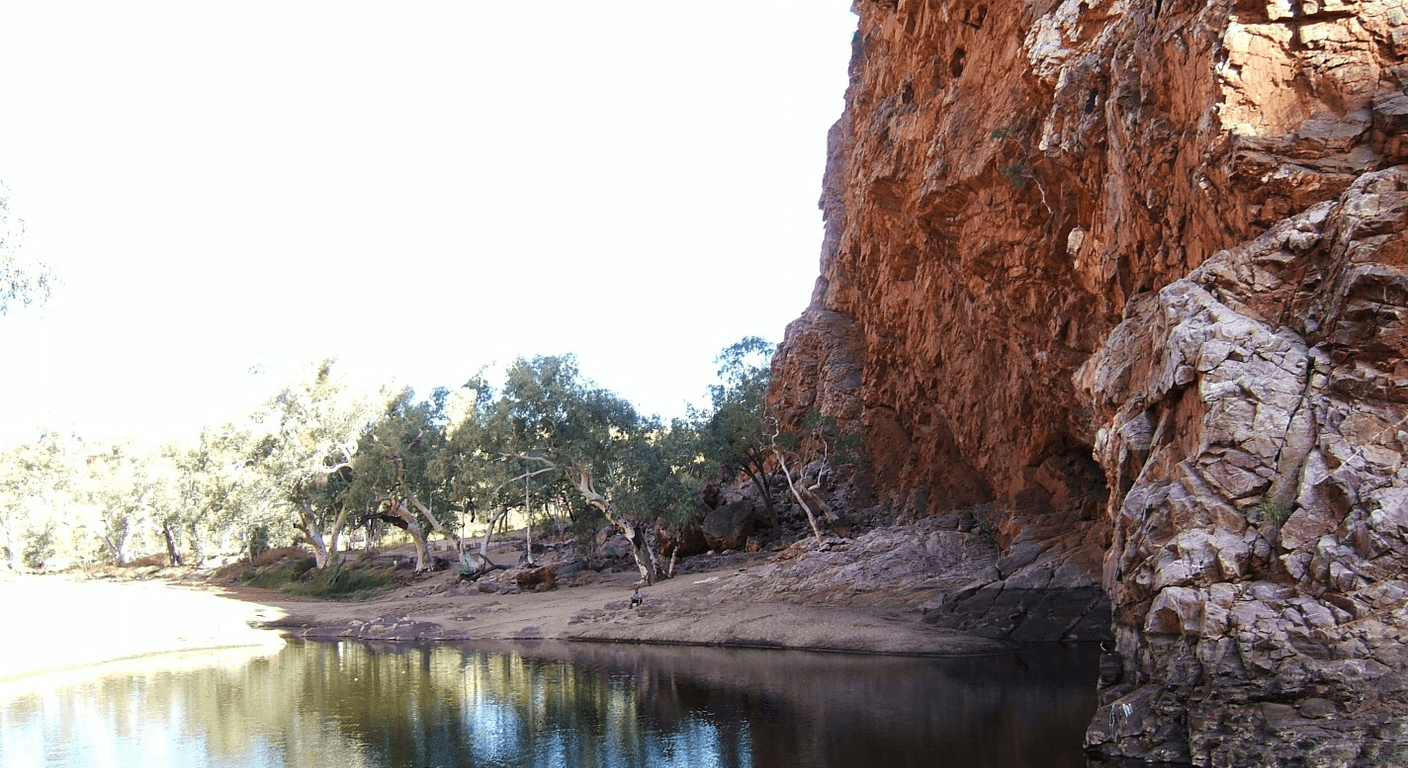
Angkerle Atwatye is the Western Arrernte name for the place most maps still label Standley Chasm. The name translates loosely to 'gap of the water running place', and it reflects a relationship with this landscape that stretches back far longer than any colonial-era surveyor's notation. The chasm sits within the West MacDonnell Ranges, a vast ridge of ancient quartzite that runs east to west across Central Australia, and it is one of the few sites along that range that is owned and managed entirely by its traditional custodians.
When you pay your entry fee at the gate, the money goes directly to the Iwupataka Land Trust and the Western Arrernte community. There are no corporate intermediaries. The staff you meet at the kiosk and along the path are local, and the interpretation boards around the site use both the Arrernte and English names for the landscape. For a solo traveller who cares about where her tourism dollars land, this matters in a practical, not just symbolic, way.
Using the name Angkerle Atwatye when you talk about the site — to staff, to other travellers, in your own notes — is a small act of respect that costs nothing. The community has made the name visible and accessible, so there is no reason not to use it.
Getting there from Alice Springs: what are the options?
Standley Chasm sits roughly 50 kilometres west of Alice Springs along Namatjira Drive, which is a sealed, well-maintained road. The drive from town takes around 50 minutes in a standard car. There is a sealed car park at the site with reasonable space, and the terrain between the car park and the entry gate is flat and easy underfoot.
For travellers who do not want to drive themselves, a small number of Alice Springs tour operators run half-day or full-day West MacDonnell Ranges tours that include the chasm as a stop. Checking with the Alice Springs Visitor Information Centre at discovercentralaustralia.com is the most reliable way to find current operators, as small tour businesses in regional areas change their schedules seasonally. Indicative costs for a guided half-day tour run roughly $90–$140 AUD per person, but confirm directly.
There is no public bus service to the chasm. If you are not comfortable driving on outback roads or are travelling without a car, a guided tour or a car hire with a trusted operator is the practical path. The road itself is not technically difficult — it is sealed and signposted — but distances between any services are long, so a full tank of fuel and a charged phone before you leave Alice Springs are sensible habits.
The midday timing: why it changes everything
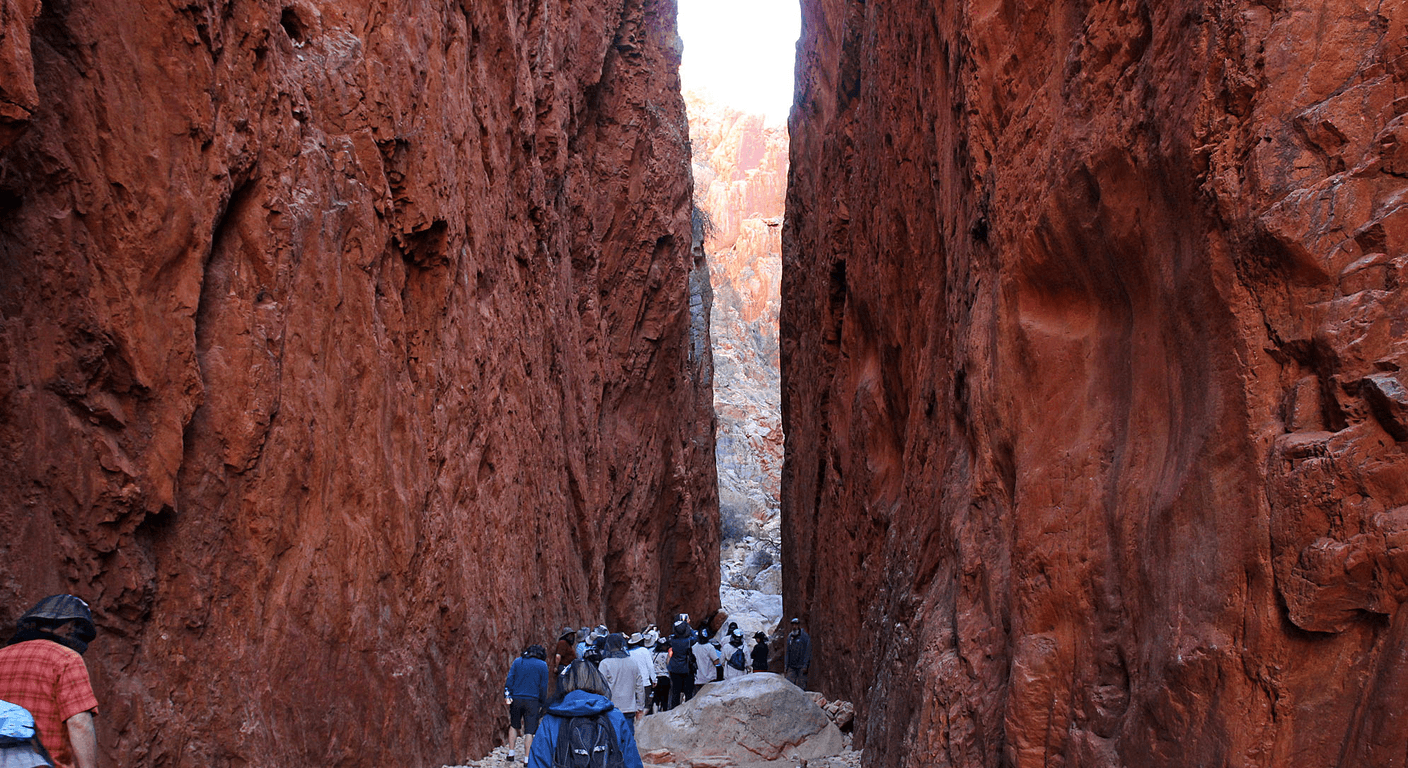
The chasm itself is a narrow slot in the quartzite, roughly 80 metres high and at some points only a few metres wide. For most of the day, the sun cannot reach the floor of the gorge, and the walls sit in cool, muted shadow. Around midday — the window runs from roughly 11:30am to 1:00pm, depending on the time of year — sunlight drops directly into the gap and strikes the walls at full intensity. The quartzite, rich in iron oxide, glows a deep, saturated red that is quite different from the washed-out orange you see at other times.
This is not a trick of photography or tourist marketing. It is simple physics, and it is worth planning your day around. Arriving at the car park by 11:00am gives you time to walk the 1.2 kilometres to the chasm at a relaxed pace, settle yourself in the gorge before the light peaks, and still have time for a scone at the kiosk on the way back. Lingering in the gorge during the light is perfectly fine — there are flat rocks to sit on and the space is not usually crowded on weekdays.
In summer (roughly November to March), the heat at midday in Central Australia is serious and the chasm can feel like a furnace. The walls radiate absorbed heat, and there is limited shade in the gorge itself. For travellers in their 60s and 70s, the shoulder seasons — April to May and August to September — offer the midday light without the extreme temperatures. Winter middays are genuinely pleasant, often around 18–22 degrees Celsius, though mornings and evenings drop sharply.
What is the walk actually like?
The path from the entry gate to the chasm is 1.2 kilometres one way, so roughly 2.4 kilometres return. The first section follows a dry creek bed and is mostly flat, with some areas of loose, rounded river stones and exposed tree roots. The final approach into the gorge involves a short section of larger, irregular rocks that requires some careful foot placement. It is manageable for most reasonably mobile older travellers, but anyone with significant balance issues or ankle instability should know this section is there.
Walking poles are genuinely useful here, not just reassuring to carry. The creek-bed stones can shift underfoot, and having a third point of contact on the rockier section near the gorge entrance makes a real difference. If you do not own poles, a lightweight pair is worth picking up before a trip like this — they are available from outdoor retailers in Alice Springs. Sturdy closed-toe shoes with grip are essential; sandals or flat-soled shoes are not appropriate.
The walk is not graded as wheelchair accessible, and the creek-bed surface means mobility aids have limited reach. Travellers who use a walker or wheelchair will likely be able to reach the first part of the creek path but not the gorge itself. The kiosk area and surrounds are accessible, and the entry fee is indicatively the same regardless of how far you walk. If accessibility is a key concern, contacting the site directly at standleychasm.com.au before your visit is the best approach — staff there can give you an honest current picture.
The kiosk: a practical and genuinely good stop
The kiosk at Angkerle Atwatye is run by the community and serves straightforward, well-made food. The scones are the thing most repeat visitors mention — freshly made, served with jam and cream, and priced modestly. A scone and a tea or coffee runs roughly $8–$12 AUD, though confirm current pricing on the day. It is not a café in the city sense, but it is a proper, satisfying stop.
The kiosk also stocks cold water, cold drinks, and basic snacks. Given that the nearest other food option is back in Alice Springs, this matters practically. For a solo traveller doing a half-day out here, a scone at the kiosk after the walk back is a comfortable, sociable way to round out the visit. The tables outside have shade, and the pace is unhurried.
There is a small gift area with locally made items and books about the Western Arrernte people and the West MacDonnell Ranges. The books in particular are worth a look if you want to understand more about what you have just walked through. Purchases here go back to the community in a direct way.
What to bring and how to pace the day
Water is the non-negotiable. Two litres per person for a half-day in Central Australia is a reasonable baseline, more in warmer months. The kiosk sells cold water but relying on it as your only source is not wise — carry what you need from the start. Sunscreen, a hat with a full brim, and a light long-sleeved layer for the walk back (when the sun is at its highest) are practical defaults.
The full half-day — drive from Alice Springs, walk to the chasm, time in the gorge, walk back, scone stop, drive back — takes around four to five hours at a comfortable pace. That is a satisfying but not exhausting day for most travellers. Combining Angkerle Atwatye with another West MacDonnell stop, such as Simpsons Gap (Rungutjirba), which is only 18 kilometres from Alice Springs and has an easier, flatter walk, makes for a full but manageable day if you are energetic.
Solo travellers should let someone know their itinerary before heading out, even for a straightforward sealed-road day trip like this. Mobile coverage along Namatjira Drive is patchy in places. It is a basic precaution, not a reason for anxiety — the route is popular and well-travelled, but Central Australia rewards the habit of telling someone where you are going.
The wider West MacDonnell Ranges: what else is nearby?
The West MacDonnell National Park stretches for roughly 160 kilometres west of Alice Springs and contains a sequence of gaps, gorges, and waterholes, many with deep significance to the Western and Central Arrernte peoples. Simpsons Gap, Ellery Creek Big Hole, Serpentine Gorge, and Glen Helen Gorge are among the more visited points, each with its own character and varying degrees of walking difficulty.
For a traveller based in Alice Springs for a few days, a sensible approach is to do Angkerle Atwatye as a dedicated half-day, then consider one or two other West MacDonnell stops on separate days rather than trying to link too many sites in a single long drive. The distances accumulate, and the heat can be draining. Parks Australia's website at parksaustralia.gov.au and the NT Parks and Wildlife service provide current information on track conditions and facilities at each site.
Alice Springs itself deserves a day or two as well. The Araluen Arts Centre, the Alice Springs Desert Park, and the Tangentyere Artists gallery offer genuine depth for a curious traveller. The Desert Park in particular — a large, walk-through representation of Central Australian desert environments — is excellent and very accessible, with paved paths and electric buggies available for sections of the route.
Quick planning guide
| Ideal pace | Relaxed half-day, timed around the midday light |
|---|---|
| Best months | April–May and August–September for mild temperatures with the same midday light effect |
| Suggested stay | Half-day (around four to five hours including drive and kiosk stop) |
| Mobility level | Moderate — flat creek-bed path with a rocky, uneven section near the gorge; not wheelchair accessible |
| Cost level | Budget-friendly (entry under $30; kiosk scone around $8–$12) |
| Comfort level | Simple and community-run, with shaded kiosk seating and no crowds on weekdays |
| Best for | Solo or independent travellers wanting a meaningful, manageable Central Australian outing |
| Main planning consideration | Timing the walk to arrive before 11:00am so you're settled in the gorge for the midday light, and having your own transport or a booked tour since there's no public bus |
Key takeaways
- Angkerle Atwatye is owned and operated by the Western Arrernte community, and your entry fee goes directly to local custodians.
- The chasm walls glow their deepest red between roughly 11:30am and 1:00pm, when midday sun reaches the gorge floor — plan your walk around this window.
- The 1.2km creek-bed walk is mostly flat but has rocky, uneven ground near the gorge; walking poles and grip shoes make a real difference.
- Entry is around $12–$15 AUD per adult (indicative; confirm current prices at standleychasm.com.au before you visit).
- The community-run kiosk serves freshly made scones — a practical and worthwhile stop after the walk back.
- Shoulder seasons (April–May and August–September) offer the midday light spectacle without the extreme summer heat of Central Australia.
Recommended partners and links
Indicative prices only — always confirm with the operator before booking.
Frequently asked questions
Is Standley Chasm suitable for older travellers or those with limited mobility?
The walk to the chasm is 1.2 kilometres one way along a dry creek bed, mostly flat but with rocky, uneven ground and a short section of larger irregular rocks near the gorge entrance. It is manageable for most reasonably active older travellers, though walking poles and grip shoes are strongly recommended. The walk is not wheelchair accessible beyond the initial flat section. Contact the site directly at standleychasm.com.au for the most current accessibility information.
What time should you arrive at Standley Chasm to see the red walls?
Arriving at the car park by around 11:00am gives you time to walk to the gorge before the peak light window, which runs roughly from 11:30am to 1:00pm. During this midday period, sunlight drops directly into the narrow chasm and the quartzite walls glow a deep red. Outside this window the walls are in shadow and the colour effect is much reduced.
How much does it cost to enter Standley Chasm?
Entry is indicatively around $12–$15 AUD per adult, but prices should be confirmed directly with the site at standleychasm.com.au before your visit, as fees can change. The entry fee goes to the Iwupataka Land Trust and the Western Arrernte community who own and operate the site.
Can you get to Standley Chasm without a car from Alice Springs?
There is no public bus service to Standley Chasm. Travellers without a car can join a guided half-day or full-day West MacDonnell Ranges tour from Alice Springs, several of which include the chasm as a stop. The Alice Springs Visitor Information Centre at discovercentralaustralia.com can provide current operator details. Car hire from Alice Springs is the other option; the drive is roughly 50 minutes on a sealed road.
Is food available at Standley Chasm?
Yes. A community-run kiosk at the site serves scones, tea, coffee, cold drinks, and water. It is a reliable and worthwhile stop, particularly after the walk back from the gorge. The nearest other food option is back in Alice Springs, so it is sensible to carry your own water and snacks as well.